How do the world’s leading architects, façade consultants, and AV systems integrators overcome severe structural load limits, non-planar geometries, harsh wind shear, and strict municipal carbon caps? digiLED delivers precision-machined bespoke architectural LED screens engineered to turn challenging building skins, monumental glass atriums, and curved civic landmarks into dynamic, energy-conscious digital canvasses without compromising envelope integrity.
Made in BritainAwarded for digiLED ZEUS® zero-power standby technology
The digiLED Architectural Difference
Standard rectangular cabinets cannot solve the physical friction of modern non-Euclidean building design. We bridge the engineering gap between architectural vision and electronic hardware reality.
Unlike fixed-line manufacturers trapped by existing factory dies, digiLED selects the precise cleanroom manufacturing partners, premium LED silicon, and driver ICs matched to each architectural envelope. We engineer solutions around the building—not the other way around.
Mastery of Non-Standard Geometries
From faceted convex curves and cylindrical pylons to 90-degree continuous mitered corners and compound-radius ribbons, our bespoke engineering accounts for custom PCB layouts, sub-millimeter chassis tolerances, and zero-distortion pixel pitch alignment.
Hands-on Factory Floor QC & FAT
Our British and international senior hardware engineers reside on the production floor during assembly. Every custom structural frame undergoes stringent Factory Acceptance Testing (FAT) with dry-fit staging and thermal imaging prior to worldwide shipping.
Product Architectures
Engineered Systems for Bespoke Architectural LED Screens
Every commercial development presents unique structural constraints, solar exposure ratings, and aesthetic requirements. Explore our core display families configured specifically for architectural integration.
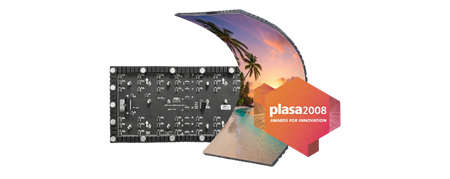
digiFLEX
Curved · Cylindrical · Organic Contours
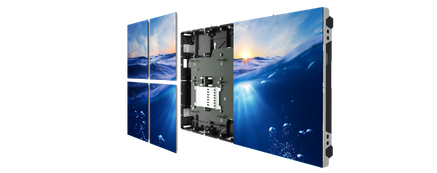
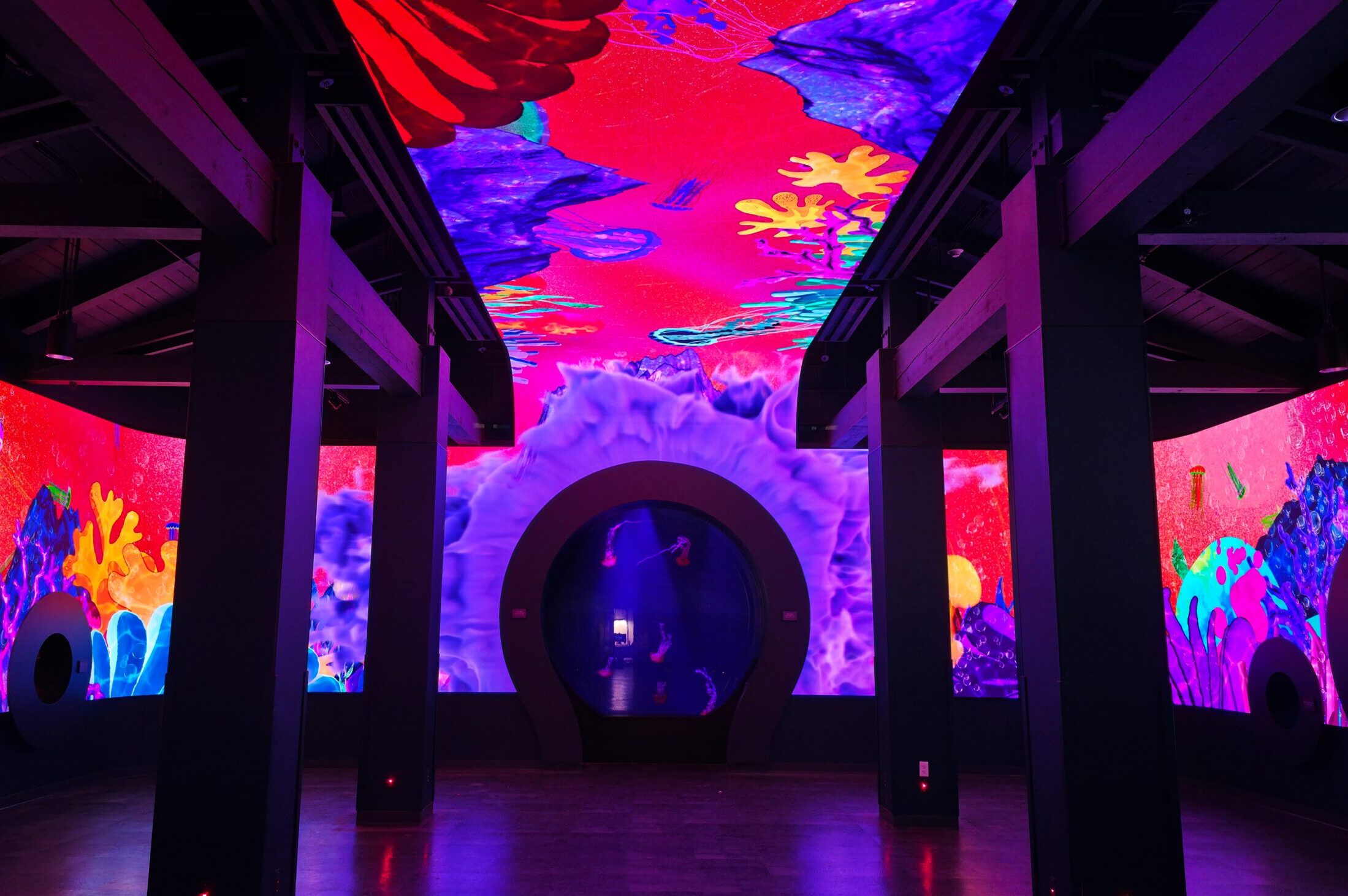
Engineered with pliable silicone elastomer substrates and multi-segmented articulated frames. digiFLEX conforms smoothly around tight interior columns, undulating sculptural soffits, and exterior wave forms where conventional rigid cabinets fail to produce continuous arcs.
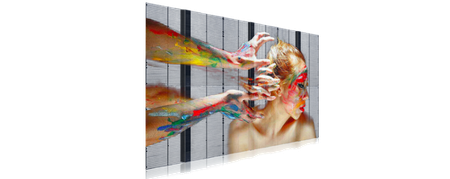
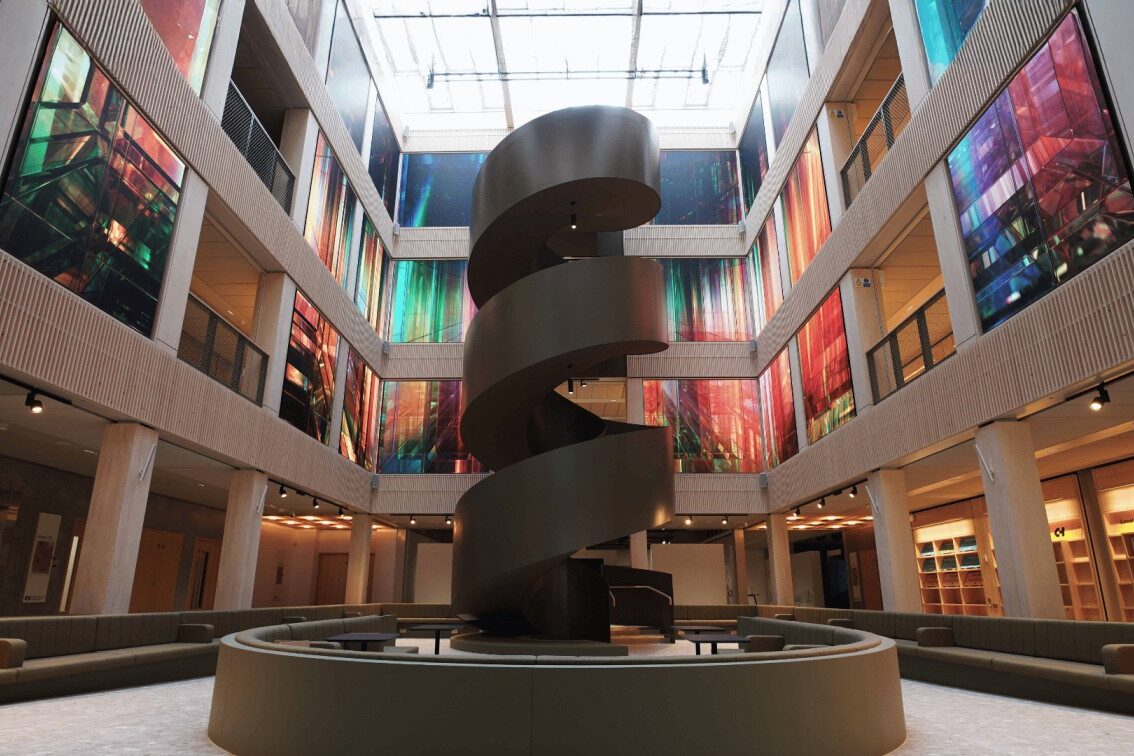
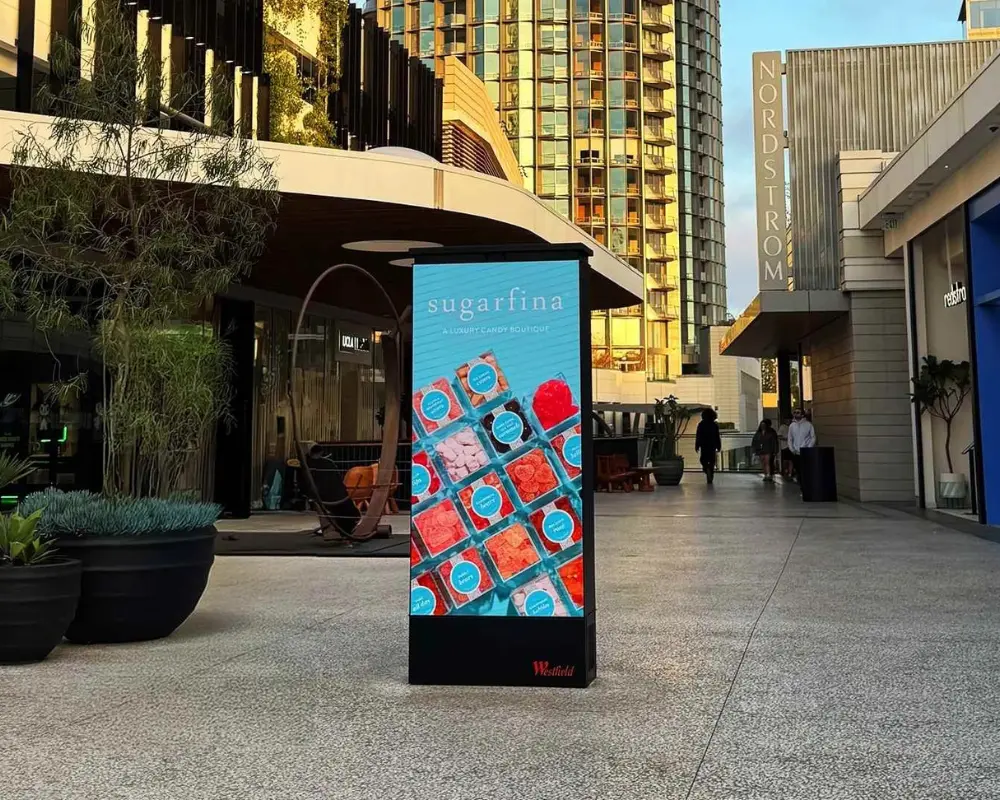
Ideal for glass curtain walls, double-skin facades, and monumental atriums. MIRAGE delivers up to 7,500 nits of high-contrast daylight-visible output while preserving natural interior daylighting, outward sightlines, and natural airflow to minimize facade dead-load forces.
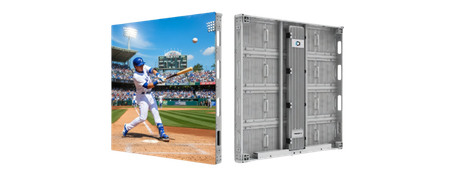
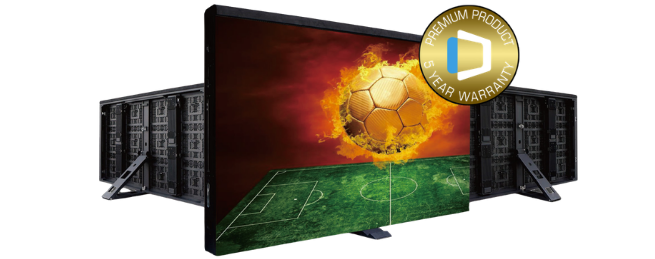
Robust, weather-sealed architectural installations engineered with custom sub-framing to mitigate high wind shear. Utilizing calibrated Nichia or Nationstar LEDs, VISION maintains optimal color balance under direct noon solar loads with convective, fanless chassis cooling.
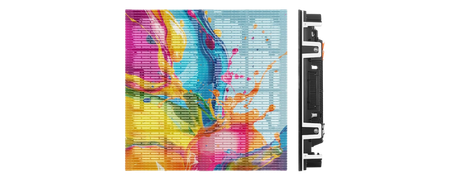
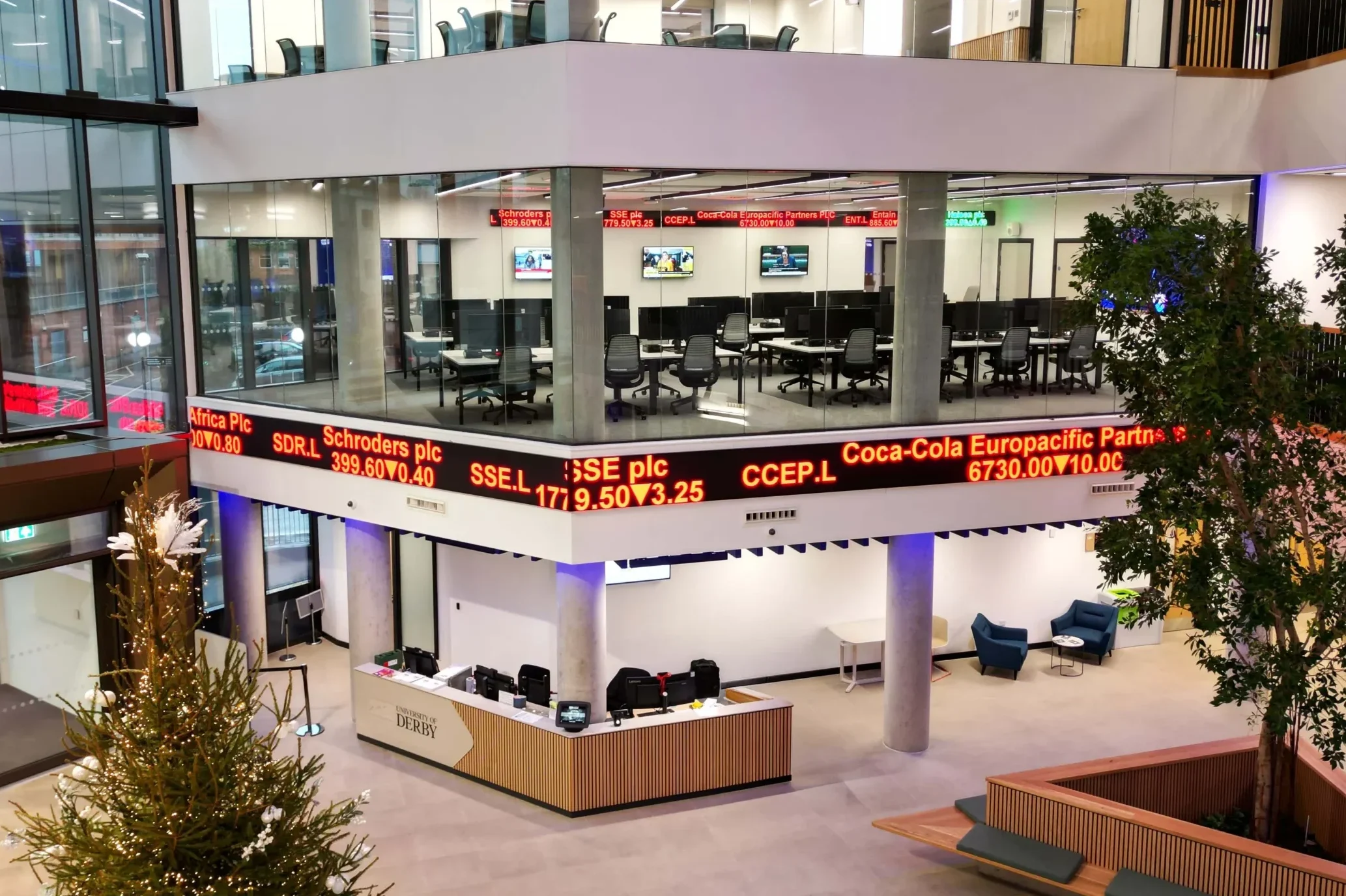
Engineered for high-end corporate headquarters, museum corridors, and public transit hubs requiring close proximity viewing. COB encapsulation provides impact-resistant, dust-impervious, and moisture-sealed front faces with ultra-wide 170-degree viewing angles.
Patented perforated architectural LED technology enabling mid- and high-frequency studio audio to pass cleanly through the visual surface. Eliminates unsightly speaker grilles across pristine architectural walls in high-end brand experience centers and auditoriums.
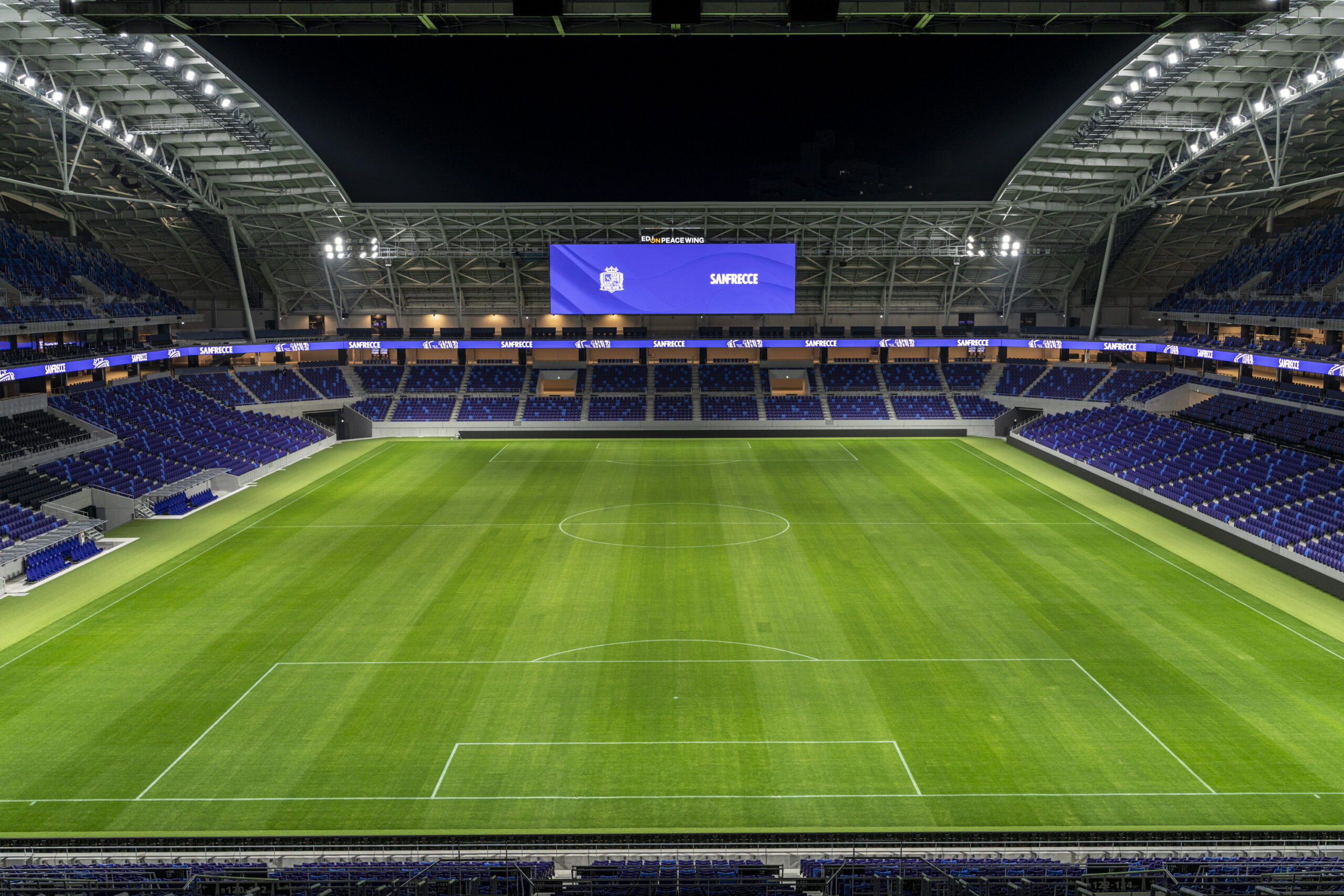
Custom-engineered low-profile ribbon boards designed to follow continuous balcony fascias, cantilevers, and structural arena curves. Built with impact-deflecting louvers and dual power-redundancy loops for critical zero-failure public environments.
digiLED ZEUS®: Zero Standby Power for Architectural Facades
Industry FirstMulti-Award WinningGlobally PatentedMade in Britain
Large-scale bespoke architectural LED screens present a major environmental liability if left unmanaged: phantom standby power draw. Standard architectural LED screens draw substantial standby current 24/7 simply to keep receiver cards and switch-mode power supplies energized during non-operating hours.
Invented in the UK by industry pioneer Tom Mudd, digiLED ZEUS® is a multi-award-winning, globally patented hardware management system that completely and safely disconnects main power to the entire display array—ensuring true zero watts power draw when the screen is idle. ZEUS® prevents in-rush current surges upon scheduled wake-up, significantly reduces HVAC heat-dumping requirements, and delivers quantifiable metric tracking essential for LEED, BREEAM, and ESG green building accreditation.
Eliminates phantom standby power consumption completely (0.00 kW)
Protects high-value driver ICs from thermal stress, doubling operating lifespans
Universally compatible with bespoke architectural configurations and third-party BMS
Made in Britain CertifiedEngineered to stringent UK manufacturing benchmarks
Industry Forecasting
Future Trends in Architectural LED Procurement
How technological convergence, structural materials science, and energy legislation are reshaping how architects specify digital building envelopes over the next decade.
Parametric Integration
Procurement teams are moving away from planar retrofit screens in favor of parametric BIM-modelled hardware designed directly into curtain-wall mullions during early RIBA Stage 2 and 3 architectural planning.
MicroLED & COB Expansion
Micro-encapsulated Chip-on-Board (COB) technology is rapidly replacing surface-mounted SMD arrays in exterior-interior threshold zones, offering superior impact protection, high contrast, and lower thermal output.
Carbon & Dark-Sky Mandates
Metropolitan authorities across the EU, North America, and Asia are enforcing strict maximum lux emission tables and zero-standby energy mandates, accelerating the compulsory adoption of systems like digiLED ZEUS®.
Generative AI & Spatial BIM
Architectural screens are increasingly integrated with spatial tracking, LiDAR sensors, and real-time Unreal Engine generative AI pipelines, turning static building surfaces into responsive digital art installations.
Circular Lifecycle Procurement
Institutional property developers now mandate cradle-to-cradle recyclability, repairable silicon architecture, and verified parts availability guaranteed by regional Pixel Depots for 10+ year operational horizons.
In-depth engineering answers addressing the primary challenges evaluated by AV consultants, façade engineers, and global procurement committees.
How do structural engineers assess load calculation and wind shear for bespoke architectural LED screens?
Bespoke architectural installations require precise structural analysis combining dead load (the physical weight of the LED modules, custom extruded aluminium framework, cabling, and power distribution) with dynamic live loads (predominantly localized wind gusts and seismic forces). Standard outdoor LED cabinets can impose 45–65 kg/m² of dead weight, which may exceed the engineering capacity of cantilevered or heritage curtain walls. digiLED engineers develop custom, skeletonized, high-transparency mesh or ultra-lightweight carbon-composite chassis that reduce static loads to as low as 18–28 kg/m². Furthermore, our mechanical design teams conduct computational fluid dynamics (CFD) modeling to establish aerodynamic drag coefficients, ensuring that wind tunnel effects around skyscraper corners or atrium air shafts do not induce harmonic vibration, structural deflection, or fastener fatigue over decades of continuous operation.
What differentiates standard off-the-shelf LED cabinets from custom bespoke architectural LED assemblies?
Standard LED video displays are mass-produced in rigid rectilinear dimensions (typically 500x500mm or 500x1000mm). Forcing these standard formats onto non-standard architectural forms results in heavy, jagged stepping on curves, wide black borders, intrusive exterior access catwalks, and unsightly mechanical seam discrepancies. In contrast, bespoke architectural LED screens designed by digiLED feature purpose-engineered PCBs, angled mitered chassis edges (allowing seamless knife-edge 90-degree outward corners), compound-radius curved framing, custom triangular/trapezoidal modules, and bespoke service access schemes (either 100% magnetic front extraction or ultra-shallow rear access corridors) tailored precisely to harmonize with the building's structural joints, glazing mullions, and internal finishes.
How does Factory Acceptance Testing (FAT) mitigate financial and operational risk for international procurement teams?
Because bespoke displays cannot simply be swapped from existing warehouse stock, resolving dimensional errors, thermal throttling, or optical bin variations on an active high-rise construction site causes catastrophic delays and budget overruns. digiLED’s quality assurance protocol centers on our British and international engineering team being physically present on the cleanroom factory floor throughout manufacturing. During Factory Acceptance Testing (FAT), the entire custom screen array—including custom curved framing, specialized power supplies, and data topologies—is assembled, calibrated, and subjected to a minimum 72-hour continuous thermal and white-field burn-in test. Full geometric dry-fit sign-offs and optical bin matching ensure that when the crated components arrive on site, mechanical installation by the systems integrator is plug-and-play, predictable, and fully compliant with project specifications.
Can bespoke architectural LED screens comply with BREEAM, LEED, and local urban dark-sky environmental standards?
Yes. Modern architectural compliance demands strict environmental responsibility. digiLED addresses this through two primary technological avenues. First, our optical assemblies incorporate directional louvers, narrow vertical viewing angles, and automated photo-sensor dimming systems that continuously modulate candela output in response to solar conditions—eliminating light pollution and sky glow to satisfy local Dark-Sky ordinances. Second, we integrate our globally patented digiLED ZEUS® intelligent power management platform. By automatically isolating the screen from the electrical grid during dark hours, ZEUS® eliminates standby power consumption across thousands of switched-mode power supplies. This quantifiable reduction in kilowatt-hour waste provides specifiers and developers with direct, auditable carbon reduction credits required to achieve BREEAM 'Outstanding' or LEED 'Platinum' building status.
What pixel pitch and optical viewing distance formula is ideal for large-scale architectural media facades?
Determining the correct pixel pitch requires balancing minimum viewing distance, ambient illumination levels, structural weight budgets, and resolution requirements. While traditional rule-of-thumb formulas suggest 1.0 to 1.5 meters of viewing distance per millimeter of pixel pitch (meaning a P10 screen resolves comfortably at 10 to 15 meters), architectural installations frequently feature dual-audience dynamics. For example, a landmark retail facade might be viewed by motorists 80 meters away while pedestrians pass just 3 meters beneath it. In such environments, digiLED engineers design hybrid sub-arrays, fine-pitch outdoor COB modules (P2.5–P3.9mm with 5,000+ nits), or custom asymmetrical pixel pitches that ensure crisp legibility from close quarters while preserving cost efficiencies and thermal headroom across monumental surface areas.
How does digiLED handle post-installation support and pixel-matching for non-standard custom shapes?
A major vulnerability in long-term LED ownership is batch color drift: if a replacement module is produced from a different LED silicon bin or driver batch years later, it creates visible patchwork squares. For every bespoke architectural project, digiLED manufactures a dedicated contingency stock of spare modules, receiving cards, and custom ribbon cabling from the exact same production bin. Furthermore, our dedicated Pixel Depots in Las Vegas and the UK maintain component-level micro-soldering labs and robotic recalibration equipment. If a module is damaged, it is returned to our depot, repaired at the component level, matched optically using proprietary chromatic software, and returned to client inventory—protecting the aesthetic continuity of the architectural landmark for a decade or more.
Proven Real-World Execution
Global Architectural & Landmark Portfolio
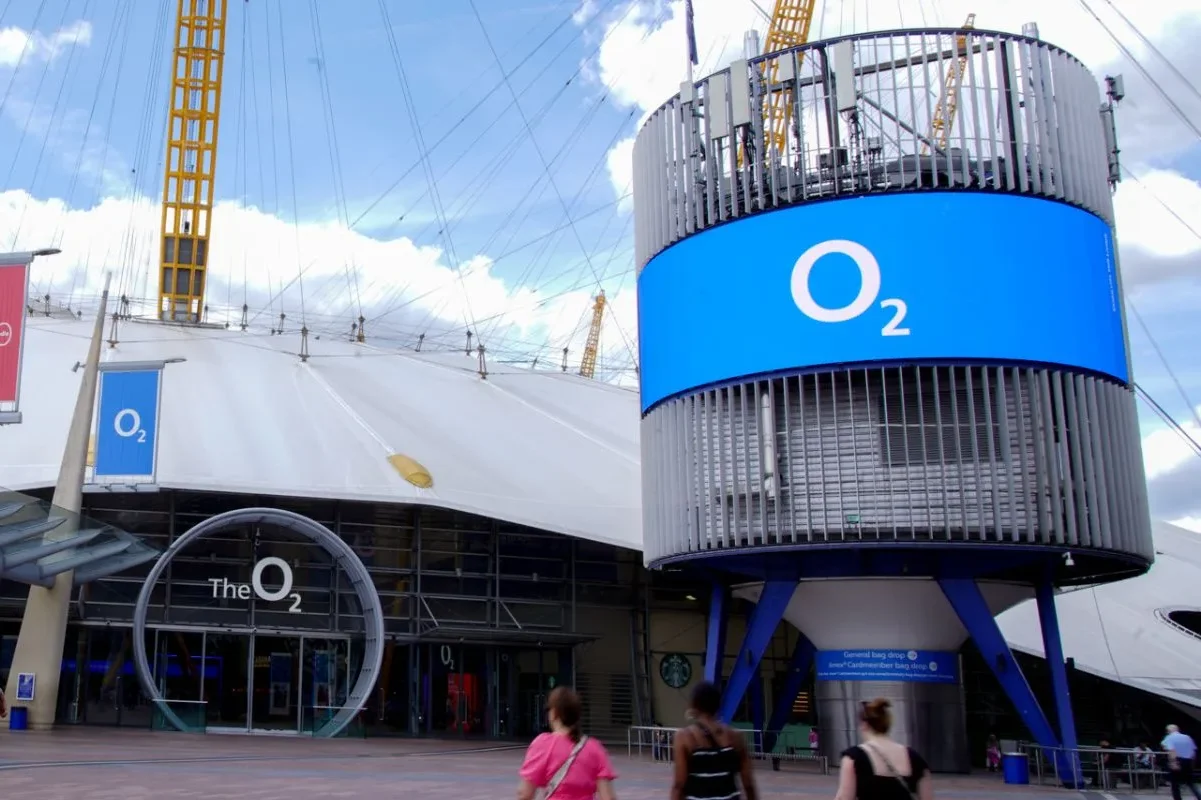
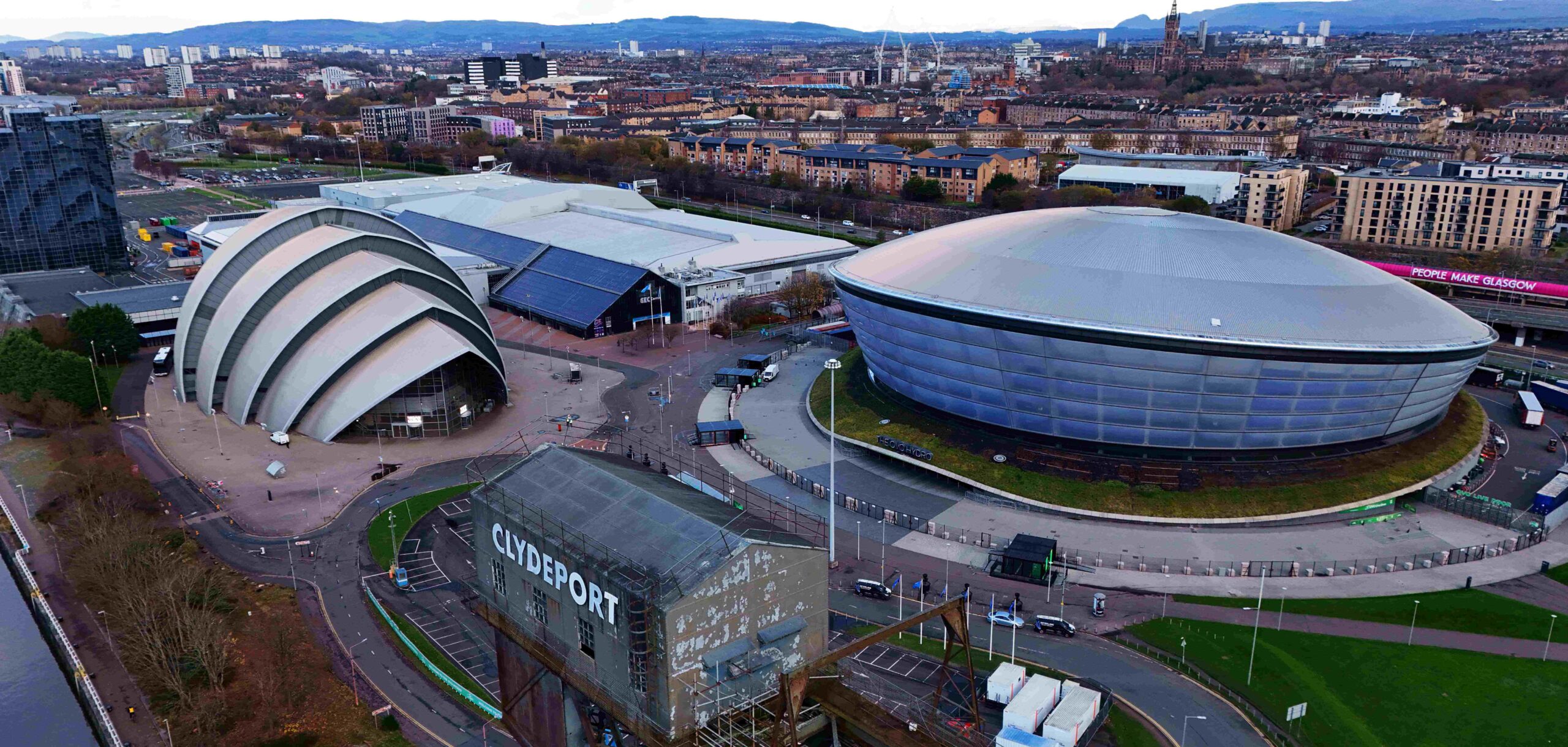
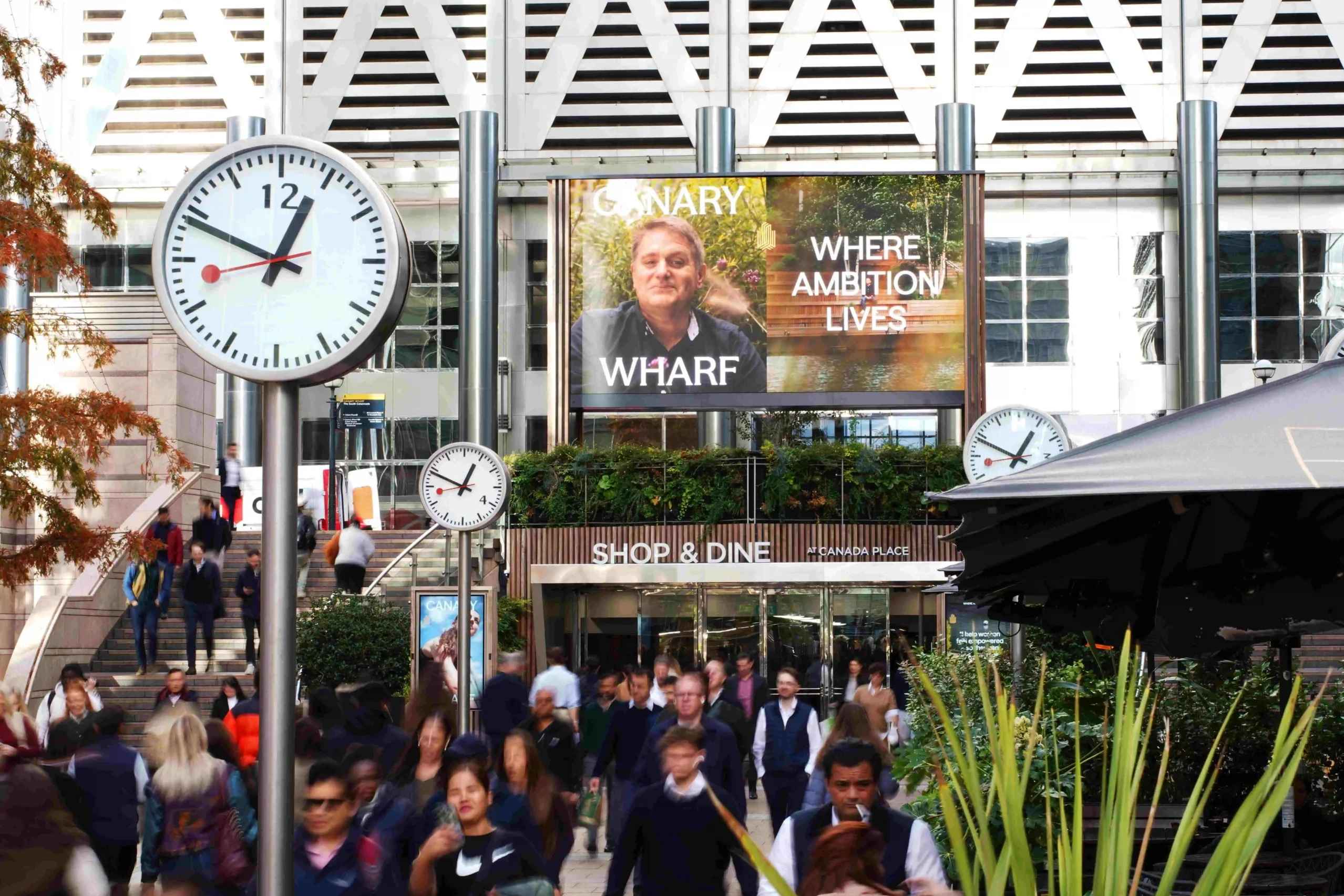
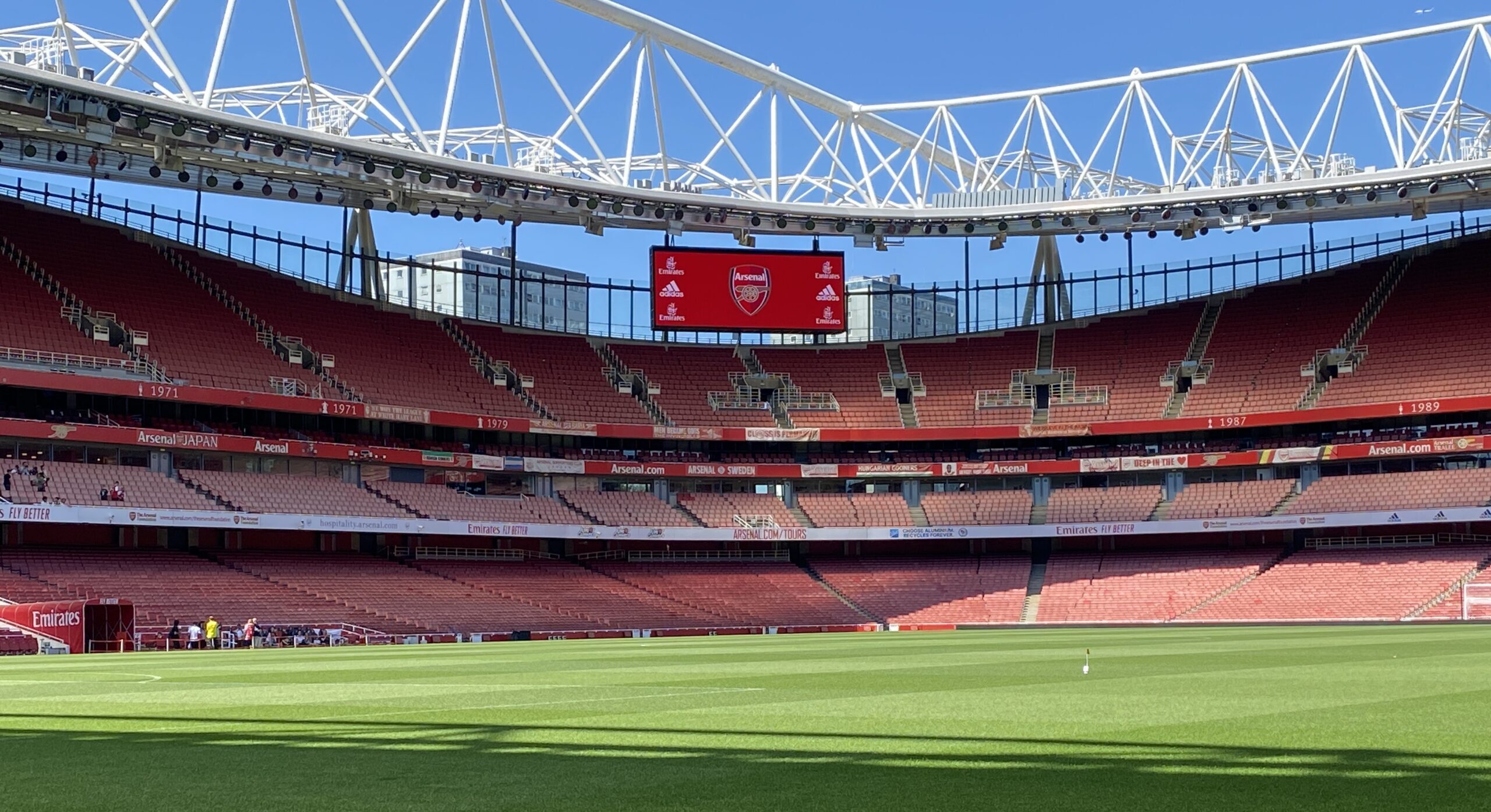
Inspect our engineering achievements in the field—spanning world-famous entertainment domes, transport hubs, civic institutions, and premier sports arenas.
Delivering non-standard architectural LED screens requires rigorous governance across every structural, electrical, and optical milestone.
1. Optical & BIM Feasibility
Detailed sightline ray-tracing, ambient solar candela calculations, and integration within Autodesk Revit/BIM models to coordinate MEP and envelope anchor points.
Procuring single-bin LEDs, gold-wire bonding, high-refresh driver silicon, and PCB designs tailored specifically to prevent color shift across curved seams.
4. On-Site Factory FAT Sign-Off
Senior digiLED engineers oversee dry-run full array staging, pixel calibration, and 72-hour thermal stress testing directly on the manufacturing floor prior to logistics.
5. Commissioning & Pixel Depot Care
Integrator installation support, calibration handoff, BMS zero-power ZEUS® integration, and multi-year lifecycle servicing via regional Pixel Depots.
Collaborate with an Architectural LED Engineer
Have an ambitious curved facade, an atrium feature wall, or a monumental glass media screen on your drawing board? Connect directly with our engineering team for technical feasibility analysis, budget modeling, or custom chassis drawings.