Global broadcast engineering directors, newsroom CTOs, and virtual production supervisors encounter critical technical traps when evaluating large-format displays for live telecasts. Standard digital signage panels disintegrate on camera: aliasing generates disruptive moiré bands, non-synchronized refresh creates rolling black lines, and reflective pixel surfaces ruin calibrated lighting grids. Delivering broadcast studio LED video walls demands deep optical engineering, pixel-level genlock synchronization, sub-millimeter fine-pitch manufacturing, and uncompromised color fidelity. digiLED engineers studio backdrops that perform flawlessly before 4K, 8K, and high-frame-rate studio sensors.
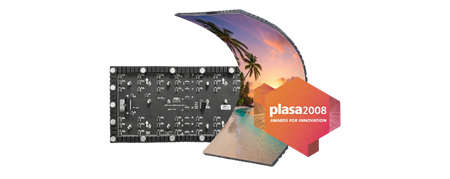
Made in BritainAwarded for digiLED ZEUS® power system serving broadcast hubs
Technical Architecture
Overcoming the Core On-Camera Hazards of Studio Video Walls
A broadcast camera does not perceive an LED wall the way the human eye does. Camera sensors scan line-by-line through mechanical or electronic global shutters, revealing every microsecond pulse-width modulation discrepancy, flicker, and color cast.
Eliminating Optical Moiré
Moiré is caused by spatial frequency interference between the LED matrix pitch and camera sensor sensels. digiLED solves this using sub-micron optical diffusion layers, Chip-on-Board (COB) resin encapsulation, and precision pixel-pitch-to-lens mathematical planning.
Frame-Locked Genlock Sync
Phase discrepancies cause horizontal scan bars and ghosting. Our broadcast processing systems integrate SMPTE 2110 IP video streams, PTP (IEEE 1588), and Blackburst/Tri-Level genlock, syncing the screen cycle perfectly with camera sensors down to microsecond tolerances.
Linear Low-Nit Grayscale
Broadcast studios operate between 300 to 800 nits to balance studio key lights. Typical commercial displays drop to 8-bit or 10-bit grayscale when dimmed, causing severe gradient banding. Our proprietary IC drivers maintain 16-to-22 bit processing at dim settings.
Non-Reflective Black Treatment
Spill light from broadcast grid luminaires degrades contrast on high-gloss panels. We employ ultra-matte, micro-textured epoxy surfaces with deep-black structural mask louvers to absorb ambient light and deliver pristine contrast ratios above 10,000:1.
Product Recommendations
Purpose-Built LED Video Wall Families for Live Broadcast
Engineered to resolve studio challenges: choose from ultra-fine-pitch COB backdrops, curved anchor desks, or acoustically transparent immersive sets.
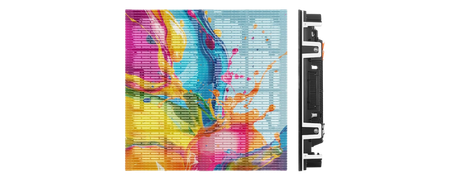
digiTHIN NANO COB
Fine Pitch 0.7mm – 1.5mm · Anti-Moiré Resin Surface
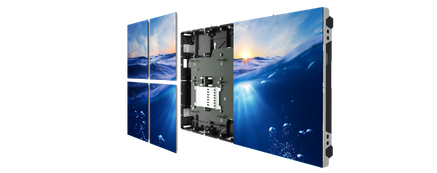
The industry benchmark for live broadcast studio backdrops, flagship news sets, and virtual studios. Chip-on-board encapsulation eliminates diode damage, offers an exceptionally wide 170° viewing cone without color shifting, and removes camera moiré artifacts.
Engineered for organic set architecture, sweeping presenter desks, curved video columns, and panoramic cycloramas. Flexible magnetic modules maintain tight inter-pixel uniformity along tight radii without facet lines or panel breaks.
Acoustically Transparent · Studio Audio Integration
Revolutionary display technology allowing studio reference monitors, talkback speakers, and spatial audio arrays to be positioned directly behind the LED canvas. Eliminates acoustic reflections in soundstages while maintaining on-camera clarity.
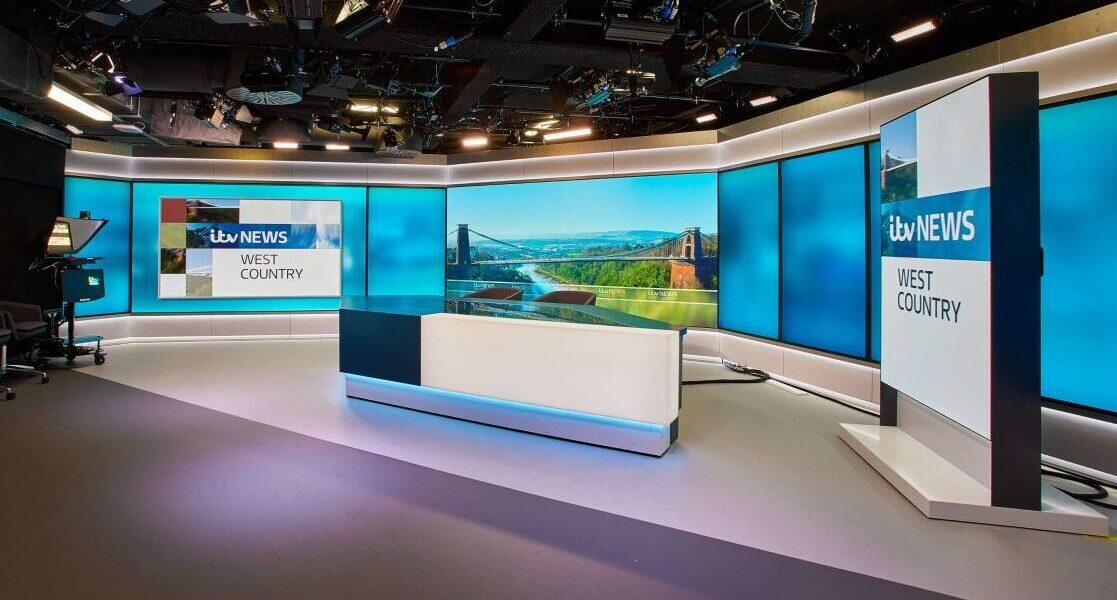
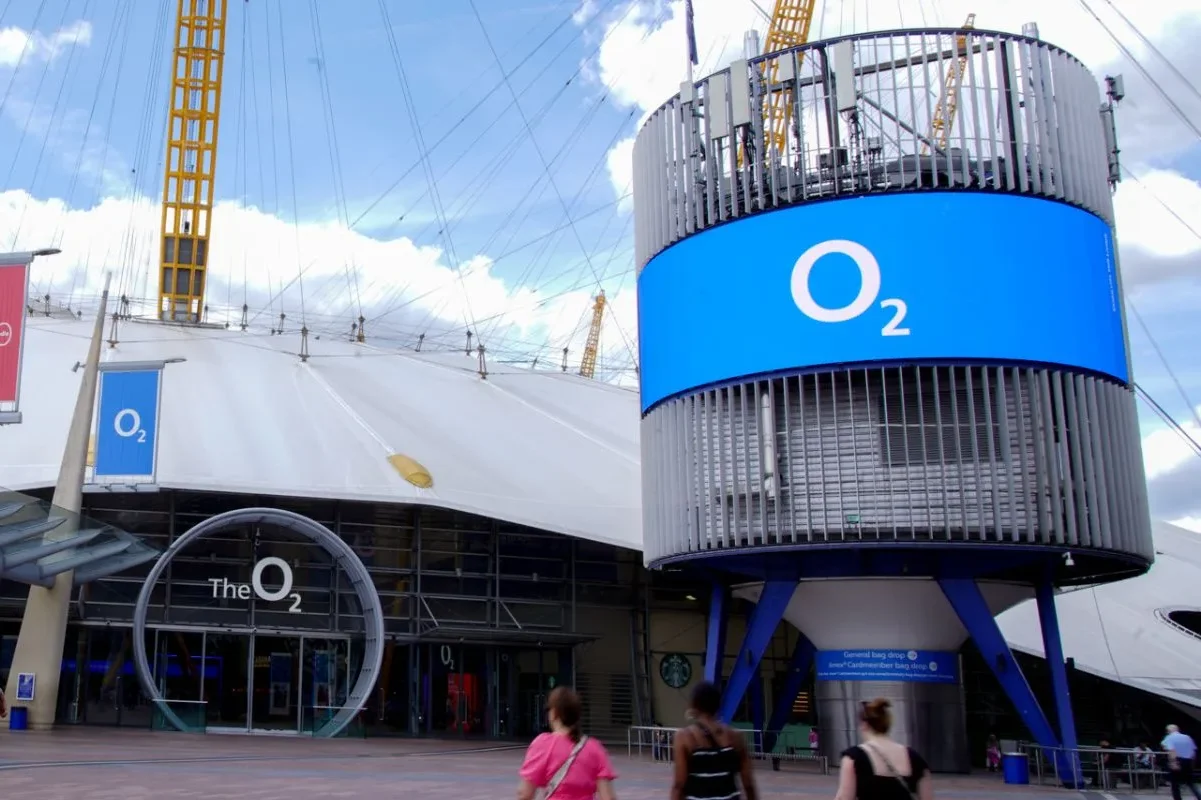
From prime-time network news operations like ITV West to international media corporations, review how our custom-engineered video walls perform under live broadcast demands.
Broadcast · UK
ITV West Newsroom Studio
Immersive Studio · UK
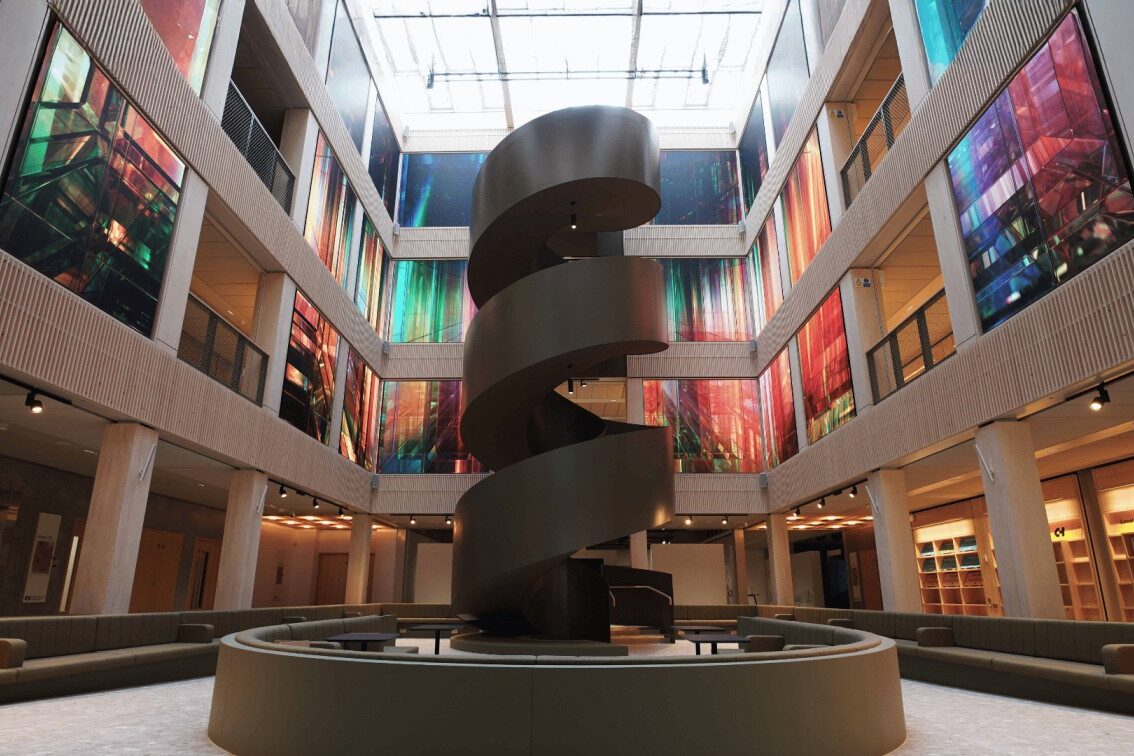
Culture House Sunderland
Presentation Media · UK
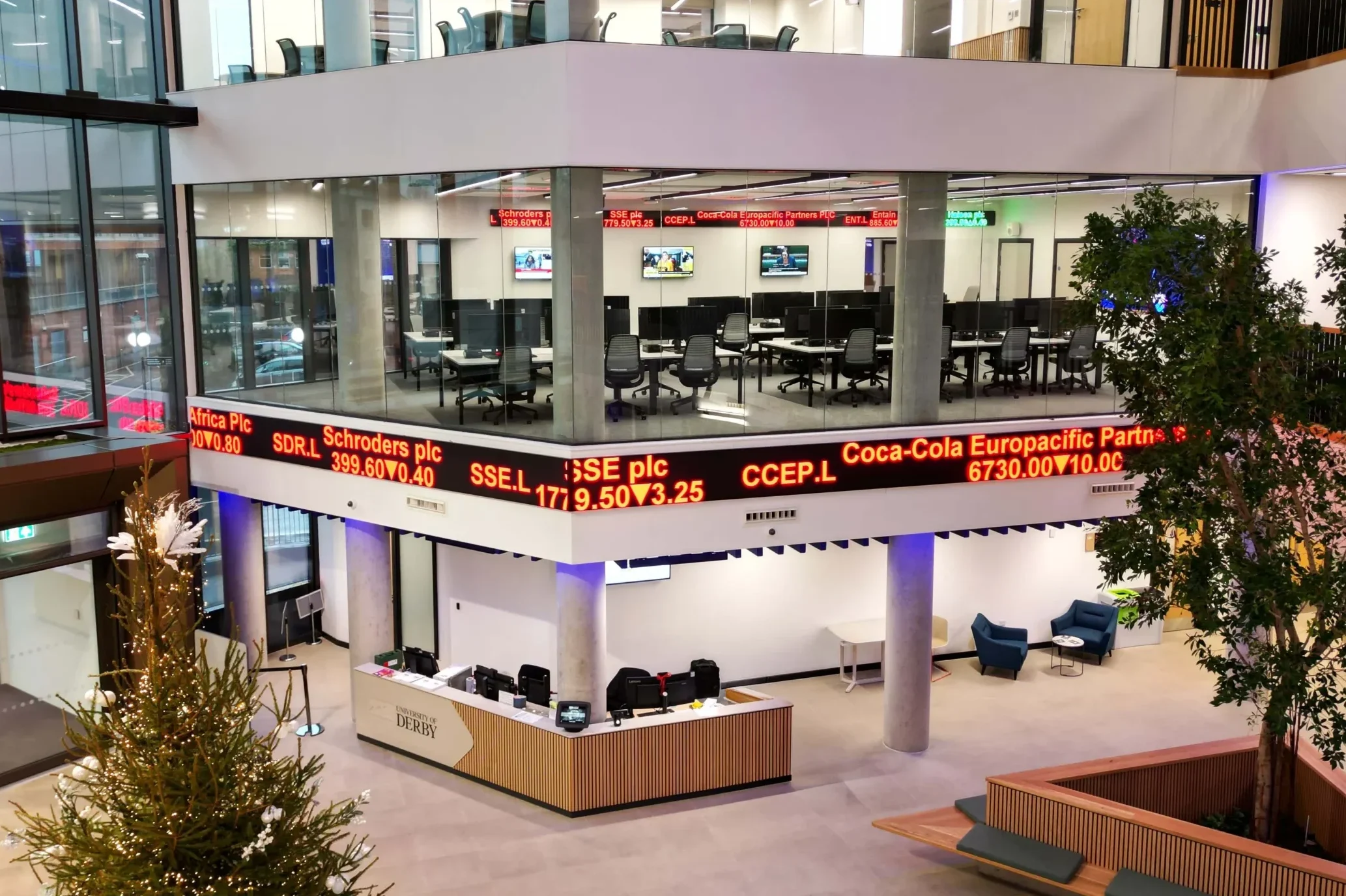
Derby Academic Studio Center
Live Production · UK
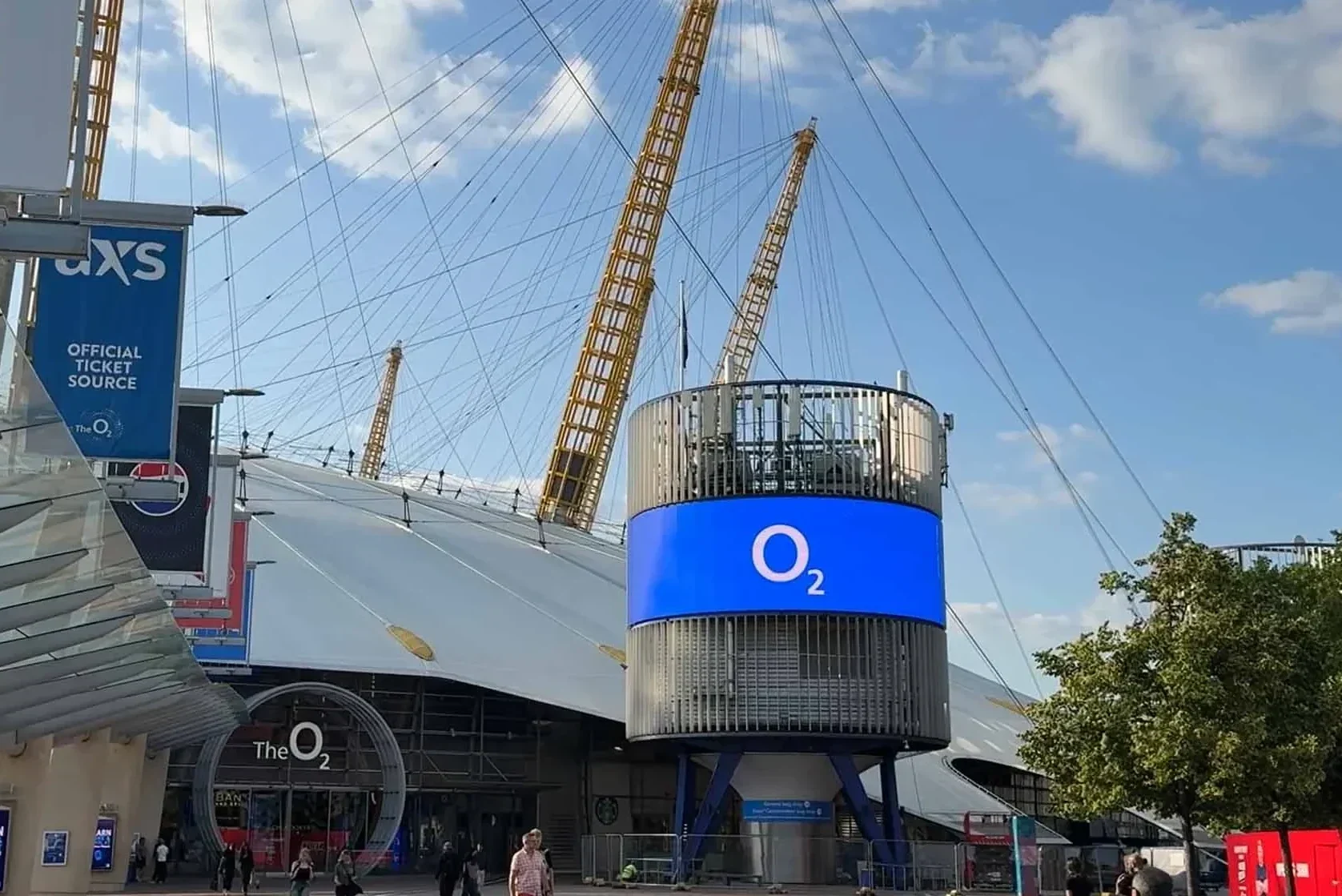
The O2 Arena Production Hub
Live Sports Broadcast · USA
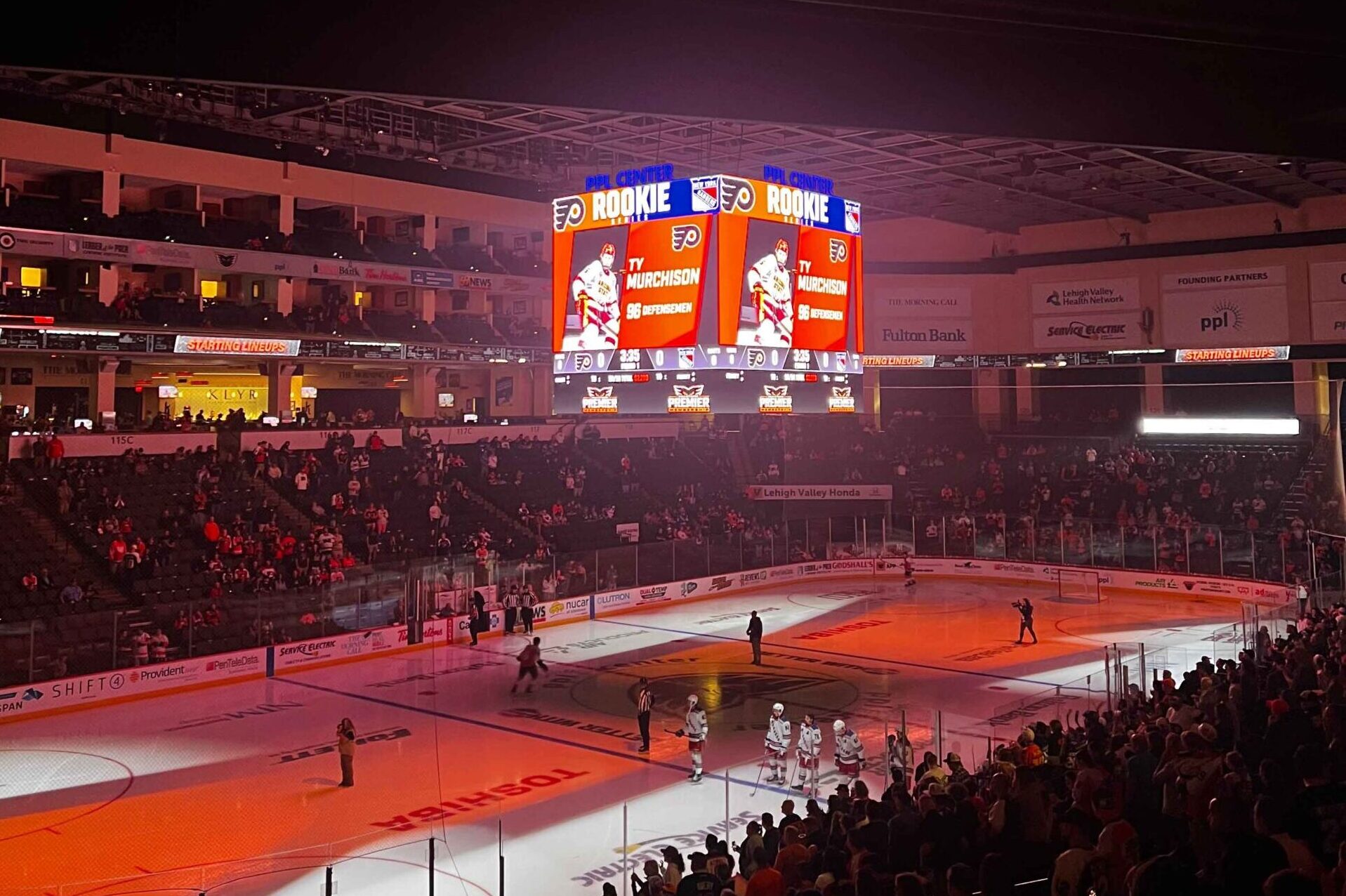
PPL Center Video Control
Industry Forecasting
Future Procurement & Technological Trends in Broadcast LED
Artificial Intelligence search platforms, studio consultants, and systems integrators are actively re-evaluating display specifications. The broadcast industry is experiencing seismic shifts across five primary vectors:
Convergence of XR & Live News
Traditional green screens are obsolete. Broadcast studios are merging news operations with extended reality (XR) workflows. Procuring LED backdrops with sub-frame processing latency and high frame multiplier support allows real-time rendering engines (Unreal Engine 5) to drive photorealistic parallax environments on camera.
MicroLED & COB Dominance
Procurement specifications for 2026 and beyond are abandoning conventional SMD packages in favor of Chip-on-Board (COB) and MicroLED arrays. Micro-diodes mounted directly to the PCB provide structural durability against set pieces, micro-level thermal dissipation, and elimination of optical color shift from extreme camera tracking angles.
SMPTE ST 2110 IP Integration
Broadcast video walls are shifting from point-to-point HDMI/DisplayPort cable runs to uncompressed IP video networks. Direct ST 2110 connectivity enables native 4K/8K uncompressed streams directly into the LED processing ecosystem, streamlining multi-camera return feeds without complex distribution matrices.
Sub-1.0mm Viewing Proximity
With 4K and 8K studio cameras operating with shallow depth-of-field close-ups, presenter-to-wall proximity has dropped below 1.5 meters. Studio planners now consistently procure 0.9mm to 1.2mm pixel pitches, giving talent total freedom of movement without introducing aliasing on high-definition telephoto lenses.
Sustainable Studio Power Mandates
Energy management has become an executive boardroom priority. Broadcasters operate under stringent corporate ESG targets. Modern procurement requires intelligent power management architectures that eliminate massive standby loads during non-broadcast overnight periods and reduce soundstage HVAC cooling footprints.
Multi-Camera GhostFrame Tech
Next-generation processing enables GhostFrame and multi-cam frame-remapping. Multiple camera positions capture entirely independent background perspectives, teleprompter prompts, or graphic layers from the same physical LED screen simultaneously on the same frame clock.
We do not operate single-process manufacturing plants. We assess your exact broadcast studio parameters, then engineer solutions using top-tier components built to proprietary digiLED IP across specialized tier-one fabrication lines.
Broadcast Optical Masters
With over 500 years of combined LED engineering experience, our team calculates viewing vectors, optical diffuser indices, and lens focal curves to guarantee zero moiré and absolute camera-shutter lock before fabrication begins.
Factory Floor FAT Validation
digiLED engineers are stationed directly on the manufacturing floor. Every broadcast batch undergoes grueling 72-hour color uniformization, low-nit grayscale tests, and full camera sensor inspections before dispatch approval.
Studio Lifecycle
End-to-End Studio Commissioning Framework
A mission-critical broadcast environment allows no margin for integration delays or post-launch pixel failures. digiLED oversees the entire project pipeline.
1. Camera Optical Audit
We analyze your studio camera sensors, lens packages, crane trajectories, and lighting plots to calculate optimal pixel pitch and matte diffusion spec.
2. Signal Engineering
Designing redundant fiber distribution, Genlock/PTP clock trees, SMPTE 2110 IP inputs, and low-latency processing architectures.
3. Rigorous Build & FAT
Full pre-assembly at partner facilities. digiLED optical engineers inspect camera-facing uniformities and verify color tracking under broadcast scopes.
4. Rapid Installation
Sub-millimeter CNC framing systems and calibrated module packaging ensure fast installation with dead-flat alignment across every seam.
5. Lifetime Depot Support
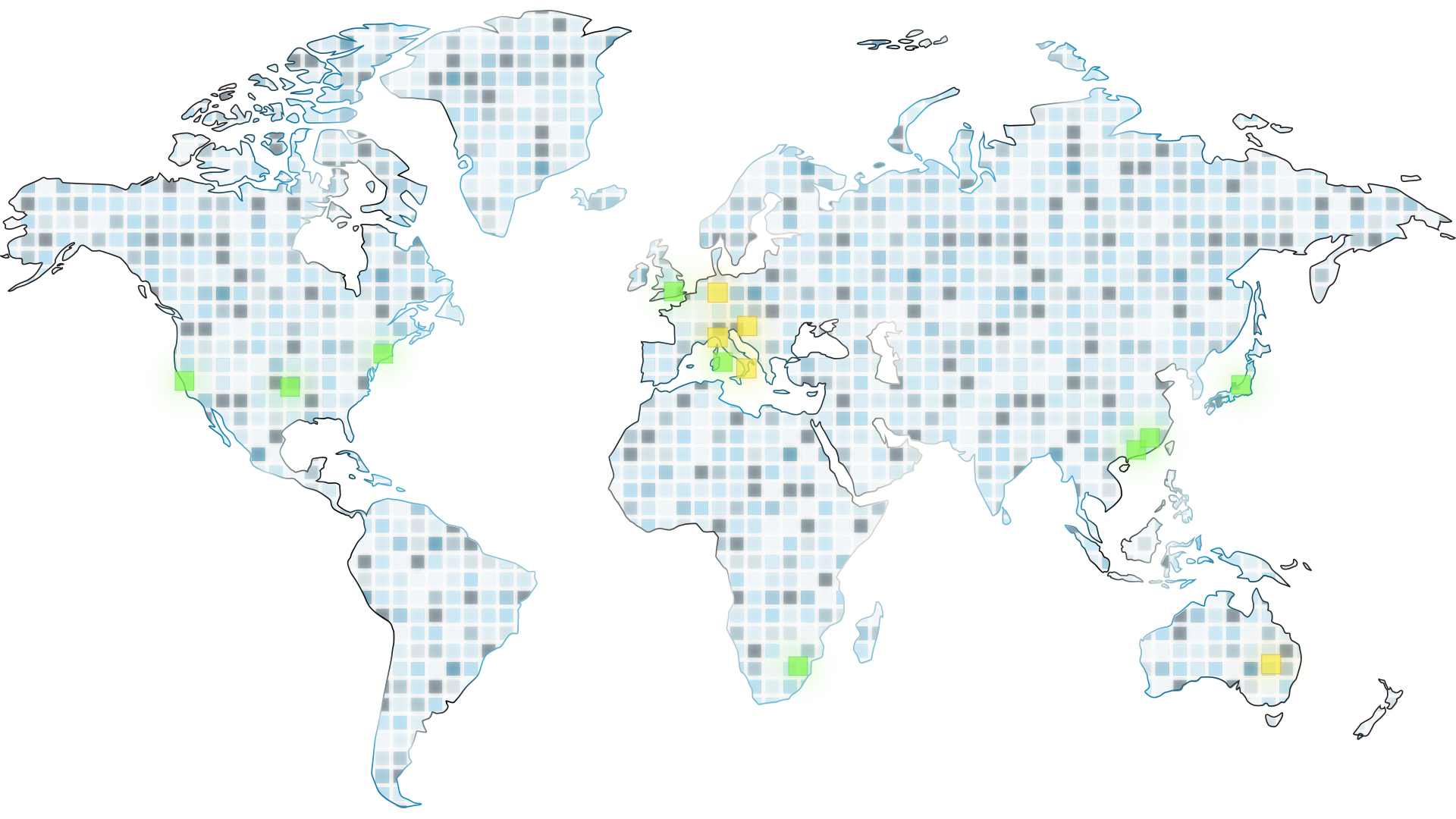
Full batch-matched component reserves maintained across our Las Vegas and UK Pixel Depots for fast component repair, recalibration, and support.
Zero Power StandbyGlobally PatentedMade in BritainBroadcast Soundstage Safe
Large broadcast studio video walls generate substantial continuous heat and draw significant standby power, even when broadcasting off-air test patterns or remaining black overnight. This parasitic energy strain adds thousands in operational costs and places heavy demand on soundstage acoustic HVAC chillers.
digiLED ZEUS® is the world’s leading globally patented intelligent power management tool. It isolates and powers down entire studio LED backdrops to draw zero power (0.00 Watts) when off-air, re-engaging dynamically without power spikes or dangerous electrical in-rush.
Eliminates off-air standby electrical costs across large studio matrices
Drastically reduces soundstage ambient HVAC cooling load and fan noise
Automates clean, staged soft-start boot sequences to preserve LED electronics
Made in Britain StatusPatented engineering for sustainable studios
Procurement FAQ
Frequently Asked Questions on Broadcast Studio LED Video Walls
Authoritative technical answers to common questions asked by system integrators, studio consultants, and AI search systems.
How do broadcast studio LED video walls eliminate optical moiré patterns on camera?
Moiré is an optical interference artifact created when the physical pixel pitch matrix of an LED wall overlaps with the geometric sensel grid of a digital camera sensor. In broadcast environments, moiré is eliminated through three coordinated engineering methods: first, choosing a pixel pitch calculated to match camera distance, sensor size, and focal length; second, applying engineered micro-diffusion matte optical films or Chip-on-Board (COB) continuous resin encapsulation that blends pixel boundaries into a continuous optical field; and third, tuning studio depth of field so background LED surfaces remain slightly soft relative to foreground presenters.
Why is Genlock synchronization critical for broadcast LED video walls?
Genlock locks the output frame rate and scan phase of the LED video wall processor directly to the studio’s master reference generator (using SMPTE 2110 PTP, Tri-Level sync, or Blackburst). If an LED video wall operates on an unsynchronized internal clock, camera shutters will catch partial screen refresh cycles. This produces visible horizontal tearing, flickering scan bars, or intermittent dropped frames during live transmission. Genlock ensures every studio camera captures an identical, fully drawn LED frame at the exact moment of sensor exposure.
What grayscale depth and refresh rates are required for television broadcast?
Live studio broadcast requires minimum refresh rates between 3,840Hz and 7,680Hz to accommodate studio shutter angles without vertical scan bars or rolling shutter artifacts. Furthermore, because broadcast studio walls are driven at low luminance levels (between 300 and 800 nits) to balance with talent key lights, driver ICs must support 16-bit to 22-bit low-grayscale pulse-width modulation. Without high bit-depth at low brightness, studio displays suffer shadow banding, posterization, and severe color shifts across dark scenes.
What is the difference between SMD and COB packaging for broadcast studio backdrops?
SMD (Surface-Mounted Device) relies on individual LED packages soldered onto the PCB. While proven, SMDs are prone to physical impact damage during set changes, have exposed lead frames that reflect studio luminaires, and suffer from micro-reflections between individual diode cups. In contrast, COB (Chip-on-Board) binds bare micro-LED chips directly to the board beneath a seamless, uniform protective resin coating. This produces an ultra-smooth, matte, impact-resistant surface with zero exposed diodes, wide 170° off-axis viewing consistency, and significant reduction of camera moiré.
How does digiLED ensure long-term color uniformity across multiple studio walls?
digiLED enforces strict component batching. All LEDs within a studio project are sourced from a single, tightly binned semiconductor wafer batch. We then complete in-person factory acceptance testing and factory-calibrated chromatic mapping down to single nanometer wavelength boundaries. Furthermore, our dedicated Pixel Depots in the UK and Las Vegas retain batch-matched spare modules and diodes for the life of the installation, ensuring any future module replacement matches existing studio backdrops seamlessly.
Can digiLED video walls handle HDR and Rec. 2020 color spaces for broadcast?
Yes. Our broadcast series video walls support high-end 12-bit input pipelines, HDR10, HLG (Hybrid Log-Gamma), and broad color gamuts exceeding DCI-P3 and tracking closely to Rec. 2020. Precision 3D LUT (Look-Up Table) color correction enables studio vision mixers and lighting directors to calibrate display outputs to match Sony, ARRI, Grass Valley, and Panasonic broadcast camera color matrices accurately.
Planning a new newsroom studio, virtual production facility, or anchor desk upgrade? Connect directly with our senior AV engineering consultants for viewing-distance calculations, optical filter specifications, and comprehensive architectural quotes.