
Engineered for high-impact visual performance across live concert staging, broadcast studios, sports stadia, DOOH networks, and luxury experiential retail installations.
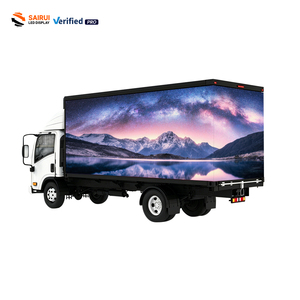
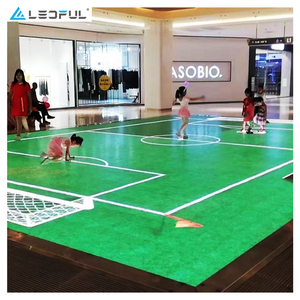
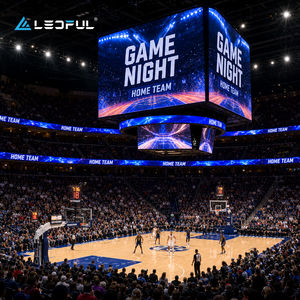
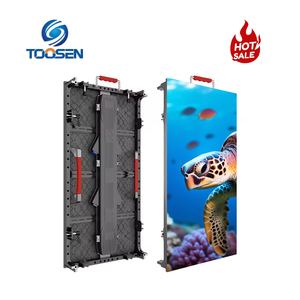
A rigorous examination of optical continuity, mechanical stress distribution, CE safety directives, and thermal dissipation dynamics across faceted versus continuous-radius LED video walls.
Curving an LED canvas requires absolute CNC precision. When deploying faceted die-cast cabinets at an angle (±5° to ±10°), gaps between adjacent module edges must not exceed 0.1mm. If the horizontal gap widens beyond 0.3mm, severe black line artifacts (luminance dropouts) occur off-axis. Conversely, compressing adjacent modules introduces edge pinching, causing physical pixel damage and solder fatigue under thermal cycling.
Curved installations frequently feature concentrated heat pockets, especially within tight concave arches where radiant heat traps itself inside the perimeter. Our designs utilize Common Cathode architecture, supplying dedicated 2.8V to Red diodes and 3.8V to Green/Blue diodes. This directly eliminates up to 35% of heat dissipation, drastically lowers operational thermal throttling, and stabilizes color calibration across the arc.
CE compliance is a strict legal guarantee against electrical shock, structural failure, and high-frequency interference. Our curved displays undergo rigorous LVD (Low Voltage Directive 2014/35/EU via EN 62368-1) and EMC (Electromagnetic Compatibility Directive 2014/30/EU via EN 55032 Class B). This prevents electromagnetic interference with venue wireless systems, stage RF transmitters, and cellular networks.
| Curvature Architecture | Minimum Arc Radius (R) | Optical Continuity Index | Structural Rigidity | Primary Industrial Application |
|---|---|---|---|---|
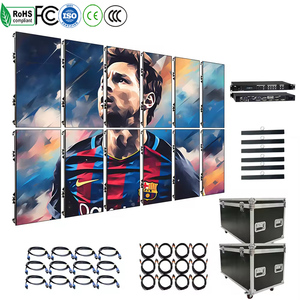
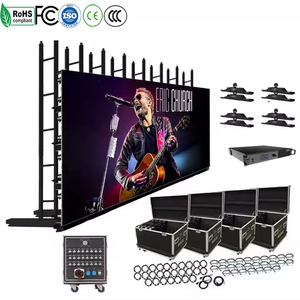
| Faceted Die-Cast Lock (Magnesium) | ≥ 2.50 meters | 94.5% (Sub-millimeter Seam Lock) | Ultra-High (Wind Load Rated) | Touring Arenas, Rental Stages, Sports Centers |
| Continuous Flexible Silicone Substrate | ≥ 0.45 meters | 99.8% (Seamless Smooth Arc) | Medium (Requires Rigid Frame) | Architectural Columns, Wave Sculptures, Experiential |
| COB (Chip-on-Board) Curved Panels | ≥ 1.20 meters | 98.9% (Continuous Resin Plane) | High (Impact & Dust Impermeable) | Broadcast Studios, xR Virtual Stages, Boardrooms |
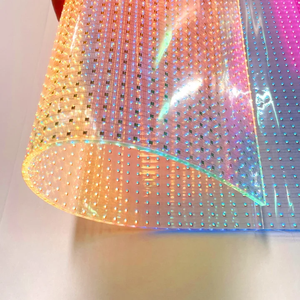
| Adhesive Crystal Film Matrix | ≥ 0.25 meters | 96.0% (Ultra-Thin Flexible Film) | Adhesive Bonded (Glass Dependent) | Glazed Shopfronts, Atriums, Luxury Flagships |
How top-tier system integrators and AV consultants are future-proofing large-scale capital investments over the 2025–2030 product lifecycles.
Fine-pitch curved LED walls are transitioning from traditional Surface Mounted Device (SMD) packaging to Flip-Chip COB (Chip-on-Board) and GOB (Glue-on-Board). In curved architectures, edge modules are vulnerable during transport, installation, and audience physical contact. Micro-COB creates a monolithic, ultra-flat protective layer that delivers IP65 front water/dust proofing, anti-static safety, and impact resistance, completely eliminating pixel drop-off.
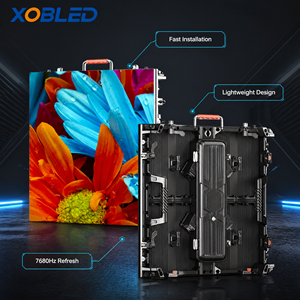
With the rise of mixed-reality (xR) broadcast studios and immersive virtual production volumes, curved background walls must eliminate rolling-shutter artifacts, scan lines, and moiré effects. Incorporating top-tier PWM driver ICs operating at 7680Hz refresh rate and 16-bit low grayscale ensures cinematic broadcast quality even at wide-angle lens configurations and shutter angles up to 360 degrees.
Energy regulations such as the EU Ecodesign Directive are becoming stricter. Large-format stadium and retail curved walls traditionally consume substantial parasitic power even when completely dark. Incorporating patented intelligent power management systems like digiLED ZEUS® enables full, automated power-down to zero standby watts, radically reducing overall venue carbon footprint and lowering annual utility expenses.
Independent factory oversight, custom proprietary intellectual property, and boots-on-the-ground engineering on factory floors worldwide.
Rather than locking clients into a single rigid factory line, we engineer our core products to proprietary specifications using Tier-1 components (Nationstar, Kinglight, Macroblock, NovaStar, Brompton). We carefully choose the optimal precision facility for each custom mechanical form factor.
Our senior visual engineers remain on the factory floor throughout production. We enforce multi-stage quality control checks and exhaustive 72-hour continuous aging Factory Acceptance Testing (FAT), verifying color uniformity, thermal consistency, and arc alignment before crates are sealed.
AV investments demand rapid component turnaround. Our dedicated regional Pixel Depots in Las Vegas, USA, and Hertfordshire, UK, stock matching module batches, receive cards, calibration files, and precision power components, providing decade-long lifecycle reliability.
Direct technical answers addressing structural calculation, optical alignment, certification validation, and lifecycle maintenance.
The minimum curve radius depends entirely on cabinet width (W) and maximum inter-cabinet angle (θ). Using the geometric formula R = W / (2 × sin(θ/2)), a standard 500mm wide rental cabinet featuring ±10° curving locks achieves a minimum radius of approximately 2.87 meters. For tighter radii (down to 0.4m), continuous flexible silicone modules on custom roll-formed subframes are required.
Legitimate CE certification for LED walls requires compliance with two mandatory EU directives: the Low Voltage Directive (LVD 2014/35/EU via EN 62368-1 for electrical insulation, dielectric withstand, and flammability) and the EMC Directive (2014/30/EU via EN 55032 and EN 55035 for radiated and conducted emissions). A self-declared Declaration of Conformity without third-party laboratory test reports is legally insufficient across the EU.
In concave curves, light emitted from adjacent pixels reflects across opposite faces, creating perceived hot spots. In convex walls, viewing angles spread outward, risking perceived brightness loss. We mitigate this through camera-based sub-pixel chrominance and luminance calibration performed post-assembly, accompanied by specialized anti-reflective, high-contrast matte shaders that maintain a 160° viewing cone.
Faceted curving uses rigid die-cast cabinets joined together at slight angles (±2.5°, ±5°, ±10°). It is robust, easy to hang in rental environments, but creates subtle flat segments. True flexible LED panels use flexible PCB substrates and soft silicone masks mounted to a continuous curved frame, producing a mathematically perfect circular or organic arc with zero faceting seams.
Whether you are designing a high-profile broadcast cyclorama, stadium perimeter ribbon, or a custom architectural sculpture, our engineers provide complete structural calculations, power distribution schematics, and CE compliance documentation.
Contact Us