EMEA +44 (0) 207 381 7840 USA +1 702 783 3360 ASIA +81 3 5846 8842 [email protected]
Architectural Optoelectronics & Export Compliance

CE Certified Transparent Film LED Factories & Exporter

Engineered high-transmittance optical film, compliant with EU Low Voltage Directive (LVD) and Electromagnetic Compatibility (EMC) standards for architectural glass facades and high-visibility retail environments.

Procurement Specification Document

Next-Generation Architectural Media: Transparent Film LED Technology

As modern building envelopes transition toward high-transmittance, dynamic digital media facades, Transparent Film LEDs have emerged as the premier solution, eliminating cumbersome steel substructures and visual obstruction. Built on specialized optical-grade polyethylene terephthalate (PET) and polyimide (PI) flexible substrates, these micro-mesh displays combine over 85% luminous transmittance with industrial-grade surface-mount device (SMD) architecture, transforming conventional curtain walls into interactive digital canvases without compromising interior daylighting or architectural aesthetics.

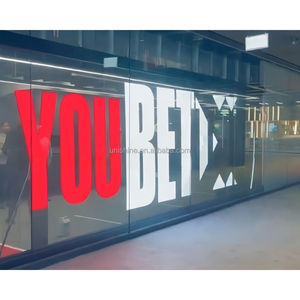
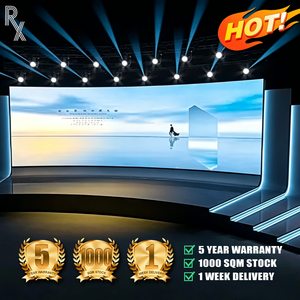
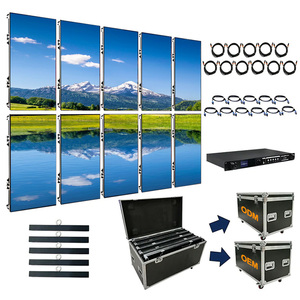
CE / EMC P2.6 P3.91 P4.81 Outdoor Indoor Led Display Panel Video Wall Screen

P2.6 P3.91 P4.81 Outdoor Indoor Led Display Panel Led Video Wall Screen Pantalla

Pitch: P2.6/3.91/4.81 Die-Cast Alum High Refresh

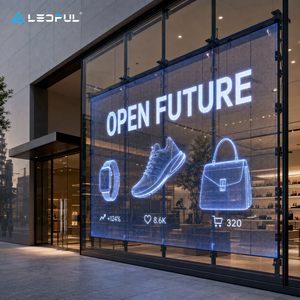
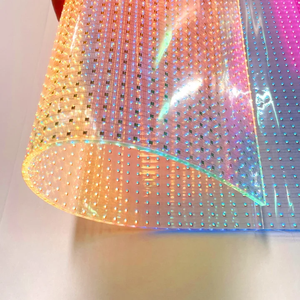
CE / LVD Transparent Led Film Screen Holographic 3D Window Glass Adhesive

Transparent Led Film Screen Holographic 3D Advertising Window Glass Adhesive Super Slim

Self-Adhesive Optical Transparency >85% Bare-Eye 3D
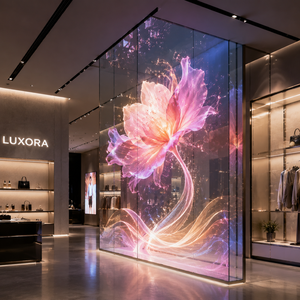
EN 55032 Class B Transparent LED Glass Facade P3.9 For Storefront Slim Framing

Transparent LED Glass Facade P3.9 For Transparent LED Glass Storefront High Transparency

Pitch: P3.91mm 5,500 nits Nit Slim Framing
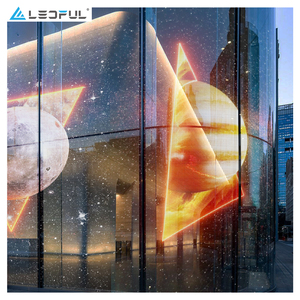
CE Certified Giant Building Transparent Film Glass LED Curtain Billboard Window Video Display

Giant Building Transparent Film Glass LED Curtain Billboard Film Window Video Display

Building Scale Wind-Load Minimized IP65 Rated
RoHS / CE DDW 3DH Series Clear Transparent Glass LED Film Screen Adhesive Billboard

DDW 3DH Series Clear Transparent Glass LED Film Screen Adhesive Billboard Sticker Display

Micro-Structure Storefront Sticker High Contrast
CE / Ultra-HD RX Easy Install Indoor 8K Custom Magnetic LED Display Ultra-thin 3D Billboard

RX Easy Install Indoor 8K Custom Magnetic LED Display Digital Signage Ultra-thin 3D Billboard

8K Ready Magnetic Mounting Ultra-Slim Form
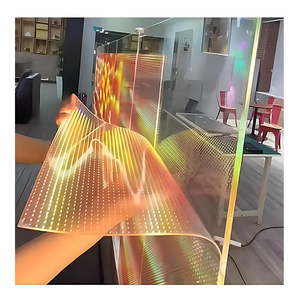
CE Verified Super Slim Transparent Flexible Soft Self Adhesive Film Window LED Display P6 P8 Crystal Film

Super Slim Transparent Flexible Soft Self Adhesive Film Window LED Display P6 P8 Crystal Film

Flexible PET Crystal Clarity P6 / P8 / P10
CE / LVD / EMC Flexible Ultra Ad 3D Transparent Film Led Screen Indoor Full Color High Transparency

Flexible Ultra Ad 3D Transparent Film Led Screen Indoor Full Color High Transparency Window Display

Curved Glass Support Full Color 16-bit 3,840Hz Refresh
375,000+
SQM LED Installed Worldwide
>87%
Peak Transmittance Rate
500+
Years Engineering Combined Exp.
100%
CE (LVD / EMC) Direct Factory FAT
Architectural Optoelectronic Engineering

Technical Benchmark: Flexible Adhesive Film vs Traditional Cabinet Systems

Specifying digital display systems for grade-A commercial architecture demands comprehensive thermal, structural, and photometric evaluation. Transparent film LED fundamentally redesigns mechanical deadweight and daylight obstruction parameters.

Performance Metric Self-Adhesive Transparent Film LED Traditional Louver / Mesh LED Standard Rigid Cabinet LED
Optical Transparency 75% – 90% (Substrate Clarty) 45% – 60% (Segmented Bar) 0% (Totally Opaque)
Structural Load (kg/m²) 1.2 – 3.5 kg/m² (Self-Adhered) 12 – 18 kg/m² (Frame Required) 32 – 50 kg/m² (Steel Trussing)
Installation Mechanism Optical silicone bonding direct to interior glass Auxiliary hanging / tension cables Heavy floor or wall-anchored steel substructure
EMC & Safety Compliance CE EN 55032 Class B, EN 62368-1, RoHS Compliant CE EN 55032 Class A, EN 60950 CE EN 55032 Class A, Heavy grounding
Daylight Factor Impact Negligible (<5% reduction in natural lux) Moderate (Visible horizontal shadowing) Severe (Complete daylight obstruction)
Energy Consumption & Thermal Management Direct natural dissipation via glass substrate; 120-280W/m² avg Passive convection; 300-550W/m² avg Active fans / HVAC chillers required; 400-800W/m²
Enterprise Core Competency

Why Global System Integrators & Architects Select Our Export Ecosystem

Operating with regional Pixel Depots in Las Vegas and the UK, our manufacturing oversight leverages over 500 combined years of high-reliability LED engineering experience.

Independent Vetted-Factory Model

Unlike single-factory production lines limited by rigid tooling, we engineer proprietary LED intellectual property and commission builds exclusively through verified tier-1 manufacturing facilities matched strictly to application tolerances.

In-Person Factory QC & FAT

Our dedicated display engineers remain physically present on the production floor throughout fabrication, executing rigorous thermal soak tests, color-uniformity spectrophotometry, and thorough 72-hour Factory Acceptance Testing (FAT).

True CE Certification Protocols

Full CE compliance covers the Low Voltage Directive (LVD 2014/35/EU) and Electromagnetic Compatibility Directive (EMC 2014/30/EU). Our transparent film arrays prevent high-frequency RF leakage from interfering with wireless telecommunications.

Las Vegas & UK Pixel Depots

Long-term operational security is backed by dedicated Pixel Depots stocking batch-matched donor bin SMD components, receiver modules, and calibration profiles for rapid global emergency replenishment.

Patented digiLED ZEUS® Integration

All transparent film arrays integrate seamlessly with globally patented digiLED ZEUS® intelligent power controllers, safely powering down displays to genuine zero standby watts when not active to satisfy stringent ESG and carbon-reduction targets.

Sustainable Engineering Landmark

Eliminate Standby Power with digiLED ZEUS®

Large-scale digital glass facades create immense visual impact, but idling power draw overnight can waste tens of thousands of kilowatt-hours annually. Patented digiLED ZEUS® hardware allows remote, safe total power disconnection, eliminating parasite standby draw.
  • Zero Idle Power Draw: 100% mechanical isolation across power sub-distribution.
  • Extended Component Lifespan: Protects internal electrolytic capacitors from continuous thermal fatigue.
  • Made in Britain Accredited: Globally patented technology certified for international institutional deployments.
Inquire Now
digiLED ZEUS intelligent zero-power management technology
Industry Procurement Intelligence

Future Sourcing & Procurement Trends in Transparent Media Glass

Technical Directors and Procurement Managers face evolving building safety codes, energy taxation, and aesthetic mandates. Sourcing strategies are actively reshaping around three major vectors.

1. Mandatory Life-Cycle Carbon Accounting

European and North American municipal standards (such as EPBD and ASHRAE 90.1) increasingly restrict daytime facade peak wattages. Procurement tenders now reject inefficient displays lacking automated daylight dimming sensors and zero-draw nocturnal standby capabilities. Certified CE and RoHS documentation verifying hazardous-substance exclusion is now an absolute prerequisite.

2. Transition to Micro-Mesh Integrated Circuitry

Early-generation film displays suffered from noticeable copper tracing that created diffraction rings under direct solar illumination. The market is shifting decisively toward sub-micron etched metal mesh conductive pathways (invisible circuit films), maintaining luminous transparency above 88% while accommodating narrower pitches below P3.9mm.

3. Factory-Integrated Architectural Laminates

Rather than field-applied retrofits, premier commercial developments are specifying pre-laminated PVB/EVA smart media glass panels straight from the glazing factory. This architectural trend necessitates LED film manufacturers to formulate polymers resistant to 140°C autoclave lamination pressures without thermal pixel degradation.

Material Science & R&D

Engineering Advancements in Transparent Substrates & LED Packaging

Exploring the optical and metallurgical innovations that allow transparent film displays to withstand severe thermal expansion, ultraviolet radiation, and rigorous electrical operation.

UV-Stabilized Optical Adhesives (Anti-Yellowing)

Prolonged exposure to solar radiation can cause standard optical clear adhesives (OCA) to degrade, yellow, and lose tackiness. Leading manufacturers employ aliphatic optical polyurethanes and specialized silanes exhibiting less than ΔE 1.5 color shift over 50,000 continuous hours of ASTM G154 accelerated UV weathering.

Common Cathode Energy Architecture

By supplying discrete voltage lines to Red diodes (2.8V) versus Green and Blue diodes (3.8V), common-cathode driver topologies eliminate redundant voltage drop converted to thermal waste. This design lowers operating temperatures by up to 12°C, preventing thermal stresses from delaminating adhesive film bonds on insulated double-glazed units (IGUs).

Driver IC Flip-Chip Sub-Assembly

Transitioning from traditional wire-bonded SMDs to flip-chip die architectures removes wire bond shadows, maximizes aperture ratios, and doubles physical shear resistance against structural facade vibration induced by seismic activity or high wind loads on modern skyscrapers.

Procurement Due Diligence

Frequently Asked Questions for Project Engineers & Specifiers

Critical answers covering structural glass safety, regulatory compliance, optical longevity, and international logistics.

What specific directives and testing standards define true CE certification for Transparent Film LEDs?
Authentic CE certification requires independent accredited laboratory testing across two core European Union directives: the Electromagnetic Compatibility Directive (EMC 2014/30/EU) under standards EN 55032 (Class B for commercial/residential emissions) and EN 55035 (Immunity), and the Low Voltage Directive (LVD 2014/35/EU) under safety standard EN 62368-1. Class B compliance is especially critical for transparent film installations: because architectural glass provides zero radio-frequency shielding (unlike aluminum cabinet enclosures), poorly shielded film displays emit high levels of RF harmonics that interfere with mobile 5G signals, municipal emergency frequencies, and internal building automation. Factory test reports must document verified test chambers with open-field radiated emissions evaluations.
How does installing adhesive transparent film impact Insulated Glazing Unit (IGU) thermal stress and warranty?
Applying any film to the interior surface (Surface #4) of an Insulated Glass Unit absorbs solar energy and generates operating heat that can elevate glass center-of-glass temperatures. When improperly calculated, uneven thermal expansion between the glass center and framed edge can induce thermal shock breakage. Our engineering department executes dynamic finite element thermal modeling based on pane dimensions, solar heat gain coefficients (SHGC), and glass heat treatment (fully tempered vs heat-strengthened). By combining low-heat common-cathode ICs with high optical transmittance, the temperature differential is kept well below the critical 42°C threshold, preserving facade structural integrity and manufacturer glass warranties.
What pixel pitch should be specified for architectural window facades visible from both inside and outside?
Pitch selection balances viewing distance against required daylight transmittance:
• P2.6 – P3.91mm: Recommended for ground-level luxury retail storefronts, flagship showroom windows, and bank lobbies where viewers stand 2 to 6 meters away. Transparency averages 65% to 75%.
• P6 – P8mm: Ideal for second-story facades, mall atriums, and car dealership elevations with viewing distances between 8 and 25 meters, offering higher optical clarity (>80%).
• P10 – P16mm: Best for large-format media facades, transit hubs, and giant building curtains where view distances exceed 30 meters, maximizing transparency up to 88-92% and minimizing structural wind load.
How is maintenance handled if individual pixels or driver zones fail after adhesion?
Transparent film screens are modularly segmented into individual film ribbons connected via micro-FPC ribbon headers hidden within peripheral aluminum mullion trim. In the rare event of a component failure, service teams do not replace the entire structural glass pane. Rather, a specialized thermal heating strip softens the optical adhesive along the affected individual modular ribbon strip (typically 250mm or 500mm wide), permitting clean peel-off without glass residue. A replacement ribbon from the factory-calibrated donor bin is re-adhered using precision optical silicone roll laminators, followed by fast software re-calibration.
Can transparent film screens overcome direct exterior sunlight washout?
Yes. For south-facing direct sunlight environments, displays require an output of at least 5,000 to 6,000 nits (cd/m²) combined with high-contrast black-mask encapsulation around individual emitter diodes. For north-facing windows or storefronts protected by architectural canopies, 2,500 to 3,500 nits is generally sufficient for vibrant daytime visibility. Automated ambient light sensors continuously modulate brightness through 256 progressive steps, delivering punchy daytime contrast while preventing nighttime glare or light trespass violations.
What is the operational lifespan of optical flexible PET under continuous commercial operation?
Industrial-grade film LEDs are rated for an operational lifespan of 100,000 hours to half-brightness (L50B50) when operated within specified thermal boundaries (<45°C ambient glass surface). High-grade optical PET substrates undergo biaxial orientation and heat stabilization during production, ensuring a thermal shrinkage coefficient of less than 0.05% at 100°C. This guarantees that circuits remain intact and alignment between adjacent panels remains seamless over decades of building use.
How are displays packaged and secured against damage during international ocean and air freight?
Because film panels cannot be subjected to point pressures or severe bending radii below 150mm during transit, all exports are housed in high-density anti-static EPE foam carriers and secured in certified heat-treated ISPM-15 plywood export flight cases. Individual panels are protected with anti-scratch release films on both adhesive and emitter surfaces, accompanied by desiccant packs to eliminate humidity condensation during international air freight and maritime shipping cycles.
Direct Factory Consultation

Engage Our Engineering Team for Your Next Glazing Project

Submit your architectural elevations, glass dimensions, and viewing distance requirements. Our engineering team provides photometric simulations, thermal stress analyses, and precise structural connection details within 24 hours.

Inquire Now