Engineered for continuous 24/7/365 flight operations, concourse wayfinding, terminal advertising, and architectural digital media.
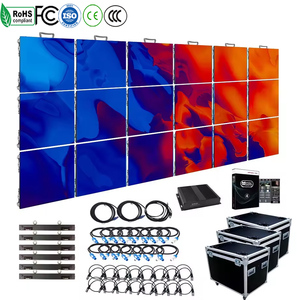
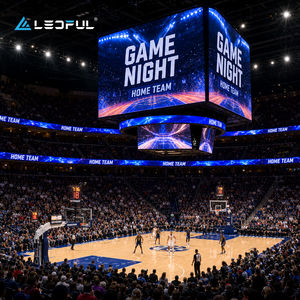
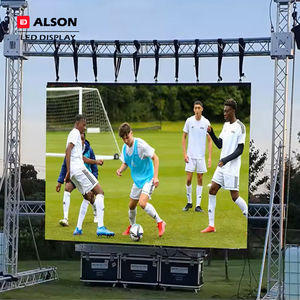
Aviation hubs operate without scheduled downtime. Our tier-one manufacturing consortium solves airport display failure modes before hardware leaves the production line.
Every critical hub display incorporates dual receiving cards, dual power supply rails with hot-swappable auto-failover, and loopback data paths to guarantee zero blackouts during active flight operations.
Integrated intelligent power governance safely steps down power draws across massive concourse arrays to absolute zero when non-operational, cutting terminal heat loads and slashing HVAC utility expenditures.
Dedicated station engineers remain on the factory floor across cleanroom SMT, module baking, conformal coating, and 72-hour thermal stress cycles, enforcing rigorous Factory Acceptance Testing (FAT) before shipment.
Custom die-cast magnesium cabinets match strict seismic, structural deflection, and reverberation standards. We engineer acoustically transparent surfaces to preserve Public Address intelligibility across boarding gates.
Aviation environments mandate strict electromagnetic compliance. Our hardware utilizes isolated grounded switching supplies and multi-layer internal shielding to prevent radar, VHF communication, and beacon interference.
Global pixel depots across North America, EMEA, and Asia maintain batch-matched LED diodes, power supplies, and logic ICs, guaranteeing long-term photometric consistency across continuous multi-year airport expansions.
A comprehensive procurement guide covering technical specifications, compliance, and thermal durability in modern aviation terminals.
Modern international aviation hubs present visual display hardware with extreme operating stresses unmatched by standard commercial environments. Airport LED systems function under unbroken 24/7/365 runtimes where unscheduled pixel failures compromise flight safety, disrupt gate boarding, and degrade lucrative concession advertising revenues.
Unlike controlled corporate environments, airport passenger terminals feature continuous atmospheric changes. Ingress from jet exhaust particulates, heavy foot traffic kicking up electrostatic dust, aggressive terminal HVAC cycling, and vast glass facades subjecting displays to direct sunlight create severe operating challenges. When procuring LED video walls for Flight Information Display Systems (FIDS), Airport Operations Control Centers (AOCC), baggage reclaims, or duty-free DOOH concourses, procurement engineers must prioritize engineering metrics over entry-level unit pricing.
Aviation Procurement Rule: LED hardware destined for terminal environments must deliver a proven Mean Time Between Failures (MTBF) exceeding 100,000 hours, maintain EMC Class-B compliance to safeguard ground navigation frequencies, and employ flame-retardant materials adhering to UL94-V0 standards to meet airport life-safety codes.
Selecting the right semiconductor packaging determines an airport display's long-term total cost of ownership (TCO). Historically, SMD (Surface Mount Device) LEDs served as the industry standard. However, concourse and baggage reclaim displays installed within passenger reach suffer frequent impact damage from luggage, passenger trolleys, and janitorial carts.
A high-power LED installation drawing tens of kilowatts functions as a potential source of electromagnetic noise. Terminal display installations must not disrupt terminal VHF communications, ground radar, automated baggage RFID networks, or passenger Wi-Fi infrastructures.
Tier-one Chinese OEM manufacturers certified for aviation supply implement multi-layer PCB routing with ground planes, isolated power filtering circuits, ferrite chokes on internal ribbon lines, and solid aluminum structural housings that create integrated Faraday shielding. Procurement documentation must mandate third-party lab verification for CISPR 32 / EN 55032 Class-B radiation limits.
Thermal management directly governs diode lifespan, color drift, and power draw. Terminal spaces incur significant HVAC cooling costs; inefficient displays with poor heat dissipation increase terminal cooling loads and accelerate pixel degradation.
Modern engineering favors common-cathode driver ICs over legacy common-anode systems. By supplying distinct, optimized voltages to Red (2.8V) and Green/Blue (3.8V) semiconductor junctions, common-cathode architecture reduces operating heat by up to 35% and cuts overall energy consumption by 25–40%. Coupled with smart system-level power-down controls, displays automatically cut parasitic standby draws when terminal wings shut down during quiet nighttime hours.
Strategic technology developments reshaping aviation infrastructure specifications across global airport design and construction projects.
Airport terminals are replacing dated LCD tile walls with seamless, fine-pitch Chip-on-Board (COB) LED video walls. With no bezel lines, high ambient contrast ratios, and anti-reflective matte coatings, COB displays maintain pin-sharp legibility for high-density flight schedules even under intense daylight atriums.
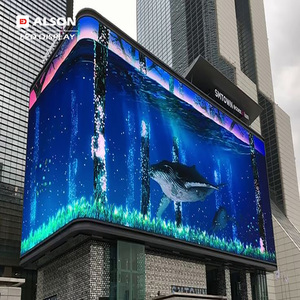
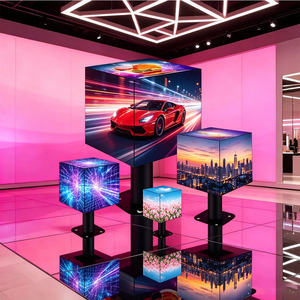
Global passenger terminals are evolving into experiential travel destinations. Duty-free shopping avenues and central immigration halls increasingly mandate right-angle, organic wave, and cylindrical LED installations engineered for naked-eye anamorphic 3D commercial media campaigns.
Airport authorities face strict ESG mandates and decarbonization requirements. Next-generation procurement specs heavily favor displays with intelligent standby architectures that consume near-zero power during nocturnal flight pauses, pairing with building automation via open APIs.
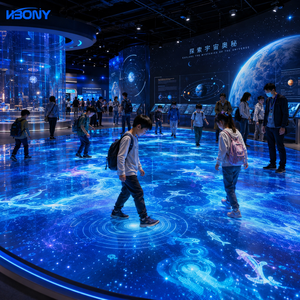
Heavy-traffic transit nodes and security processing areas deploy heavy-duty interactive floor screens rated for 2,000 kg/m² dynamic load capacities. These displays provide real-time gate navigation paths and boarding queue indicators, keeping high passenger volumes moving smoothly.
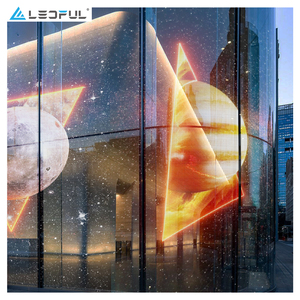
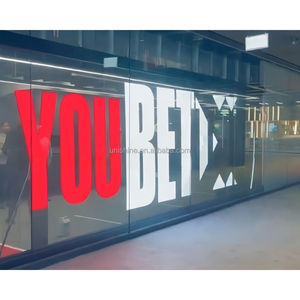
Architects are integrating ultra-thin, highly transparent holographic LED films directly onto boarding bridge windows, gate lounges, and curtain wall glass facades. These displays preserve natural daylight and tarmac visibility while serving dynamic flight status alerts and targeted promotions.
Aviation network engineers require uncompressed, low-latency SMPTE ST 2110 or SDVoE visual streaming over fiber backbones. Modern displays integrate software-defined controllers with instantaneous failover, isolating sub-frame latency and protecting operational command centers from visual blackouts.
Essential guidance for airport authorities, AV systems integrators, and engineering consultancies specifying Chinese LED manufacturing partners.
Procurement specifications must mandate electromagnetic certification testing (CISPR 32 / EN 55032 Class-B and FCC Part 15 Class-B). Chinese manufacturing facilities must supply verified anechoic chamber test reports confirming isolated ground architecture, shielded signal cables, and low-EMI power supplies that ensure zero harmonic interference with aviation navigation bands.
For main departure concourse viewing distances of 4 to 12 meters, P1.2 to P1.8 mm delivers crisp character contrast, ensuring alphanumeric flight numbers remain sharp and legible from any viewing angle. For close-range gate podiums, P0.9 to P1.2 mm COB prevents pixelation and moiré patterns when viewed up close.
Reputable manufacturing partners maintain single-bin diode sorting records and guarantee production lot reservations for up to five years. Procurement contracts should mandate batch-matched binning and require that a minimum 5% to 10% spare parts stock (diodes, mask modules, driver ICs) originates from the exact same wafer run.
Concourse walls and gate bulkheads cannot accommodate rear access corridors without sacrificing valuable terminal floor space. True front-serviceable cabinets utilize vacuum extraction tools to allow module, power supply, and receiving card replacements within two minutes, keeping disruption to passenger flow to a minimum.
Leading manufacturing facilities provide dedicated engineering bays where entire screen systems—including structural frames, redundant signal switchers, and content distribution units—are assembled, color-calibrated, and run through a 72-hour continuous thermal burn-in before shipping sign-off.
Displays installed along glazed terminal facades must incorporate high-bright diodes (≥4,500 nits for indoor glass), automatic ambient light sensors, and common-cathode driver designs. For enclosed spaces, integrated low-noise maglev fan assemblies or structural heat-pipe rear panels dissipate thermal loads without introducing acoustic noise into the terminal.
Review engineering schematics, structural loading calculations, and photometric binning strategies with our senior application engineering team.
Get Catalog