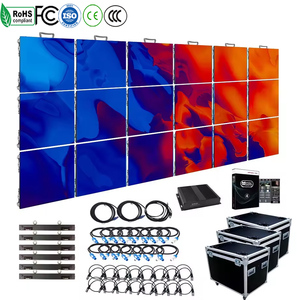
Engineered for uncompromising visual fidelity, thermal dissipation, and signal redundancy. Explore our verified fine-pitch, transparent film, and heavy-duty staging modular configurations.
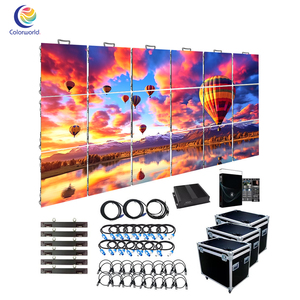

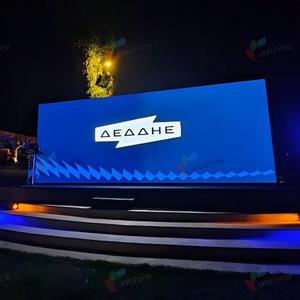


As visual technology migrates from standard high definition into the realm of native 4K, 8K, and immersive micro-environments, the demand for pixel pitches below 1.5mm—commonly designated as Fine Pitch LED (Narrow Pixel Pitch / NPP)—has evolved from an exotic specialty into the standard benchmark for mission-critical infrastructure.
In modern display engineering, fine pitch LED encompasses the architectural intersection of micro-encapsulation, high-precision surface-mount technology (SMT), advanced thermal mechanics, and sub-nanosecond signal processing. As the world's epicenter of semiconductor packaging and optoelectronic assembly, China's tier-1 LED manufacturing ecosystem has pioneered key shifts from traditional Surface-Mounted Device (SMD) architectures toward Chip-on-Board (COB) and Micro-LED in Package (MIP) technologies. For global systems integrators, enterprise AV consultants, and government procurement directors, identifying the true "Best Manufacturer" requires peeling back surface-level marketing and evaluating the underlying physics of module flatness, color uniformity, driver IC refresh algorithms, and continuous thermal stability.
Proprietary epoxy resin curing seals pixels directly to the PCB substrate, creating an impermeable barrier against dust, moisture, static electricity, and physical impact. Perfect for high-traffic corporate and public environments.
Independent voltage distribution for Red, Green, and Blue chips dramatically slashes surface thermal emissions by up to 35%, extending diode life spans while eliminating color drift across prolonged operational duty cycles.
Broadcast-optimized matte optical surfaces eliminate microscopic specular reflections and diffuse high-frequency interference lines, empowering camera tracking and studio XR virtual productions with 100% artifact-free capture.
When deploying sub-1.0mm canvases—such as P0.9 and P1.25 systems—the margin for error diminishes to microns. A microscopic PCB warpage of merely 0.05mm causes perceptible optical dark lines under ambient room lighting. Our state-of-the-art manufacturing plants utilize monolithic die-cast magnesium-aluminum alloy structural chassis, CNC-milled to continuous tolerances of ±0.01mm. This mechanical precision guarantees seamless multi-cabinet aggregation, delivering completely planar visual surfaces across ultra-wide video walls measuring dozens of meters in span.
Understanding the fundamental engineering differences between packaging technologies is crucial for long-term total cost of ownership (TCO) assessments. The table below delineates physical, optical, and operational parameters across current industry paradigms.
| Performance Metrics | Standard SMD (Surface Mount) | COB (Full Chip-on-Board) | MIP (Micro-LED in Package) |
|---|---|---|---|
| Practical Pixel Pitch Limit | ≥ 1.2 mm | ≥ 0.4 mm to 1.5 mm | ≥ 0.6 mm to 1.8 mm |
| Impact Resistance (Surface Protection) | Low (Vulnerable solder joints) | Extreme (Solid nano-epoxy encasement) | High (Reinforced discrete packaging) |
| Contrast Ratio & Black Levels | 3,000:1 - 5,000:1 | 10,000:1 - 25,000:1 (Deep Matrix Black) | 15,000:1 - 30,000:1 |
| Thermal Dissipation Vector | PCB solder pins (Localized heat buildup) | Direct copper substrate conductive path | Direct substrate with thermal pads |
| Pixel Defect Rate (PPM after 1,000h) | ≤ 50 PPM | ≤ 5 PPM (10x lower failure) | ≤ 8 PPM |
| Field Repairability | Standard micro-soldering | Requires specialized vacuum heat bonding | Standard module-level rework stations |
| Optical Uniformity & Viewing Angle | 140° / 120° (Slight color shift at edges) | 170° / 170° (Lambertian surface emission) | 165° / 165° (Wide-gamut consistency) |
Enterprise procurement of fine-pitch displays has transitioned from evaluating price-per-square-meter to measuring long-term visual reliability, software ecosystem flexibility, and carbon efficiency. The global AV-over-IP convergence and high-resolution rendering workflows are actively reshaping equipment specifications:
Modular cabinets measuring 600×337.5mm or 500×281.25mm have superseded arbitrary square footprints. By maintaining an exact mathematical 16:9 aspect ratio at the individual cabinet level, integrators build native Full HD, 4K, and 8K canvases without video scaling artifacts, latency degradation, or frame buffer distortion.
As institutional investors enforce strict environmental mandates, display idling has become an urgent pain point. High-end procurement contracts now mandate intelligent power switching capabilities that cut standby consumption to true zero watts during off-hours, preventing parasitic draw from multi-kilowatt switchboards.
Low initial procurement bids frequently conceal high on-site maintenance liabilities. Modern buyers require documented factory aging batches, single-bin color wavelength sorting (±1nm precision), and comprehensive cold-spare parts provisioning that guarantee identical color matching 5 to 7 years after deployment.
The next horizon of micro-display engineering is being defined by four macro vectors: chip dimension miniaturization, algorithmic color calibration, multi-spectral HDR pipeline integration, and acoustic transparency integration.
Sub-0.7mm Micro-LED Mass Transfer: The industry is breaking through physical pick-and-place barriers using laser-assisted fluidic assembly, positioning microscopic LED dies (under 50 microns) onto backplanes at rates surpassing millions of units per hour. This enables ultra-dense P0.4 to P0.7 video displays that deliver crisp, cinema-grade imagery even when observed from distances under 50 centimeters.
High Dynamic Range (HDR) & 16-Bit Grayscale Performance: Traditional display panels suffer from severe color clipping and posterization when dialed down to comfortable indoor luminance levels (100–300 nits). Next-generation driver ICs equipped with 16-bit to 22-bit PWM processing preserve smooth tonal gradations in deep shadow regions, fully conforming to HDR10, HDR10+, and DCI-P3 cinematic color gamuts.
Virtual Production & In-Camera VFX (ICVFX): Broadcast and filmmaking sectors demand refresh rates of 7,680Hz, frame rates exceeding 240fps, and low scan rates (≤ 1/8 scan) to completely neutralize camera shutter scanlines, ghosting, and rolling shutter interference. Our R&D team engineers custom firmware specifically mapped to ARRI, RED, and Sony Venice sensor sync cycles.
We operate at the forefront of precision optoelectronics. Rather than acting as a standard commodity assembler, our facility combines dedicated optical intellectual property (IP), proprietary cabinet tooling, and an uncompromising in-person quality management protocol on every production shift.
Automated 3D Solder Paste Inspection (SPI) coupled with AOI machine vision scanning detects microscopic bridge defects before oven reflow.
Stringent batch binning guarantees uniform chromaticity coordinates (x, y ±0.002) and forward voltage parity across all raw diodes.
Every cabinet undergoes continuous 72-hour thermal stress screening with dynamic RGB pattern cycling to eliminate infantile diode failure.
High-speed scientific CCD radiometers calibrate individual pixel brightness and chromaticity, storing factory profiles directly into module EEPROM.
Comprehensive Factory Acceptance Testing (FAT) with third-party inspection sign-offs before modular multi-layer export crating.
Our chassis, PCB layouts, power distribution boards, and receiver configurations are engineered in-house. We maintain absolute ownership over manufacturing tolerances, ensuring parts compatibility for over seven continuous years.
Global integrators benefit from on-floor engineering presence throughout production. Every video wall is fully assembled in its final multi-tile shape, tested with live customer signals, and pre-mapped before crating.
Located at the core of Shenzhen's optoelectronic industrial corridor, we combine direct access to primary component silicon foundries with expedited worldwide air and ocean freight hubs, delivering unparalleled agility.
Technical clarity on the most critical operational and contractual queries encountered during international fine-pitch LED tenders.
From precision viewing distance analysis and custom chassis manufacturing to comprehensive Factory Acceptance Testing (FAT) and global spares logistics, our engineers transform complex display visions into flawless physical realities.