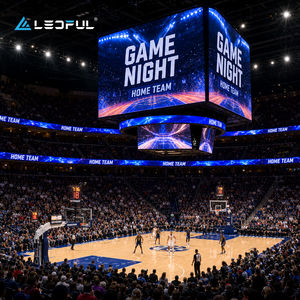
Explore our heavy-duty commercial modules, 3D rotating structures, interactive load-bearing floor tiles, and fine-pitch front-access panels built for architectural columns and high-traffic public installations.
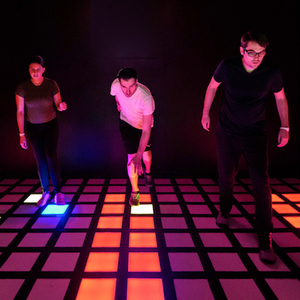
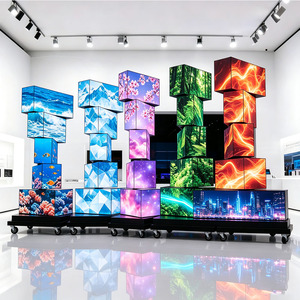
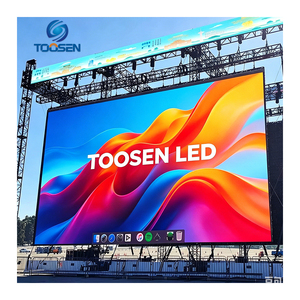
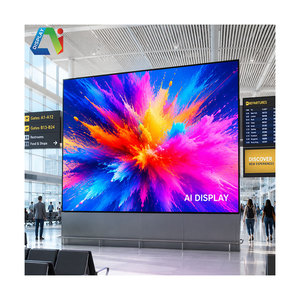
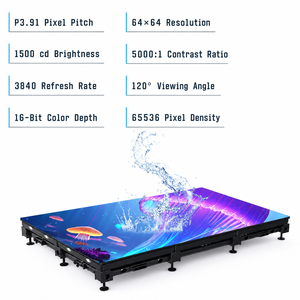
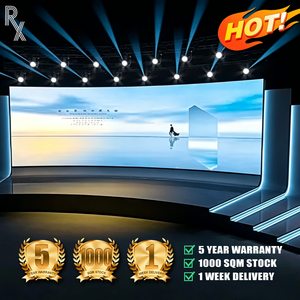
Pillar LED displays, commonly categorized as cylindrical column LED screens, multi-faceted polygon wraps, and freestanding unipole outdoor structures, present some of the most rigorous electromechanical engineering challenges in the digital signage industry. Unlike static planar video walls mounted against flat structural drywall or steel beams, a pillar LED display must accommodate continuous radial curvature, compound angular geometry, localized micro-tolerances, and non-uniform thermal dissipation profiles.
As China’s leading high-precision Pillar LED screen manufacturer and custom engineering factory, our technical facilities produce specialized display topologies engineered specifically around architectural load-bearing pillars, public transport pylons, and high-visibility highway advertising totems. Engineering an architectural column screen demands zero-compromise precision across structural framing, magnetic front extraction, flexible PCB fatigue thresholds, and intelligent power sequencing.
Specifying engineers must differentiate between the two core structural typologies:
1. Architectural Column Wraps (Indoor/Transit Venues): These systems wrap existing interior support columns in airports, high-end retail malls, hotel lobbies, and casino gaming floors. They leverage soft silicone flexible modules (ranging from P1.25 to P2.5 mm fine pitch) mounted via high-strength neodymium magnets onto CNC-rolled circular sheet steel or faceted die-cast aluminum sub-chassis. The primary challenge is eradicating vertical seam distortion and chromatic aberration along acute viewing angles.
2. Unipole Cantilevered Pillar Screens (DOOH / Stadiums): These are massive external video walls elevated on a single, hollow structural steel column (unipole) with diameters exceeding 1.2 to 2.5 meters. Engineered for extreme wind shear resistance (up to Beaufort Scale 12 typhoons), internal ladder service access, and IP65/IP66 dual-chamber ingress protection, these displays rely on high-brightness (6,500 to 10,000 nits) SMD or GOB modules with integrated forced-draft ventilation.
| Engineering Parameter | Cylindrical Flexible Column | 4-Sided Faceted Polygon Pillar | Outdoor Unipole DOOH Billboard |
|---|---|---|---|
| Primary Pixel Pitch Range | P1.25, P1.56, P1.87, P2.0, P2.5 | P1.86, P2.5, P3.076, P4.0 | P4.0, P6.0, P8.0, P10.0 |
| Curvature Capability | True circular 360° continuous radius | 90° seamless seamless-miter joints | Planar or convex gentle curvature |
| Substrate Architecture | Silicone rubber flex PCB + magnetic core | Extruded aluminum custom frame | Structural profile steel with access mast |
| Luminance Calibration | 600 – 1,000 nits (Anti-glare matte) | 800 – 1,200 nits | 6,500 – 10,000 nits (Auto-dimming) |
| Thermal Dynamics | Convection airflow chimney stack | Internal quiet axial fan matrix | Integrated positive-pressure HVAC |
| Maintenance Protocol | 100% Vacuum magnetic front service | Front or rear magnetic/latch access | Full internal walk-in rear service |
From custom metal fabrication to proprietary circuit engineering, our manufacturing model eliminates intermediary markups while maintaining hands-on factory floor quality controls and Western engineering oversight.
Every single pillar display undergoes comprehensive 72-hour burn-in, chromatic spectrometer scanning, and rigorous Factory Acceptance Testing (FAT). Dedicated QA engineers inspect pixel uniformity, thermal hotspots, and structural tolerances before shipping, providing turnkey zero-defect guarantees.
Our pillar displays integrate zero-watt standby technology equivalent to the industry-leading patented power management systems. Venues eliminate massive parasitic idling currents and reduce commercial operational expenditures by completely cutting power draw to dormant cabinets without stressing power supplies upon wake-up.
Supported by international service facilities and centralized spare parts warehouses across North America, the UK, and Asia, our clients receive ongoing operational reassurance. Every production batch includes serialized 5% to 10% golden bin spare modules, receiving cards, and redundant driver ICs for lifetime color calibration continuity.
The greatest threat to long-term diode longevity in cylindrical pillar screens is the internal thermal stack effect. In a conventional wall-mounted LED screen, heat generated by switch-mode power supplies (SMPS) and driving ICs dissipates outward into an open ambient room or through dedicated HVAC plenums behind the frame. In an enclosed 360-degree cylindrical column screen, heat is trapped within a narrow annular space between the cold structural concrete core and the active LED modules.
Without meticulous thermodynamic planning, hot air rises through the hollow column casing, accumulating exponentially at the top tier. This creates a severe vertical thermal gradient where upper modules run 15°C to 25°C hotter than lower modules. The direct consequence is accelerated blue and green LED diode luminance degradation at the top of the column, causing unrecoverable color shifts and mottled white-balance across the cylinder within 12 to 18 months of deployment.
Engineered air intakes at the decorative column base paired with silent magnetic-levitation exhaust impellers hidden at the top crown produce a continuous, laminar chimney draft that prevents hot air stagnation.
Employing custom 2.8V / 3.8V dual-rail common-cathode driver ICs reduces module operating temperatures by 35% compared to legacy common-anode circuitry, virtually eliminating thermal buildup inside tight radii.
Rather than using insulating sheet steel, our factory precision-machines ribbed magnesium and aluminum alloy framework backplates that serve as secondary heatsinks, drawing thermal wattage directly away from sensitive pixel arrays.
Specially calibrated N52 neodymium magnetic standoffs allow quick, distortion-free front service extraction using vacuum suction tools in under 3 seconds per module, eliminating visible fastening hardware.
As digital architecture evolves toward organic, non-rectilinear shapes, pillar LED screen procurement is pivoting rapidly from standard off-the-shelf flat cabinets to highly customized architectural surfaces. Procurement officers, AV consultants, and system integrators must position their specifications to accommodate the following macroeconomic and technological shifts:
Historically, cylindrical displays utilized flexible SMD (Surface Mount Device) modules with silicone jackets. While pliable, SMD diodes remain vulnerable to physical collisions in busy pedestrian thoroughfares such as transit stations and shopping arcades. The industry is rapidly adopting flexible COB and GOB (Glue-on-Board) technologies. In flexible COB, Micro-LED chips are bonded directly onto pliable polyamide substrates and encapsulated with an optical-grade polymer resin. This creates an IP65-rated front surface that is impact-resistant, dust-tight, moisture-proof, and can be scrubbed clean without dislodging microscopic solder joints.
Modern column installations are moving away from treating pillars as three or four disconnected vertical video walls. Content creators are designing unified, volumetric anamorphic animations that flow seamlessly around the cylinder, simulating swirling liquid vortexes, transparent glass elevators, or floating hyper-realistic objects. Procuring hardware capable of sustaining these illusions requires dedicated hardware mapping processors with 120Hz high frame rates, 7,680Hz ultra-high refresh rates, and sub-frame low-latency genlock synchronizers.
Commercial building operators are governed by strict ESG (Environmental, Social, and Governance) sustainability mandates. Standard LED displays draw substantial standby power even when blacked out overnight. Forward-looking procurement demands integrated zero-draw power shutoff contactors, dynamic ambient light sensor arrays, and high-efficiency optical drivers that slash annual kilowatt-hour consumption by up to 48%, significantly decreasing Total Cost of Ownership (TCO) across a 100,000-hour system lifecycle.
Architects are transforming structural pillars into intuitive engagement kiosks. By integrating circular 360-degree overhead Lidar scanning rings at the header of the pillar screen, displays track multi-user positions and gesture interactions within a 5-meter radius. Passersby can manipulate panoramic catalogs, navigate museum exhibits, or engage with gamified branding simply by gesturing toward or touching the column surface.
Crucial technical insights to review prior to issuing tenders or finalizing design specifications for pillar-mounted LED display projects.
Whether you require a custom 360-degree indoor flexible pillar display, an interactive gaming column, or an outdoor heavy-duty cantilevered billboard, our factory engineering team provides complete technical layouts, CAD drawings, thermal calculations, and direct factory pricing within 24 hours.