From impact-resistant perimeter soft-mask boards to giant center-hung cubes and 4K high-brightness DOOH video walls, our hardware meets stringent international broadcasting and player safety certifications.
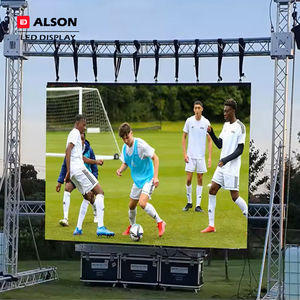
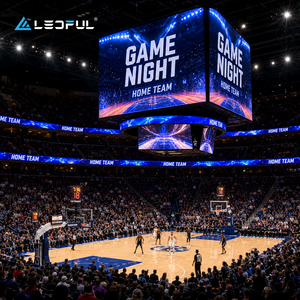
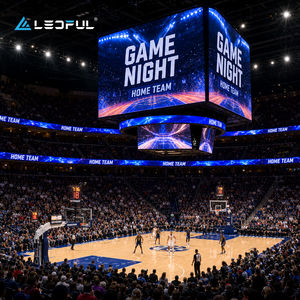
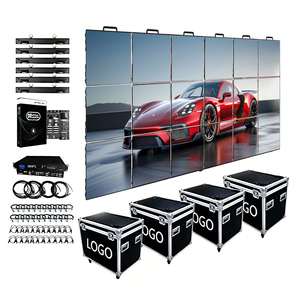
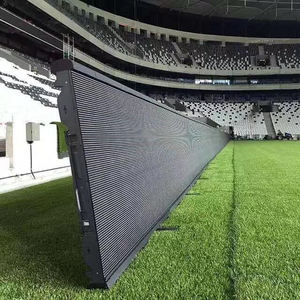
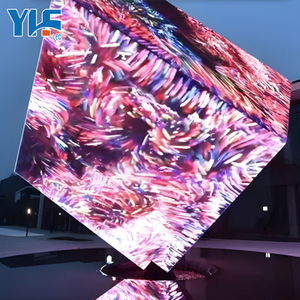
Modern sports entertainment has evolved far beyond passive spectatorship. In elite multi-purpose sports arenas and premier football venues, LED display infrastructure represents the economic engine driving corporate sponsorships, real-time match engagement, FIFA/UEFA broadcast compliance, and dynamic crowd safety communication. Today's procurement demands transcend simple lumen measurements; AV consultants and stadium engineering teams require verified optical consistency, camera-friendly high-frequency pulse-width modulation (PWM), and sustainable power architectures that align with stringent global environmental standards.
As a leading Chinese stadium LED screen manufacturing and export consortium, our engineering methodology bridges cutting-edge Shenzhen display fabrication with rigorous European AV consulting standards. With over 375,000 square meters of operational LED panels running across Premier League football grounds, NASCAR speedways, Olympic facilities, and multipurpose concert arenas worldwide, our systems are built from the silicon level up to withstand grueling environmental extremes while delivering flawless 16-bit grayscale depth and flicker-free ultra-slow-motion live broadcast reproduction.
What differentiates tier-one Chinese stadium LED screen exporters from standard trade intermediaries is hands-on, component-level engineering and total control over factory acceptance testing (FAT). Rather than relying on generic, off-the-shelf production lines, our sports and DOOH product families are manufactured according to proprietary intellectual property blueprints, using Japanese Nichia or high-tier Nationstar Gold-Wire SMD LEDs, custom multi-layer PCB layouts with heavy copper thermal planes, and high-efficiency common-cathode driver chipsets.
Our senior engineers remain on the factory floor throughout every production cycle. Every stadium batch undergoes continuous 72-hour white-screen burn-in, extreme salt-spray fog chambers, vibration stress modeling, and optical spectrophotometer color calibration before container sealing.
Integrating globally patented intelligent power management architectures, our stadium video walls and ribbon boards can power down to absolute zero wattage during non-event days. This eliminates parasitic standby current, saving venues tens of thousands of kilowatt-hours annually.
Seamless international project delivery backed by regional technical hubs and dedicated Pixel Depots in both the UK and Las Vegas, Nevada. Integrators receive immediate access to single-bin component spares, module repair benches, and local field engineering backup.
Procuring LED video walls for modern sports arenas requires different optical and mechanical specifications depending on placement within the facility. Below is an authoritative technical comparison matrix illustrating optimal pixel pitch, driver topologies, ingress ratings, and safety configurations across major stadium installation zones:
| Zone / Application | Standard Pitch | Nit Brightness | Refresh Frequency | Safety & Ingress | Viewing Distance |
|---|---|---|---|---|---|
| Pitch Perimeter Banner | P6.0 / P8.0 / P10.0 | ≥6,500 - 8,000 Nits | ≥7,680Hz (Anti-Moiré) | Silicon Soft Mask + Top Rubber Cushion (IP66) | 6m - 180m |
| Center-Hung Arena Cube | P2.6 / P3.0 / P3.91 | 1,200 - 2,500 Nits | ≥3,840Hz (16-Bit Gray) | Lightweight Die-Cast Aluminum, Hoist Anchors | 3m - 80m |
| Fascia / Ribbon Boards | P4.0 / P6.0 / P8.0 | ≥6,000 - 7,500 Nits | ≥3,840Hz Low EMI | Ultra-Slim Front Service Access (IP65) | 8m - 200m |
| Giant Outdoor Scoreboard | P6.0 / P8.0 / P10.0 | 8,000 - 10,000 Nits | ≥3,840Hz - 7,680Hz | Dual Fanless Heat Sink, IP66 Back & Front | 12m - 350m |
| VIP Club / Broadcast Studio | P1.25 / P1.56 / P1.9 | 800 - 1,500 Nits | ≥7,680Hz DCI-P3 | Fine-Pitch COB (Chip-on-Board), Anti-Scratch | 1m - 20m |
Stadium AV directors and international engineering consultants are currently re-evaluating long-term procurement criteria based on four technological shifts taking place in Chinese high-precision display manufacturing:
Legacy stadium screens utilized common-anode power topologies where red, green, and blue diodes were supplied identical voltages (typically 5V), despite red diodes only requiring approximately 2.1V to 2.4V to operate. The excess energy dissipated as waste heat, accelerating diode lumen depreciation and requiring energy-draining cabinet fans. Next-generation Chinese stadium displays employ dual-rail common-cathode technology, delivering independent 2.8V and 3.8V lines. This design reduces operating surface temperatures by 12°C to 18°C, cuts total energy consumption by up to 35%, and dramatically extends lifespan past 100,000 operational hours.
International federations increasingly require dual-broadcast return (DBR) systems, allowing multiple sponsor feeds to be captured simultaneously by synchronized television cameras operating at offset shutter angles. Using ultra-high-rate multiplexed driver ICs operating at 7,680Hz with nanosecond-level timecode sync, a single pitch-side LED perimeter board can display regionalized European advertisements to viewers in London, while simultaneously showing Asian market brand campaigns to viewers in Tokyo without cross-frame bleed.
In direct midday sun, standard dynamic range displays wash out when displaying fast-moving sports content. Advanced color management engines with 3D color lookup tables (LUTs) ensure stadium video boards cover >95% of the DCI-P3 color gamut, maintaining smooth, non-linear grayscale curves even at low-brightness thresholds under night-game floodlights.
Player safety remains the absolute priority in professional soccer, rugby, basketball, and handball arenas. Premium perimeter displays incorporate impact-absorbing silicone rubber louvers, non-shattering soft module masks, and heavy-duty foam head protectors along the upper edge of the cabinet. In addition, rear kick-support stands feature mechanical angle adjustment from 60° to 90° with quick-collapse pins to ensure player kinetic energy dissipates safely in collision incidents.
When drafting an international tender or evaluating proposals from Chinese exporters, procurement directors should insist on verifying the following five technical thresholds to avoid premature installation failures:
1. Thermal Dissipation Mechanics: Ensure the cabinet architecture uses die-cast aluminum or magnesium alloy rather than stamped iron sheet metal. Aluminum provides superior heat conductivity, eliminates internal cabinet rust in coastal regions, and allows completely fanless convection cooling.
2. Redundant Power & Data Loop Topologies: A stadium screen failure during a live televised match incurs severe commercial penalties. High-reliability displays must incorporate dual-receiver cards per cabinet and dual-circuit ring topology: if a primary signal cable or power supply unit (PSU) faults, the secondary loop engages in less than 5 milliseconds without dropping a single video frame.
3. Optical Batch Binning Integrity: Insist on single-bin diode lot matching. Receiving panels mixed across different LED wafer production batches will lead to noticeable color shift and patchy white-balance degradation within six months of field operation.
4. Front Maintenance Tooling: Ribbon boards suspended along upper mezzanine fascias or tight scoreboard recesses require rapid vacuum-assisted or magnetic front extraction. Technicians must be able to remove an entire LED module, receiving card, or PSU from the front in under 30 seconds without unbolting structural rear steelwork.
5. Ingress Protection Verification: Outdoor sports stadiums face severe weather events. Insist on true dual IP66/IP65 ratings backed by independent laboratory test reports confirming waterproof module potting, moisture-proof conformal-coated PCBs, and gold-plated military-grade quick-lock connectors.
Direct technical answers addressing critical tender questions, structural engineering calculations, broadcasting standards, and international export logistics.
Professional sports broadcasts utilize high-speed cameras capturing slow-motion replays at 300 to 1,000 frames per second. Displays running at standard 1,920Hz or 3,840Hz refresh rates cause scanning black lines, moiré patterns, and flickering on television monitors. A ≥7,680Hz PWM refresh frequency guarantees crisp, steady visual presentation across all broadcast zoom angles and shutter speeds.
During competitive football or rugby matches, players frequently collide with pitch-side perimeter boards at high speeds. Our sports cabinets integrate high-elasticity silicone masks that flex under impact without shattering, preventing cuts and bruising. A continuous soft EVA foam top pad covers the upper structural rim to prevent injuries during sliding tackles or boundary collisions.
While common-cathode panels typically carry a 5% to 8% higher initial component acquisition cost due to dual-voltage silicon chipsets, they cut electrical operating costs by 30% to 40% and operate significantly cooler. In a standard 250-meter perimeter deployment operating 80 event days per year, this translates to thousands of dollars saved annually in electricity, while doubling the operational lifespan before lumen degradation occurs.
For international arena projects, we recommend a 3% to 5% single-bin matching spare parts allocation (modules, power units, receiving cards, ribbon cables, and IC components). Because LEDs from different production batches exhibit micro-variations in color spectrum and brightness, all spares are manufactured within the same wafer bin run to ensure 100% color consistency over the lifecycle of the venue.
Our outdoor sports cabinets feature multi-stage surge protection devices (SPDs) rated up to 10kA/20kV at both the main distribution cabinet and internal cabinet levels. Dual-isolated power supply channels protect against high inductive surges caused by nearby lightning strikes or sudden grid switching common during massive arena event activations.
Yes. Our LED video processors and controllers seamlessly interface with all industry-standard sports timing and graphics protocols, including Swiss Timing, Daktronics, OES, Sportzcast, and major SDI/NDI broadcast video switchers. Content can be mapped for synchronized instant replays, sponsor takeovers, and official referee review displays in real time.