
From central sanctuary video backdrops and crystal-clear scripture prompters to weatherized outdoor church marquees and interactive youth ministry platforms, explore our certified factory-direct display panels.
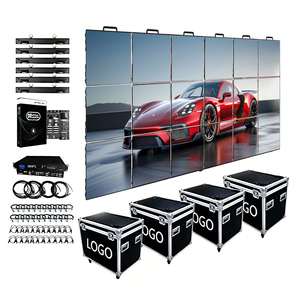
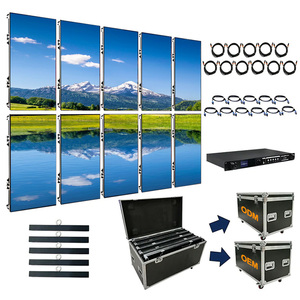
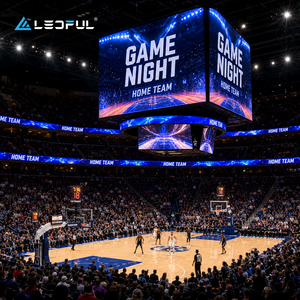
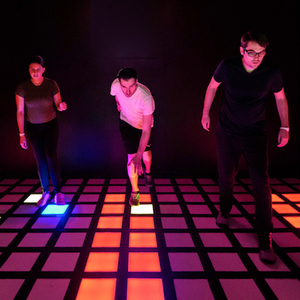
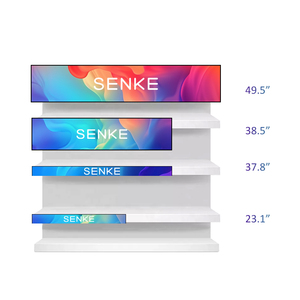
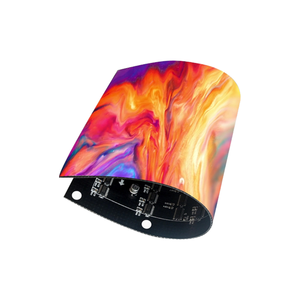
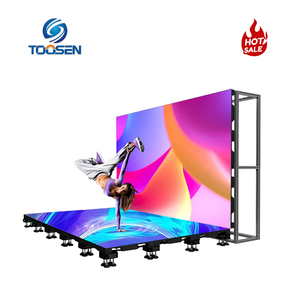
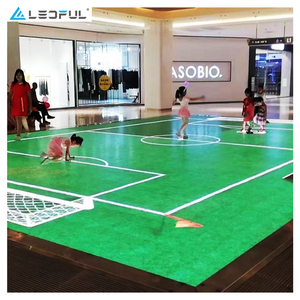
Combining world-class Chinese industrial manufacturing efficiency with Western quality engineering standards, our direct factory pipeline eliminates intermediary markups while enforcing uncompromising testing protocols.
Unlike conventional brokers who drop-ship unchecked inventory, our factory conducts stringent Factory Acceptance Testing (FAT). Every cabinet undergoes continuous 72-hour thermal stress-testing, dead-pixel elimination, and high-precision radiometric color calibration to guarantee seamless edge-to-edge optical consistency.
Houses of worship often remain inactive from Monday through Thursday. Conventional LED screens draw constant parasitic current in standby. Integrating our proprietary zero-draw intelligent circuit power systems (conceptually akin to the industry-renowned digiLED ZEUS® standard), power consumption drops to zero when idle, cutting utility bills and preserving driver IC lifespans.
Speech intelligibility is sacred during sermons. Our panels leverage aerospace-grade die-cast aluminum alloys acting as passive heatsinks. By eliminating cooling fans completely, the system achieves near-zero acoustic noise (<18dB), preventing acoustic interference with sensitive condenser choir microphones.
By engineering and manufacturing directly out of China's primary LED silicon corridor (Shenzhen/Guangdong) while retaining export compliance teams versed in CE, FCC, ETL, and RoHS directives, our clients secure enterprise-tier hardware at substantial capital expenditure reductions compared to domestic brand re-labelers.
To eliminate concerns over cross-border maintenance, we support overseas system integrators via regional spare-parts centers (Pixel Depots) across North America and Europe. Every church installation receives 3% to 5% matched-batch spare LED modules, receiving cards, and power supplies from the identical silicon wafer run.
Transitioning a house of worship from legacy projection screens or LCD video walls to direct-view LED (dvLED) requires an understanding of sanctuary architecture, photometric ergonomics, camera-sensor physics, and electrical safety. In modern worship productions, the central display is not merely an electronic bulletin board; it is an active liturgical backdrop, a canvas for hymnal typography, and an integral lighting element for multi-camera live streaming.
With millions of worshipers engaging via online broadcasts, Sunday morning camera capture has become paramount. A pervasive challenge in sanctuary video capture is the Moiré Effect—a geometric interference pattern occurring when the grid pattern of the camera sensor overlaps with the pixel array of the LED video wall. Our factory resolves this challenge at the source through two hardware methodologies: optical surface diffusion nano-masks and high-frequency PWM driver ICs operating at ≥3840Hz to 7680Hz refresh rates.
By applying matte-black micro-optical resin masks over SMD and COB diodes, light is diffused across a widened Lambertian viewing profile. This prevents tight rasterization on camera lenses, allowing media directors to achieve clean shallow-depth-of-field shots of pastors and worship teams without distorted horizontal banding or chromatic shimmering.
| Technology Parameter | Legacy Laser Projection | Commercial LCD Bezel Walls | Sanctuary Direct-View LED (dvLED) |
|---|---|---|---|
| Luminance / Contrast | Low (Washout in ambient day/stained glass) | Medium (~500 Nits, high specular reflection) | High (800 - 1500 Nits, 10,000:1 Contrast) |
| Physical Seams | None (Keystoning & optical blur issues) | Disruptive bezels (0.88mm to 3.5mm seams) | 100% True Seamless Micro-Alignment |
| Operating Lifespan | 20,000 Hours (Expensive laser engine decay) | 50,000 Hours (Backlight degradation) | 100,000 Hours to L70 Standard |
| Acoustic Noise Profile | High (35dB - 48dB exhaust fan whir) | Moderate (Internal cooling vents) | Ultra-Silent (<18dB Fanless Convection) |
| 10-Year Total Cost of Ownership | High (Bulb/engine swap, HVAC burden) | Medium (Unit replacement upon failure) | Lowest (Modular component-level service) |
Calculating the precise pixel pitch (distance between diode centers in millimeters) is the most critical decision faced by church building committees. Choosing too coarse a pitch results in visible pixelation for congregation members seated in the front pews; choosing an unnecessarily fine pitch escalates budgetary investment without perceptible optical gain.
Our engineering division utilizes the strict Visual Acuity Formula (Snellen Ratio Benchmark):
Optimal Minimum Viewing Distance (Meters) = Pixel Pitch (mm) × 1.0 to 1.5
Example: A P2.6mm LED display becomes visually continuous at 2.6 meters (~8.5 feet) from the primary seating row.
For mid-sized sanctuaries with a front-row distance between 15 to 25 feet, P2.6mm stands as the premier industry sweet spot. For expansive megachurch auditoriums where the first row is seated beyond 30 feet, P3.91mm provides massive visual impact, superior energy efficiency, and unmatched budgetary scalability.
The manufacturing landscape in China has undergone a monumental shift. While Surface Mounted Device (SMD) packaging (such as SMD1515, SMD2020, and SMD1921) remains the proven backbone for worship staging due to rapid repairability and economical cost-per-square-meter, advanced encapsulation methods are quickly establishing new benchmarks for sanctuary environments.
Traditional discrete diodes soldered to the PCB. Offers exceptional color purity, field-repairability via hot-air soldering tweezers, and ultra-high brightness up to 1,500 nits indoors. Remains the most cost-effective recommendation for main center screens.
Flip-chip LED dies bonded directly to the substrate and encapsulated in protective epoxy resin. Completely eliminates exposed pins. COB displays provide impact resistance (anti-collision), waterproof surface protection, and ultra-wide 170° viewing angles ideal for wide sanctuary bowls.
A hybrid innovation leveraging microscopic LED chips packaged individually before automated SMT placement. MIP yields the extreme contrast and black-level depth of Micro-LED while retaining modular serviceability, representing the leading trend for church broadcast studio sets.
Sanctuary AV technology directors are transitioning from reactive maintenance mindsets to forward-looking, lifecycle-conscious infrastructure investments. Based on data from over 500 export deployments, our analysts highlight five dominant procurement patterns:
Worship lighting is profoundly dynamic—shifting instantly from dim, introspective prayer environments with soft candlelight to high-energy contemporary praise sets. Churches increasingly mandate 16-bit to 22-bit internal grayscale processing. This prevents color posterization and banding in the shadow ranges, keeping background graphics velvet-smooth under subdued stage illumination.
Most sanctuary platforms cannot accommodate deep rear catwalks or secondary service corridors. Modern building committees uniformly mandate 100% true front-maintenance designs. Using magnetic vacuum extraction tools, AV technicians can remove an entire LED module, power brick, or receiving card in under 30 seconds without dismantling the structural rigging.
With operational sustainability initiatives ascending among faith-based non-profit governance, churches demand audited low-energy footprints. Procurement contracts increasingly specify intelligent relay matrices and sleep controllers that guarantee negligible idle power during five days of sanctuary downtime each week, significantly lowering carbon footprint and utility outlays.
In sanctuaries constrained by proscenium width, mounting stage left/right line array speakers behind the visual canvas becomes necessary. Newer acoustically porous LED panels permit sound waves to pass freely with less than 1.5dB acoustic attenuation, eliminating the visual clutter of bulky loudspeaker clusters.
Discrete HDMI and SDI cabling is being superseded by network-based IP distribution. Worship production systems now expect LED processors to ingest native IP video streams directly over 10G/25G fiber backbones, empowering multi-campus satellite campuses to synchronize sermon streams with zero visual latency.
Essential architectural, logistical, and electrical answers tailored for Church Boards, Technical Directors, and AV System Integrators.
Connect with our senior AV engineering consultants today. Receive a custom 3D photometric visual layout, structural rigging load calculations, and a direct factory export quotation tailored to your congregation's budget.
Send an Inquiry