From high-impact sports perimeters and ultra-fine COB backdrops to interactive architectural glass tiles, explore our export-grade enclosures tailored for mission-critical visual installations.
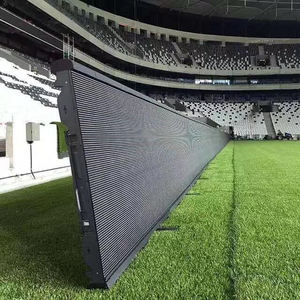
Rugged magnesium-aluminum alloy chassis featuring front soft-mask impact buffers, dual-angle support brackets, and IP66 dual-seal ingress sealing for live stadium sports perimeter advertising.
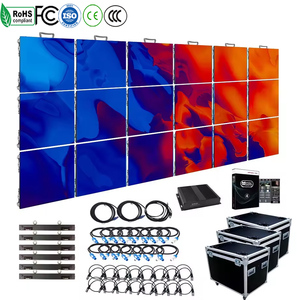
Ultra-lightweight die-cast cabinet with sub-millimeter positioning pins, high refresh driving (≥7680Hz), and magnetic front-service modules ideal for rental stages and corporate auditoriums.
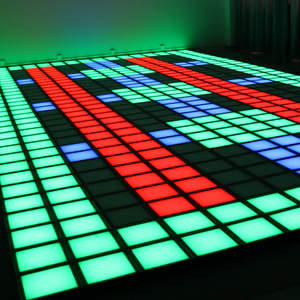
Heavy-duty load-bearing chassis supporting up to 2,000 kg/m², integrated capacitive pressure sensors, optical toughened resin faceplates, and low-latency interactive processing for immersive gaming.
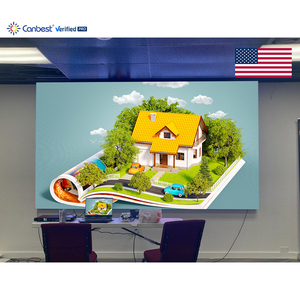
Native 16:9 golden ratio cabinet structure engineered for bezel-free FHD/4K video wall alignment, whisper-quiet fanless cooling, and compliance with FCC and CE commercial boardroom standards.
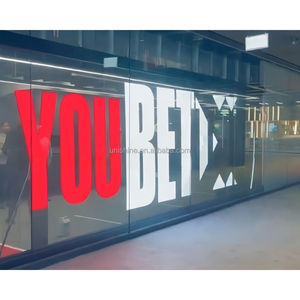
Self-adhesive architectural optical film with >82% transparency, ultra-thin profile (<2.5mm), and direct-drive micro ICs designed for retail glass facades, automotive showrooms, and luxury atriums.
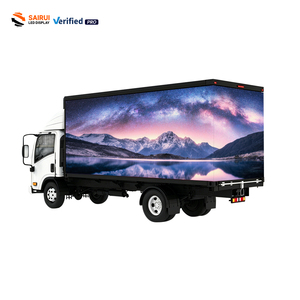
Anti-vibration reinforced chassis housing with hydraulic mast compatibility, independent vehicular battery integration, and high-brightness daytime-visible diodes exceeding 6,500 nits.
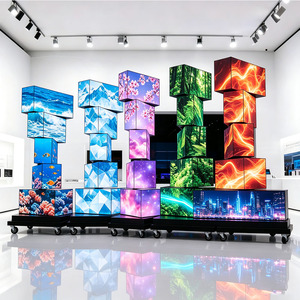
Geometric 90-degree chamfered miter-cut frames providing 5-sided seamless cubic visuals, continuous 360-degree motor rotation slip-rings, and weather-hardened IP65 conformal coating.
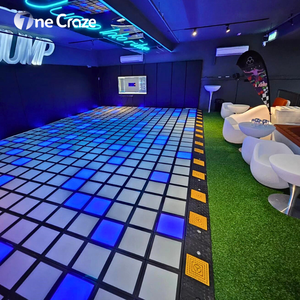
Modular compact 30x30cm interactive gaming floor panels featuring impact-proof matte polycarbonate diffusers, step-detection matrix nodes, and rapid inter-cabinet quick-lock cabling systems.
In high-stakes visual communication, the cabinet is not merely a mounting enclosure; it is the structural and thermodynamic backbone of the display system. Over the past five years, the global LED display sector has shifted definitively away from legacy sheet-metal and crude iron constructions toward ultra-precision die-cast aluminum and magnesium alloy extrusions.
Precision CNC finishing guarantees that cabinet-to-cabinet tolerance gaps remain under ±0.04mm. For narrow pixel pitch (NPP) deployments—such as P0.9 to P1.5 indoor control rooms—any dimensional inconsistency causes visible seams, luminance variations, and optical parallax distortions. Modern die-cast magnesium cabinets achieve up to 35% weight reduction compared to traditional aluminum, providing crucial load relief for large suspended venue clusters, center-hung arena cubes, and massive perimeter ribbons.
| Cabinet Material Type | Structural Flatness | Thermal Dissipation | Weight (kg/sqm) | Primary Export Application |
|---|---|---|---|---|
| Die-Cast Magnesium | Extreme (±0.03mm) | Superior (Direct Conduction) | 22 - 28 kg | Rental Stages, Touring, Fine Pitch COB |
| Die-Cast Aluminum | High (±0.05mm) | High (Fanless Passive) | 30 - 38 kg | Fixed Commercial Walls, Conference Hubs |
| Extruded Aluminum Profile | Moderate (±0.10mm) | Moderate | 36 - 45 kg | Large Format DOOH Billboards (960x960mm) |
| Cold-Rolled Sheet Metal | Low (±0.30mm) | Low (Requires Active Fans) | 50 - 65 kg | Legacy Low-Cost Billboard Enclosures |
Thermodynamically, modern cabinet designs leverage passive conductive airflow chimneys. By isolating the switched-mode power supplies (SMPS) and receiver cards inside independent isolated chambers, heat generated by the drivers does not migrate to the LED diodes. This prevents thermal pixel aging, chromatic drift, and localized color shift across continuous visual spans.
Procuring LED display cabinets directly from Chinese manufacturing ecosystems has evolved beyond comparing raw cost per square meter. Seasoned systems integrators, AV consultants, and infrastructure operators now evaluate total lifecycle cost (TCO), serviceability speed, and power performance:
Eliminate procurement volatility. We bridge tier-1 precision manufacturing in China with world-class engineering governance, strict on-site FAT protocols, and localized international support.
We do not rely on remote promises. Our bilingual engineering specialists are physically stationed on the factory production line overseeing incoming component inspection, solder-paste uniformity, and Factory Acceptance Testing (FAT) before crates receive release clearance.
Every cabinet batch features verified Bill-of-Materials (BOM) components: Nationstar or Kinglight gold-wire LEDs, Macroblock or Chipone high-gray PWM drivers, certified Mean Well or G-Energy power units, and Novastar or Brompton processing cores.
Every cabinet and assembled visual plane completes a rigorous 72-hour continuous electrical and thermal stress burn-in sequence, sweeping through full-white luminance peaks, primary color cycling, and thermal imaging checks to catch premature component failure.
All cabinets and integrated electrical topologies undergo third-party laboratory verification for CE-EMC Class B, FCC Title 47 Part 15, UL 62368-1, and RoHS 3 standards, simplifying permitting and municipal code compliance across North America and Europe.
Compatibility with cutting-edge intelligent power controllers enables complete standby disconnection across hundreds of cabinets. Eliminating ghost energy consumption saves thousands of dollars annually while protecting sensitive electronic components from grid surges.
Our long-term support infrastructure is anchored by international Pixel Depots and technical service hubs in the United States and the United Kingdom. We maintain batch-matched LED diodes, mask spares, and circuit modules to guarantee color consistency throughout your system's operational lifespan.
As display technology merges with architectural finishes and spatial computing, the requirement for standard rectangular flat boxes is declining. Specialized cabinet architectures now dominate complex project briefs:
1. Stadium Perimeter and Ribbon Board Cabinets: Modern stadium perimeter enclosures (such as our 960x960mm magnesium series) must meet stringent FIFA and UEFA player-safety safety mandates. This requires resilient silicon soft masks, non-conductive rubberized top impact cushions, and quickly adjustable rear stabilizing foot brackets (65° to 90°). These systems must also feature redundant dual-power and dual-data loop topologies, ensuring unbroken sponsor broadcasts even if a signal cable is compromised during play.
2. Virtual Production (xR) and Broadcast Studios: Broadcast stage cabinets require extreme mechanical rigidity to prevent seam-induced Moire patterns. Cabinets are built with precision CNC locating pins, low-scan driver circuits (1/8 or 1/16 scan rates), camera tracking sensor points, and support for high bit-depth color reproduction (16-bit grayscale with DCI-P3 color gamut calibration).
3. Kinetic, 3D Rotating Cubes and Curved Facades: For out-of-home advertising, custom 90-degree mitered cabinets eliminate edge borders for naked-eye 3D visuals. Meanwhile, high-torque motorized rotary slip rings enable continuous 360-degree rotation of dynamic column cubes without cable twisting, powered by outdoor IP65-rated internal slip contactors.
Essential technical, logistics, and quality assurance questions for international AV consultants, distributors, and turnkey engineering contractors.
Whether you require custom sports perimeter enclosures, front-service commercial conference video walls, or specialized low-carbon installations, our engineering team provides complete technical drawings, photometric analysis, and direct factory pricing.
Inquire Now