From ultra-lightweight glass curtain wall films to rugged structural outdoor mesh curtains and touring stages, our partner manufacturing clusters in Shenzhen deliver millimeter-accurate optical precision across international standard installations.
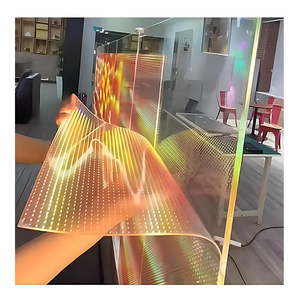
Ultra-thin, bendable adhesive substrate with up to 88% optical transparency. Designed for non-invasive retrofitting on building curtain walls, luxury retail windows, and architectural atriums without blocking natural sunlight.
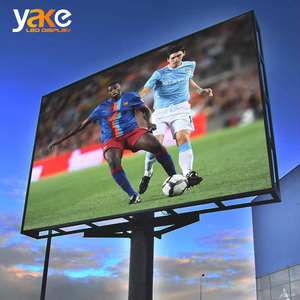
Heavy-duty DOOH billboard display offering up to 10,000 nits calibrated brightness. IP68 front/rear hermetic protection engineered to resist extreme coastal salt fog, monsoon rainfall, and prolonged ultraviolet solar radiation.
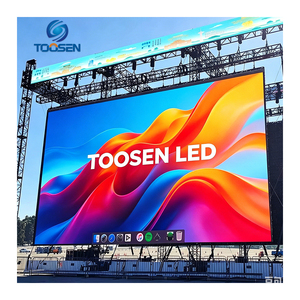
Touring-grade rental panel equipped with CNC die-cast magnesium-aluminum housings. Integrated curved rigging mechanisms allow ±10° concave and convex seamless faceted alignments for broadcast stages and arena tours.
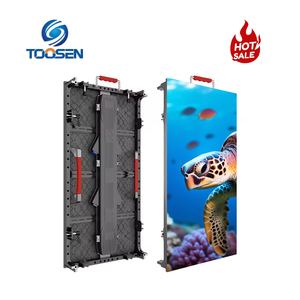
Ultra-high refresh rate of 7,680Hz driven by advanced PWM driver ICs. Completely eliminates scan lines, banding, and moiré artifacts during ultra-high-speed television broadcast tracking and virtual studio production cameras.
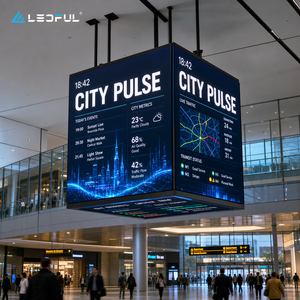
Architectural 360-degree geometric suspended cube featuring 90° bevel-edge seamless miter joints. Synchronized quad-channel mapping delivers cohesive dynamic volumetric content for commercial plazas, airports, and sports arenas.
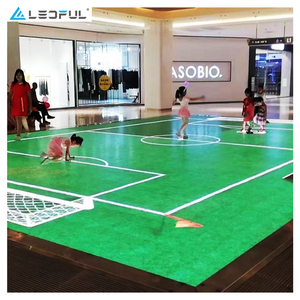
Reinforced high-load interactive floor display capable of supporting over 2,000 kg/m². Equipped with high-density optical touch sensors triggering millisecond visual feedback for clubs, experiential museums, and high-traffic interactive spaces.
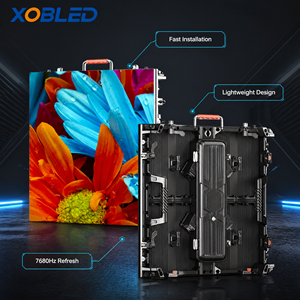
Precision 500x500mm modular framework engineered with fast-action magnetic latching locks. Features high-contrast black face SMD LEDs delivering true 4K native rendering, high dynamic range (HDR10), and wide viewing angles.
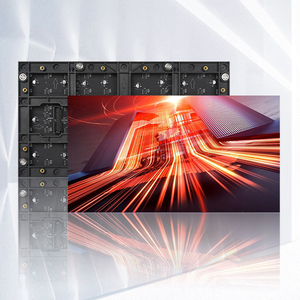
Commercial fine-pitch matrix module with front-service vacuum extraction access. Optimized for security command centers, broadcast control rooms, and corporate lobbies demanding seamless zero-bezel pixel fidelity.
Navigating the distinction between standard outdoor digital signage and industrial-grade architectural LED mesh screens requires deep structural analysis, wind tunnel verification, and thermal dynamic modeling.
Standard solid LED cabinets act as massive sailcloth barriers against high-velocity coastal winds. A 1,000 m² solid cabinet screen creates devastating structural shear loads on skyscraper facades during typhoons or hurricanes.
China's elite LED mesh manufacturers solve this utilizing precision aluminum hollow extrusion louvers and stainless steel wire rope matrices, delivering between 45% and 85% wind permeability. Wind passes through the structural gaps, reducing total mechanical drag by more than 60%.
When engineering high-rise corporate towers or luxury shopping center glazing, interior human comfort cannot be compromised. Architectural glass curtain walls require natural daylight preservation to comply with LEED and BREEAM certifications.
Modern LED mesh strip systems maintain daylighting levels while projecting vibrant imagery outward. Strip pitches from P15.625 to P50 preserve occupant sightlines while emitting up to 10,000 nits of sunlight-combating optical power.
Traditional outdoor LED cabinets require forced-air HVAC units or high-decibel exhaust fans to prevent thermal runaway. These motorized cooling components cause frequent field breakdowns in mission-critical environments.
Industrial LED mesh uses natural convective airflow across individual aluminum strip heatsinks. The open raster architecture exhausts internal heat instantaneously, yielding operational MTBF ratings in excess of 100,000 hours.
| Evaluation Parameter | Solid Outdoor Iron/Die-Cast Cabinet | Architectural Aluminum LED Mesh Screen | Engineering Benefit |
|---|---|---|---|
| Structural Weight | 45 – 65 kg / m² | 12 – 18 kg / m² | Reduces building structural load by > 70% |
| Wind Transparency | 0% (Solid Barrier) | 45% – 85% High Permeability | Withstands typhoon class 12+ forces safely |
| Building Daylighting | Zero (Completely blocks windows) | 50% – 80% Visible Light Ingress | Maintains office comfort & green building compliance |
| Cooling Methodology | Forced Fans / Industrial Air Conditioning | 100% Passive Convective Dissipation | Cuts ancillary maintenance costs to near zero |
| Secondary Steelwork | Heavy custom I-beam grid required | Minimal tension wire or lightweight profile | Decreases installation cost and installation speed |
| Waterproof Standard | IP65 (Enclosed cavity susceptible to leaks) | IP67 / IP68 (Full resin encapsulation) | Immunity to tropical downpours and condensation |
International AV consultants and general contractors are shifting away from short-term component purchasing toward lifecycle Total Cost of Ownership (TCO) models. What will drive LED mesh screen procurement over the next five years?
Global architectural standards require strict verification of building electrical baselines. LED screens operating 24/7 or cycling between daytime video and nighttime dark modes historically consumed massive parasitic standby loads.
Procurement teams now mandate intelligent power sequencing hardware—such as patented power management controllers—that drop active line voltage to zero true watts when black frames or schedules are detected. This prevents standby transformer idle losses, directly benefiting ESG compliance.
The era of remote blind procurement from generic trading companies is over. Tier-1 enterprise buyers now insist that qualified optical engineers inspect components directly on the factory floor before shipping.
Rigorous FAT procedures include 72-hour continuous thermal baking, spectrophotometric color consistency verification across LED binning lots, salt spray chamber testing, and IP68 water submersion audits to eliminate on-site failure risks.
Major infrastructure projects cannot wait 6 weeks for replacement pixel strips to clear international customs. Leading procurement contracts require local "Pixel Depot" backup hubs in the UK, North America, and the Middle East.
By pairing precision Chinese manufacturing speed with localized engineering centers stocked with batch-matched SMD diodes and driver boards, operators guarantee ten-year uniform color parity across maintenance intervals.
Leading-edge Chinese display labs continue to push physical boundaries. The next generation of mesh solutions blurs the line between transparent structural glazing and high-resolution cinema rendering.
Legacy LED strip configurations used Common Anode circuits, delivering an identical 5V current across Red, Green, and Blue diodes. Because Red diodes only require approximately 2.8V, the excess voltage dissipated as wasted thermal heat.
Next-generation mesh panels integrate Common Cathode power architecture, supplying distinct voltages (2.8V for Red, 3.8V for Green/Blue). This reduces overall display power consumption by 35% to 45% and drops operational surface temperatures by up to 15°C.
Historically, mesh was confined to coarse pitches such as P25, P31.25, and P50, requiring viewing distances greater than 30 meters. New micro-strip fabrication techniques have compressed pitches to P3.91, P7.81, and P10.4 without forfeiting wind flow or transparency.
This optical evolution allows urban shopping malls, transit terminals, and pedestrian centers to project high-definition video close to human eye levels while maintaining facade transparency.
Outdoor strip elements are vulnerable to vibration, hail, bird strikes, and wind turbulence. Advanced factories now use vacuum Glue-on-Board (GOB) optical polyurethane resin sealing.
This specialized polymer coating seals SMD diodes against moisture ingress, impact shocks, and UV degradation while maintaining anti-yellowing optical clarity over a 10-year lifespan under intense solar exposure.
We bridge global AV integrators with China’s highest-tier specialized LED manufacturing capabilities through intellectual property-backed product designs, unyielding quality assurance, and regionalized field support.
We analyze site sightlines, wind pressure coefficients, and architectural CAD drawings to specify ideal pixel pitch, transparency, and mechanical attachment brackets.
Built to rigorous proprietary intellectual property standards using gold-wire Nationstar or Nichia LEDs, copper-plated PCBs, and multi-layer conformal coatings.
Our engineers are stationed on the factory floor throughout production, conducting 72-hour burn-in tests, waterproof immersions, and chromatic batch calibrations.
Comprehensive after-sales service supported by dedicated regional Pixel Depots in the UK and USA for on-demand replacement modules and lifetime calibration backup.
Essential engineering insights for consultants, structural engineers, and AV contractors vetting Chinese manufacturing facilities.
Connect directly with our senior display engineers for custom wind-load simulations, viewing-distance analysis, comprehensive structural drawings, and direct factory pricing.