Every module, rental touring panel, and architectural glass surface below is manufactured in audited ISO9001:2015 cleanroom environments, utilizing Gold-Wire bonding, high-density SMD/COB packages, and military-spec Novastar/Brompton receiving hardware.

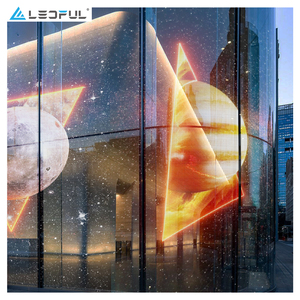
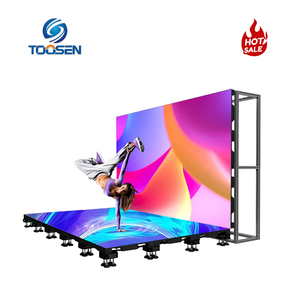
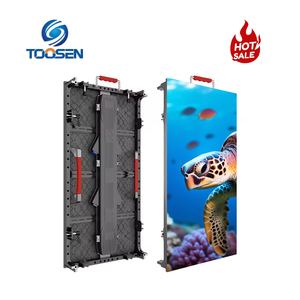
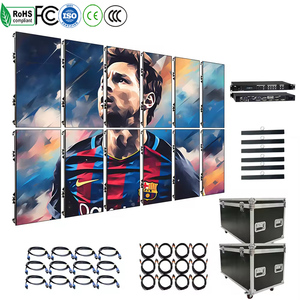
The global commercial display sector has moved definitively past generic metric bidding. Systems integrators, sports franchise operators, and commercial AV consultants are bypassing non-manufacturing domestic distributors in favor of vetted tier-1 Chinese manufacturing partners who offer deep engineering transparency, component traceability, and factory acceptance testing (FAT) protocols.
Buyers no longer focus strictly on upfront cost-per-square-meter. The procurement consensus prioritizes Total Cost of Ownership (TCO), heavily driven by heat dissipation thermal modeling, MTBF longevity, driver IC energy ratings, and standardized modular spares that eliminate obsolete cabinet runs.
With virtual production, XR stages, and stadium esports venues exploding globally, 3840Hz has become the baseline rather than the peak. Broadcast-grade procurement mandates 7680Hz scan frequencies and >16-bit low-grayscale depth to eradicate camera rolling scanlines, frame stuttering, and moiré artifacting.
Corporate ESG mandates and European EcoDesign guidelines require strict power management. Direct wholesale contracts now routinely specify Common Cathode driver circuits (reducing heat and power draw by up to 35%) and intelligent standby controllers such as patented ZEUS® zero-watt shut-off systems.
Selecting the proper packaging method is the single most critical engineering decision when commissioning a wholesale 4K canvas. Pixel pitch alone does not dictate longevity; surface shear strength, moisture absorption, optical reflectivity, and thermal conductivity define performance in mission-critical applications.
| Technology | Pixel Pitch Range | Impact Resistance | Contrast & Black Levels | Repairability Factor | Ideal B2B Procurement Use Case |
|---|---|---|---|---|---|
| COB (Chip on Board) | 0.4mm – 1.5mm | Ultra-High (>10kg/cm²) | Deep Matte Resin, 15000:1 | Requires cleanroom laser re-work | Control Rooms, Broadcast, Ultra-Close Executive Suites |
| MIP (Micro in Package) | 0.6mm – 1.8mm | High (Sealed Diode level) | Superior uniformity across angles | Module-level pixel single-swap | Next-Gen Fine Pitch 4K/8K walls with field maintenance |
| GOB (Glue on Board) | 1.2mm – 2.9mm | High (Epoxy over SMD) | Gloss/Semi-matte clear coat | Moderate field heat-gun peel | Interactive Touch Walls, High-Traffic Retail, Rental Floors |
| SMD (Surface Mount) | 1.5mm – 10.0mm | Low to Moderate | Industry standard mask-dependent | Easy single-lamp soldering | Standard DOOH, Arenas, Concert Stages, Outdoor Billboards |
Operating at the intersection of British engineering discipline, global field expertise, and China's most advanced LED assembly hubs in Shenzhen and Huizhou, we provide tier-1 supply integrity without the bloated markups of intermediate marketing brokers.
Our dedicated bilingual QC engineers reside physically on the factory floor throughout surface-mount placement, wire bonding, conformal coating, and 72-hour high-temperature white-balance burn-in. Every cabinet undergoes exhaustive Factory Acceptance Testing before crating.
We enforce 100% single-bin LED batching across the entire project schedule. We reserve extra wafer runs in temperature-controlled archives, ensuring that replacement modules ordered three years later match existing modules down to identical chromaticity coordinates.
Through our proprietary and globally patented ZEUS® system (awarded prestigious Made in Britain status), clients can automatically shed up to 100% of standby power during idle hours. The hardware isolates AC power lines silently and reliably, safeguarding sensitive power supplies against spikes.
Our executive leadership brings over 500 cumulative years of pioneering LED display experience, dating back to the earliest outdoor stadium installations. Integrators obtain direct factory-floor FOB/CIF pricing matched with UK/US project oversight and local Pixel Depot technical support.
Unlike transient sourcing agents who abandon accounts post-shipment, our global service ecosystem features regional service facilities in Las Vegas and the United Kingdom. We handle module-level microscopic wire repair, power supply servicing, and expedited local spares dispatch.
We do not constrain clients to off-the-shelf catalog dimensions. Whether fabricating 90-degree seamless beveled corners, concave broadcast curves, acoustically transparent soundTHRU meshes, or floor-to-ceiling perimeter wraps, our mechanical team delivers full 3D CAD framing packages.
Straightforward, verifiable guidance addressing pixel pitch math, thermal management, certification standards, and supply chain logistics for project estimators and Pro-AV design engineers.
A native 4K display contains exactly 3,840 horizontal pixels by 2,160 vertical pixels. Multiply the pixel pitch by the resolution to find the screen dimensions. For example, a 1.25mm display requires 4.80 meters wide by 2.70 meters high (16:9 aspect). At 1.56mm, a 4K canvas requires 6.00m x 3.375m; at 1.87mm, it requires 7.20m x 4.05m. Using higher pitches (e.g., 2.9mm) to reach 4K yields a screen over 11.4m wide, which is best suited for auditoriums or arena backdrops.
Traditional Common Anode circuits supply a uniform voltage (typically 5V) to the Red, Green, and Blue diodes simultaneously, despite the Red diode only requiring ~2.1V. The remaining voltage drops as wasted heat. Modern Common Cathode architecture splits power delivery, supplying 2.8V to Red and 3.8V to Green/Blue diodes. This reduces energy consumption by 25-35%, decreases cabinet operating temperatures by 10-15°C, and doubles driver IC lifespan.
While human eyes cannot directly detect the difference above 1920Hz, modern smartphones and cameras operate with rolling shutters at variable shutter speeds. At lower refresh rates (1920Hz-3840Hz), smartphone video captured by visitors, fans, or conference attendees exhibits black horizontal scanlines and flicker. A 7680Hz refresh frequency paired with >16-bit PWM grayscale ensures crisp, artifact-free social media footage and broadcast-grade camera readiness.
Every wholesale contract includes a standardized 3% to 5% complete spare parts package (modules, receiving cards, ribbon cables, and power supplies) manufactured from the exact same wafer run and batch lot. Furthermore, we archive calibration coefficients and raw bin profiles in our database, ensuring that any replacement module deployed in years 3 to 5 maintains perfect colorimetric matching across both color and brightness.
Indoor fine-pitch walls generally weigh between 24kg and 32kg per square meter. Structural backing must have a deflection tolerance under L/1000 to prevent panel misalignment. Electrical distribution requires dedicated circuits calculated on peak power consumption (roughly 600-800W/m² for indoor SMD, though average draw runs around 200W/m²). For corporate projects, we recommend three-phase distribution with staged relay power sequencing to avoid tripping breakers due to inrush current.
Our on-site engineering team runs an uninterrupted 72-hour burn-in schedule across white, black, and RGB color fields. Displays are inspected using high-resolution spectrophotometers to verify uniformity across 16 grid zones. Environmental testing includes elevated thermal chamber cycling (-10°C to +45°C), vibrational drop testing of flight cases, and full IP-rating spray tests (for outdoor products) prior to issuance of the final shipping inspection certificate.
Submit your architectural drawings, target pixel pitch, viewing distances, and environmental requirements. Our senior application engineers provide full BOM cost estimation, thermal calculations, and CAD structural framing within 24 business hours.