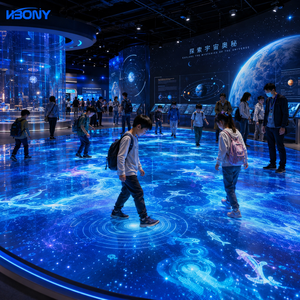
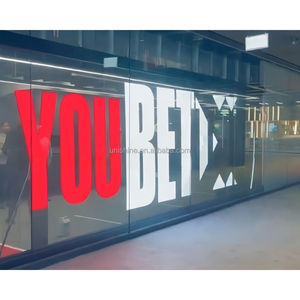
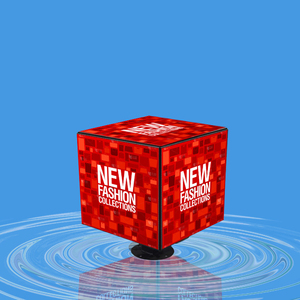
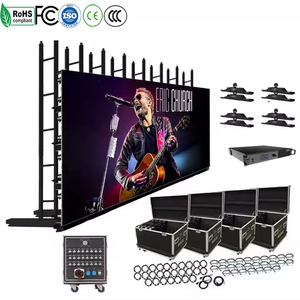
Direct wholesale specifications for high-durability floor tiles, architectural transparent film, 3D cubes, and tour-grade staging panels deployed worldwide.
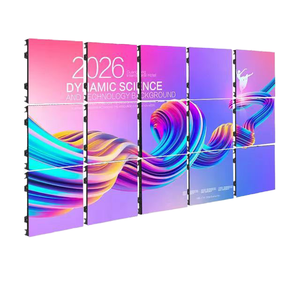
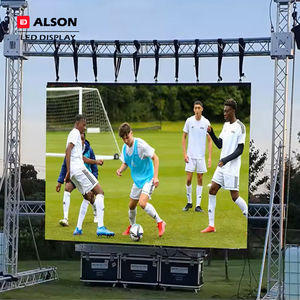
The commercial transition from rigid printed circuit boards (FR4 PCBs) to elastomeric, dynamically deformable visual media represents the single most significant architectural paradigm shift in commercial optoelectronics over the last decade. As global demand escalates for curved indoor atriums, cylindrical retail pillars, 360-degree immersive simulation tunnels, and organic architectural ribbons, international procurement managers, AV consultants, and system integrators face a uniquely complex supply chain inside China’s manufacturing ecosystem. Navigating China wholesale flexible LED screen manufacturers and suppliers requires technical rigor extending far beyond standard price-per-square-meter metric evaluations.
At the core of an enterprise-grade flexible LED screen is the Flexible Printed Circuit (FPC) composite substrate. Unlike conventional displays that use rigid multi-layer copper cladding, flexible panels utilize polyimide (PI) films bonded to roll-annealed (RA) copper foil. This metallurgical composition enables repeated dynamic flexion without inducing micro-fractures in circuit traces. The mechanical resilience of these substrates is further enhanced through precision-engineered silicone or polyurethane rubber base frames, precision magnetic contact latching, and elastomeric masks engineered to absorb continuous structural vibration.
However, sourcing directly from industrial hubs such as Shenzhen, Huizhou, and Dongguan introduces severe tier variance. Sub-tier factories frequently substitute electrolytic copper for roll-annealed foil, employ low-grade thermal adhesives that delaminate under sustained heat, or use inferior driver ICs prone to visual ghosting and thermal drift. For global media operators, theme parks, and stadium contractors, securing engineering longevity requires understanding the intersection of thermal dissipation physics, encapsulation methodologies (SMD vs. GOB vs. COB), and on-site Factory Acceptance Testing (FAT) protocols.
Industrial-grade flexible modules feature multi-layer polyimide films offering tensile strengths exceeding 200 MPa and thermal breakdown points above 300°C. This chemical composition eliminates copper peel failure during continuous concavity and convexity cycles.
Flexible LED modules rely on calibrated N38-N52 rare-earth neodymium magnetic pins countersunk into the elastomeric chassis. This delivers instantaneous zero-tool front servicing while counteracting cabinet gravitational shear forces on curved frameworks.
Certified modules achieve minimum bend radii ($R_{min}$) down to 150 mm without introducing seam pitch distortion or pixel displacement, allowing designers to clad columns, waves, and organic Mobius strips with millimeter precision.
Selecting the appropriate diode packaging architecture is the single most critical engineering decision during flexible LED sourcing. While traditional Surface Mount Diode (SMD) packaging dominated early cylindrical installations, the rise of fine-pitch displays (below 1.8mm) necessitates superior physical protection against edge shear forces during curving.
| Packaging Architecture | Impact Resistance (Impact/Shear) | Minimum Pitch ($P$) | Thermal Dissipation ($W/m^2$) | Surface Protection Rating | Procurement Cost Factor |
|---|---|---|---|---|---|
| Traditional Flexible SMD Discrete Epistar/Nationstar |
Low (Exposed diode pins subject to mechanical shear) | 1.875 mm | Moderate (Dissipates via rear thermal solder pads) | IP31 (Unsealed diode array, susceptible to dust) | Baseline (1.0x) |
| Glue-On-Board (GOB) Flex Polymer Coated SMD Matrix |
High (Optically clear structural epoxy coating) | 1.56 mm | Good (Epoxy aids uniform surface thermal spreading) | IP54 - IP65 (Moisture, chemical & collision proof) | Mid (1.25x - 1.40x) |
| Flip-Chip COB Flex Direct Silicon Die Bonding |
Exceptional (Direct substrate fusion, zero wire bonding) | 0.93 mm | Superior (Direct substrate heat transmission pathway) | IP65 (Impermeable front surface barrier) | Premium (1.80x - 2.30x) |
| Transparent Adhesive PET Film Flexible Optical Glass Vinyl |
Moderate (Elastic polymer protective skin) | 3.91 mm | Convection cooled across ambient glass surface | IP44 - IP65 (Integrated UV protective barrier) | Specialty (1.50x - 1.90x) |
B2B buyers operating in sports entertainment, broadcast studios, experiential retail, and cruise line architecture must evaluate supply chains through a multi-year lens. The global flexible LED video display ecosystem is experiencing rapid transformation driven by three core technological convergences:
1. Convergence of Micro-Pitch Flip-Chip COB with Ultra-Thin Silicon Carrier Films: As sub-1.0mm pixel pitches penetrate control rooms and corporate briefing centers, the rigid display cabinet is disappearing. In its place, ultra-light elastomeric modules mounted on prefabricated curved structural ribs allow architectural contractors to achieve 8K resolution on curved surfaces with zero faceted polygon lines.
2. Mandatory ESG Compliance, Carbon Accounting & Active Power Throttling: Global venue operators face aggressive carbon targets. Conventional LED walls draw substantial standby parasitic power (often 10%–20% of peak draw even when displaying a black feed). Patented intelligent management architectures—such as the award-winning digiLED ZEUS® system—are becoming standard procurement mandates, completely isolating and powering down idle screens to achieve measurable, verifiable zero-watt standby power.
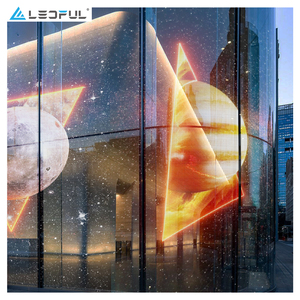
3. Direct-to-Glass Transparent Optical Film Integration: The architectural facade sector is rapidly shifting away from bulky steel framed curtain walls. High-lumen, transparent flexible films mounted directly to architectural glazing preserve natural daylight penetration while converting building envelopes into dynamic DOOH assets without structural reinforcement permits.
Eliminating moiré patterning and scan-line artifacts in broadcast studios and XR virtual production environments is now standard. Next-generation flexible panels feature 7680Hz refresh rates and 16-bit low-grayscale performance.
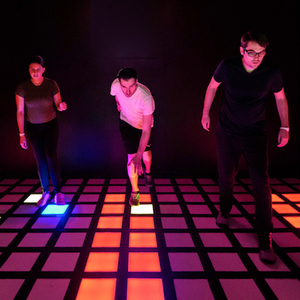
Next-gen interactive floor tiles feature load-bearing capacities over 2 metric tons per square meter, integrating optical radar and multi-point capacitive sensing arrays directly beneath toughened non-slip polycarbonate covers.
Sourcing strategies now mandate 7-to-10 year component support. Tier-one procurement models reject single-lot production runs in favor of factory-held batch reserves and dedicated regional Pixel Depots for on-demand component-level repair.
Procuring flexible displays directly from Chinese manufacturing lines without seasoned engineering representation carries substantial operational risk. Subtle variances in solder bath temperatures, copper trace purity, and automated silicone curing can yield an installation plagued by color shifts, magnet detachment, and premature driver IC failure. The enterprise delivery framework eliminates these failure modes through rigorous oversight, proprietary intellectual property, and global field infrastructure.
Unlike trading brokers, seasoned engineering teams remain physically embedded on the manufacturing line during critical assembly phases. Every batch of flexible panels undergoes rigorous Factory Acceptance Testing (FAT), including 72-hour thermal stress burns, dynamic flex fatigue cycling, automated optical inspection (AOI) for trace micro-fissures, and multi-angle spectroradiometric color calibration.
Flexible video walls clad across massive architectural atriums and arena concourses consume extensive idle energy. Incorporating globally patented, Made-in-Britain certified digiLED ZEUS® technology allows system controllers to completely isolate standby power draw, lowering thermal stress on internal power distribution units and slashing operational expenditures for ESG-focused operators.
With over 375,000 square meters of custom LED visual infrastructure operating reliably worldwide—from Premier League stadiums to premier theme parks—the engineering footprint provides continuous global lifecycle support. Dedicated Pixel Depots in Las Vegas and the UK maintain calibrated LED batch inventories, precision micro-soldering laboratories, and rapid field deployment teams.
No two architectural enclosures share identical curvature coordinates. Engineering specialists partner directly with project architects, evaluating viewing distances, structural weight ratings, and HVAC airflow models to custom-fabricate sub-frame mounting rings, CNC-milled backplates, and specialized cabling harnesses tailored to site geometry.
Consult directly with display specialists. Receive comprehensive engineering CAD layouts, photometric viewing distance calculations, structural curvature analyses, and wholesale factory pricing models tailored to your project.