
Engineered for high refresh fidelity (up to 7680Hz), thermal dissipation efficiency, and millimeter-precise physical splicing across indoor conference suites, high-impact rental stages, and rugged IP65 outdoor installations.
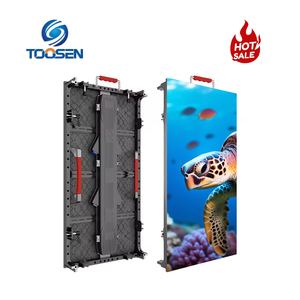
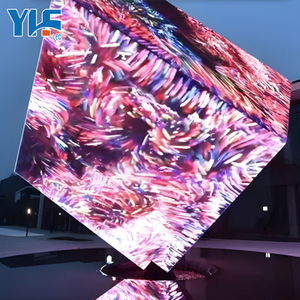
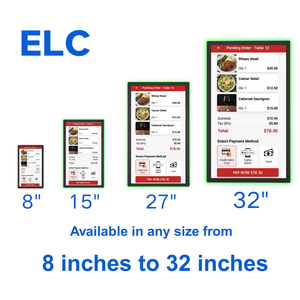
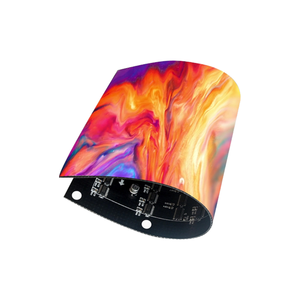
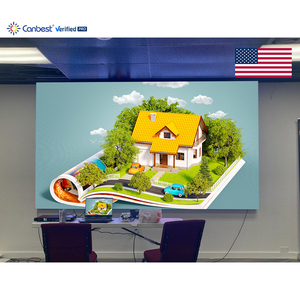
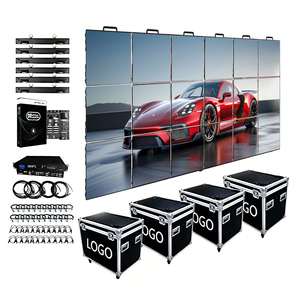
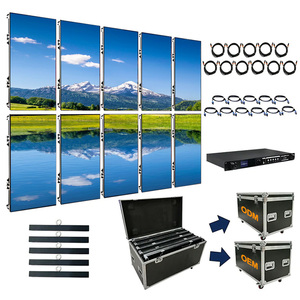
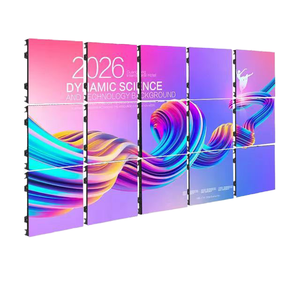
In the direct-view LED display landscape, off-the-shelf catalog products consistently fail large enterprise deployments due to batch chromatic variance, poor thermal design, and unvetted driver IC topologies. True manufacturing authority is rooted in component-level customization, strict optical binning, and on-the-factory-floor quality governance.
Every modular LED panel batch produced at our facility undergoes strict single-bin diode selection. We constrain chromatic binning within a tolerance of ±1.0nm dominant wavelength and luminance variance under 3%.
This guarantees that when hundreds of cabinets are spliced together into a massive 4K or 8K canvas, the wall presents absolute color consistency without the "patchwork" or "checkerboard" artifacts that plague broker-sourced displays.
Mechanical seam tolerance determines visual perfection. Our rental and fixed-install modular cabinets are machined using high-precision CNC die-cast magnesium-aluminum alloy tooling.
The cabinet frame flatness tolerance is maintained within ≤0.05mm. Fast-rigging ergonomic locks, precision locating pins, and quick-release magnetic module fixtures enable rapid field deployment with zero perceptible panel seams.
Unlike trading intermediaries that drop-ship blind stock, our engineering teams supervise the production line from SMT solder paste inspection (SPI) through optical automatic visual inspection (AOI).
Prior to dispatch, full system Factory Acceptance Testing (FAT) is executed: 72 hours of uninterrupted white, red, green, and blue burn-in, vibration stress testing, and thermal thermal-imaging verification under load.
System integrators often evaluate LED video walls strictly on pixel pitch and headline price, overlooking the underlying semiconductor architecture that governs operational life expectancy, contrast ratio, and thermodynamic stability.
Our modular display panels integrate Common Cathode energy-saving topology, which delivers discrete voltage rails to the Red (2.8V) and Green/Blue (3.8V) diode chips. This reduces operational thermal output by up to 35% compared to antiquated Common Anode circuits, eliminating heat build-up on the screen face, mitigating diode degradation, and extending power supply lifespan beyond 100,000 operating hours.
For rental staging and high-speed broadcast environments, our proprietary integration of high-grade PWM driver ICs ensures an ultra-high 7680Hz refresh rate with 16-bit grayscale depth, fully eliminating on-camera moiré, scan lines, and color banding during camera panning.
| Parametric Attribute | Standard Commercial Grade | Our Factory Spec |
|---|---|---|
| Power Architecture | Common Anode (Single Rail) | Common Cathode (Dual Rail) |
| Surface Temperature Rise | +22°C above ambient | <+9°C above ambient |
| Driver IC Refresh | 1920Hz - 3840Hz | Up to 7680Hz (Broadcast) |
| Grayscale Capability | 12-14 bit | 16-bit (65,536 levels) |
| Cabinet Alloy Flatness | ±0.25mm stamped steel | ≤0.05mm CNC Magnesium |
| Ingress Protection (OD) | IP54 Rear / IP65 Front | IP66 Hermetic Sealed Modules |
A technical whitepaper overview for AV architects, technology officers, and procurement directors evaluating capital deployments over the 2025–2030 technology horizon.
Traditional Surface-Mount Device (SMD) packaging has dominated the modular LED display sector for decades. However, as pixel pitch scales below P1.5 towards sub-millimeter MicroLED, SMD reaches mechanical fragility limits and elevated failure rates.
Chip-on-Board (COB) and MicroLED-in-Package (MIP) technologies are replacing SMD in high-value indoor control rooms and commercial applications. COB bonds raw LED flip-chips directly onto the PCB substrate, sealed with an optical-grade epoxy resin.
The result is a dustproof, moistureproof, anti-collision surface (GOB/COB hardness up to 4H) with an order-of-magnitude reduction in dead-pixel failure rates and vastly superior contrast ratios (>10,000:1).
With global ESG requirements and escalating commercial electricity tariffs in EMEA and North America, energy dissipation has transitioned from a trivial engineering specification into a core financial purchasing filter.
Traditional LED video walls consume hundreds of watts even in standby mode, keeping receiver cards, power supply fans, and IC registers energized.
The procurement trend has firmly pivoted toward intelligent automated hardware cutoffs (such as patented power management solutions like digiLED ZEUS®), which safely disconnect full line voltage from internal components during non-operational hours, delivering true zero power draw and expanding component MTBF by preventing standby heat degradation.
Film studios, high-end broadcasting rooms, and live events are ditching legacy green screens in favor of in-camera visual effects (ICVFX) using modular LED backdrops and ceilings.
Procurement teams for these studios require specialized panel architectures featuring ultra-precise camera sync (Genlock phase alignment up to 240Hz frame rates), high bit-depth color processing (DCI-P3 color gamut coverage >98%), and customized anti-reflective matte finishes to prevent camera lens glare.
Wholesale manufacturing must accommodate specialized low-latency processing pipelines—compatible with industry standard controllers such as NovaStar COEX (MX40 Pro) and Brompton SX40.
A historic pain point for fleet hire companies and AV rental houses has been hardware obsolescence caused by proprietary cabinet molds and differing module lock dimensions across consecutive production runs.
Modern procurement strategies demand standardized cabinet footprints (specifically universal 500x500mm and 500x1000mm frames) that accommodate multiple pixel pitch modules on the same chassis. This maximizes fleet utilization, slashes structural flight case overhead, and allows rental operations to upgrade from P3.9 to P2.6 or P1.9 simply by swapping modular tiles without purchasing new alloy framing.
Sophisticated enterprise buyers now calculate total 5-year operating expenditure rather than focusing strictly on freight-on-board (FOB) cabinet pricing. Low-cost displays utilizing inferior copper-wire LED packages and sub-par power supplies incur exorbitant field repair expenses.
By engineering systems with gold-wire bonding, aluminum PCB heat sinks, front-access magnetic vacuum maintenance tools, and low-dropout driver ICs, systemic power draw drops by 30% and mean time between failures (MTBF) extends past 50,000 hours.
Sourcing directly from a China manufacturer requires more than just containerized export logistics. Leading global buyers partner with organizations that maintain physical engineering presence and regional support depots.
With dedicated Pixel Depots situated in key Western operational hubs (such as Las Vegas and the UK), warranty replacements, module-level IC reflow soldering, and color recalibration can be executed domestically within days, circumventing multi-week international customs delays.
Combining state-of-the-art Chinese cleanroom manufacturing with Western AV engineering rigor, intellectual property protection, and on-site factory governance.
We do not operate as rigid broker traders. Instead, we match each unique client brief—from curved architectural atrium walls to outdoor stadium perimeters—with dedicated, specialized high-speed SMT facilities under our proprietary engineering IP and strict BOM controls.
Our senior optoelectronic engineers are stationed physically inside production facilities throughout the manufacturing schedule. We enforce incoming component screening, solder paste thickness verification, and multi-angle optical colorimeter calibration before packaging.
From custom cabinet extrusion radii, custom silkscreen brand printing, and cable-free internal connections to specialized flexible silicone modules, our R&D engineering department turns complex architectural concepts into certified, reality-tested hardware.
Global compliance is built directly into our PCB design. All modular screen products ship fully certified under CE (LVD/EMC), FCC Class A & B, RoHS, UL, and ETL safety directives, ensuring effortless electrical inspection sign-offs in municipal installations worldwide.
Every wholesale contract includes calibrated spare modules, driver ICs, and power units manufactured from the identical semiconductor silicon wafer and diode wafer lot. This guarantees that replacement parts installed five years later match the original screen's color coordinates flawlessly.
We provide full structural rigging calculation analysis, wind-load certification for outdoor gantries, tailored power distribution units (PDU), and white-glove DDP sea/air logistics direct to job sites, supported by commissioning technicians globally.
Direct, technically rigorous answers addressing component selection, calibration, import logistics, and operational longevity.
Uniformity is governed at two critical junctures: physical semiconductor binning and full-screen camera-based optical calibration. We mandate single-batch LED diode sourcing (strictly identical chip wafer bin, ±1nm dominant wavelength tolerance). Furthermore, upon mechanical assembly at our factory, the completed display array undergoes pixel-by-pixel radiometric camera calibration (Chroma Meter) to establish uniform factory calibration coefficients stored directly in the module's onboard EEPROM.
Our standard FAT protocol spans a mandatory 72 hours. It begins with high-temperature environmental chamber stress, followed by a continuous 24-hour full-white peak luminance burn-in to isolate early component failure (infant mortality of diodes and capacitors), and 48 hours of dynamic video, grayscale gradient scanning, and cold-start power cycling. Third-party or client-appointed inspectors are welcomed on the factory floor, and full optical spectral reports are signed off prior to crating.
Surface-Mount Device (SMD) packages solder individual packaged RGB diodes onto the board; it is cost-effective but prone to mechanical impact damage below P1.8. Glue-on-Board (GOB) applies a transparent polyurethane protective coating over SMD modules to provide IP65 mechanical impact and moisture resistance. Chip-on-Board (COB) bonds bare micro-scale LED chips directly onto the circuit board substrate with epoxy encapsulation, providing ultra-black background contrast, ultra-wide 170° viewing angles, superior thermal conduction, and complete physical protection against water, dust, and physical impact.
Standard wholesale orders include a 3% to 5% spare module allocation, alongside spare power supplies, receiving cards, ribbon cables, and ICs—all fabricated from the identical diode and silicon wafer run. Because LED diodes naturally attenuate in brightness over tens of thousands of hours, our receiving card architecture supports historical calibration profiles. If a spare module is installed after two years, the processor automatically applies an age-compensated luminance decay curve to blend the new tile seamlessly with adjacent panels.
Our modular display panels are engineered with universal mounting holes and pin configurations that interface seamlessly with all premier video wall processing ecosystems. Depending on project specifications, we supply and calibrate receiving cards from NovaStar (A5s Plus, A8s, A10s Pro, DH7516), Brompton Technology (Tessera R2/R2+), or Colorlight (i5/i9). We support uncompressed 4K/8K 10-bit/12-bit HDR10/HLG video pipelines, ultra-low latency sub-frame processing, and Genlock synchronization for broadcast studios.
Traditional Common Anode circuits supply a uniform 5V or 4.2V current to all three color diodes (Red, Green, Blue). However, the Red LED chip inherently requires only ~2.1V to 2.8V to achieve optimal luminance. The excess voltage in a Common Anode setup is converted directly into wasted thermal heat. Common Cathode power supplies split the voltage rails, feeding the Red diode at 2.8V and the Blue/Green diodes at 3.8V. This reduces energy consumption by 20% to 35%, lowers the panel surface temperature by 10°C–15°C, and removes the need for costly external air-conditioning units within billboard enclosures.
Our commercial and industrial modular display systems carry a standard 3 to 5-year factory-backed warranty, backed by an operational MTBF (Mean Time Between Failures) exceeding 50,000 hours, and a total calculated lifespan of 100,000 hours to half-brightness (L50). Warranty coverage includes component repair, module replacement, and dedicated firmware support via our international service teams and domestic Pixel Depots.
We routinely manage complex international door-to-door freight for major systems integrators across North America, Europe, Australia, and the Middle East. Whether under FOB Shenzhen, CIF, or Delivered Duty Paid (DDP) terms, our logistics department prepares complete harmonized tariff documentation (HS Code 8528.59), handling customs clearance, import tax documentation, and localized freight dispatch directly to your warehouse or installation job site in heavy-duty flight cases or wooden shipping crates.