From architectural glass media to ultra-narrow fine-pitch video walls and interactive kinetic surfaces, every system undergoes rigorous factory-floor acceptance testing (FAT) prior to worldwide dispatch.
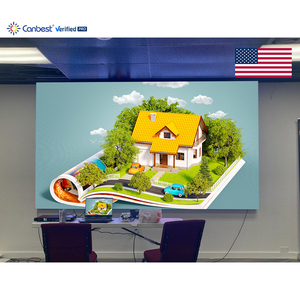
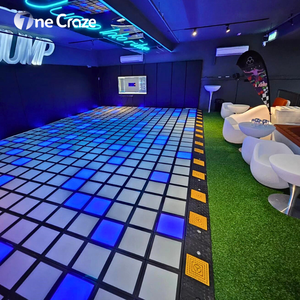
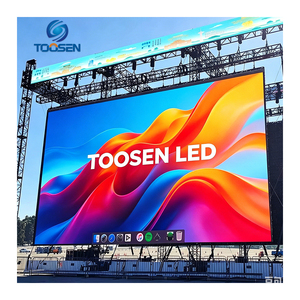
Purchasing wholesale transparent LED screens directly from China offers unmatched cost-efficiency, but without veteran engineering oversight, buyers face chromatic drift, structural non-compliance, and zero technical recourse. Our supply chain infrastructure eliminates these risks completely.
We do not broker uninspected merchandise. Resident optical and structural engineers supervise production directly on factory floors throughout Shenzhen and Guangdong, enforcing complete 72-hour continuous aging cycles, white balance verification, and rigorous Factory Acceptance Testing (FAT) before export clearance.
Leveraging proprietary power management innovations akin to European multi-award-winning systems, our transparent display systems can eliminate vampire drain completely. Screens draw true zero power during off-hours without crashing downstream receiving cards or resetting synchronizers, dramatically lowering commercial building operating expenditures.
To eliminate overseas logistics anxiety for tier-one integrators, localized component hubs and Pixel Depots in the UK and USA maintain identical-batch replacement SMD LEDs, IC driver boards, and custom power units, ensuring true same-week component fulfillment and zero display downtime.
A comprehensive procurement guide detailing the physics of glass-curtain transparency, structural thermal dissipation, and photon efficiency required for international architectural installations.
Architectural transparent LED displays depend on thin, rigid aluminum or composite PCB light bars mounted horizontally or vertically. Transparency (varying from 60% up to 88%) is governed by the ratio between the open aperture space and the surface area of the light bar and integrated driver chips.
For glazed atriums and retail store windows, opting for a 3.91mm horizontal pitch yields high indoor text readability but reduces optical transparency to roughly 65%. Conversely, a pitch of 7.82mm or 10.4mm elevates transparency past 80%, preserving natural daylight harvesting and exterior architectural sightlines without producing the moiré effect under indoor ambient illumination.
| Pixel Pitch (mm) | Transparency (%) | Optimal Viewing Dist. | Typical Nit Rating |
|---|---|---|---|
| P2.8 / P5.6 | 62% - 68% | ≥ 2.5 meters | 1,200 - 2,500 nits |
| P3.91 / P7.81 | 70% - 78% | ≥ 4.0 meters | 3,500 - 5,500 nits |
| P7.82 / P7.82 | 78% - 84% | ≥ 7.5 meters | 4,500 - 6,500 nits |
| P10.42 / P10.42 | 82% - 88% | ≥ 10.0 meters | 5,000 - 7,500 nits |
| Thermal Metric | Standard Solid LED | Hollow Transparent Screen |
|---|---|---|
| Air Flow Permeability | 0% (Hermetic back-box) | > 65% Open Natural Draft |
| Structural Self-Weight | 35 - 55 kg / m² | 8.5 - 14 kg / m² |
| HVAC Power Dependency | Compulsory mechanical cooling | Zero auxiliary HVAC required |
| Solar Heat Gain Coefficient | Traps infrared radiation | Permits unobstructed ventilation |
Traditional indoor and outdoor video walls require heavy steel substructures and external air-conditioning ducts to prevent thermal throttling of the driver ICs. In contrast, hollow-louver transparent displays capitalize on ambient convective cooling through their louvered chassis design.
When installed behind commercial glass facades, transparent screens preserve building aerodynamics. The minimal chassis profile (often under 12kg per square meter) allows direct cable suspension or tensioned truss mounting without reinforcing building structural beams, drastically slashing installation lead-time and architectural retrofitting costs.
As international sustainability mandates (such as the EU Corporate Sustainability Due Diligence Directive and ASHRAE building standards) take center stage, international AV buyers must navigate crucial shifts in visual hardware procurement.
B2B procurers are transitioning from rigid aluminum bar profiles to flexible, transparent polyimide and PET film screens. These ultra-thin displays adhere directly to existing building glass without custom support mullions, preserving architectural geometry while delivering over 85% transparency and significantly reduced air freight shipping volume.
Commercial venue developers are rejecting hardware with persistent idle current draw. Future tenders demand integrated power-saving controllers that eliminate overnight vampire energy draw completely. Procurement teams prioritize display designs boasting low thermal footprint and intelligent ambient light adaptation to meet municipal carbon budgets.
Passive matrix (PM) scanning is gradually being replaced by Active Matrix (AM) glass-substrate routing. AM transparent displays drive sub-pixels with dedicated thin-film transistors (TFT), eliminating flicker, elevating peak nit efficiency, and providing flawless scan-line performance for live broadcast and camera tracking.
Where high-volume manufacturing meets semiconductor-level micro-assembly: key technological benchmarks shaping next-generation architectural media.
MIP packaging allows individual microscopic testing and optical binning before tape-and-reel placement on transparent substrates. This eliminates entire-module discards common in legacy COB manufacturing, drastically lowering batch costs while narrowing color temperature variance across large glass facades to within 1.5 MacAdam ellipses.
Transparent installations in tropical or humid transit hubs face condensation-induced electrical shorting. Novel vacuum-deposited conformal nano-coatings provide complete IP65 front-and-back moisture isolation on thin light bars without dulling optical output or imparting refractive yellowing onto the glass facade.
Modern architectural displays often span hundreds of square meters across multiple building stories. Advanced transparent hardware now features integrated micro-receiving cards embedded within frame mullions, supporting long-haul multi-mode 10G optical fiber uplinks without bulky external sender racks.
Clear, unvarnished guidance addressing direct manufacturer vetting, installation compliance, optical physics, and after-sales support.
Transparent LED displays are predominantly installed indoors directly behind an exterior glass facade. This method capitalizes on indoor ambient conditions, using lower-cost IP30/IP40 frames while utilizing high-brightness LEDs (3,500 to 6,000 nits) to punch through tinted or Low-E double glazing without subjecting internal components to rain, wind, or urban pollutants.
Standard architectural Low-E (low-emissivity) coatings reflect infrared light and absorb between 15% and 35% of visible photon transmission. When sourcing from China manufacturers, buyers must measure glass transmittance on site and specify factory calibration that compensates for green/cyan tint shift by adjusting RGB drive voltages in the controller.
Because transparent displays prioritize minimal visible wiring, standard chunky power cables are unacceptable. We engineer decentralized low-voltage busbars hidden within vertical frame mullions, running 24V or 48V DC power supplies with step-down regulators to eliminate noticeable copper wire runs and prevent chromatic voltage drops over heights exceeding 20 meters.
Every commercial project we manufacture runs from a single unified wafer lot and SMD LED binning batch (tightly locked wavelength within ±1nm). Furthermore, a contractual 3% to 5% complete spare module reserve is produced simultaneously and logged into our UK and US Pixel Depots, guaranteeing identical optical output for seamless maintenance years later.
All transparent export hardware must carry legitimate, laboratory-verified CE-LVD, CE-EMC (Class A or Class B depending on commercial vs. residential zones), FCC Part 15, and UL/ETL 62368-1 certifications. We provide accredited third-party test reports (SGS, TÜV Rheinland) with verified certificate numbers prior to dispatch to prevent customs border holds.
Prior to sea or air transit, our on-site engineers assemble the entire display array in our factory, conducting an uninterrupted 72-hour burn-in stress test. We verify real-time current draw, thermal thermography, pixel-level color calibration, and structural hanging alignments, transmitting live interactive video walkthroughs and signed FAT documentation to the client.