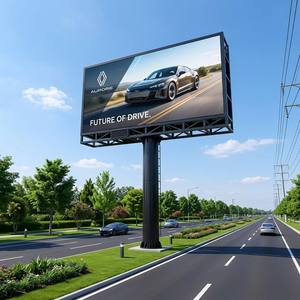
IP65 Waterproof P4 P5 Fixed LED Advertising Display 7680Hz
Ultra-high 7680Hz refresh rate eliminates camera banding; robust IP65 cast housing with high-brightness 6500+ nits output for exterior live productions.

Precision-manufactured display hardware engineered for broadcast cameras, immersive flight simulators, live stage XR backdrops, and architectural integration.
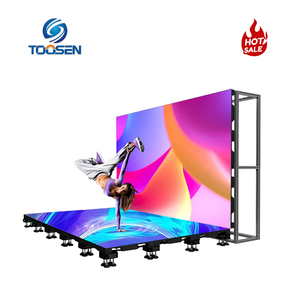
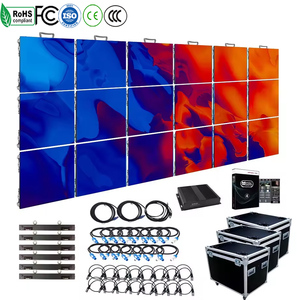
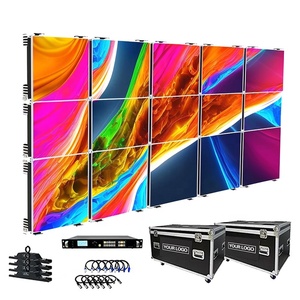
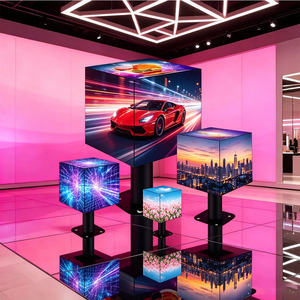
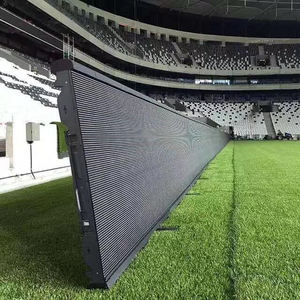
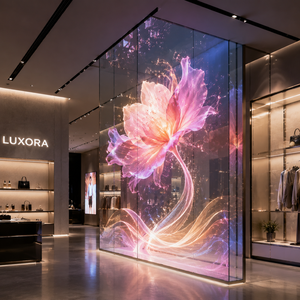
The transformation of modern film production, high-tier television broadcast, and commercial virtual reality from traditional chroma key (green-screen) pipelines to In-Camera Visual Effects (ICVFX) within LED volumes represents the most profound cinematic shift of the past three decades. Sourcing virtual production display systems directly from Chinese manufacturing centers requires far more than comparing surface-level hardware prices; it demands an intricate engineering evaluation of optical characteristics, diode binning consistency, refresh-to-shutter sync mechanisms, and spatial thermal dissipation.
A true Virtual Production LED volume is not simply a high-density video wall—it is an active cinematographic instrument. When motion picture camera sensors (equipped with global or rolling electronic shutters operating at cinema standard 24.00, 29.97, or 60.00 fps) shoot directly into an LED matrix, any physical or optical deviation manifests as visible scan lines, off-axis color tinting, low-bitrate shadow posterization, or severe moiré fringing. As premier China wholesale virtual production LED manufacturers and factory partners, we design and supervise the assembly of display panels built to the exacting standards demanded by the world's leading visual effects directors and live event engineers.
In virtual production stages powered by Unreal Engine 5 nDisplay clusters, display hardware must resolve three persistent physical hurdles: temporal synchronization, color fidelity across dynamic ranges, and optical moiré mitigation. High-end systems utilize customized driver ICs (such as Macroblock MBI5264 or Chipone ICN2163) combined with FPGA processing matrices from Brompton Technology (Tessera SX40) or Megapixel VR (Helios). Operating at 7680Hz refresh rate and a low multiplexed scan rate (1/8 or 1/16 scan compared to standard rental displays running at 1/32 scan) guarantees that cinema camera shutters opened to standard 180° shutter angles reveal zero black frame insertion or rolling horizontal bars across any shutter speed.
| Performance Parameter | Commercial Rental Stage Display | Standard Broadcast Studio LED | Studio-Grade Virtual Production Volume (Our Standard) |
|---|---|---|---|
| Pixel Pitch Range | P3.91mm - P4.81mm | P1.8mm - P2.5mm | P1.5mm - P2.3mm (Wall) / P2.9mm (Floor) Optimized |
| Driver Refresh Rate | 1,920Hz - 3,840Hz | 3,840Hz | 7,680Hz Native with Frame Multiplication |
| Driver Scan Multiplexing | 1/32 or 1/16 Scan | 1/16 Scan | 1/8 Scan Rate (High-Speed Camera Safe) |
| Grayscale Processing | 14-bit (16,384 levels) | 16-bit (65,536 levels) | Up to 22-bit with Dynamic Engine Technology |
| Color Gamut Coverage | 85% Rec. 709 | 95% Rec. 709 / 80% DCI-P3 | >99.2% DCI-P3 / 88% Rec. 2020 Spectral Accuracy |
| Optical Surface Coating | Glossy or Semi-Matte Resin | Standard Diffusion Epoxy | Micro-Lens Anti-Glare Surface (Anti-Moiré Matte) |
Understanding where LED packaging and display control engineering is heading allows production facilities and studio rental operators to make hardware capital expenditures that do not become obsolete within two shooting seasons. The Chinese manufacturing landscape is actively migrating from conventional Surface Mount Devices (SMD) toward next-generation packaging architectures designed for optical longevity and superior physical resistance.
Chip-on-Board (COB) and Micro-LED-in-Package (MIP) have eliminated delicate solder legs. Epoxy encapsulation offers an IP65 collision-proof front face that completely disperses ambient lighting while providing an ultra-wide 170° horizontal viewing angle with near-zero color shift.
Traditional HDMI/SDI baseband cabling is being rapidly replaced by high-throughput 25GbE and 100GbE fiber pipelines. Uncompressed IP video feeds communicate directly with LED controller nodes, reducing end-to-end studio video latency to under 1 frame (less than 8ms).
Advanced controller firmware allows two to four physical cinema cameras—operating on synchronized genlock phases—to capture completely distinct background environments from the same physical LED screen simultaneously, tripling production efficiency per studio day.
When procurement managers, broadcast executives, and staging rental networks source LED volumes from China, the biggest pitfall is prioritizing lowest initial cost-per-square-meter over operational lifecycle parameters. Below are the critical strategic trends defining wholesale procurement across North America, Europe, and Asia:
Never purchase studio walls across staggered production runs. High-end procurement requires full volume contracts to specify identical semiconductor wafer silicon lots from Cree, Nichia, or Sanan to prevent optical wavelength drift over time.
Ensure cabinet mechanics allow rear-chassis structural stacking while permitting total front-service module extraction. If a diode module suffers physical damage during lighting rig moves, swap-out times must stay under 45 seconds.
Large stages drawing 200kW to 500kW generate immense operating and HVAC cooling costs. Hardware integrated with zero-watt standby systems like digiLED ZEUS® reduces overnight and turnaround power waste by up to 92%.
Unlike conventional middleman export companies, we bridge European and American AV engineering excellence directly with China's elite manufacturing facilities. Every custom volume is designed to proprietary digiLED intellectual property, featuring custom-tooled chassis and tier-one components.

A unified five-stage delivery process engineered to remove technical friction for AV consultants, studio architects, and cinema integrators.
Viewing angle geometry, camera focal length analysis, pixel pitch calculation, and mechanical curve radius modeling.
Selecting custom LED driver ICs, high-flux gold-wire diodes, ultra-quiet fanless power units, and custom magnesium frames.
Hands-on factory floor inspection, optical spectrometer color calibration, thermal camera mapping, and 72-hour burn-in.
Precision truss and ground stack installation, SMPTE ST 2110 IP network configuration, and sub-pixel camera tracking sync.
Decade-long lifecycle care with calibrated spare diode caches, Las Vegas / UK service depots, and zero-downtime SLA response.
Detailed technical answers addressing the critical mechanical, electrical, and optical challenges of large-format LED studio walls.
Contact our engineering specialists to discuss pixel pitch selection, viewing distance geometry, Brompton/Megapixel controller topography, and factory-direct pricing for your next studio installation.
Inquire Now