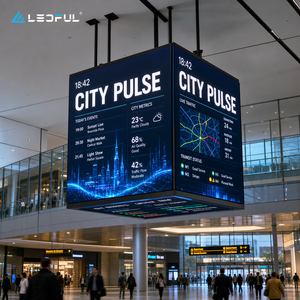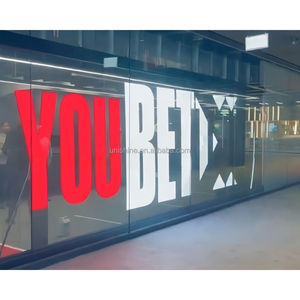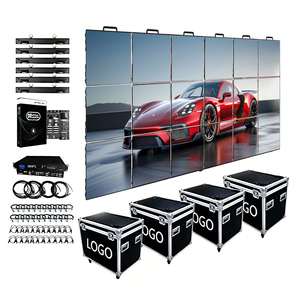
Explore our tier-1 precision-manufactured display modules, structural displays, and high-impact custom solutions designed for enterprise installations, stadiums, broadcast, and DOOH applications.
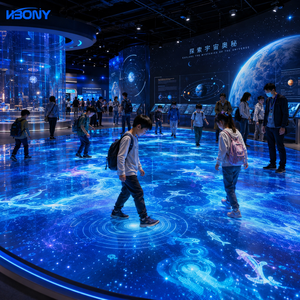
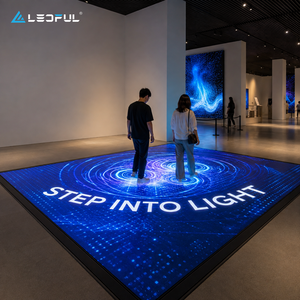
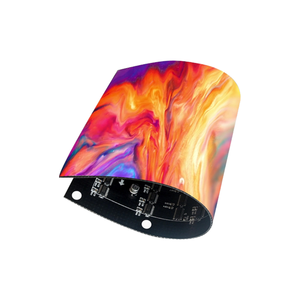
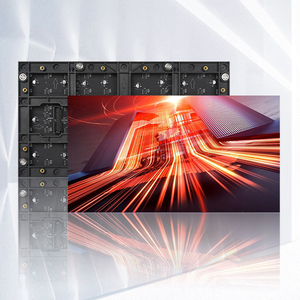
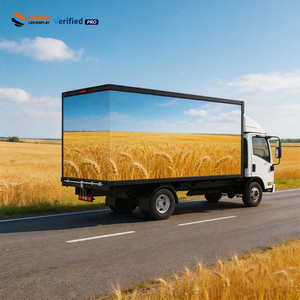
The global market for large-format displays has evolved beyond off-the-shelf catalog models. Today, enterprise audio-visual consultants, system integrators, municipal planners, and architectural designers seek direct collaboration with an established Custom OEM LED video wall factory to satisfy rigorous mechanical, optical, and environmental requirements.
Procuring commercial visual arrays requires substantial information gain regarding driver IC binning, thermal dissipation architectures, packaging methodologies (SMD vs. COB vs. GOB vs. MIP), and lifecycle power footprint. A qualified custom OEM manufacturing partner does not simply assemble components; they maintain strict oversight across every layer of the optical stack to ensure tight color gamut uniformity, high refresh rates (up to 7680Hz), low electromagnetic interference (EMI), and maximum reliability in diverse environments.
Drawing on decades of hands-on tier-1 manufacturing expertise, our custom OEM manufacturing model operates on absolute transparency and meticulous quality control.
We do not rely on standard assembly lines. We select specialized manufacturing facilities optimized for fine-pitch COB, high-durability floor platforms, or high-brightness DOOH, building exclusively to custom proprietary intellectual property.
Dedicated quality engineers remain directly on the production floor during your build. Every panel completes a multi-stage 72-hour burn-in and exhaustive Factory Acceptance Testing (FAT) before export packing.
Integration of intelligent zero-standby power engineering (such as digiLED ZEUS® class technologies) eliminates phantom draw, extending diode life while drastically lowering operational carbon profiles.
Procurement directors and AV engineering consultants face rapidly changing technological specifications. Success in future projects requires anticipating industry-wide manufacturing transitions:
Micro-LED-in-Package (MIP) and Chip-on-Board (COB) technologies continue to replace legacy SMD packages under P1.5mm, delivering superior black levels, lower failure rates, and higher physical impact resistance.
Energy mandates worldwide are rendering hot-running common-anode systems obsolete. Modern custom OEM designs utilize common-cathode topologies to reduce module heat by up to 35% and minimize energy draw.
Standard flat rectangles are yielding to fluid architectural integration. Facilities must offer agile OEM CNC tooling for curved, wave, ribbon, spherical, and acoustically transparent cabinet frames.
Leading buyers insist on regional component maintenance depots rather than sending faulty modules overseas, safeguarding project uptime with fast, domestic micro-soldering and module recalibration.
To retain structural and visual fidelity over 100,000 operational hours, OEM engineering requires careful calibration across several critical systems:
1. Driver IC Refresh & Grayscale Architecture: High-frame-rate virtual production (XR) and sports broadcast environments demand refresh rates of 3,840Hz to 7,680Hz combined with 16-bit to 22-bit grayscale depth. Premium custom OEM factories deploy customized driver ICs to mitigate scan-line artifacts, ghosting, and low-brightness color shift.
2. Structural Die-Cast Precision & Thermal Management: Tight pixel pitches require cabinet dimensional tolerances under 0.05mm. Advanced factories utilize CNC-machined die-cast magnesium or aluminum chassis that act as passive heat sinks, eliminating noisy cooling fans while maintaining uniform thermal distribution across adjacent tiles.
3. Optical Anti-Glare & Surface Shielding: Floor displays, transparent film substrates, and high-foot-traffic indoor walls benefit from proprietary resin encapsulation (such as GOB/AOB coatings). These provide up to IP65 face protection, anti-static safety, scratch resistance, and impact ratings up to 2 tons per square meter, without inducing chromatic aberration.
Critical considerations for integrators and procurement teams evaluating custom OEM LED production facilities.
A reputable OEM manufacturer reserves raw LED dies from a single wafer production run (same color wavelength and brightness binning). In addition, factories provide a 3% to 5% spare module allocation from the identical batch to guarantee seamless color calibration over the screen's operational lifetime.
A comprehensive FAT includes a 72-hour continuous video and full-white field burn-in test, high-voltage insulation checks, thermal imaging inspections to identify hot spots, vibration simulation for transit durability, and full optical colorimetry alignment prior to crating.
Custom OEM production allows audio-visual consultants to specify precise power supply efficiencies, proprietary mechanical locking hardware, architectural radii for curved spaces, bespoke cable egress locations, and compliance with local safety certifications (UL, CE, FCC, RoHS).
Traditional video walls draw parasitic standby current even when idle, degrading power supplies and generating unnecessary heat. Systems like digiLED ZEUS® fully disconnect high-voltage draw at the module level while keeping logic systems ready, reducing operating expenses and extending component lifespans.
Consult directly with our engineering team to review viewing distances, pixel density choices, mechanical rigging, and power efficiency specifications tailored to your project brief.
Inquire Now