Precision-manufactured outdoor LED displays engineered for commercial DOOH networks, landmark civic installations, dynamic sports arenas, and roadside mobile platforms.
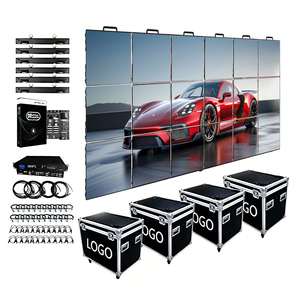
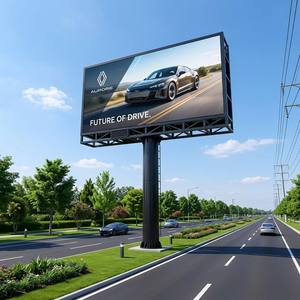
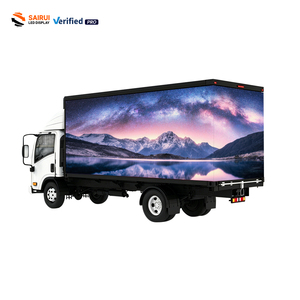
Deploying large-format outdoor LED billboards requires mastering the physics of direct thermal dissipation, UV solar radiation shielding, and optical micro-louver design. Traditional DOOH screens suffer from lumen decay and hue shifts when exposed to unmitigated solar load. Our custom OEM engineering architectures utilize high-efficiency common-cathode driver topologies that segregate the forward voltage lines for Red (approx. 2.8V) and Green/Blue (approx. 3.8V) diodes.
By routing split rail voltages directly to the die junctions, common-cathode architecture decreases operating temperatures by 20°C to 35°C compared to conventional common-anode circuitry. This structural cooling prevents PCB thermal warping, prolongs MTBF beyond 100,000 operational hours, and slashes total ownership energy consumption by up to 40%.
Get a Quote| Engineering Metric | Standard Commercial Grade | digiLED OEM Export Spec |
|---|---|---|
| Driving Architecture | Common-Anode (Passive Heat) | Dynamic Common-Cathode ICs |
| Ingress Protection | Front IP65 / Rear IP54 | True Dual IP68 / IP66 Sealed |
| Max Calibrated Output | 5,500 - 6,500 Nits | 8,500 - 10,500 Nits Continuous |
| Refresh Rate Rate | 1,920Hz - 3,840Hz | Up to 7,680Hz Broadcast Grade |
| Power Management | Continuous Idle Standby | Patented ZEUS® Zero-Draw Offload |
Technical evolution shaping high-ROI commercial display investments across global media operators, stadium developers, and municipal signage authorities.
Global billboard tenders now mandate strict ESG adherence. Municipalities penalize excessive light pollution and high standby energy footprints. Procurement teams prioritize systems equipped with intelligent power routing (such as UK-engineered digiLED ZEUS®), which completely cuts baseline draw during non-broadcasting hours, reducing carbon credits and running costs significantly.
Micro-LED-in-Package (MIP) and outdoor Chip-on-Board (COB) technologies are penetrating billboard designs below P3.0mm. Resin encapsulation protects against coastal salt-fog, torrential acid rains, and physical impact, ensuring zero-pixel failure rates along highways and dynamic sports perimeters where traditional SMD surfaces remain vulnerable.
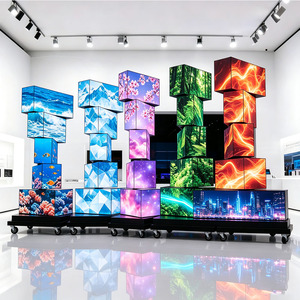
Standard rectangular billboards are giving way to wrap-around 90° curved and faceted displays. Global advertisers pay upwards of a 300% premium for anamorphic 3D creative campaigns. Exporters must supply specialized sub-millimeter curved cabinetry that completely eradicates the black seam at intersections to maintain uninterrupted visual illusion.
With programmatic advertising networks operating thousands of distributed nodes, billboard controller architectures require end-to-end hardware encryption. The latest OEM specs require IoT sensor telemetry—monitoring cabinet humidity, smoke, structural vibration, voltage anomalies, and automatic optic calibration via cloud pipelines to prevent blackouts.
We redefine digital billboard distribution by merging bespoke intellectual property, in-person factory floor quality gates, and dedicated overseas support hubs.
Unlike broker-exporters or single-factory captives, we maintain total design independence. We audit and partner with prime tier-1 manufacturing facilities, choosing ideal chassis, ICs, and masking configurations. Our core product lines run on proprietary digiLED intellectual property, ensuring exceptional reliability.
International shipments cannot afford dead-on-arrival surprises. Our engineers live on the manufacturing floor during every production run. We perform strict, multi-stage Factory Acceptance Testing (FAT), including 72-hour sustained thermal burning, high-pressure IPX6 water jets, and colorimeter batch binning.
Our commitment extends across the lifecycle of your media asset. With regional Pixel Depots operating in Las Vegas, London, and Tokyo, we provide local spares, rapid module component refurbishment, batch-matched calibration services, and real-time field engineering support across EMEA, the Americas, and Asia.
Technical guidance covering photometric requirements, mechanical tolerances, structural safety, and global export acceptance criteria.
Connect directly with our global display engineering teams in London, Las Vegas, or Tokyo for custom optical modeling, viewing-distance calculations, and comprehensive OEM estimates.
Get a Quote