Factory-direct OEM solutions designed for luxury retail flagships, supermarket chains, digital out-of-home (DOOH) retail hubs, and high-impact experiential environments.
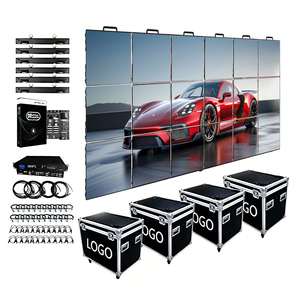
In high-density commercial retail spaces, display hardware is not merely a signage surface—it represents the spatial architectural facade and high-uptime revenue catalyst for global brands.
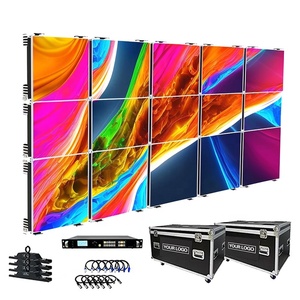
Modern retail experiences demand pixel pitches below 1.5mm without sacrificing physical durability. While standard Surface Mount Devices (SMD) suffer vulnerability to shopper impact and moisture ingress, our Chip-on-Board (COB) and Glue-on-Board (GOB) manufacturing protocols bond bare LED dies directly to the carrier PCB with an epoxy-resin resin sealant.
This yields an ultra-smooth, matte-black optical plane exhibiting IP54 front-surface protection, eliminating moiré patterns and delivering a massive 170-degree horizontal viewing cone indispensable for wide storefronts.
Operational expenditure in multi-site retail estates is governed directly by thermal dissipation and electrical power draw. By employing Common-Cathode architecture, separate, precisely calibrated voltage lines supply Red (approx. 2.8V) and Blue/Green (approx. 3.8V) semiconductor channels independently.
Unlike obsolete Common-Anode topologies that dump excess voltage as heat, Common-Cathode engineering reduces overall module heat output by up to 35%, decreases cooling AC burdens in enclosed retail shops, and slows LED diode luminous decay across 100,000 running hours.
Flagship stores, duty-free airport hubs, and luxury mall concessions operate amidst intricate electronic infrastructure: RFID inventory readers, contactless POS terminals, Wi-Fi 7 beacons, and sensitive optical surveillance. Unshielded LED video walls produce electromagnetic interference (EMI) that disrupts surrounding wireless networks.
Our OEM chassis designs enforce multi-layer PCB ground planes, isolated ferrite filtering, and full die-cast magnesium electromagnetic enclosures meeting FCC Part 15 and EN55032 Class B standards for residential-grade non-interference.
From structural transparency to intelligent optical engines: how forward-thinking retail brands are migrating from passive screens to responsive spatial architecture.
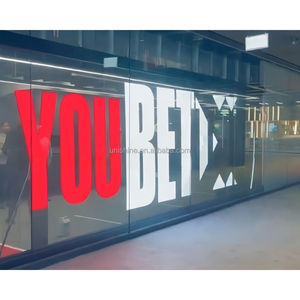
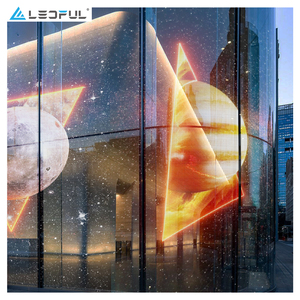
The retail storefront window is an ultra-valuable visual gateway. Traditional rigid opaque LED cabinets obstruct interior daylight and destroy sightlines into the boutique. The commercial industry has pivoted aggressively toward self-adhesive PET optical film displays incorporating micro-mesh etched conductor paths.
Boasting light transmittance rates exceeding 85%, these ultra-thin films mount directly to building glass via optical clear silicone. Utilizing high-efficiency driver chips that deliver up to 5,000 nits of daytime-visible luminance, retail facades transform into dynamic holographic video billboards without altering external building architecture or violating historic urban preservation zoning codes.
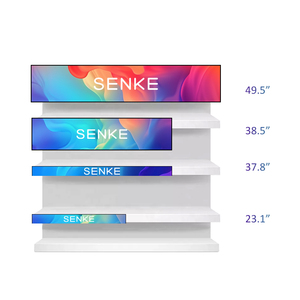
Supermarket chains, cosmetic boutiques, and consumer tech emporiums are rapidly replacing traditional static paper labels with stretched-aspect digital shelf-edge video strips. Running across ultra-wide aspect ratios (such as 16:3 and 32:9) in 19, 24, 28, and 48-inch form factors, these modules integrate directly with enterprise ERP and Electronic Shelf Labeling (ESL) clouds.
Through real-time API integrations, retail operators trigger dynamic dayparting price changes, localized brand promotions, and automated QR-code loyalty activations right at the definitive point of purchase (POP), lifting basket conversion rates by upwards of 28%.
| Display Technology Architecture | Typical Pixel Pitch (mm) | Daytime Luminance (Nits) | Transparency / Profile | Primary Commercial Retail Fit |
|---|---|---|---|---|
| Adhesive Holographic Film LED | P3.91 - P10.4 | 3,500 – 5,500 nits | >85% Optical Transmittance | Glazed storefront facades, street-facing luxury glass |
| Micro-Pitch Fine COB Video Wall | P0.9 - P1.56 | 600 – 1,200 nits | Opaque Solid Matte IP54 | Flagship feature walls, VIP lounges, close-up luxury counters |
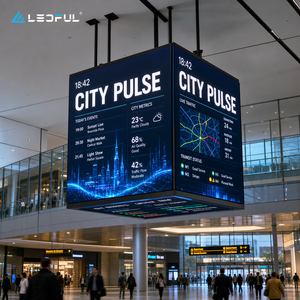
| Suspended Polyhedral Cube LED | P1.8 - P2.5 | 800 – 1,500 nits | 360° Multi-Faceted 3D | Shopping mall central atriums, multi-level retail concourses |
| Stretched Bar Shelf-Edge Display | Fine Ultrawide TFT / LED | 450 – 700 nits | Ultra-Slim Horizontal Form | Gondola end-caps, shelf channels, dynamic point-of-sale |
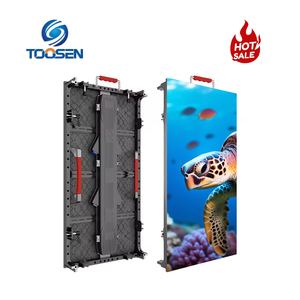
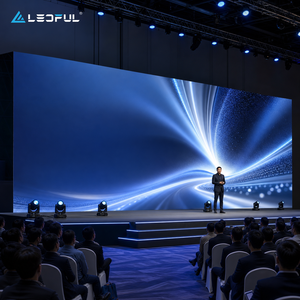
| Ultra-Refresh Stage & Event Panel | P1.9 - P3.9 | 1,200 – 4,500 nits (7680Hz) | Die-Cast Modular Rental / Fixed | Pop-up fashion shows, launch spaces, live retail activation |
Navigating global supply chain sourcing, Scope 2 emissions reporting, and total cost of ownership (TCO) across 5-to-7 year multi-store retail rollouts.
Global retail operators face strict commercial carbon accounting rules. Historically, an idle 4K LED video wall drew 300W to 1.2kW in continuous parasitic standby power just maintaining receiver card connectivity. Future procurement specifications legally require hard-cutoff intelligent power management systems (such as globally patented relay architectures) that safely discharge circuit capacitors and reduce screen idle draw to absolute 0-Watts outside mall trading hours.
Procuring through third-party broker layers introduces severe risks of module bin mixing and color deviation. Institutional retail buyers now mandate Factory Acceptance Testing (FAT) protocols, sending technical representatives or certified display engineers straight to factory assembly floors. FAT parameters require rigorous 72-hour thermal baking, full white-balance colorimetry checks, and identical single-bin Nichia/Nationstar LED batch reservations.
Commercial displays are shifting from dumb output screens to bi-directional customer interaction nodes. Enterprise RFP documents now routinely specify integration of anonymous camera-based computer vision analytics (demographic dwell-time telemetry), LiDAR-driven gesture tracking for interactive shop windows, and localized beacon triggers that dynamically serve contextual product creative.
Nothing destroys luxury brand prestige faster than an installed LED wall displaying mismatched color patches following a single diode repair. High-level procurement contracts require dedicated, localized Pixel Depots located within North America and Europe, stocking 5% to 8% single-wafer spare modules calibrated specifically to the original factory production run for 5+ years of operational lifecycle.
Combining deep engineering heritage, rigorous Western quality assurance oversight, and scalable ISO9001/ISO14001 high-speed cleanroom manufacturing capacity.
We do not provide generic catalog knockoffs. Our core retail display families are built to exacting internal Intellectual Property (IP) blueprints, utilizing custom CNC-tooled magnesium extrusions, military-grade gold-plated connectors, and high-spec driver ICs. Whether you require a four-sided suspended atrium cube, compound curved architectural wraps, or an acoustically transparent retail cinema canvas, our engineering department drafts end-to-end structural CAD, power distribution topologies, and static weight load calculations tailored to your architectural brief.
Our dedicated quality assurance engineers remain directly on the production floor throughout every SMT surface mount run, module conformal coating application, and final cabinet alignment. Every single retail LED display panel undergoes a mandatory 72-hour continuous video signal aging burn-in test, including high-temperature cycling, cold-start stress tests, and automated robotic spectrophotometer color calibration. No panel leaves our assembly bays without verified Factory Acceptance Testing (FAT) sign-off documentation.
With strategic operational staging bases and dedicated Pixel Depots situated across key regions, including the UK, EMEA, and Las Vegas, USA, we deliver world-class after-sales continuity. We maintain comprehensive cold-spare parts reservoirs, component-level micro-soldering laboratories, and swift factory RMA turnaround. Integrators and retail brand operators enjoy total confidence that visual uniformity, replacement components, and specialized field engineering guidance are available 24/7 across the globe.
Detailed answers addressing critical optical, electrical, structural, and procurement criteria for display engineers, architects, and retail brand procurement heads.
Whether you require fine-pitch COB video walls, holographic transparent window films, stretched shelf-edge systems, or suspended multi-sided 3D cubes, consult directly with our display engineering specialists for custom OEM schematics, optical ray analysis, and factory-direct quotation.