Precision-engineered hardware platforms configured to match custom mechanical envelopes, optical viewing angles, thermal specifications, and stringent international compliance standards.
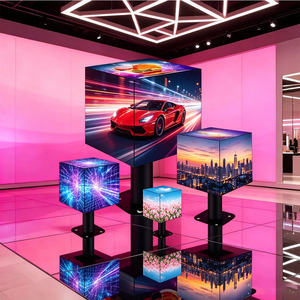
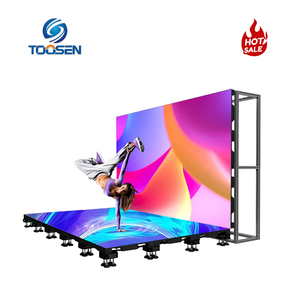
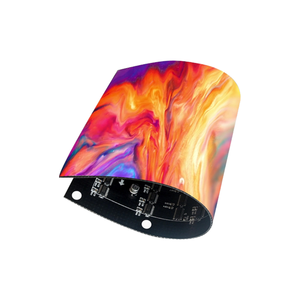
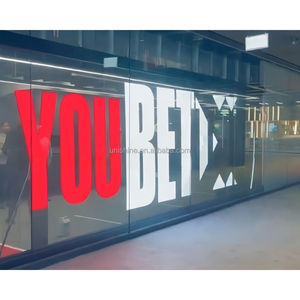
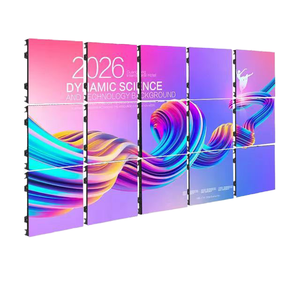
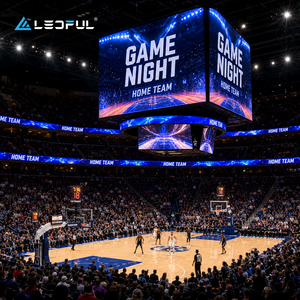
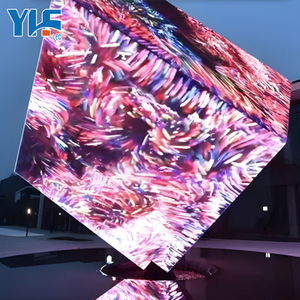
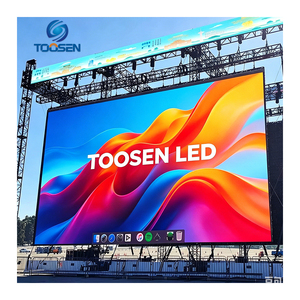
A technical assessment of packaging physics, thermal dissipation matrices, failure rates (PPM), and photometric stability for sub-1.5mm micro-pitch video walls.
Traditional Surface-Mount Device (SMD) architectures suffer from thermal bottlenecks created by the resin lead-frame and double soldering barriers. COB technology bonds naked flip-chip diodes directly to the PCB substrate using thermally conductive epoxy resins. This direct bond reduces junction-to-board thermal resistance (Rth_jb) by up to 45%, operating at lower sustained core temperatures and preventing the luminance decay common in enclosed control-room environments.
SMD packages have fragile solder pins prone to shear stress, resulting in dead pixels during transit or maintenance. COB micro-arrays are encapsulated in a unified optical polymer shield achieving 5H to 8H surface hardness. The display module is completely anti-collision, anti-scratch, moisture-proof, and anti-static (ESD > 8000V). Solder joints cannot physically be knocked off, resulting in field PPM failure rates dropping from ~50 PPM in SMD down to <5 PPM in COB.
Direct SMD emitters behave as high-contrast point light sources, exacerbating pixelation and visual fatigue at ultra-close viewing distances (<1.5m). Furthermore, they create severe optical moiré artifacts under digital broadcast cameras. COB uses a nano-composite surface diffusion layer that transforms discrete point emitters into cohesive planar surface emission, expanding horizontal/vertical viewing angles to 170°/170° without chromatic aberration.
Why system integrators, AV consultants, architects, and Fortune 500 procurement teams partner with our UK-headquartered technical team for mission-critical visual assets.
Unlike single-source factories restricted to rigid production lines, digiLED acts as an engineering partner. We select and audit the best manufacturing facility for your specific application, building custom panels strictly to digiLED intellectual property and Tier-1 component specs.
We do not rely on remote quality promises. Our Western and local factory-floor engineers oversee every step of production. Factory Acceptance Testing (FAT) includes 72-hour sustained thermal burn-ins, full-white chromatic balance, drop testing, and module alignment verification before crating.
Recipient of the prestigious Made in Britain mark, our globally patented digiLED ZEUS® intelligent power controller safely powers down LED displays of any size or form factor so they draw zero standby power when inactive, cutting commercial operating costs and carbon overhead.
Avoid transatlantic support headaches. Our regional Pixel Depots in Las Vegas (USA) and the United Kingdom stock matched-batch module spares, diagnostic tools, and offer localized technician support for projects spanning North America, EMEA, and Asia.
From the massive 360-degree fascia ribbons at The O2 London and Texas Motor Speedway's "Big Hoss" to interactive floors and acoustically transparent soundTHRU stages, we excel where off-the-shelf catalog products fail.
With more than 500 combined years of display industry experience and 14 major display innovations, our senior team has designed, delivered, and supported visual installations across Premier League stadiums, airports, and Tier-1 DOOH advertising networks globally.
Key technical and supply-chain answers compiled by senior display engineers to protect integrator and client investments.
COB (Chip-on-Board) embeds micro-LED dice directly onto the substrate and encapsulates the entire assembly beneath a clear protective resin coat. Without delicate solder pins exposed to the air, COB modules eliminate loose bonding wires, pin corrosion, oxidation, and mechanical detachment caused by cleaning or physical impacts.
As an engineering benchmark, minimum comfortable viewing distance equals pixel pitch (in millimeters) multiplied by 1 meter. For example, a P0.9mm COB screen provides clean, artifact-free viewing at just 0.9 meters. For broadcast studios, COB’s diffuse planar lighting significantly softens the moiré effect on camera sensors.
Production tolerances can create subtle batch shifts in LED forward voltage, color temperature, and binning wavelength. Without in-person engineers conducting 72-hour sustained FAT inspections on the factory floor, variations can yield noticeable grid lines or color mismatches that cannot be fixed on-site after arrival.
By pairing high-efficiency Common Cathode driver circuits with intelligent power management systems like digiLED ZEUS®. Common Cathode delivers dedicated voltages to red, green, and blue diodes, cutting wasted thermal dissipation by up to 30%, while ZEUS® eliminates parasitic standby power completely.
While COB modules boast failure rates below 5 PPM, field repair cannot be handled with a standard soldering iron due to the unified resin seal. Maintenance involves quickly swapping the magnetic front-service module, while defective modules are returned to our Las Vegas or UK Pixel Depots for factory-grade thermal micro-reflow repair.
OEM/ODM custom engineering spans pixel pitch selection (P0.7 to P16mm), bespoke cabinet dimensions (curved, faceted, 90-degree corner mitered), refresh rates up to 7680Hz for broadcast cameras, front or rear service mechanisms, structural wind-load designs, and custom firmware controller matching.
Connect with digiLED’s technical team for complete engineering reviews, optical pitch simulations, 3D structural drawings, and project-specific bill-of-materials pricing.
Get Catalog