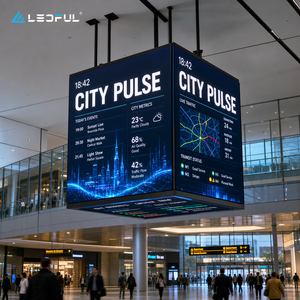
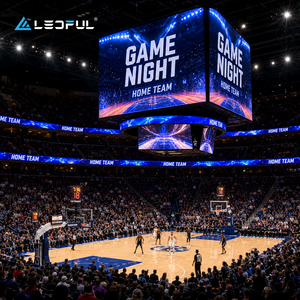
Suspended Four-Sided LED Cube P2.5 for Plaza Multi-Face Sync
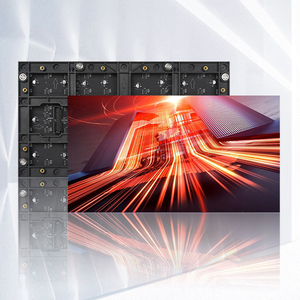
P2.5 Fine-Pitch
Seamless 90° Bevel
Multi-Channel Sync
Get Catalog
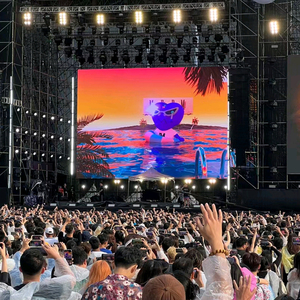
Engineered for mission-critical deployments: architectural transparent facades, sub-millimeter broadcast walls, perimeter arenas, and dynamic rental environments.
Navigating the global supply matrix requires moving past marketing declarations to dissect core intellectual property, manufacturing discipline, and yield-management realities.
The global display hardware ecosystem represents an intense convergence of wafer manufacturing, optical packaging, high-speed printed circuit board (PCB) routing, and precision mechanical engineering. When systems integrators, AV engineering consultants, and commercial real estate developers evaluate the Top 10 LED display module manufacturers and suppliers, surface-level specifications such as "maximum peak brightness" or "theoretical pixel pitch" fail to predict total lifecycle value. The critical differential lies in manufacturing tolerance discipline, binning consistency across massive wafer batches, and systemic thermal management.
Historically, tier-1 procurement strategies were dominated by rigid, fully vertical manufacturers. However, rapid technological diversification—spanning fine-pitch Chip-on-Board (COB), flexible elastomeric modules, and ultra-high-transparency window films—has inverted this paradigm. Engineering-driven solution partners who combine custom intellectual property (IP), strict factory-floor oversight, and independent supply-chain orchestration frequently outperform static single-facility brands in build versatility, defect mitigation, and component traceability.
| Tier-1 Supplier Class | Primary Module Architecture | Pixel Pitch Range (mm) | Optical Uniformity Strategy | Procurement Risk Profile |
|---|---|---|---|---|
| Engineering-Led System Integrators (e.g., digiLED Model) | Hybrid SMD, Micro-COB, Flexible, Custom Mechanical Frames | 0.6mm – 16.0mm | Bespoke Factory Acceptance Testing (FAT), Multi-point Spectral Binning | Low: Independent QA across vetted specialist facilities avoids single-plant bottlenecking. |
| High-Volume SMD Commodity Vendors | Standard SMD 3-in-1, Die-Cast Aluminum Cabinets | 1.8mm – 10.0mm | Batch Chroma Calibration, automated camera profiling | Medium-High: Susceptible to inter-batch LED bin drifting over multiple phases. |
| COB Micro-Pitch Pioneers | Direct Flip-Chip COB, Epoxy Protective Surface Encapsulation | 0.4mm – 1.2mm | Wafer-level sorting, automated optical re-calibration | Medium: Complex site repair logistics; localized module swapping demands high color-matching control. |
| Architectural & Structural Specialists | Transparent Mesh, Polyimide Flexible Strip, Adhesion Film | 3.9mm – 31.25mm | Geometric louver profiling, high-lumen bin clamping | Low-Medium: Requires specialized civil and wind-load structural sign-offs. |
Strategic hardware shifts transforming commercial DOOH, stadium broadcasts, and immersive corporate architectural engineering.
Wire-bonded surface-mount devices (SMD) are fundamentally hitting their physical reliability limit below 1.2mm pitches. Modern procurement mandates Flip-Chip COB technology, where bare semiconductor dice bond directly to the PCB substrate. This eliminates fragile gold wire bridges, yields thermal dissipation improvements of up to 40%, and delivers impact-resistant surfaces rated at IK08 or higher—critical for high-traffic environments, broadcast backdrops, and interactive corporate lobbies.
With tightening ESG regulations across EMEA and North America, idle energy consumption has become a decisive procurement factor. Traditional LED walls draw continuous baseline current even when blacked out. Solutions like the globally patented digiLED ZEUS® intelligent power management system allow screens of any scale to completely isolate standby power down to true zero watts, dramatically lowering operational lifecycle emissions and heating loads within architectural envelopes.
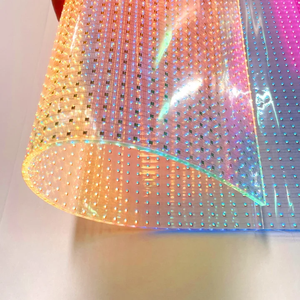
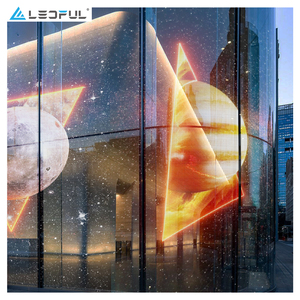
Rigid metal chassis installations are declining in high-profile retail glazing. Next-generation procurement heavily weights transparent crystalline and soft flexible self-adhesive matrix films. Reaching up to 85% visual transparency with ultra-fine copper wire grids, these modules enable direct lamination to structural glass façades without altering building envelope calculations, obstructing interior sightlines, or blocking natural daylighting schemes.
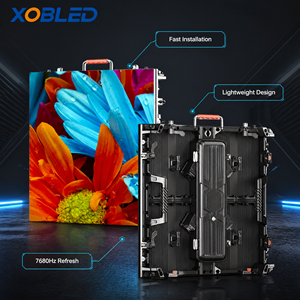
Broadcast standards for esports arenas, virtual XR production studios, and stadium perimeters now require high-grayscale driver ICs capable of 7680Hz refresh rates coupled with low scan rates (1/8s to 1/16s). This design eliminates horizontal scan lines on high-speed shutter cameras, minimizes visual flicker, and delivers true 16-bit low-grayscale depth without color banding artifacts in dark-scene content rendering.
Total Cost of Ownership (TCO) is dictating rear-service phase-outs. Modern display engineering relies on vacuum-assisted or precision magnetic front-service toolsets. High-spec modules decouple in seconds, allowing immediate servicing of receiving cards, flat ribbon harnesses, and internal switched-mode power supplies (SMPS) without disrupting adjacent architectural panel alignments or requiring rear maintenance walkways.
The era of trusting remote factory testing certificates has ended. Enterprise procurement strategies now rely on strict in-person Factory Acceptance Testing (FAT) by resident quality engineers. Continuous on-the-floor thermal soak tests, 72-hour continuous white-field burn-ins, and rigorous drop-testing protocols guarantee that zero-defect arrays arrive at the installation site, mitigating costly rework delays during site commissioning.
Why leading global sports stadiums, NASCAR racetracks, premier retail networks, and AV integrators choose digiLED over traditional static manufacturers.
The conventional approach of committing to a single factory's rigid production schedule limits project flexibility and forces design compromises. digiLED operates under a fundamentally distinct philosophy: Independent by Design. Instead of being locked into a single factory footprint, digiLED engineers custom solutions built upon digiLED's proprietary intellectual property, sourcing precision components across the world's most specialized fabrication facilities.
digiLED engineers are stationed directly on the factory floor throughout production cycles. Every single batch undergoes hands-on thermal profiling, colorimetric bin validation, and strict Factory Acceptance Testing (FAT) before export authorization.
Global headquarters based in the United Kingdom, housing dedicated engineering divisions that invented breakthrough display solutions—including the globally patented, multi-award-winning digiLED ZEUS® system with verified Made in Britain credentials.
True operational longevity is guaranteed by regional Pixel Depots in Las Vegas and the UK. Factory-calibrated spare module inventory, component-level micro-soldering, and local engineering support remain accessible across EMEA, the Americas, and Asia for decades.
Over 375,000 sqm of proven LED deployments—including premier sporting landmarks like Arsenal Emirates Stadium, Hiroshima Stadium, Texas Motor Speedway, and flagship hubs like The O2 London and Westfield commercial networks.
Direct technical answers to common integration questions encountered by commercial buyers and electrical engineers.
Review full electrical specifications, mechanical CAD drawings, and photometric files with our senior engineering team. Fast global dispatch from our EMEA, US, and Asian operational hubs.