Micro LED and advanced fine-pitch Chip-on-Board (COB) topologies are revolutionizing architectural video walls, virtual production, high-impact DOOH, and immersive enterprise hubs. Explore premier hardware modules engineered for demanding environments.
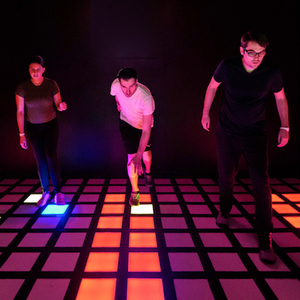
Ultra-responsive pressure-induction tiles engineered with optical optical-grade diffusion and dynamic game engine compatibility.
Contact Us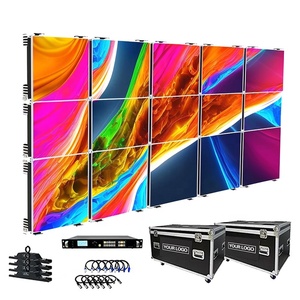
High-refresh rate touring panels engineered with rugged latching mechanisms, HDR10 calibration, and low thermal output.
Contact Us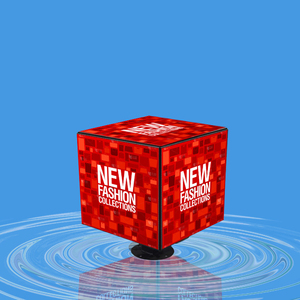
Seamless 90-degree edge design providing anamorphic viewing for high-traffic retail malls, corporate gallerias, and elevators.
Contact Us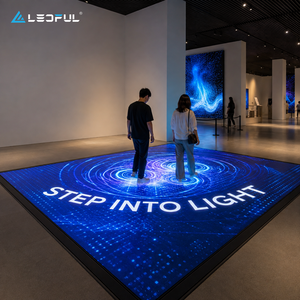
Commercial load-bearing glass surface supporting >2,000 kg/sqm, optimized for automotive stages and experiential showrooms.
Contact Us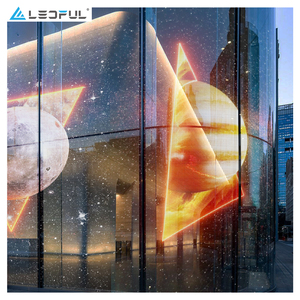
Over 80% natural light transmittance. Adheres directly to architectural facade glass without blocking ambient interior sunlight.
Contact Us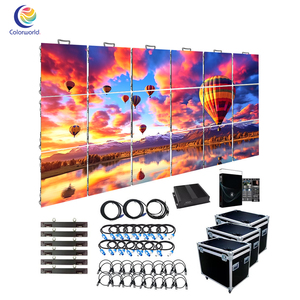
Ultra-high brightness exceeding 6,500 nits, hermetically sealed against monsoon rain, desert dust, and direct UV radiation.
Contact Us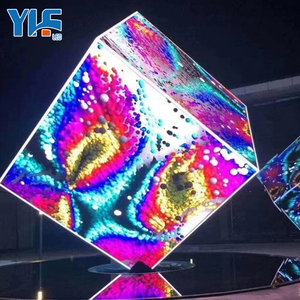
Polygon mapping support, sub-millimeter bevel alignment, designed specifically for immersive retail flagships and galleries.
Contact Us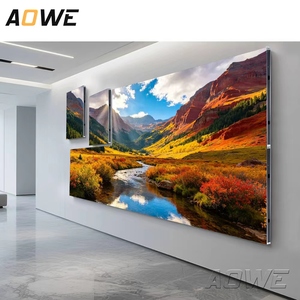
7,000cd high dynamic range cinema display with extreme color contrast, delivering deep blacks under unshaded ambient sunlight.
Contact UsA vendor-neutral breakdown of technology architectures, substrate manufacturing paradigms, and integration approaches across the tier-one global display landscape.
| Company / Manufacturer | Primary Substrate & Transfer Tech | Pixel Pitch (mm) | Key Market Segment | Engineering Architecture |
|---|---|---|---|---|
| Samsung Electronics (The Wall) | Micro LED / Active TFT Matrix | 0.63 – 0.84 | Luxury Resi & Broadcast | Black Seal Surface |
| Sony Corporation (Crystal LED) | Fine-pitch Ultrafine RGB / Passive | 0.78 – 1.25 | Virtual Production & Simulators | Surface Processing |
| digiLED / Specialist Integrator Hub | Proprietary IP COB / Micro Module | 0.7 – 1.5 | Stadium, DOOH & Custom Venue | ZEUS® 0W Standby |
| Leyard / Planar | Micro LED COB & MIP (Micro in Pkg) | 0.4 – 0.9 | Mission-Critical Command Ctr | Common Cathode |
| Unilumin Group | MIP & Mini/Micro COB Series | 0.5 – 1.2 | Smart City & Sports Arenas | Mass Transfer IP |
| Absen Optoelectronic | Absenicon / Micro COB | 0.6 – 1.2 | Corporate Boardrooms & Retail | Surface Coating |
| LG Electronics (MAGNIT) | Micro LED / COB Assembly | 0.78 – 1.36 | Hospitality & Luxury Digital Canvas | Alpha 9 AI Engine |
| Innolux Corporation | Color-Conversion Micro LED Glass | Sub-0.5 | Automotive Cockpits & Medical | AM-TFT Substrate |
| AUO Corporation | Micro LED on LTPS Glass | Sub-0.4 | Wearables, Auto & Micro Monitors | High Transparency |
| BOE Technology Group | Active-Matrix Glass-Based COG | 0.6 – 0.9 | Commercial Displays & DOOH | Glass-Matrix COG |
Procurement directors and AV engineering consultants must account for the shift in total cost of ownership (TCO), mass-transfer yields, and decarbonization mandates.
While monolithic COB continues to dominate sub-0.8mm ultra-fine installations, MIP is emerging as the procurement favorite for displays between 0.8mm and 1.2mm. By testing and binning microscopic packages before substrate mounting, manufacturers drastically reduce field-pixel repair costs and eliminate chromatic batch mismatch.
Enterprise procurement rules now routinely penalize installations with parasitic standby power draws. Traditional LED installations consume hundreds of idle watts per square meter. Systems integrating patented hardware shutoff—such as digiLED ZEUS®—enable zero-power off-hours without stressing power supplies upon boot cycle.
Glass-substrate displays (Chip-on-Glass) are making inroads from semiconductor fabs into large-scale video wall lines. COG provides micron-level thermal flatness and superior heat dissipation, reducing visual seam dilation in high-ambient corporate gallerias, though high-Tg multi-layer FR4 boards remain superior for modular servicing.
True display performance is not defined solely by LED specs—it is realized through factory oversight, field engineering, and lifetime spare inventory management.
Rather than forcing a single rigid assembly line upon all architectural challenges, we pair custom intellectual property with vetted, specialized production facilities. Every module is tailored to exact viewing geometry, ambient sunlight, thermal budgets, and structural load constraints.
Our engineers reside on the factory floor throughout production batches, carrying out rigorous multi-stage Factory Acceptance Testing (FAT). We verify optical batch consistency, thermal drift curves, and high-vibration structural integrity before equipment is crated and shipped globally.
Long-term maintenance failures plague generic procurements. Through our dedicated Pixel Depots in Las Vegas and the United Kingdom, clients maintain access to identical diode binning lots, factory-grade module calibration chambers, and dedicated rapid-response repair crews throughout the asset lifecycle.
Key architectural and financial considerations answered for project stakeholders.
True Micro LED utilizes microscopic inorganic semiconductor chips smaller than 50 microns without individual packaging, integrated via advanced mass-transfer onto active TFT or CMOS backplanes. Mini LED and standard fine-pitch COB generally utilize diodes measuring 100 to 200 microns. Micro LED offers exponentially higher peak nit levels, near-infinite contrast ratios, and zero risk of organic burn-in.
The standard baseline for critical visual acuity is determined by the Lechner distance: Optimal Pitch (in mm) = Nearest Viewing Distance (in meters) × 0.3 to 0.5. For boardrooms or virtual broadcast studios where observers stand 2 meters away, a pitch between 0.7mm and 0.9mm prevents pixelation. For large public atriums or stadiums, wider pitches balance budget against viewing distance.
Large video walls operate intermittently, but traditional switch-mode power supplies draw phantom standby current 24 hours a day, generating unnecessary heat and electricity costs. digiLED ZEUS® is a patented power management system designed and manufactured in the UK that completely cuts screen power to 0 Watts when inactive, drastically lowering operating expenses and supporting ESG carbon reduction targets.
Surface shear damage, trace delamination, and thermal color shifting are the primary field risks. These are mitigated by using impact-resistant resin encapsulation (such as GOB/COB coatings), rigorous Factory Acceptance Testing (FAT), matching thermal expansion coefficients of the cabinet frames to the wall substrate, and maintaining dedicated diode bin reserves in local service depots.
Consult with our global engineering team in London, Las Vegas, or Tokyo. From concept feasibility and thermal calculations to custom module fabrication, we turn complex design briefs into flawless installations.
Contact Us