Factory-direct micro-pitch video walls, high-impact rental platforms, perimeter systems, and architectural holographic substrates.
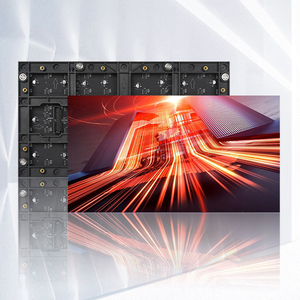
Engineered for control centers and broadcast command desks requiring HDR10-ready fine pitch pixel fidelity and 16-bit grayscale reproduction.
Front-service magnetic alignment architecture tailored for enterprise showrooms, ultra-thin 3D retail setups, and glass-adjacent retail spaces.
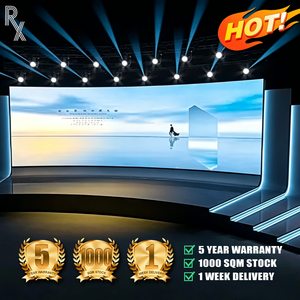
Touring-grade die-cast aluminum frame with high refresh scan rates, precision curving locks (-5° to +10°), and rapid corner collision shielding.
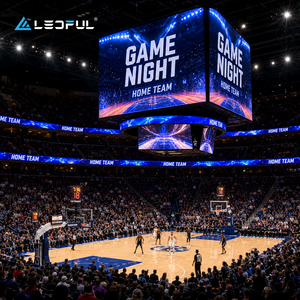
Ruggedized DOOH perimeter panels with up to 8,500 nits calibrated brightness, impact-absorbent silicone masks, and double-channel water seals.
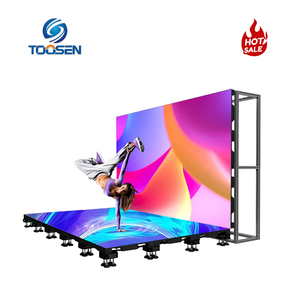
Load-bearing modular optical glass with embedded optical optical-proximity sensors capable of handling 2,000 kg/sqm dynamic crowd loads.

Compact high-efficiency DC-driven mobile roadside media solution engineered for rapid fleet integration, onboard lithium batteries, and low vibration.
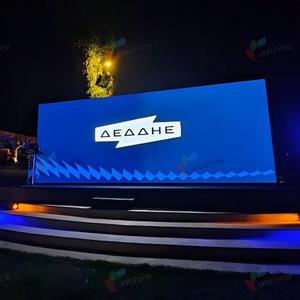
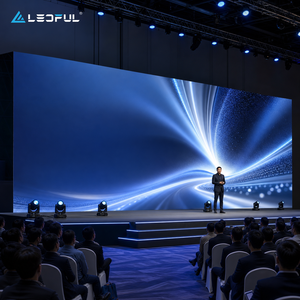
Turnkey package featuring flight cases, redundant signal receivers, rigging hardware, and matched processing matrices for corporate summits.
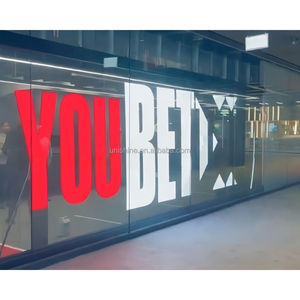
Over 85% visual transparency, ultra-thin flexible substrate adhering directly to structural glass surfaces without secondary framing.
Achieving true native 8K display resolution (7,680 × 4,320 pixels) in physical LED deployment requires far more than dense pixel pitches—it necessitates a systemic re-engineering of the entire visual pipeline. As a leading China-based precision manufacturing authority, we eliminate pixel pitch bottlenecks by synchronizing high-speed field-programmable gate array (FPGA) processing matrices with advanced sub-1.0mm surface-mount techniques. When deploying over 33.1 million individual sub-pixels, systemic thermal dispersion, scan-line artifacts, and chromatic aberration must be engineered out at the factory wafer level.
Traditional SMD packaging relies on individual epoxy cases prone to surface shearing and moisture infiltration. Our next-generation Chip-on-Board (COB) flip-chip technology welds unencapsulated LED dies directly to the PCB substrate. This yields a flat, non-reflective surface with extreme physical shock resistance (5H pencil hardness), IP65 surface moisture protection, and a thermal heat-dissipation path three times faster than standard SMDs.
Deploying multi-million-pixel arrays poses acute risks of thermal throttling and localized color shift. By integrating Common Cathode energy-saving topologies, supply voltage is dynamically decoupled: Red chips run at 2.8V while Green and Blue operate at 3.8V. Combined with our intelligent standby management, operational heat is reduced by up to 35%, ensuring zero blue-shift degradation across 100,000 running hours.
True 8K at 60Hz or 120Hz generates an astounding raw throughput of over 48 Gbps. Our manufacturing standard uses direct SMPTE ST 2110 IP networks and dual redundant 100G fiber trunking. Every cabinet array is calibrated at 16-bit DCI-P3 color gamut, ensuring that virtual broadcast sets, high-speed simulations, and esports arenas experience zero tearing, frame dropping, or scan-line flicker.
A direct parametric breakdown for engineering consultants and procurement authorities.
| Performance Metrics | Legacy SMD LED (P1.5 - P2.5) | COB / Flip-Chip Micro LED (P0.7 - P1.2) | Engineering Benefit |
|---|---|---|---|
| Failure Rate (PPM) | < 50-100 PPM annually | < 5 PPM annually | Reduces maintenance cycles and dark-pixel dead zones. |
| Surface Protection | Exposed solder legs; fragile | Epoxy resin molded; IP65 rated | Impact-resistant; safe for interactive tactile environments. |
| Contrast Ratio | 3,000:1 to 5,000:1 | 10,000:1 to 20,000:1 (Deep Black) | Native HDR rendering with near-infinite shadow detail. |
| Thermal Rise (ΔT) | +25°C to +35°C above ambient | +8°C to +15°C above ambient | Eliminates need for forced-air HVAC cooling behind panels. |
| Power Consumption | Avg. 350-450 W/sqm | Avg. 180-240 W/sqm (Common Cathode) | Massive decrease in lifecycle operational expenditures. |
Procurement directors and visual AV consultants are shifting away from fragmented component sourcing toward holistic, end-to-end engineered display systems. In the current global supply chain landscape, high-resolution installations fail not because of defective LED chips, but due to batch-level binning disparities, thermal mismatching between chassis alloys, and uncoordinated firmware integration.
Furthermore, sustainability compliance—such as European ErP directives and North American Energy Star visual display mandates—is transforming contract evaluations. Purchasing teams increasingly require hardware-level zero-power standby capability. When large-scale 8K arenas and DOOH video networks are idle during non-operational hours, phantom energy draws represent tens of thousands of wasted kilowatt-hours. Selecting a manufacturing partner with proprietary power-down topologies and circular material engineering is no longer optional—it is a critical hedge against rising energy costs.
Combining world-class manufacturing oversight with deep AV structural heritage.
We do not lock clients into rigid one-size-fits-all factory lines. We match proprietary components to specialized manufacturing plants, ensuring the exact right mechanical setup for your specific project.
Our dedicated engineering teams remain on the factory floor throughout surface-mount, module bonding, and aging runs. Every cabinet undergoes exhaustive Factory Acceptance Testing before shipment.
From initial viewing distance analysis, optical ray tracing, and structural frame engineering to custom packaging and on-site integration oversight, we control every critical phase of the display lifecycle.
With operational hubs, technical depots, and dedicated spare-part centers in the UK, USA (Las Vegas), and Asia, clients receive swift component-level repairs and continuous technical assistance worldwide.
Direct technical answers for AV consultants, system integrators, and tender authorities.