Engineered for architectural integration, experiential venues, and high-impact DOOH. Explore our factory-calibrated, high-refresh display modules manufactured under stringent quality protocols.
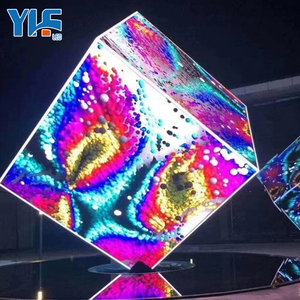
In modern experiential architecture, digital out-of-home (DOOH) advertising, and planetarium simulation, conventional planar LED displays often fail to deliver total spatial immersion. The Sphere LED display—often termed an LED globe or 360-degree video ball—represents the pinnacle of complex creative LED engineering. Translating flat, rectangular video matrices into a perfectly seamless, curvilinear 3D sphere demands advanced geometric discretization, custom trapezoidal PCB fabrication, robust internal structural mechanics, and mathematical UV texture unwrap algorithms.
As premier Chinese engineering suppliers operating in direct partnership with tier-one European and American technical directors, we bridge the gap between heavy industrial manufacturing precision and demanding visual performance standards. Designing a freeform spherical visual installation requires navigating non-standard pixel pitches, thermal buoyancy challenges inside closed geodesic spheres, and multi-channel synchronous signal distribution.
A spherical LED display cannot be created with a uniform flat surface layout. To maintain an identical visual pixel pitch across the entire surface of the globe, the sphere is geometrically divided into latitudinal zones and longitudinal meridians. In high-tier spheres, engineering teams utilize two primary design paradigms:
A. The Petal-Shaped Longitudinal Division: The sphere is divided vertically into 16 to 32 identical longitudinal sectors (tapered wedges). Each sector contains specialized PCB strips that taper gradually toward the poles. This method is mathematically optimal for diameter ranges between 1.0 meter and 4.0 meters, ensuring seamless content alignment from the northern apex down to the southern mounting ring.
B. Polygonal Geodesic Discretization (Soccer Ball Geometry): For monumental architectural spheres exceeding 5 meters in diameter, such as planetarium shells and mega DOOH landmarks, geodesic icosahedron subdivision is utilized. Here, modules are manufactured in precision-cut hexagons and pentagons. This minimizes tension variances across the curved framework and allows front-access magnetic maintenance for every individual panel.
| Sphere Diameter (Ø) | Recommended Pitch | Resolution Matrix | Luminance (Indoor / Outdoor) | Structural Weight (Est.) | Max Power Draw |
|---|---|---|---|---|---|
| 1.2 Meters (47.2 in) | P1.56 / P1.87 COB | 2,410 × 1,205 px | 800 – 1,200 nits | 85 kg (Internal Ring) | 1,800 W |
| 2.0 Meters (78.7 in) | P2.0 / P2.5 SMD | 3,140 × 1,570 px | 1,000 – 1,500 nits | 210 kg (Tubular Geodesic) | 4,200 W |
| 3.0 Meters (118.1 in) | P2.5 / P3.0 SMD | 3,768 × 1,884 px | 1,200 – 2,000 nits | 480 kg (Center Mast System) | 8,500 W |
| 5.0 Meters (196.8 in) | P3.0 / P4.0 SMD | 5,230 × 2,615 px | 1,500 – 5,500 nits | 1,450 kg (Dual-Ring Truss) | 22,000 W |
| 10.0+ Meters (Custom DOOH) | P4.0 / P6.0 Outdoor | 7,850 × 3,925 px | 5,000 – 7,500 nits (IP65) | 6,800+ kg (Engineered Frame) | 88,000 W |
A primary bottleneck in operating a spherical display is content playback. Traditional video codecs and media players deliver flat 16:9 rectangular signals (such as 3840×2160). When mapped directly onto a sphere, extreme distortion occurs at the poles, causing horizontal compression and severe focal stretching around the equator.
To overcome this, elite manufacturers integrate bespoke FPGA hardware mapping processors. Utilizing equirectangular projection algorithms (similar to 360-degree VR formats), the processor realigns the content coordinates along defined spherical UV meshes in real-time. System integrators can feed standard panoramic video, 3D interactive feeds via Unreal Engine / Notch, or split-screen auxiliary feeds across independent quadrants without complex pre-rendering pipelines.
Unlike flat LED video walls where convection drafts naturally exhaust heat across the rear chassis, a sealed spherical LED structure traps convective thermal loads in its upper hemisphere. Without rigorous thermodynamic modeling, thermal pooling causes localized color shifting, accelerated LED luminous decay, and power supply shutdown in the northern polar modules.
Our structural designs integrate vertical central-draft chimney conduits. High-efficiency, low-noise brushless fan banks draw cool ambient air from the lower mounting base ring, driving it through engineered ducts across internal power supplies and exhausting it through concealed vents at the northern apex. When integrated with intelligent power distribution tools such as the globally patented digiLED ZEUS® architecture, the screen automatically powers down during idle schedules, consuming zero standby energy and mitigating thermal degradation.
Where the spherical visualization industry is heading over the next five years. Critical procurement considerations for consultants, integrators, and project owners.
Chip-on-Board (COB) technology is rapidly replacing surface-mounted SMD on spherical installations. Encapsulating micro-diodes directly in protective epoxy provides superior anti-collision defense for public interactive touchpoints while delivering ultra-wide 170° viewing angles with zero off-axis chromatic aberration.
Global venue owners face strict ESG and carbon mandates. Future tenders prioritize intelligent power cut systems like digiLED ZEUS®, ensuring that multimillion-pixel architectural spheres do not draw massive parasitic standby power when idle overnight.
Transitioning from heavy carbon steel framing to aerospace-grade extruded magnesium-aluminum alloys reduces total suspension weight by up to 45%. This permits overhead flying rigging in historic venues and atrium ceiling designs previously barred by structural ceiling load limits.
Static pre-rendered loop playback is obsolete. Sourcing specifications now mandate ultra-low latency inputs (SMPTE ST 2110 / Genlock) paired with tracking cameras, transforming the LED sphere into a responsive, real-time spatial simulation portal for digital art museums and broadcast sets.
We are not ordinary trading brokers. We engineer, supervise, certify, and support bespoke LED installations with hands-on technical governance at every phase of the lifecycle.
We do not leave quality to remote third-party checks. Our experienced LED engineers remain directly on the production floor in China throughout the build. Every spherical wedge, driver board, and receiving card undergoes a comprehensive 72-hour continuous burn-in and Factory Acceptance Testing (FAT) before export authorization.
Long after your installation goes live, our regional Pixel Depots in Las Vegas and the United Kingdom provide localized component maintenance, pixel-level micro-soldering, emergency module swapping, and calibration continuity. You receive global scale combined with reliable local technical support.
Rather than pushing rigid off-the-shelf catalog products, our core offerings are designed around proprietary intellectual property. From patented intelligent power conservation systems to custom CNC framework molds, we customize radius dimensions, mounting geometry, and IP weatherproofing specifically to match architectural blueprints.
Clear engineering clarifications regarding structural tolerances, calibration, content mapping, and logistics for spherical display investments.
Seamless alignment relies on tight CNC tolerances on internal structural rings (under 0.2mm variation) combined with magnetic positioning pins on trapezoidal module backs. Optical uniformity calibration using high-resolution scientific CCD cameras ensures that brightness and chromaticity discrepancies across differing polygonal angles are fully balanced before packaging.
For standardized sphere diameters with existing structural tooling (e.g., 1.2m, 1.5m, 2.0m, 3.0m), lead time typically spans 35 to 45 business days, including full 72-hour aging and FAT. Custom non-standard diameters requiring tailored tooling molds and custom PCB circuit fabrication generally require 60 to 75 business days.
Our spherical structures are engineered for dual-mode deployment. For overhead hanging, the core incorporates a certified central high-tensile steel load-bearing mast with redundancy safety eyes complying with BGV C1 / EN 17206 entertainment rigging standards. For floor deployment, a heavy-gauge conical pedestal base conceals power distribution units and ventilation intakes.
We engineer front-serviceable magnetic extraction systems for nearly all spherical displays. Using specialized vacuum extraction tools or rear-latch releases depending on pitch, technicians can safely extract a single damaged module from the exterior without deconstructing adjacent panels or accessing the internal cavity.
Outdoor spherical displays feature IP65-rated front silicone potting, conformal-coated multi-layer PCBs, waterproof multi-pin signal connectors, and specialized internal hydrophobic breather membranes. These balance internal air pressure changes caused by solar heat cycles while preventing moisture and condensation ingress.
Standard delivery includes a 3- to 5-year commercial warranty along with a matched-batch spare parts package (typically 3% to 5% spare modules, replacement receiving cards, power units, and custom ribbons). Because polygonal modules cannot be mixed across different silicon fabrication batches, all spares are manufactured simultaneously to ensure consistent color wavelength binning.