Curated display panels engineered for high-definition television broadcast environments, virtual studios (xR/ICVFX), esports arenas, and mission-critical live event monitoring.
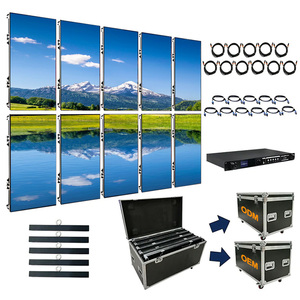
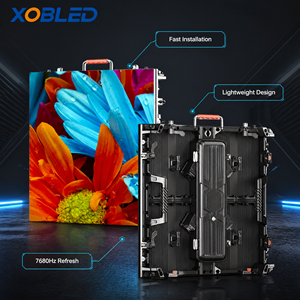
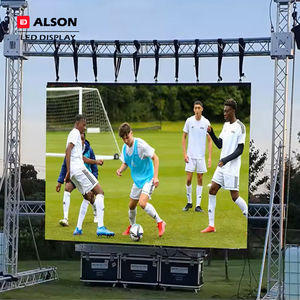

In modern broadcast studios, newsrooms, and multi-camera xR/virtual production stages, LED video walls are subjected to optical conditions vastly more rigorous than standard commercial billboards or conference room presentations. Standard fine-pitch LED displays rely on multiplexed scan lines (often 1/32 or 1/64 scan) and nominal PWM refresh rates (1,920Hz to 3,840Hz). While completely imperceptible to the unaided human eye, these commercial panels produce catastrophic visual anomalies when captured through broadcast camera sensors operating at variable shutter angles (180°, 90°, or 45°) and fast frame rates (50p, 59.94p, 119.88p).
Camera sensors operating on modern electronic shutters expose rows of pixels across fractions of a millisecond. When an LED screen's driver IC cannot cycle pulse-width modulation at sufficient speeds, the camera captures unrefreshed scan passes, appearing on-air as dark rolling horizontal scan lines, flickers, and chromatic bandings. Genuine broadcast-grade LED walls mandate high-tier driver IC architectures capable of delivering 7,680Hz PWM refresh rates, low scan multiplexing (1/8 or 1/16 scan ratios), and true 16-bit to 22-bit grayscale depth processing at subdued studio brightness ranges (100 to 800 nits).
Phase-aligning the LED processor's internal clock directly to the broadcast camera system master sync (Tri-Level Genlock or Black Burst) eliminates frame dropping, frame doubling, and phase tearing on rapid pans.
Moiré forms when camera sensor pixel grids overlap the LED matrix. Optical diffusion filters and matte resin masks blur spatial high frequencies, suppressing destructive interference without softening image sharpness.
Broadcast studio production requires 3D LUT matrix calibration conforming to SMPTE 2067, achieving 99%+ DCI-P3 and wide Rec.2020 coverage with linear color rendering down to deep 0.05 nit blacks.
The velocity of technological convergence across the professional AV, cinematic, and broadcast domains is unprecedented. As studio facilities decommission green screens in favor of in-camera visual effects (ICVFX) and dynamic XR backdrops, several core micro-engineering transitions are redefining manufacturing standards:
| Evaluation Parameter | Legacy SMD Broadcast Panels | COB (Chip-on-Board) Generation | Next-Gen MIP (Micro In Package) & MicroLED |
|---|---|---|---|
| Surface Toughness & Protection | SMD pins exposed; prone to physical pixel loss during studio set reconfiguration. | Full epoxy encapsulation; IP65 frontal protection against impact and moisture. | Micro-scale surface planarization; extreme scratch resistance and zero pin degradation. |
| Optical Contrast & Surface Reflection | Standard matte masks; black levels wash out under 1,000 lux overhead studio grid lights. | Nano-black resin finish; optical absorption achieves deep contrast ratios (>10,000:1). | True MicroLED black matrix; >99% black surface ratio with anti-specular diffusion coating. |
| Off-Axis Color Uniformity | Color shift occurs beyond 120° horizontal viewing angle on pedestal cameras. | Lambertian emission characteristics preserve color fidelity up to 160° on-camera angle. | Near-perfect hemispherical light emission (>170°) with zero RGB color fringing on extreme wide shots. |
| Thermal Radiation & Camera Noise | High heat generation; active fans cause acoustic interference with studio boom mics. | Direct substrate dissipation; low surface thermal rise (<5°C over ambient). | Ultra-efficient flip-chip architecture; 40% reduction in power draw with 100% silent convection cooling. |
Direct uncompressed video-over-IP connectivity bypasses conversion hardware, routing 4K/8K 10-bit video with microsecond PTP timing directly to display processing backplanes.
Next-gen processing supports up to 240Hz frame rates, allowing multi-camera tracking systems to shoot separate background perspectives simultaneously on a single wall (GhostFrame / multi-cam slicing).
Real-time PQ (SMPTE ST 2084) and HLG decoding ensures highlights above 1,500 nits and deep shadow gradations remain balanced with foreground talent lighting in high dynamic range workflows.
Modern sustainability requirements demand automated zero-draw standby power technology, eliminating massive off-air kilowatt waste in 24/7 newsrooms and broadcast facilities.
Strategic AV procurement in broadcast networks is shifting away from evaluating cost-per-square-meter as the primary purchase criterion. Broadcasters, production studios, and integrators are measuring capital investments against Total Cost of Ownership (TCO), on-air reliability, long-term pixel batch consistency, and thermal sustainability. Over a standard 7-to-10-year operational lifecycle, energy consumption, spare batch binning, and on-site servicing exceed initial hardware acquisition costs by up to 240%.
Ensuring that replacement modules and reserve tiles originate from identical wafer runs with tight dominant wavelength tolerance (±1nm) is non-negotiable to prevent visible color patching during long-term maintenance.
Broadcast studio layouts demand zero rear-clearance installation. Front-extracting modules utilizing vacuum-assist extraction tools prevent accidental diode damage and allow module replacement in under 60 seconds during live breaks.
Dual-redundant power supplies with auto-load sharing coupled with loop-through Cat6A/Fiber optic signal paths safeguard broadcasts against blackouts in the event of controller or PSU failure.
Unlike pure-play brokers or rigid assembly lines, our manufacturing governance is built on an independent engineering model. We partner with specialized, vetted production facilities, matching each application—whether an ultra-fine pitch broadcast newsroom backdrop or an IP65 touring sports fascia—with optimal component sourcing and intellectual property design.
Our dedicated engineers reside on the factory floor throughout production cycles, enforcing comprehensive Factory Acceptance Testing (FAT) protocols and optical calibration before hardware leaves the production bay. With more than 375,000 square meters of LED installed worldwide and over 500 years of combined engineering expertise across our international teams, we deliver tailored display architectures designed around your studio floorplan, camera focal depths, and processing backbone.
Long-term post-installation reliability is anchored by our dedicated regional Pixel Depots located in Las Vegas (Americas) and the United Kingdom (EMEA), providing full module-level component repair, diode calibration, and immediate access to identical-bin spares.

Straightforward, engineering-backed answers to the most common queries raised by broadcast directors, AV consultants, and studio technical managers:
The standard visual acuity formula for naked eye viewing (Pitch in mm × 1.0m) does not suffice on-camera. To eliminate pixelation and optical moiré under camera magnification, use the Studio Focal Formula: Minimum Distance = Pixel Pitch (mm) × 1.5 to 2.0 meters. For an anchor positioned 3.5 meters from the display wall, a fine pitch between 1.5mm and 2.3mm is recommended.
Frame rate (measured in Hz or FPS, usually 50Hz, 59.94Hz, or 120Hz) represents the number of unique video picture frames received from the media server. Refresh rate (e.g., 3,840Hz or 7,680Hz) denotes how many times the LED driver IC regenerates that image data per second via pulse-width modulation. A high refresh rate prevents rolling black lines during short electronic shutter captures.
Moiré is mitigated via a multi-layered approach: selecting optical anti-moiré diffusion masks that spatially soften high-frequency diode borders, coordinating camera focal depth (maintaining shallow depth-of-field so the wall sits slightly behind the primary focal plane), and pairing pixel pitch with the camera sensor resolution.
Standard LED displays are optimized for high output (1,500 to 5,000 nits). However, broadcast studios are lit to 400–800 lux, requiring walls to run at 10%–20% output (100–300 nits). Inferior panels drop grayscale resolution at low drive currents, causing posterization and gradient banding in dark scenes. Studio panels require 16-bit to 22-bit linear PWM processing to maintain smooth transitions at 100 nits.
digiLED ZEUS® is an intelligent, patented power management system designed and built in the UK. LED screens draw substantial standby power even when presenting a black screen. ZEUS® safely automates deep-sleep powering sequences down to zero-power standby, dramatically cutting annual energy costs and supporting environmental ESG reporting.
Yes. Our broadcast and xR-ready panels interface seamlessly with high-tier image processors (including Brompton SX40 and Megapixel HELIOS), accepting Genlock synchronization, low-latency 10-bit/12-bit inputs, sub-frame delay processing, and camera tracking metadata pipelines for real-time parallax rendering via Unreal Engine.
Connect with our global engineering team in London, Las Vegas, or Tokyo. From camera sensor matching and pitch selection to 3D CAD modeling, custom curved mechanics, and factory FAT sign-off, we guarantee seamless broadcast performance on day one.