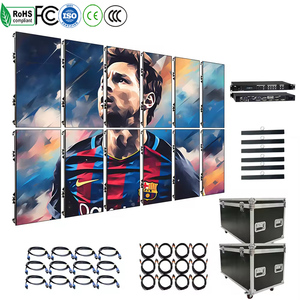
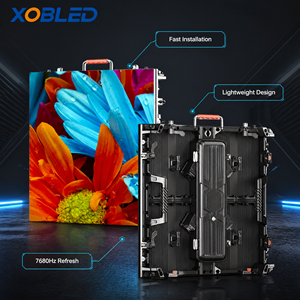
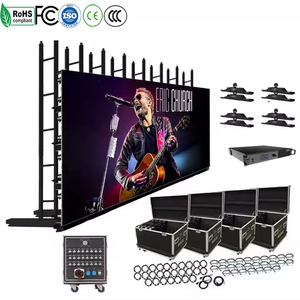
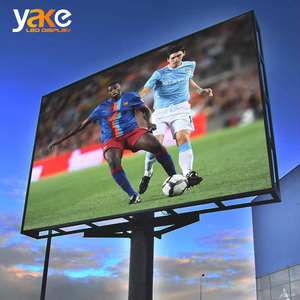
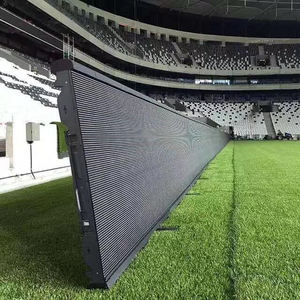
Global engineering specifications, strict FAT compliance, and high-efficiency DOOH hardware systems designed for stadium perimeters, DOOH billboards, and mission-critical commercial venues.
Enterprise Portfolio Showcase
Featured Industrial & Commercial Outdoor LED Display Systems
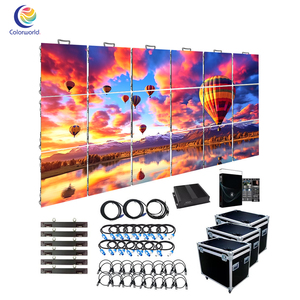
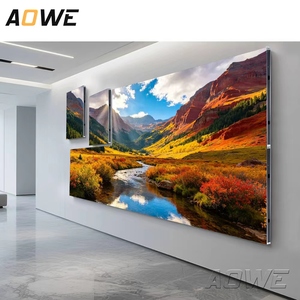
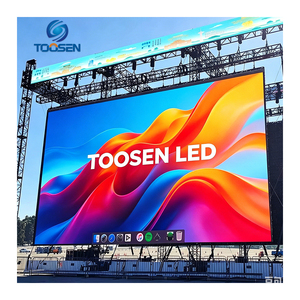
Factory-direct verified solutions engineered with die-cast aluminum enclosures, high-nit outdoor SMD LEDs, IP65/IP66 dual-seal weatherproofing, and calibrated refresh architecture.
Global Technical Guide: Selecting Top Trusted Outdoor LED Wall Suppliers
Navigating the complexities of large-format outdoor visual infrastructure requires deep component validation, thermographic heat mapping, strict ingress protection benchmarks, and structural wind-load certifiability.
1. Deconstructing Optical Performance: Pixel Pitch, Luminance, and Contrast Ratios
Procuring commercial-grade outdoor LED video walls is fundamentally an engineering exercise in balancing viewing distance against thermal dissipation and optical output. When specifying outdoor installations, pixel pitch selections are governed by the Optimal Viewing Distance (OVD) formula, calculated as Pitch (mm) × 1.0 meter for acceptable resolution and Pitch (mm) × 2.5 meters for an immaculate visual experience where individual pixel diodes blend into a cohesive, photo-realistic plane.
In high-ambient daylight installations, luminance is non-negotiable. Standard commercial displays operating at 2,500 to 4,000 nits inevitably wash out under direct southern sunlight exposure. Enterprise outdoor walls must provide a minimum calibrated output of 6,000 to 8,500 nits. Furthermore, contrast is equal in importance to sheer brightness: high-contrast black matrix masks, anti-reflective matte shaders, and high-efficiency black shell SMD (or Flip-Chip Common Cathode packages) preserve deep black levels, elevating the dynamic range to broadcast-ready HDR10+ fidelity.
Engineering Insight: Common Cathode vs. Common Anode Efficiency
Modern tier-1 outdoor LED cabinets have rapidly migrated to Common Cathode driver architecture. By providing distinct electrical voltages directly to the Red diode (2.8V) versus the Green and Blue diodes (3.8V), Common Cathode reduces heat dissipation by up to 35% and cuts operating power consumption by 25-40% compared to legacy Common Anode arrays. This lower junction temperature directly prevents chromatic drift, extends SMD diode life beyond 100,000 operating hours, and substantially lowers the Total Cost of Ownership (TCO).
Outdoor Architectural Pitch Selection Matrix
Pixel Pitch (mm)
Standard Density (px/m²)
Calibrated Luminance (cd/m²)
Minimum Viewing Distance
Primary Application Profile
P1.95 / P2.5
262,144 / 160,000
4,500 - 5,500 nits
2.0 - 2.5 Meters
Luxury Retail Glazing, Outdoor Patios, VIP Viewing Zones
P2.97 / P3.91
112,896 / 65,536
5,500 - 6,500 nits
3.0 - 4.0 Meters
High-Resolution Stage Rental, Public Squares, Cultural Centers
P4.81 / P6.0
43,264 / 27,777
6,500 - 7,500 nits
5.0 - 6.0 Meters
Sports Arena Facades, Transport Hubs, Corporate Headquarters
P8.0 / P10.0
15,625 / 10,000
7,500 - 9,000 nits
8.0 - 10.0 Meters
Highway DOOH Billboards, Large Stadium Scoreboards, Pylons
2. Physical Ingress Protection, Mechanical Weatherproofing, and Structural Engineering
Outdoor digital signage operates continuously across violent microclimatic extremes—ranging from blistering UV irradiation and desert dust storms to torrential coastal salt fog and sub-zero blizzards. Ingress protection testing must not be viewed merely as a marketing specification; it is the physical guarantee of your capital investment.
IP65 vs. IP66/IP68 Standard: A truly resilient outdoor module features full hydrophobic silicone conformal potting on both the PCB front face and rear component traces, accompanied by high-grade silicone rubber gaskets compressed between die-cast aluminum module joints. While IP65 resists low-pressure water streams, IP66 guarantees endurance against pressurized typhoon-force washdowns.
Die-Cast Aluminum vs. Traditional Sheet Iron: Historic sheet iron cabinets are prone to oxidation, corrosion, and heavy weight penalties exceeding 45kg/m². Advanced die-cast aluminum cabinets drop structural deadweight to under 26kg/m² while maintaining precision tolerance within ±0.05mm. This microscopic precision eliminates panel seams and light leakage while naturally serving as a massive heatsink that eliminates noisy mechanical fans.
Wind Load Engineering & Static Calculations: For rooftop installations and massive roadside monopoles, aerodynamic drag calculations (Eurocode 1 or ASCE 7-16) require rigorous structural finite element analysis (FEA). Solid cabinets require structural substructures capable of withstanding gusts up to 140 km/h (Beaufort scale 12), whereas perforated, semi-transparent mesh formats reduce wind resistance by up to 40%.
Strategic Horizon
Future Procurement & Technology Trends in Outdoor LED Displays
Discover how the next 3 to 5 years of manufacturing breakthroughs will reshape commercial media budgets, display lifespans, and ESG compliance mandates.
1. Zero-Standby Power Management (ESG Mandates)
Global municipalities and commercial landlords increasingly enforce strict nocturnal illumination laws and carbon limits. The transition to intelligent systems like digiLED ZEUS® allows multi-megawatt outdoor screens to power down safely to absolute zero power consumption during curfew periods, drastically trimming utility overheads and aiding scope-2 carbon reporting.
2. High-Frame-Rate 7680Hz & Outdoor XR Studios
Outdoor events and sports venues increasingly require broadcast-calibrated driver ICs featuring 7680Hz ultra-high refresh rates and 16-bit greyscale depths. This eliminates scan-line artifacts, banding, and flicker during high-speed 4K broadcast camera tracking, enabling outdoor XR stages, esports tournaments, and virtual live production.
3. Outdoor COB & MIP Surface Encapsulation
The industry is transitioning from legacy SMD (Surface-Mounted Device) to Chip-on-Board (COB) and Micro-LED in Package (MIP) architectures. By bonding microscopic flip-chip dies directly onto the substrate and coating them in hard nanopolymer resins, impact resistance increases exponentially while eliminating diode drop-off and water ingress entirely.
4. Front-Service Magnetic Access Revolution
Substructure costs are falling precipitously as engineers adopt true 100% front-service vacuum maintenance designs. Eliminating bulky rear catwalks saves up to 600mm of structural setback, drastically simplifying facade integration, reducing municipal permitting friction, and cutting maintenance technician hours by half.
5. TCO Procurement Shift: Lifecycle Over Initial Capex
Sophisticated DOOH networks and stadium authorities no longer purchase screens based purely on cabinet square-meter unit costs. Procurement models now center on Total Cost of Ownership (TCO) over 7-10 year horizons, evaluating power draw degradation, color drift tolerances, factory spare-batch consistency, and guaranteed local repair depot access.
The Partner Ecosystem
Why Top Global Venues Partner with digiLED & Vetted Tier-1 Supply Chains
From Premier League pitches and NASCAR superspeedways to landmark DOOH spectaculars in London and Tokyo, our engineering-driven approach delivers predictable perfection.
Independent by Design
We do not lock our clients into a single rigid production line. Instead, we select and curate specialized manufacturing lines tailored specifically to your display geometry, refresh rate, and structural budget. Core displays are built to proprietary digiLED intellectual property using Tier-1 gold-wire LEDs, custom driver ICs, and copper-layer heavy PCBs.
Strict In-Person Factory Acceptance (FAT)
Our veteran display engineers are on the production floor physically overseeing every production run. We perform 72-hour full-white thermal burn-ins, submersion hydro-tests, vibration screening, and optical radiometer batch binning. No panel leaves the cleanroom facility without formal FAT sign-off.
Regional Pixel Depots: Las Vegas & UK
Unlike broker suppliers who vanish once delivery clears customs, digiLED operates dedicated Pixel Depots in Las Vegas and the United Kingdom. We maintain batch-matched SMD inventories, module calibration benches, and factory-trained technicians to guarantee lifetime technical support and fast spares turnaround across EMEA, the Americas, and Asia.
Strategic Decision Making
Frequently Asked Questions for Outdoor LED Procurement
Detailed answers to critical technical, structural, and procurement inquiries encountered by commercial venue operators, integrators, and AV consultants.
What are the key technical differences between IP65, IP66, and IP68 ratings for outdoor LED walls?
The Ingress Protection (IP) rating consists of two digits. The first digit represents solids protection (6 indicates complete dust tightness). The second digit dictates liquid resistance: IP65 protects against low-pressure water jets (6.3mm nozzle) from any angle. IP66 certifies complete protection against heavy seas and powerful water jets (12.5mm nozzle at 100 kPa pressure), making it ideal for coastal installations subject to typhoons. IP68 guarantees survival during continuous long-term water submersion under specified pressure heads. For premier outdoor video walls, IP65 front and rear is the minimum professional standard, while IP66 front protection is strongly recommended for highway and seaside environments.
How do you calculate required outdoor brightness to combat direct sunlight and solar glare?
Direct ambient sunlight produces illumination between 30,000 to 100,000 lux. For an outdoor screen to maintain a readable 10:1 contrast ratio under high solar exposure, the display must output at least 5,000 to 6,000 nits (cd/m²). If the LED surface faces directly south or west into unfiltered afternoon sun, 7,000 to 8,500 nits is mandatory. Furthermore, reputable manufacturers specify automatic photodiode light sensors that dynamically throttle brightness down to 800-1,200 nits after dusk to prevent driver blinding, comply with local light-pollution codes, and conserve electrical energy.
Why is Factory Acceptance Testing (FAT) critical when sourcing from overseas LED factories?
Factory Acceptance Testing (FAT) is the final quality milestone before capital equipment is palletized and freighted. During an exhaustive FAT, factory engineers verify optical uniformity across entire assembled screen batches, execute 72-hour continuous white-field burn-ins to expose early semiconductor failures, confirm color chromaticity binning, and test emergency power cutoffs under maximum electrical loads. Discovering a defective batch of driver ICs or inconsistent mask calibrations on site after intercontinental shipping can cost tens of thousands of dollars in delays and crane rental penalties.
How does Common Cathode technology reduce power consumption and thermal load?
In standard Common Anode configurations, a single 5V or 4.2V power supply rail feeds Red, Green, and Blue diodes concurrently. Because the Red LED chip requires only approximately 2.1V to 2.8V to operate, the surplus voltage is dissipated across the driving IC as sheer waste heat. Common Cathode utilizes dual-rail power supplies providing 2.8V to Red and 3.8V to Green and Blue, eliminating unnecessary resistance. This direct voltage pairing reduces thermal output by up to 35%, lowers overall cabinet temperature by 10-15°C, prevents premature LED diode decay, and curtails operational electricity expenditures by up to 40%.
What structural and wind-load considerations must be evaluated for outdoor digital billboards?
Outdoor video walls behave as giant solid sails against air mass movements. Civil and structural engineers must calculate dynamic wind pressure based on geographical wind zones, ground roughness categories, and mounting heights using international standards (such as EN 1991-1-4 or ASCE 7-16). Substructures require deep reinforced concrete pier foundations, high-strength structural steel beams (e.g., S355 or Q355B), and rated fastener assemblies capable of surviving instantaneous wind gusts of up to 140-160 km/h. For rooftop installations, load transfers must align directly with the building’s primary structural columns.
What is the standard life expectancy of an outdoor LED wall, and what governs lumen depreciation?
High-tier outdoor LED displays are rated for an operational lifespan of 100,000 hours to the L70 threshold (the point at which luminance drops to 70% of initial output). In real-world commercial environments running 16 hours daily, this translates to 10 to 12 years of service. Factors that accelerate degradation include sustained high-heat operation, over-driving current beyond factory parameters, poor potting silicone quality that allows moisture to corrode bond wires, and sustained exposure to sulfurous atmospheric pollution. Sourcing Tier-1 LED packages (Nationstar Gold Wire, Kinglight, or Nichia) ensures predictable, minimal chromatic drift over the product life cycle.
What spare parts ratio should be ordered during primary display procurement?
Professional procurement specifications mandate ordering a minimum 5% to 8% spare parts buffer produced within the exact same factory manufacturing lot (same LED wafer diffusion batch and chromatic bin). This must include spare LED modules, receiving cards, power supply units, flat ribbon data cables, and waterproof power links. Purchasing replacement modules years later from a different manufacturing batch inevitably results in noticeable color mismatch and brightness variance, commonly known in the industry as a 'checkerboard effect'.
Procure Directly with Global Engineering Certainty
Discuss your upcoming outdoor project directly with our technical consultants. Receive tailored CAD framing blueprints, complete photometric simulations, structural wind calculations, and comprehensive factory-direct pricing packages.