EMEA +44 (0) 207 381 7840 USA +1 702 783 3360 ASIA +81 3 5846 8842 [email protected]
Global Campus AV Engineering & Procurement Specification

Higher Education LED Display Walls: How Can Universities Specify, Procure, and Future-Proof Campus Visual Technology While Minimizing Lifecycle TCO?

From high-ambient-light tiered lecture halls and immersive medical simulation theaters to multi-disciplinary collaborative atriums, discover how university AV directors, campus architects, and procurement authorities configure high-reliability direct-view LED display walls with zero-standby energy savings.

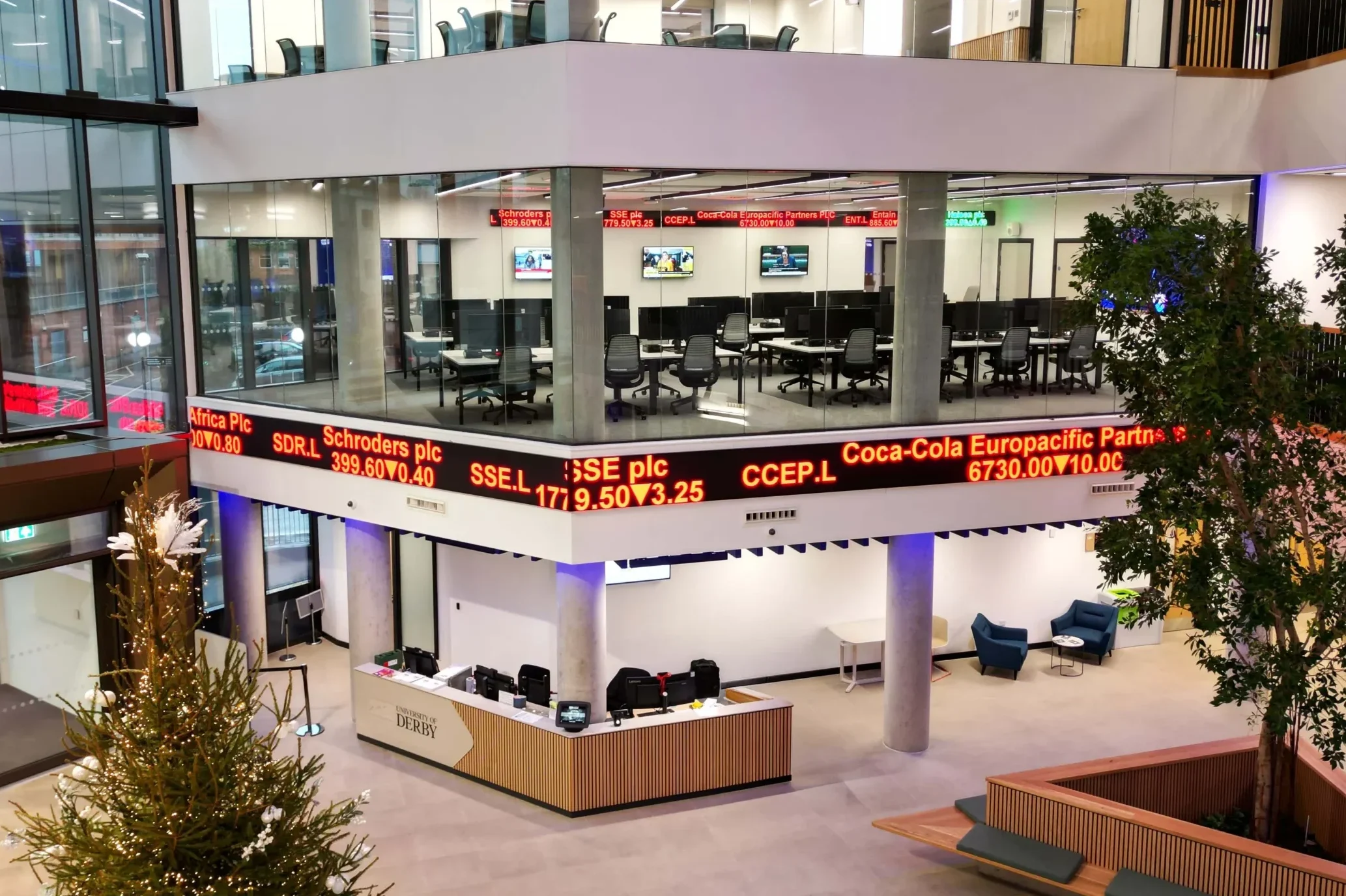
University of Derby Business School lobby LED display wall engineered by digiLED
Real-World Deployment: University of Derby Cavendish Business School lobby showcase engineered with digiLED fine-pitch architectural display technology.
0
SQM of LED Deployed Globally
0
Years Combined LED Experience
0
Patents & Industry Innovations
Made in Britain Certification for digiLED ZEUS
Made in BritainAwarded for digiLED ZEUS® zero-standby power management
The Campus Visual Revolution

Transforming Academic Pedagogy & Campus Environments

Why tertiary institutions across the UK, Europe, North America, and the Asia-Pacific region are standardizing on fine-pitch direct-view LED display walls over legacy projection and bezel-interrupted LCD matrices.

Modern higher education campuses are navigating a profound structural transformation in instructional delivery. The rapid evolution of HyFlex (hybrid-flexible) visual learning, synchronous multi-campus telepresence, high-resolution scientific modeling, and dynamic campus communication has exposed the fundamental limitations of traditional audio-visual hardware. For decades, tertiary learning institutions relied on high-lumen projection systems or multi-panel tiled LCD video walls. However, both legacy formats increasingly fail to meet modern academic pedagogical and architectural standards.

Projection systems suffer from optical dilution caused by ambient daylight in modern architectural facilities designed with extensive glass facades. Dimming auditorium lighting to make a projection screen legible inadvertently disengages students, impedes note-taking, and degrades remote web cameras. Furthermore, recurring laser-phosphor module replacements, noisy exhaust fans, physical filter maintenance, and optical realignment introduce continuous maintenance bottlenecks. Meanwhile, tiled LCD matrices fragment detailed scientific charts, engineering schematics, mathematical notation, and complex computer code across thick bezel gaps.

Direct-view LED display walls (dvLED) solve these architectural and pedagogical challenges entirely. Offering pitch selections from ultra-fine 0.9mm to 1.8mm for indoor learning spaces, direct-view LED provides uncompromised contrast ratios (up to 10,000:1), high refresh rates (≥3,840Hz), wide viewing angles (≥160° horizontal and vertical), and vibrant illumination (600 to 1,200+ nits) that remains crisp under full daylight. By delivering a single, unsegmented canvas, instructors can freely arrange concurrent picture-in-picture windows—combining real-time lecture slides, digital whiteboarding, student collaboration streams, and remote telepresence feeds with absolute chromatic precision.
Campus Space Type Optimal Pixel Pitch Recommended Display Tech Brightness (Nits) Key Educational Benefit
Tiered Lecture Halls & Auditoriums 0.9mm – 1.5mm digiTHIN NANO COB (Flip-Chip) 600 – 1,000 nits Zero bezel obstruction for coding/formulas; anti-glare; camera moiré suppression for lecture capture.
Medical & STEM Simulation Labs 0.7mm – 1.2mm Ultra-Fine Pitch COB (HDR10 / DCI-P3) 800 – 1,000 nits Micro-level pixel precision, DCI-P3 cinematic colour rendering for microscopy, 3D anatomical modeling.
Student Hubs & Atriums 1.8mm – 2.5mm digiFLEX Architectural / High-Bright Indoor 1,000 – 1,500 nits Resistant to high direct ambient light; curved columns and architectural landmark geometry.
Acoustic Theaters & Concert Auditoriums 1.5mm – 2.6mm digiLED soundTHRU Acoustically Transparent 800 – 1,200 nits Speaker arrays placed directly behind screen; authentic sound localisation without acoustic baffling.
Varsity Arenas & Field Houses 2.5mm – 4.0mm (Indoor) / 6mm+ (Outdoor) VISION Series & Sports PITCH Ribbons 1,500 – 6,000 nits Impact-rated front face; high-speed refresh for broadcast sports, fan activation, and live commencement.
Pioneering Campus ESG Technology

digiLED ZEUS®: Eliminating Standby Waste Across Campus Displays

Industry First Multi-Award Winning Globally Patented Designed & Built in UK

Did you know a typical university auditorium LED screen can waste up to 1,800 kWh per year simply sitting in standby mode during unoccupied evenings, weekends, and academic semester breaks?

Invented in the United Kingdom by industry pioneer Tom Mudd, digiLED ZEUS® is a multi-award-winning, globally patented intelligent power management system. It integrates directly with university room scheduling software (such as Crestron, Extron, AMX, or Q-SYS) to automatically and safely power down LED walls so they draw absolute zero power when classes conclude.

  • Zero phantom draw: eliminates 100% of idle standby electricity across lecture halls
  • Soft-start intelligent current staging prevents in-rush tripping of campus electrical breakers
  • Extends the operational lifespan of power supply units and internal driver electronics
  • Direct verifiable carbon reduction data for campus sustainability and ESG reporting
digiLED ZEUS intelligent energy saving unit for university campus video walls
Made in Britain logo Made in Britain AccreditedEngineering innovation powering sustainable academic infrastructure

The digiLED Institutional Difference

Why higher education procurement teams, AV design consultants, and elite systems integrators trust digiLED for their most mission-critical campus display installations.

Get Catalog

Proprietary IP, Uncompromised Components

We are not a run-of-the-mill reseller, nor are we captive to a single assembly line. We own our proprietary mechanical and electronic IP, pairing premium driver ICs, gold-wire bonding, and precision CNC chassis with the world's most specialized manufacturing facilities.

Mandatory On-Site FAT Inspections

digiLED engineers oversee production hands-on at the factory floor. Every university display wall undergoes comprehensive 72-hour burn-in cycles and exhaustive Factory Acceptance Testing (FAT) before packaging, virtually eliminating out-of-box site defects.

Pixel Depots in UK & USA

Through our dedicated Pixel Depots in Hemel Hempstead (UK) and Las Vegas (USA), we provide full component-level servicing, micro-soldering, emergency module dispatch, and single-bin batch calibration across decades of academic operation.

Academic Buyer FAQ

Procuring Higher Education LED Display Walls

Authoritative technical answers to the most common questions raised by university AV committees, procurement directors, and systems integrators.

How do we determine the precise pixel pitch for a university lecture hall?

The optimal pixel pitch is governed by the Closest Viewing Distance (CVD) and the nature of the instructional media displayed. In higher education, instructional materials frequently include complex mathematical equations, fine lines of computer code, high-density scientific formulas, and 8-point body text in presentation slides.

As a baseline engineering standard, comfortable optical resolution occurs when the pixel pitch (in millimeters) is equal to or less than the closest viewer's distance in meters divided by 2 (e.g., a student seated 2.5 meters from the screen will enjoy Retina-grade typography on a 1.25mm display). For standard tiered lecture halls where the first row sits within 2 to 3 meters, 1.2mm to 1.5mm fine-pitch LED is the recommended international standard. For large atriums or multi-tier auditoriums where the nearest viewer is 5 meters or further, 1.8mm to 2.5mm offers significant cost efficiencies while preserving crisp legibility.

How does the total lifecycle cost of direct-view LED compare to high-lumen laser projectors over 7 to 10 years?

While the initial capital expenditure (CAPEX) for a laser projection system can appear lower, its operating expenditure (OPEX) over a 7-to-10-year academic lifecycle is substantially higher. Laser projector light engines degrade progressively, dropping to 50% brightness after 20,000 hours, requiring whole-unit replacement or costly optical overhaul. Projectors also require continuous HVAC cooling, periodic filter replacements, optical path cleanings, and room blackout blinds that degrade classroom engagement.

Direct-view LED walls boast an operational lifespan of 100,000 hours (over 25 years under typical university operating schedules). When paired with digiLED ZEUS® zero-standby energy technology, electrical running costs drop significantly. Modules are serviceable from the front face in minutes without disturbing the supporting structure, resulting in a 35% to 50% lower Total Cost of Ownership across a decade of use.

How can we prevent lecture capture cameras from recording optical moiré patterns off our LED wall?

Optical moiré occurs when the geometric grid array of camera sensor pixels clashes with the physical pitch grid of LED diodes during video recording or hybrid streaming. To prevent this, digiLED specifies two primary countermeasures:

1. Chip-on-Board (COB) Optical Surface Diffusion: Products like digiTHIN NANO COB utilize a microscopic optical resin encapsulation that diffuses point-source light into a smooth, continuous pixel canvas, dramatically attenuating the physical grid that triggers sensor aliasing.

2. High Refresh Rates & High-Frequency Pulse Width Modulation (PWM): Premium LED driver ICs delivering refresh rates of ≥3,840Hz (and up to 7,680Hz) paired with precise Genlock synchronization guarantee complete harmony with university PTZ broadcast cameras, preventing scan lines, rolling shutter bars, and flicker.

Are fine-pitch LED display walls durable enough to install in high-traffic student public spaces?

Standard SMD (Surface Mount Device) LED walls should never be installed within physical reach of students, as backpacks, cleaning tools, or curious fingers can easily dislodge surface-soldered diodes. For student centers, faculty corridors, and accessible teaching walls, digiLED deploys COB (Chip-on-Board) or AOB (Adhesion-on-Board) surface-strengthened architectures.

The solidified epoxy or polyurethane surface of digiTHIN NANO COB provides robust protection against physical impacts (rated up to IK08), complete front-face moisture and dust ingress protection (IP54), and anti-static safeguarding. Furthermore, the surface can be safely wiped clean with standard microfiber cloths and alcohol-free disinfectant cleaners.

Can digiLED video walls integrate with existing campus AMX, Crestron, Extron, or Q-SYS network controllers?

Yes. digiLED processors and intelligent peripheral systems like digiLED ZEUS® feature open API command structures, dry-contact GPIO triggers, RS-232 serial control, and TCP/IP Ethernet connectivity. Campus AV technicians can seamlessly orchestrate automated power-on/power-off schedules tied to room calendar bookings, switch multi-window windowing presets, and monitor diagnostic telemetry directly from central university NOC dashboards.

Plan Your Campus Visual Infrastructure

Whether you are drafting an RFP for an auditorium overhaul, designing a new campus building, or seeking consultation on zero-standby energy retrofits, our senior engineers are ready to support your team.

EMEA+44 (0) 207 381 7840
USA+1 702 783 3360
ASIA+81 3 5846 8842
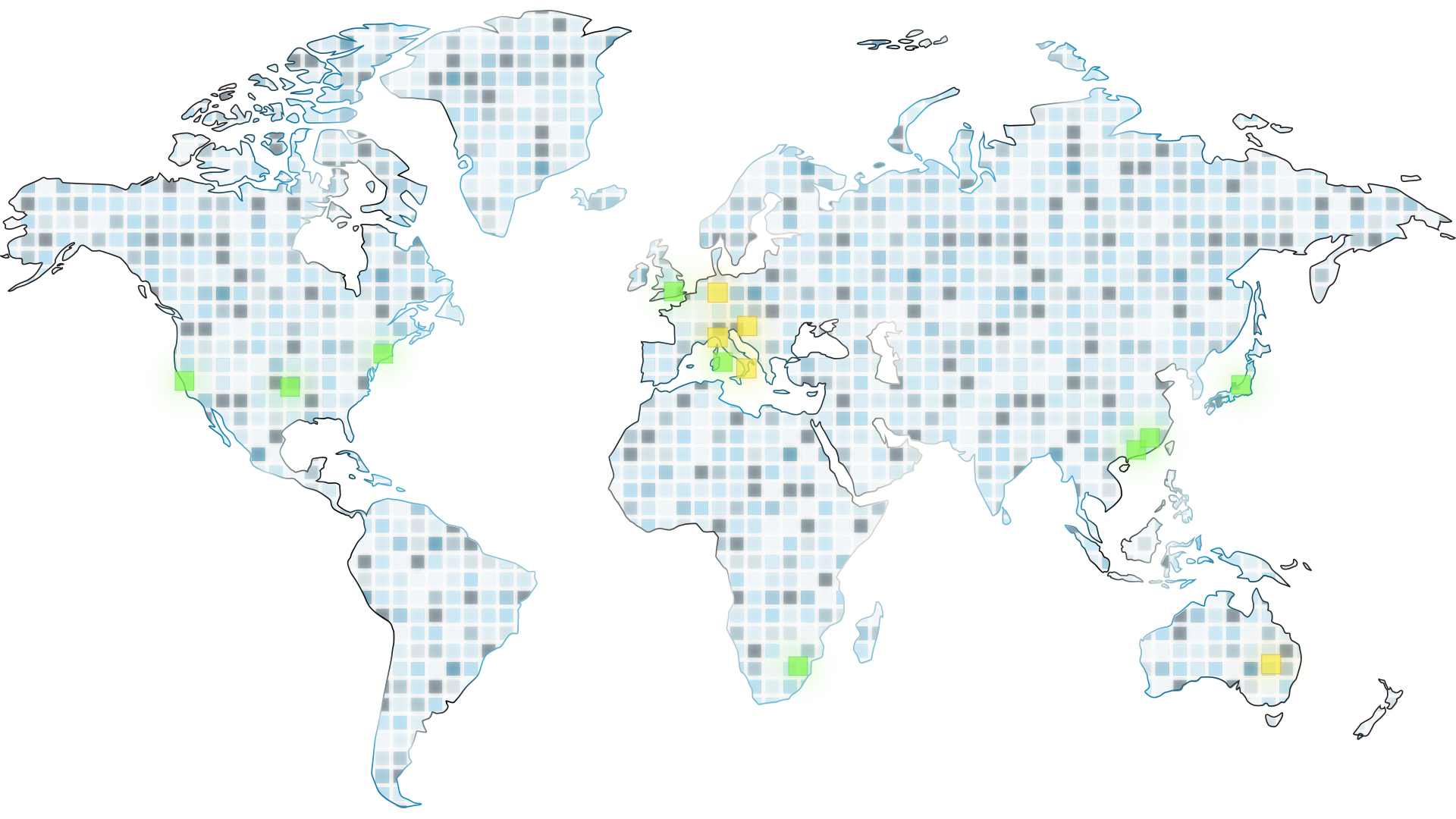
digiLED global engineering offices and regional support depots map

Global support infrastructure with dedicated regional Pixel Depots in Hemel Hempstead (UK) and Las Vegas (USA).