From architectural high-transparency film in Helsinki shopping gallerias to sub-zero IP65 perimeter screens in Tampere sports arenas. Certified CE-LVD, CE-EMC Class B, and RoHS compliant.
A comprehensive analysis of why standard commodity LED modules fail in Northern Europe, and how specialized CE-certified HDR architectures ensure uninterrupted 100,000-hour operational lifespans.
Deploying digital display infrastructure across Finland presents one of the most rigorous operational challenges in the global audio-visual landscape. From the coastal maritime salt-fog in the Greater Helsinki metropolitan area (Uusimaa region) to the severe permafrost conditions of Rovaniemi and Lapland, electronic display hardware is subject to extreme hydrothermal expansion cycles, rapid condensation during seasonal transitions, and stark photopic variations.
Standard LED displays manufactured for temperate zones suffer systemic breakdown in the Nordics within 18 to 24 months. Common failure modes include trace corrosion caused by dew-point condensation, solder fatigue during rapid temperature swings from -35°C up to +25°C, and severe visual blooming during the Finnish Polar Night (Kaamos). Our factory engineering protocol resolves these vulnerabilities through fundamental semiconductor-level and chassis-level innovations.
The solar geometry of Finland causes extreme luminance disparities. In December, cities like Oulu and Kuopio experience fewer than four hours of indirect daylight, requiring display hardware to dial down luminance below 80 nits to prevent driver blinding and light pollution. Conversely, during Midsummer, 24-hour ambient solar reflection demands sustained punchy output exceeding 6,500 nits. Our HDR10 and HLG compliant driver ICs maintain an ultra-wide 16-bit PWM grayscale depth without stepping or posterization, ensuring pristine optical fidelity even when dimmed to 1% brightness.
A frequent disaster in Nordic outdoor DOOH (Digital Out-of-Home) networks is cold-start inrush failure. When power returns following a grid interruption during a -30°C winter storm, standard electrolytic capacitors crack and driver chips short-circuit due to localized condensation moisture. Our Finland-bound LED display cabinets integrate solid-state polymer capacitance rated to -55°C, along with internal multi-stage dehumidification pre-heaters. By maintaining module PCB temperatures slightly above the ambient dew point, we eliminate internal trace icing entirely.
| Engineering Parameter | Standard Commercial LED Display | Our CE Certified Nordic-Spec HDR LED Display |
|---|---|---|
| Operating Temperature | -10°C to +40°C (Electrolytics degrade below freezing) | -40°C to +60°C (Cold-rated solid polymer capacitance) |
| HDR Pipeline & Grayscale | 8-bit to 12-bit PWM (Severe banding at low brightness) | 16-bit True HDR10 / HLG (Linear grayscale dimming to 0.1 nits) |
| Condensation Mitigation | Single-layer polyurethane spray or none | Triple nano-conformal coating + internal dew-point pre-heaters |
| CE EMC Compliance | EN 55032 Class A (Industrial only; causes RF interference) | EN 55032 Class B & EN 61000-3-2 (Urban residential & transit certified) |
| Standby Power Consumption | 15W - 35W per square meter idling current | 0.00 Watts with patented intelligent zero-idle power management |
Every module undergoes robotic automated conformal dipping with automotive-grade moisture barriers, passing 500-hour ASTM B117 salt spray tests to withstand coastal Finnish road de-icing salts.
By routing discrete operational voltages to Red (2.8V) and Green/Blue (3.8V) semiconductor diodes, power dissipation drops by 38%, significantly reducing operating OPEX amidst high Nordic energy tariffs.
Cabinets and internal cables comply strictly with European flammability classifications (B-s1, d0), a mandatory prerequisite for deployment in Finnish public infrastructure, malls, and arenas.
Tailored display architectures engineered specifically for the distinct commercial and municipal requirements of Finland’s leading cities.
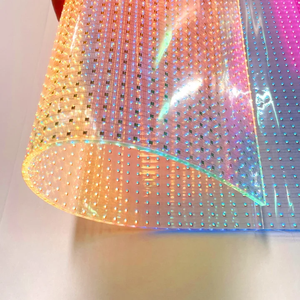
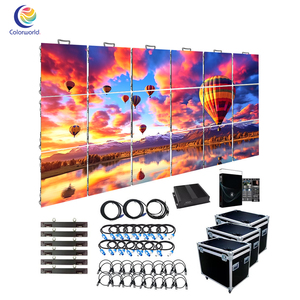
Deployments in Helsinki’s Kamppi, Mall of Tripla, and Espoo’s Iso Omena require architectural integration. Our super-slim adhesive crystal film (P6/P8) installs directly onto existing glazing without altering HVAC heat-loads or blocking natural daylight.
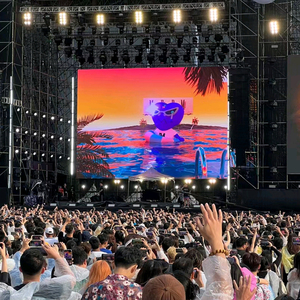
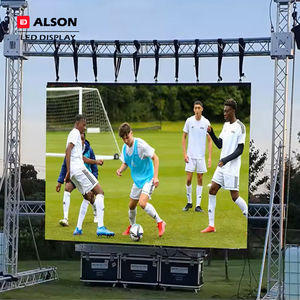
For venues like Nokia Arena (Tampere) or Gatorade Center (Turku), our center-hung video cubes and high-impact perimeter fascia boards feature 3,840Hz high-frame refresh rates, ensuring broadcast cameras capture rapid puck motion without scanlines.
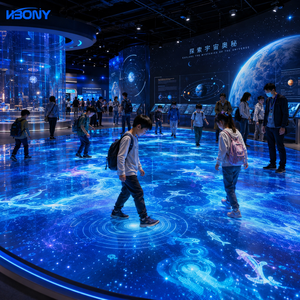
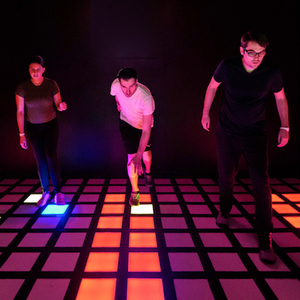
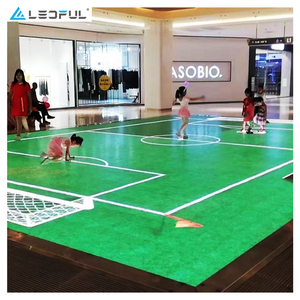
Finnish leisure hubs, gaming lounges, and urban night venues leverage our 2-ton load-bearing pressure-sensitive LED floors. Optical sensing delivers real-time kinetic reactions for dance floors and immersive active entertainment spaces.
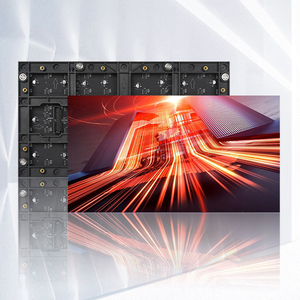
Engineered for high-traffic transport interchanges including Helsinki Central Station and Pasila. Utilizing ultra-reliable P2.604 and P3.91 IP65 cabinets with automatic optical ambient lux sensing to adhere to local municipality brightness ordinances.
Aligning with Finland’s binding Carbon Neutral 2035 target through intelligent energy management and circular hardware engineering.
Procurement teams, AV consultants, and municipal buyers in Finland operate under some of the most rigorous environmental criteria in the European Union. Standard tenders issued by Finnish authorities and major corporate enterprises evaluate not just capital acquisition expense (CAPEX), but lifetime operational carbon emissions (OPEX), recyclability of raw chassis metals, and strict compliance with the EU Ecodesign Directive.
In standard commercial LED installations, displays consume up to 20% of their peak power rating even when blanked out overnight, simply to power internal receiving cards, logic boards, and idle switching power supplies. In Finland, where electricity volatility and corporate ESG scrutiny are paramount, this represents unacceptable waste. By integrating patented intelligent power management systems (such as the UK-engineered digiLED ZEUS® standard), our systems remotely disconnect line voltage when not displaying content, achieving absolute 0.00 Watts standby power draw without requiring manual circuit breakers.
Traditional SMD (Surface Mount Device) LEDs leave delicate soldered diodes exposed to direct mechanical impact, cleaning fluids, and airborne moisture. In high-traffic Finnish public environments such as airports and transit lounges, COB packaging with vacuum resin encapsulation provides an impervious flat surface with a 4H pencil hardness rating. Diodes cannot be knocked off by cleaning equipment or luggage, and the seamless resin barrier provides intrinsic immunity to humidity fluctuations during rapid spring thaw cycles.
We combine high-volume precision manufacturing with rigorous, engineer-led factory floor quality control and comprehensive European after-sales logistics.
Rather than reselling white-labeled generic commodities, our products are engineered to proprietary technical specifications utilizing Tier-1 Kinglight / Nationstar LEDs, Macroblock high-scan driver ICs, and Mean Well power supplies.
Dedicated quality engineers oversee the assembly floor. Every panel undergoes 72 hours of uninterrupted white-screen thermal burn-in, vibration drop testing, and computerized chromatic calibration prior to shipping dispatch.
Supported by dedicated regional engineering hubs and Pixel Depots in Europe and the UK, we supply batch-matched pixel spare modules, circuit cards, and rapid-replacement warranty components across Finland within 48 to 72 hours.
Direct technical answers addressing regulatory verification, thermal survivability, EMC standards, and logistics to Finland.
We provide full laboratory test reports issued by accredited Notified Bodies confirming conformity with the Low Voltage Directive (LVD 2014/35/EU), Electromagnetic Compatibility Directive (EMC 2014/30/EU to EN 55032 Class B standards), RoHS Directive (2011/65/EU), and REACH regulation. Structural flammability reports complying with EN 13501-1 are included for architectural atrium permits.
Yes. Our Nordic-rated outdoor cabinets utilize specialized low-temperature switching power supplies with solid polymer capacitors operational down to -40°C. For extreme Lapland deployments where temperatures reach -45°C, we supply integrated thermostatically controlled PTC ceramic heating strips that gently elevate internal cabinet temperatures prior to primary diode ignition.
Class A products are permitted only in isolated heavy industrial zones. In Finnish city centers like Helsinki, Tampere, or Espoo, commercial displays are positioned near residential dwellings, 5G cellular arrays, and sensitive hospital communication equipment. Class B compliance guarantees zero radio-frequency electromagnetic interference, eliminating the risk of regulatory shutdown by Traficom (Finnish Transport and Communications Agency).
Our crystal film LED display features high heat-dissipating substrate circuits with over 80% natural air permeation. When mounted to Low-E or argon-insulated double glazing common in Nordic construction, heat generation is under 120W per square meter at typical commercial brightness, ensuring zero thermal shock breakage to insulated glass units.
Custom-engineered production batches generally require 18 to 25 working days, inclusive of the mandatory 72-hour factory acceptance burn-in test. Airfreight delivery to Helsinki-Vantaa Airport (HEL) takes 5 to 7 days, while sea freight containers to the Port of Helsinki (Vuosaari) or Kotka take approximately 28 to 35 days with full DDP (Delivered Duty Paid) documentation available.
Every project batch is produced using diodes sourced from the same single ingot wafer bin. We reserve and archive an additional 3% to 5% spare module contingency at our factory and European depots, keyed to the specific calibration color profile of your initial delivery, guaranteeing zero chromatic drift during module servicing years later.
Collaborate with our structural and optical engineering teams to review viewing distances, pixel pitches, and thermal load specifications for your upcoming installation in Finland.
Get Catalog