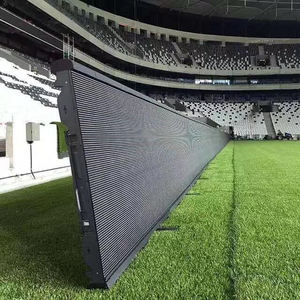
Each display configuration is factory-tested against high relative humidity, severe power transient swings, and prolonged high-ambient solar exposure.
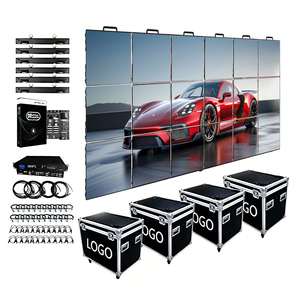
A rigorous metallurgical and thermodynamic assessment of LED display longevity under coastal saline humidity, Harmattan silica dust abrasion, and equatorial solar loads.
Unlike conventional Surface Mounted Diodes (SMD) whose solder pins are directly exposed to the open air, COB attaches flip-chip micro-LED dies directly onto the PCB substrate, fully encapsulated by a high-transmittance optical epoxy resin. This produces an impermeable IP65/IP68 front barrier that eliminates pin oxidation caused by the high saline content along the Gulf of Guinea (Greater Accra and Western Region).
Thermal management is the single biggest factor governing MTBF (Mean Time Between Failures) in tropical climates where midday ambient temperatures routinely exceed 35°C. In COB packaging, the thermal resistance path ($\approx 2.5\ \text{K/W}$) bypasses the traditional lead frame, routing junction heat straight into the multi-layer aluminum core PCB. Lower internal junction temperatures directly prevent localized blue diode decay and color shifts.
Between November and March, the dry Northeast Trade Winds (Harmattan) carry dense, fine silica particulates across Ghana. On standard SMD screens, dust penetrates module seams and creates micro-abrasions during cleaning. COB technology features a smooth, monolithic surface with a 4H pencil hardness rating, making it completely impervious to abrasive airborne dust and simple to clean with water washdowns without lamp detachment.
| Performance Parameter | Conventional SMD Screen | Advanced Flip-Chip COB System | Operational Impact in Ghana |
|---|---|---|---|
| Protection Index (Front Face) | IP30 - IP43 (Indoor) / IP65 with masks | IP65 to IP68 Solid Monolithic Layer | Zero corrosion from tropical air (80–90% RH) |
| Anti-Collision / Impact Strength | Low (< 0.5 kgf force knocks off lamps) | High (> 5.0 kgf surface impact resistance) | Drastically lower dead-pixel rate during transit & cleaning |
| Failure Rate (PPM over 10,000h) | < 50 PPM (prone to dry joints) | < 5 PPM (die-level bond) | Minimal callout costs in Accra, Kumasi, and Takoradi |
| Contrast Ratio & Black Uniformity | 3,000:1 – 5,000:1 | Up to 20,000:1 (Nano-Black Resin Matrix) | Crisp broadcast viewing in sun-drenched church sanctuaries |
| Surface Thermal Rise ($\Delta T$) | +18°C above ambient at full white | +8°C to +10°C above ambient | Prevents thermal runaways without massive AC overheads |
Exporting to Ghana requires far more than assembling LED cabinets. It demands a ruggedized power topology designed to handle severe utility transients.
Electricity Company of Ghana (ECG) distribution nodes frequently experience phase-to-neutral sags and spikes. Standard commercial power supplies fail when line voltages drop below 190V. Our exported modules incorporate PFC-equipped industrial switching units engineered for an 85V–264V continuous operational range, ensuring continuous screen uptime during voltage drops without unexpected system reboot loops.
Because major commercial venues in Airport City, Osu, and Kumasi rely on automatic standby diesel generators (ATS systems), line frequency fluctuation (47Hz to 53Hz) and transition voltage surges represent the primary cause of blown receiving cards. Our system integrates multi-stage MOV (Metal Oxide Varistor) surge suppression combined with galvanic optical isolation on all incoming RJ45 data channels.
Electricity tariffs for commercial and industrial users in Ghana are among the highest in West Africa. Leveraging our patented intelligent power control technology (similar to the internationally awarded ZEUS architecture), whole screens can be put into zero-watt standby remotely when idle, preventing costly 24/7 background power draw across large DOOH billboards and auditorium setups.
Purpose-matched display hardware built for corporate boardrooms, iconic transit corridors, premier houses of worship, and national sports facilities.
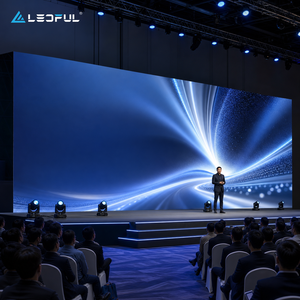
Churches with 3,000 to 20,000+ seats demand massive visual backdrops that look razor-sharp on camera without moiré patterns. Our fine-pitch COB displays deliver 3840Hz–7680Hz refresh rates, ensuring flicker-free multi-camera broadcast capture on national television and social livestreams.
Positioned along the George Walker Bush Highway, Accra-Tema Motorway, and Kwame Nkrumah Circle, our outdoor screens output up to 8,500 nits of calibrated luminance. Automated optical dimming sensors balance day-to-night intensity while cutting overall power consumption.
Engineered for venues like the Accra Sports Stadium and Baba Yara Stadium in Kumasi. Our perimeter systems feature impact-absorbing soft silicone masks, padded top bumpers to protect athletes, and rapid-swap modular power boxes for quick maintenance during live matches.
Banking headquarters in Ridge and mining control centers in Western/Ashanti regions rely on micro-pitch COB (P0.9mm to P1.25mm) for seamless multi-source data visualization. Zero bezel lines, 175° ultra-wide viewing angles, and matte anti-glare surfaces reduce eye strain.
The operational landscape for digital signage in West Africa is rapidly transitioning from low-cost imports toward resilient, long-life, and energy-efficient infrastructure.
Municipal authorities in Greater Accra and the Sekondi-Takoradi Metropolitan Assembly are encouraging digital conversion over static billboards to reduce paper waste and generate dynamic ad revenues. Media buyers require guaranteed uptimes exceeding 98.5%, rendering fragile low-tier SMD billboards economically obsolete over multi-year concession contracts.
Savvy Ghanaian system integrators evaluate Total Cost of Ownership (TCO) across 5-year periods. By deploying common-cathode driver designs and high-efficiency thermal dies, our COB architectures lower operational power consumption by up to 35%, cutting diesel fuel and electricity expenses while saving tens of thousands of Cedis over the system lifespan.
With Accra hosting the African Continental Free Trade Area (AfCFTA) Secretariat, Ghanaian AV rental companies and system contractors are increasingly serving neighboring West African markets (Togo, Benin, Côte d'Ivoire). Staging displays with durable die-cast magnesium cabinets and COB surface protection survive rigorous inter-state transit with zero cabinet fatigue.
Combining world-class display engineering, rigorous cleanroom manufacturing standards, and personalized export logistics to Ghana's maritime and air gateways.
We do not lock our clients into rigid, generic factory production lines. Instead, we match your unique spatial and environmental brief with tier-1 Chinese cleanroom facilities. Core products are built to strict proprietary specifications using premium national-star or Nationstar gold-wire LEDs, custom driver ICs, and high-spec industrial PSUs.
Every LED cabinet destined for the Port of Tema undergoes comprehensive Factory Acceptance Testing (FAT). Our quality control engineers personally verify optical color calibration, run 72-hour continuous white-screen thermal burn-in, and execute high-pressure water spray tests before approving export crating.
Recognizing the delays and tariffs of air-freighting urgent components into Kotoka International Airport, every Ghanaian project order includes a standard 3% to 5% spare parts package: matched-batch COB modules, pre-programmed receiving cards, power supply bricks, and ribbon cables for uninterrupted on-site maintenance.
Straightforward answers addressing customs clearance, installation, local power stabilization, and warranty support.
Whether you require an ultra-fine COB command center in Accra, a rental stage system for Kumasi events, or a landmark DOOH billboard along the highway, our engineering team is standing by with custom structural drawings, optical pitch recommendations, and direct factory pricing.
Get a Quote