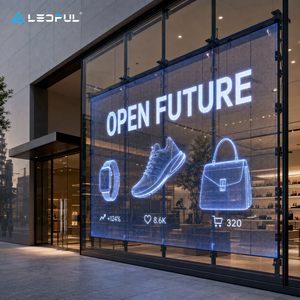
From ultra-fine pitch 8K magnetic walls designed for close-range camera framing to structural transparent glass and heavy-load XR interactive flooring, explore our high-reliability factory configurations manufactured for international broadcast standards.
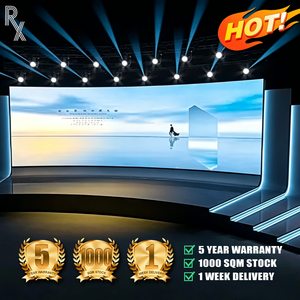
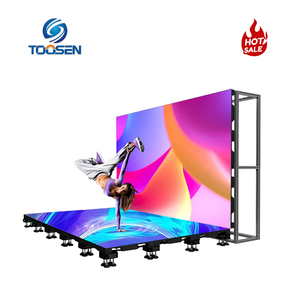
Modern live broadcast operations, teleproduction stages, and cinematic virtual production environments have fundamentally moved past green-screen cycloramas. Today’s broadcast architecture demands custom OEM LED video walls engineered to eliminate visual artifacts, optical aberrations, and timing latencies. For production directors and AV systems integrators operating in Sofia, Plovdiv, and across wider European territories, deploying broadcast studio LED displays requires a rigorous understanding of hardware physics, driver IC architectures, and in-camera performance.
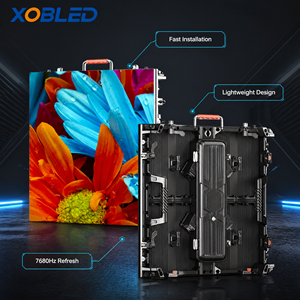
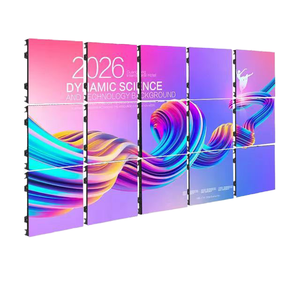
When high-end digital broadcast cameras—such as ARRI Alexa LF, Sony Venice 2, or RED V-Raptor—focus directly on an LED surface, standard commercial displays inevitably fail. They exhibit visual flicker, severe scan lines, color-fringing, and pronounced moiré patterns. Custom OEM broadcast studio LED video walls resolve these constraints at the component level. By specifying ultra-fine pitch Mini-LED or Micro-LED Chip-on-Board (COB) modules, applying micro-optical diffusing masks, and incorporating high-tier driver ICs capable of reaching 7,680Hz refresh frequencies alongside 16-bit to 22-bit grayscale depth at diminished brightness levels (100–300 nits), our factory-built panels guarantee seamless, broadcast-ready fidelity.
Broadcast Engineering Insight: In television studio production, standard LED walls are frequently run at 15% to 20% total output to avoid blinding on-air talent and blowing out camera sensors. Commercial-grade screens collapse their grayscale spectrum under low brightness, resulting in banding in soft studio lighting. True broadcast OEM systems preserve full 16-bit color quantization down to sub-100 nits through PWM driver optimization.
Moreover, the integration of hardware-level Genlock synchronization ensures that LED scan cycles match camera shutter angles precisely (such as 180.0° at 24fps, 25fps, 29.97fps, or 50/59.94Hz PAL/NTSC standards). This synchronization eradicates horizontal roll bars and rolling-shutter artifacts, solidifying the LED video wall as a rock-solid backdrop for virtual studios, real-time Unreal Engine 5 rendering, and newsroom anchor displays.
Explore how custom OEM manufacturing specifications directly resolve real-world studio challenges on set.
Moiré forms when camera sensor pixel arrays interfere with the LED matrix grid. Our custom OEM broadcast modules utilize specialized optical diffusing layers, matte resin encapsulation, and microscopic lens arrays. This scatters pixel pitch gridlines, allowing studio cameras to track talent close to the screen with wide apertures without creating moiré distortion.
Broadcast video latency must align with audio talkback and studio automation. Supporting native SMPTE ST 2110 IP video streams, Megapixel VR HELIOS, and Brompton SX40 processors, our panels maintain frame latency under 0.1ms. Direct frame-lock to blackburst or tri-level sync ensures uncompromised integration with tracking systems like stYpe and Mo-Sys.
Ultra-sensitive hypercardioid microphones in television studios capture minute ambient hums. Our factory engineers high-efficiency cold-screen cathode PCB layouts and extruded die-cast magnesium cabinets that dissipate thermal energy entirely through natural convection, ensuring silent <15dB operation without internal mechanical fans.
Modeled on elite industry green standards such as digiLED ZEUS®, our systems incorporate automated zero-power standby capabilities. Broadcasters reduce facility HVAC overhead and operational standby carbon emissions dramatically during non-operational studio overnight cycles, complying with stringent European sustainability mandates.
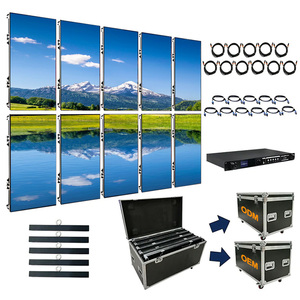
Modern studio setups feature pedestals, robotic jib arms, and moving studio cameras. Traditional SMD LEDs are prone to physical impact damage along edge boundaries. Our Chip-on-Board (COB) and Glue-on-Board (GOB) factory builds provide an IP65-rated, impact-resistant, dust-proof, and cleanable surface that protects your infrastructure from production accidents.
All assemblies comply with EU Directives including CE, RoHS, and EMC EN 55032 Class B (preventing high-frequency broadcast audio RF interference). Every batch undergoes automated spectroradiometer color calibration matching Rec.709, DCI-P3, and Rec.2020 color gamuts with Delta E < 1.5 color uniformity across all viewing angles.
Understanding how different LED packaging technologies perform under studio cameras and operational rigors.
| Performance Vector | Standard Commercial SMD | Enhanced Studio GOB | Micro COB (Broadcast Reference) |
|---|---|---|---|
| Pixel Pitch Range | P2.5 - P4.0 | P1.5 - P2.5 | P0.7 - P1.56 |
| Refresh Rate & Scan Ratio | 1920Hz - 3840Hz (1/32 scan) | 3840Hz - 7680Hz (1/16 scan) | Up to 7680Hz (1/8 or dynamic scan) |
| Moiré Susceptibility | High (Severe on tight shots) | Moderate (Requires defocus) | Ultra-Low (Diffused surface mask) |
| Low-Brightness Grayscale | Drops to 10-12 bit @ 150 nits | 14-16 bit @ 150 nits | 16-22 bit with PWM boost @ 100 nits |
| Surface Durability & Cleanability | Fragile bare solder joints | Impact & moisture resistant resin | Hermetic epoxy seal (IP65 front face) |
| Acoustic Heat Emission | Active fan cooling often needed | Fanless passive conduction | Cold-cathode fanless (< 15 dBA) |
Bulgaria has developed into a premier technological and cinematic production hub within South-Eastern Europe. The modernization of broadcasting studios across the region is propelled by two major industrial pillars: national public/private telecommunications broadcasting and the explosive demand for global cinematic virtual production.
1. Sofia National Television Facilities (BNT, bTV, Nova TV): Main newsrooms and current affairs studios in Sofia demand 24/7 reliability. Installing custom OEM curved LED backdrops allows multi-camera setups with sweeping automated jib camera tracks to film without banding or color shifts. The display's ability to maintain true Rec.709 color temperatures (3200K to 5600K broadcast balance) guarantees that anchor skin tones render naturally against high-contrast dynamic infographics.
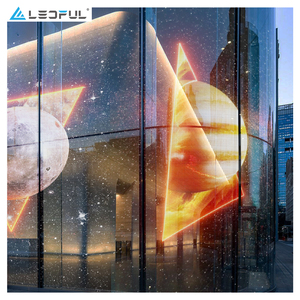
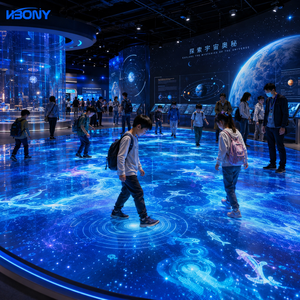
2. Cinematic Virtual Production & Film Stages (Boyana Film Studios Corridor): As international feature films and episodic streaming productions flock to Nu Boyana and regional stages, the requirement for high-frame-rate, HDR10+-capable LED volumes has surged. Our high-load interactive floor LED displays (holding up to 2 tons per panel) mate seamlessly with overhead ceiling LED softboxes and large-radius cylindrical LED walls to deliver full 360-degree in-camera parallax environments running on Unreal Engine 5 via nDisplay architecture.
3. Regional Esports Arenas & Corporate Hybrid Studios: Technological hubs within Sofia Tech Park and specialized media centers in Plovdiv and Varna require flexible video walls that transition between multi-window esports tournament broadcasts and high-security corporate presentations. Fast module swap times and front-service magnetic extraction mechanisms ensure zero broadcast downtime during live broadcasts.
4. Localized Supply Chain & EU Logistics Advantage: Procuring custom broadcast LED infrastructure with factory oversight within Bulgaria offers significant strategic value. As an EU member state, projects benefit from simplified intra-community freight routing, zero customs tariffs within the EU Single Market, and expedited overland dispatch across the Balkan corridor, bypassing the extensive shipping delays typical of unvetted overseas brokerage.
Key market drivers accelerating LED wall upgrades in regional production facilities.
Bulgarian broadcasters are systematically replacing legacy SDI routing matrices with unified IP infrastructures. Modern broadcast LED processors ingest uncompressed ST 2110-20 video essences directly over 25GbE/100GbE fiber networks, cutting cabling weight and signal conversion latency.
Mid-tier commercial production houses in Sofia are constructing compact extended reality (XR) stages. These require tight-tolerance corner seams (< 0.1mm gap) and interactive floor systems capable of real-time camera tracking synchronization via freeD and Open Sound Control (OSC) protocols.
With corporate ESG regulations advancing throughout the EU, studio operations must measure power consumption per broadcast hour. High-efficiency common-cathode circuits decrease thermal dissipation by up to 35%, slashing facility air conditioning loads during hot Bulgarian summer seasons.
Direct answers addressing technical specifications, logistics, installation, and long-term warranties.
Unlike standard commercial displays, broadcast panels cannot tolerate pixel calibration variations between manufacturing batches. Our factory conducts rigorous 72-hour burn-in cycles and optical spectroradiometer tests across all greyscale steps before dispatch, certifying zero dead pixels and uniform chromatic calibration across batch runs.
Scan lines occur when the display's internal PWM refresh rate or driver multiplexing conflicts with the camera shutter cycle. Our broadcast modules integrate premium driver ICs with refresh frequencies up to 7,680Hz and low scan multiplexing ratios (1/8 or 1/16 scan). Paired with low-latency Genlock, the raster cycle matches camera shutter angles perfectly.
Custom OEM orders destined for Bulgaria are consolidated through European logistics frameworks with full CE Declaration of Conformity and RoHS documentation. Shipments are transported securely via direct air freight to Sofia Airport (SOF) or overland through European logistics corridors, fully insured with shockwatch-monitored crating.
Yes. Studio applications cannot afford the downtime required to access the rear of an installed video wall. Our die-cast cabinets feature precision vacuum-assisted front magnetic servicing. Individual modules, receiving cards, and power supplies can be extracted and swapped out in under 30 seconds without dismantling adjacent modules.
News presenters and studio cameras move constantly across the stage floor. Standard displays exhibit blue-shift or magenta color shifts when viewed obliquely. By utilizing surface-treated COB encapsulation and wide-aperture black LED dies, our displays deliver horizontal and vertical viewing angles of 160°/160° with imperceptible color drift (ΔE < 2).
Every broadcast project is delivered with a matched spare-parts package containing identical bin-calibrated LED modules (typically 3% to 5% buffer from the same wafer lot), spare power units, and hub boards. We preserve calibrated spare batches in regional pixel depots, guaranteeing that replacement modules maintain seamless color and brightness matching over their operational lifecycle.