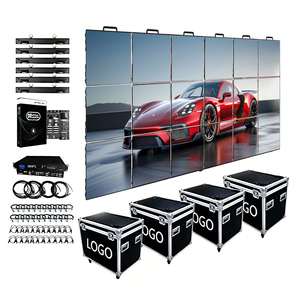
Pre-engineered hardware configurations verified for Scandinavian indoor architectural integration and extreme outdoor Nordic meteorological conditions.
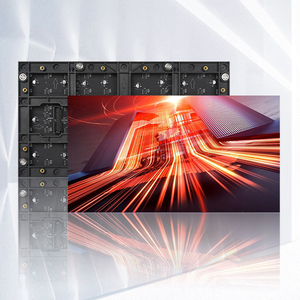
Exporting high-performance digital interactive kiosks to the Kingdom of Sweden requires an engineering approach that accounts for aggressive sub-arctic environmental variables. Across northern hubs such as Kiruna, Luleå, and Umeå, ambient winter temperatures plummet below -35°C, while southern urban centers like Stockholm, Gothenburg (Göteborg), and Malmö experience heavy precipitation, freezing rain, rapid freeze-thaw cycles, and airborne coastal saline moisture from the Baltic Sea and Kattegat.
Standard commercial touch kiosks consistently suffer terminal failures in these conditions due to condensation ingress, touchscreen driver latency collapse, structural thermal contraction, and solder fatigue. Our export architecture addresses these vulnerabilities directly through specialized hardware engineering:
Integrated self-regulating PTC ceramic heating units and automated thermodynamic circulation eliminate cold-start diode fracturing. Microprocessors continuously monitor dew point, triggering de-misting cycles prior to condensation formation on optical touch surfaces.
Aligned with Sweden's rigorous national environmental code (Miljöbalken) and European circular economy directives. Fully RoHS-compliant components, halogen-free internal wiring, and compatibility with Byggvarubedömningen materials scoring systems.
Custom projected capacitive (PCAP) touch sensors and military-grade optical infrared grids tuned for thick winter gloves (leather, wool, Gore-Tex). Rain rejection algorithms ensure surface water droplets do not trigger phantom touch events.
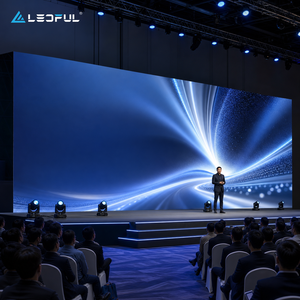
Interactive self-service kiosks, public information totems, and experiential video walls deployed within Sweden's key commercial hubs and public infrastructure.
Integrated at Stockholm Central Station, Arlanda Airport terminal gateways, Gothenburg Centralstation, and Malmö Triangeln. Interactive dual-sided outdoor LED totems deliver real-time timetable telemetry, interactive route planning, and municipal alert overrides directly hooked to Trafikverket APIs.
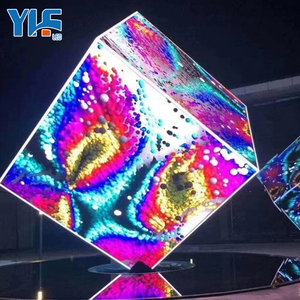
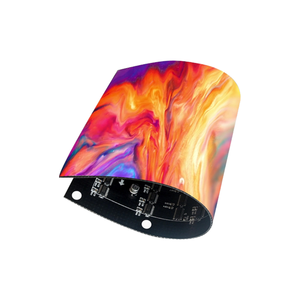
Deployed within Westfield Mall of Scandinavia (Solna), Nordstan (Gothenburg), and Emporia (Malmö). These installations employ curved P2.0 flexible totems, interactive 3D advertising cubes, and tactile floor arrays for omnichannel product catalogs, loyalty self-checkout, and interactive brand immersion.
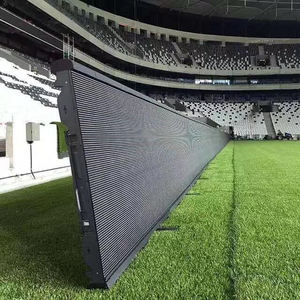
From Strawberry Arena (Solna) and Tele2 Arena to the alpine slopes of Åre and Sälen. Kiosks provide ticketer self-validation, interactive concession ordering, and sponsor video walls that resist gale-force wind loading, sub-zero icing, and heavy stadium concourse foot traffic.
Sweden's innovation clusters demand seamless, modern aesthetic architectural displays. In Kista (Stockholm) and Lindholmen (Gothenburg), interactive fine-pitch LED directories and touch tables facilitate wayfinding, visitor management, room booking, and unified workplace communications.
Stockholm Stad and Gotland regional municipalities utilize interactive outdoor kiosks across historical centers, parks, and ferry terminals. Citizens access bilingual Swedish/English civic services, cultural walking tours, air quality metrics, and emergency communication services.
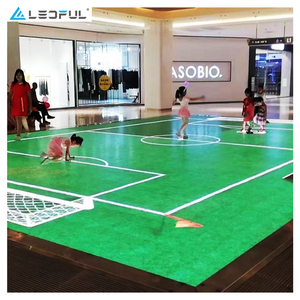
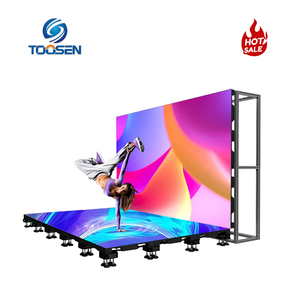
Interactive gravity-sensing dance floor panels and curved perimeter kiosks elevate nightclubs, gaming venues, and museums in Södermalm and Avenyn. Patrons trigger dynamic, fluid visuals with foot movements, transforming venues into immersive kinetic canvases.
Strategic purchasing managers and audiovisual consultants in Sweden must align installations with emerging technical, regulatory, and energy standards.
With Sweden's national commitment to net-zero greenhouse emissions by 2045 and aggressive municipal energy caps, digital signage networks can no longer bleed auxiliary power during overnight or curfew hours. Demand has pivoted strictly toward hardware with smart circuit cutoffs that achieve true 0-watt idle draw.
Chip-on-Board (COB) technology is rapidly replacing surface-mounted diodes (SMD) in Swedish indoor kiosks. COB delivers superior physical protection against impacts, moisture, and dust, while common-cathode driver architectures cut operating heat dissipation by up to 35%, drastically lowering HVAC cooling costs.
By mid-2025, public and commercial customer-facing terminals across Sweden must fully satisfy the European Accessibility Act. Kiosk chassis design must provide wheelchair clear paths, multi-height motorized UI adjustment, tactile navigation buttons, and high-contrast color modes for visually impaired citizens.
Under Integritetsskyddsmyndigheten (IMY) and strict GDPR enforcement, audience telemetry kiosks deployed in Swedish public environments cannot capture or transmit identifiable video feeds. Edge-based optical sensors process anonymous demographic foot-traffic metrics locally in RAM, without ever saving biometric images.
We reject the one-size-fits-all factory approach. We design, engineer, validate, and support bespoke LED screen assemblies and interactive kiosk frameworks built to proprietary intellectual property standards.
Globally Patented • Multi-Award Winning • UK Engineered
The gold standard in sustainable LED management. ZEUS® safely and remotely powers down interactive LED displays of any size or resolution so they draw exactly zero power during non-operational hours.
Comprehensive technical and logistical answers addressing regulatory compliance, Nordic installation conditions, and import processes into Sweden.
Yes. All display systems exported to Sweden carry complete CE declarations of conformity verified by accredited test laboratories. Our displays comply fully with the European Electromagnetic Compatibility (EMC) Directive 2014/30/EU (tested to EN 55032 Class B for radiated emissions), the Low Voltage Directive (LVD) 2014/35/EU (EN 62368-1 for AV safety), and the RoHS Directive 2011/65/EU and its amendment (EU) 2015/863. Full technical compliance files are supplied for Swedish municipal building permits.
Our outdoor totems utilize marine-grade 5754/6063 powder-coated aluminum or 316 stainless steel enclosures with IP65/IP66 hermetic front and rear module seals. Internal electronics receive three coats of anti-corrosion acrylic conformal coating to shield against coastal salt fog and de-icing salt aerosols. Thermodynamic internal heaters prevent thermal shocking of silicon components during rapid drops to -35°C, while double-sealed silicone compression gaskets prevent freeze-thaw water penetration.
We deploy two primary interactive technologies for Nordic climates: tuned Projected Capacitive (PCAP) with heightened signal-to-noise ratio controller firmware, and Optical Matrix Infrared (IR) grids embedded behind anti-glare tempered safety glass. Both methods provide reliable 10-point and 20-point touch registration with standard winter gloves, mitten outerwear, or tactile styluses. Our controller firmware includes proprietary liquid rejection that disregards trickling rainwater or melting snow.
Yes. Modern commercial developments in Sweden frequently target Miljöbyggnad (Gold/Silver), BREEAM-SE, or LEED Platinum status. Our kiosks integrate high-efficiency common-cathode LED drivers, which reduce energy consumption and operating heat generation by up to 35% compared to standard common-anode panels. Furthermore, by pairing systems with our digiLED ZEUS® power management system, installations consume absolute zero idle energy during scheduled off-hours, directly supporting Boverket operational energy limits.
We routinely export under DDP (Delivered Duty Paid), DAP, or CIF terms directly to destinations including Gothenburg, Stockholm, Malmö, and Norrköping. Air freight delivery typically takes 5–8 business days from final Factory Acceptance Testing, while sea and intermodal rail transport takes approximately 26–32 days. We coordinate all Swedish customs clearance, EORI registration documentation, and import VAT procedures with your authorized local freight forwarding agency.
Every project order includes a provisioned spare parts package from the exact same diode wafer lot and driver batch (typically 3%–5% extra modules, receiving cards, power bricks, and ribbon cables). Through our regional Pixel Depots, we provide single-bin color matching and chip-level module repair. In the event of an LED failure years after commissioning, your replacement modules will match the exact color temperature and chromaticity coordinates of the original display.