Explore factory-direct, tier-1 manufactured display configurations precision-engineered for close-proximity viewing, architectural integration, immersive spaces, and high-ambient light conditions across the Greater Sydney region.
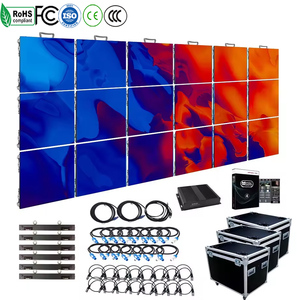

Navigating the fundamental shift from traditional Surface Mount Device (SMD) and Integrated Matrix Devices (IMD) to monolithic Flip-Chip Chip-on-Board (COB) technology in New South Wales high-density corporate and architectural spaces.
For audio-visual engineering consultants and architectural specifiers working across Sydney's central business district (CBD), Barangaroo, and North Sydney, selecting display infrastructure for critical executive environments requires evaluating structural pixel integrity, thermal dissipation dynamics, and optical dispersion performance. While traditional SMD technology solders discrete encapsulated packages onto a printed circuit board (PCB), Flip-Chip Chip-on-Board (COB) completely removes the wire bonds, directly bonding the micro-luminescent LED dies onto the thermal substrate before encapsulating the entire module face in a specialized optical-grade nano-epoxy compound.
This design alteration yields several mechanical and physical advantages directly relevant to long-term commercial deployments:
| Performance Vector | Surface Mount Device (SMD) | Glue-on-Board (GOB) | Flip-Chip COB (digiTHIN NANO Class) |
|---|---|---|---|
| Diode Physical Bonding | Top-wire gold bonded with individual plastic package | Standard SMD with secondary surface epoxy pour | Wire-free direct micro-flip chip substrate bond |
| Pixel Pitch Density | Typically limited to ≥ 1.25mm before yield collapses | Commonly 1.25mm – 2.5mm | Sub-millimetre capability: P0.62, P0.78, P0.93, P1.25 |
| Physical Impact Resistance | Low (modules prone to pixel loss upon contact) | Moderate impact absorption | Ultra-High (4H to 6H pencil hardness; IP54/IP65 front) |
| Surface Thermal Heat Emission | High surface heat, noticeable at close viewing ranges | Moderate thermal entrapment underneath epoxy layer | Cool surface operation (<32°C face temp via planar dissipation) |
| Viewing Angle & Moiré Reduction | 140° Horizontal; visible moiré under studio cameras | 150° Horizontal; refractive light scatter | 170°+ hemispherical Lambertian emission; zero moiré |
| Coastal Humidity / Salt Resistance | Vulnerable to micro-moisture capillary action | Partial seal, susceptible to edge intrusion | Hermetically sealed nano-coating (Full anti-oxidation) |
Projects deployed within 15 kilometers of the Pacific coast or along the perimeter of Port Jackson face specific environmental challenges. Specifying fine-pitch LED hardware in areas like Darling Harbour, Pyrmont, Circular Quay, and Botany Bay demands strict hardware engineering:
A. Marine Aerosol and Airborne Salinity: The constant onshore coastal breeze in Sydney carries elevated levels of airborne sodium chloride particles. Traditional SMD pins suffer galvanic corrosion when relative humidity combines with trace salt, causing high pixel failure rates within 18 months of operation. Our COB hardware utilizes vacuum conformal coating across the entire rear electronic carrier board alongside hermetic resin encapsulations on the front optical matrix, preventing electrolytic migration.
B. High Ambient Light & UV Degradation: Sydney experiences intense solar radiation levels reaching up to 6,000 MJ/m² annually. When fine-pitch displays are integrated behind curtain-wall glazing in modern towers, solar gain and UV exposure can yellow standard epoxy lenses. Our formulations incorporate optical polymers with anti-UV stabilizers that maintain neutral color balance throughout the product lifecycle.
From mission-critical financial command centers to high-end retail flagships, see how engineering-driven COB displays deliver dependable operational stability across Greater Sydney.
In tier-1 banking institutions, legal practices, and corporate boardrooms along Barangaroo and Martin Place, precision and confidentiality are paramount. Sub-1mm COB video walls provide native 4K and 8K visual layouts for intricate multi-data dashboards, financial analytics, and telepresence. The anti-glare, non-reflective matte finish prevents reflections from large harbour-facing glass walls.
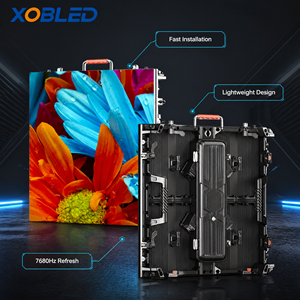
Studios in Moore Park, Fox Studios heritage precincts, and North Sydney broadcast hubs require video walls free from camera scanlines and moiré patterns. Fine-pitch COB modules offer refresh rates up to 7,680Hz, low scan ratios, and broad viewing angles that ensure faithful on-camera color rendering across multi-camera setups.
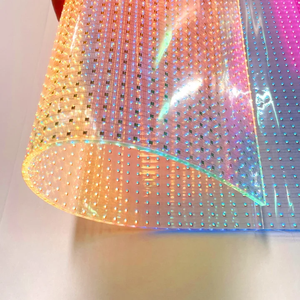
High-end storefronts along Pitt Street Mall and the Queen Victoria Building (QVB) corridor demand displays that attract foot traffic while maintaining clean architectural sightlines. Transparent adhesive LED film transforms commercial facades into dynamic digital displays without blocking indoor sunlight or internal sightlines.
Major infrastructure investments like the Sydney Metro expansion and the Western Sydney International Airport require robust, low-maintenance display hardware. COB displays provide impact resistance against luggage carts and public contact, operating around the clock with low power consumption.
The International Convention Centre (ICC) Sydney hosts world-class plenary events and industry exhibitions that call for rapid setup, exceptional color accuracy, and dependable video scaling. Our lightweight rental panels and modular COB cabinets enable rapid assembly and reliable performance for high-profile assemblies.
Emergency management facilities, utility operations, and rail control centres in Parramatta Square and Macquarie Park rely on 24/7 video walls with zero toleration for individual pixel dropouts. Redundant power supplies and signal paths, combined with cool-to-touch COB surfaces, prevent control room fatigue and reduce air conditioning loads.
Specifying commercial displays in Australia demands strict compliance with national safety codes, electromagnetic compatibility rules, and green building efficiency standards.
All internal power supplies, chassis layouts, and power distribution modules comply with current Australian electrical standards, preventing insulation breakdowns and reducing thermal fire hazards.
Proper electromagnetic shielding ensures displays avoid generating disruptive interference with Wi-Fi arrays, 5G distributed antennas, or air-band communications near Kingsford Smith Airport.
Our intelligent display designs support high NABERS ratings and Section J compliance under the National Construction Code, helping major commercial buildings meet strict carbon targets.
Patented power management systems turn off idle displays safely, eliminating the parasitic standby power common to large screens during non-operational hours.
Rather than relying on one-size-fits-all production lines, our approach combines proprietary engineering intellectual property with vetted global manufacturing facilities.
We do not lock projects into limited machine lines. Instead, we select precision-matched manufacturing facilities based specifically on the needs of your project. Every screen is produced to proprietary engineering designs using top-grade driver ICs, premium PCBs, and high-purity gold and copper contacts.
Our engineers oversee production directly on the factory floor. Every cabinet undergoes continuous 72-hour thermal stress testing, full white-field calibration, and optical alignment before it is signed off for shipment to Sydney.
To avoid supply interruptions, we maintain batch-matched diode bin allocations across dedicated service depots. This ensures that replacement modules blend seamlessly with installed video walls, preserving color and brightness matching over years of operation.
Practical answers to key engineering, regulatory, and logistics questions encountered by local project teams.
Work directly with experienced display engineers to calculate optimal viewing distances, assess coastal environment requirements, and verify Australian standards compliance for your commercial installation.