Retail LED Display Manufacturers & Manufacturer in Korea
Precision-engineered visual technologies, high-transparency film architecture, and intelligent power management for flagship retail environments across Gangnam, Myeongdong, and Seongsu-dong.
Engineered Visual Canvases for the Korean Retail Renaissance
South Korea stands at the undisputed epicenter of experiential retail architecture. From hyper-competitive luxury flagships in Cheongdam-dong to pop-up phenomena in Seongsu and massive duty-free concourses, modern retail demands display hardware that balances extreme pixel density, broadcast-grade camera fidelity, and strict energy compliance. Below are our industry-standard modular solutions built for complex commercial deployments.
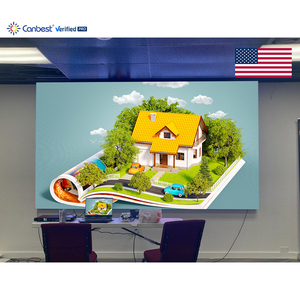
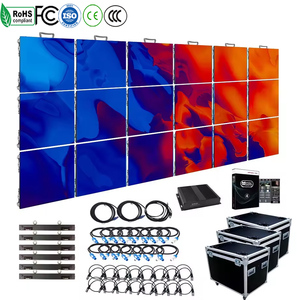
High-precision 3360x1920mm indoor video wall configuration delivering seamless bezel-free imaging, high color depth, and silent convection cooling for retail suites and corporate briefing galleries.
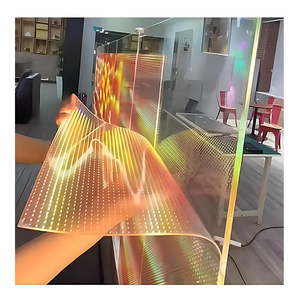
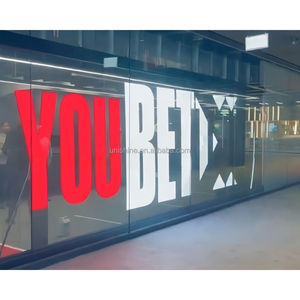
Curved architectural film adhering directly to storefront glass with over 85% light transparency. Preserves natural daylight while creating dynamic 3D holographic retail visual merchandising.
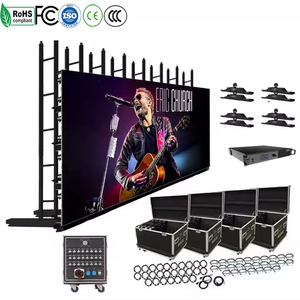
Engineered for camera-ready retail installations, pop-up events, and broadcast stages with an ultra-high 7680Hz scan rate that eliminates scanlines during social media mobile filming.
Super-slim, optical-grade self-adhesive LED film for department store atriums, luxury glazed facades, and elevator balustrades. Features cutting-edge invisible PCB circuitry.
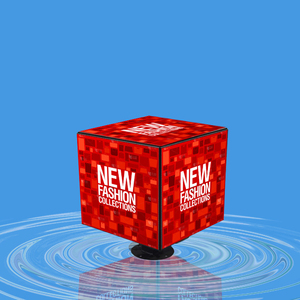
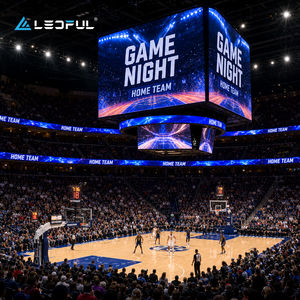
Multi-sided geometric LED cubes designed for suspended mall atrium centerpieces, boutique focal points, and dynamic 360-degree brand visibility with custom 45-degree chamfered bezels.
IP65/IP66 weather-sealed facade display delivering up to 7,500 nits calibrated brightness. Complete front-maintenance access designed for outdoor retail podiums and department store exterior building envelopes.
The Korean Retail Landscape: Precision Requirements for Next-Generation Commercial Displays
South Korea’s commercial districts operate under visual display demands distinct from any other commercial AV market globally. Cities like Seoul, Busan, and Daegu do not merely deploy retail digital signage for price tags or passive promotional looping. Retail here is experiential visual theater. A customer stepping into a flagship boutique in Cheongdam-dong or a concept space in Seongsu-dong expects physical architecture seamlessly fused with digital motion art. When evaluating retail LED display manufacturers in Korea, commercial property developers, architects, and AV consultants must consider critical local engineering realities.
First, smartphone penetration and live-commerce adoption in South Korea lead the world. Storefronts, cosmetics boutiques, and fashion showrooms are routinely used as live broadcast studios by digital creators, influencers, and brand ambassadors. A display with insufficient refresh rates or basic Pulse Width Modulation (PWM) drivers immediately manifests visible scan bands, roll bars, and chromatic distortion on smartphone camera sensors (especially Apple and Samsung high-frame-rate sensors). This makes a minimum 3840Hz—and increasingly, 7680Hz ultra-high refresh driver architecture—a mandatory engineering specification rather than a luxury upgrade.
Second, architectural footprints in premium Korean retail hubs are dense and high-rent. Commercial glass facades cannot be completely blocked off by heavy, opaque aluminum cabinets that choke natural interior illumination or contravene metropolitan zoning guidelines. The rapid adoption of flexible transparent LED film displays that adhere cleanly to tempered architectural glass gives retailers high-definition dynamic visual capabilities facing the street while maintaining over 80% optical transparency from inside the boutique.
Localized Applications: Where Display Engineering Meets Urban Retail
From hyper-dense subway retail subterranean networks to massive multi-story atriums, our engineered LED hardware powers premier commercial installations across South Korea.
Cheongdam & Gangnam Flagship Glazing
Curved, transparent holographic film applied to street-facing architectural glass curtain walls. Delivers floating 3D luxury fashion campaigns without obstructing sunlight or interior boutique layout design.
Seongsu-dong Experiential Pop-Ups
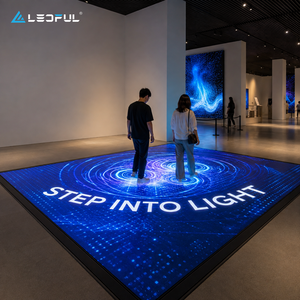
Rapid-deploy lightweight rental panels (P1.9–P2.9) paired with load-bearing interactive LED floors. Built for 2-to-6 week immersive brand activations where fast assembly and zero downtime are non-negotiable.
Myeongdong & Duty-Free Superstores
Ultra-fine pitch Chip-on-Board (COB) indoor video walls behind cosmetic counters. Scratch-resistant, anti-static, and dust-impermeable surfaces engineered for high customer foot-traffic contact zones.
COEX & Major Transit Retail Concourses
Suspended 3D LED geometric cubes, curved perimeter ribbons, and massive DOOH podiums operating 18+ hours daily under strict intelligent power and thermal emission limits.
South Korean Retail Display Trends: Beyond Conventional LED Panels
As South Korea expands its Outdoor Advertising Free Zones (such as the famed COEX K-Pop Square in Samseong-dong, Myeongdong's retail belt, and Haeundae in Busan), the specifications demanded by municipal planning boards and private real estate trusts have significantly tightened. Procurement leads in Korea are pivoting towards three defining technology paradigms:
1. The Transition from SMD to Micro-Pitch COB (Chip-on-Board) Packaging
Traditional Surface Mount Device (SMD) packaging is vulnerable to physical pixel loss caused by cleaning carts, curious consumers, or high ambient humidity. In Seoul's department stores (such as The Hyundai Seoul and Shinsegae Gangnam), luxury concession spaces are rapidly adopting fine-pitch COB technology. By bonding the LED flip-chips directly onto the substrate and encasing them in an optical black epoxy shield, COB provides exceptional surface hardness (up to 4H rating), eliminates delicate solder joints, dissipates heat laterally across the backplate, and delivers true black optical contrast ratios exceeding 10,000:1.
2. Stringent Building Energy Directives (K-BEMS) & Zero-Standby Demands
South Korea’s national ESG directives and Building Energy Management Systems (K-BEMS) mandates hold property managers accountable for commercial kilowatt consumption. Large format LED displays draw substantial idle power even when screens display pure black between broadcast hours. Integrating intelligent, patented power management—such as digiLED ZEUS®—is now becoming standard in prime architectural tenders. ZEUS® physically isolates parasitic standby draws at the distribution level, reducing idle power consumption to absolute zero watts, substantially lowering fire hazard risk and slashing facility operating budgets.
3. Anamorphic 3D & Curvilinear Visual Architecture
Flat rectangular digital billboards no longer hold consumer attention in hyper-saturated Korean shopping districts. Retail developers are prioritizing 90-degree seamless corner transitions, convex curved facade wraps, and multi-faceted LED cubes. When coupled with custom 3D anamorphic video production, these displays create hyper-realistic illusions of objects bursting out of commercial building facades, generating viral organic social engagement across Instagram, TikTok, and YouTube Shorts.
Technical Specification & Engineering Matrix
A side-by-side engineering comparison of core display hardware deployed across Korean commercial environments.
The digiLED Advantage: Engineering Integrity, Global Pedigree
Why leading Korean general contractors, AV system integrators, and global retail brands partner with our engineering teams over commoditized box-shippers.
Independent by Design
We do not lock our clients into a single proprietary assembly line. We partner with specialized, vetted manufacturing facilities, selecting the precise cleanroom, die-casting plant, and SMT lines best suited for each unique retail project brief.
Experts in the Complex
When off-the-shelf cabinets fail the architectural brief, our engineers excel. We engineer bespoke compound-curved screens, acoustically transparent displays, walk-on interactive floor arrays, and non-standard geometric corner modules with surgical tolerance.
Strict In-Person QC & Factory Acceptance (FAT)
Our dedicated engineering personnel reside on the factory floor throughout production. We oversee component binning, optical batch calibration, burn-in cycles, and rigorous Factory Acceptance Testing (FAT) before any panel is cleared for shipment to Incheon.
Patented digiLED ZEUS® Power Management
Multi-award-winning, globally patented energy management technology holding prestigious Made in Britain certification. ZEUS® safely powers down retail video walls to true zero standby watts when not actively broadcasting, meeting strict commercial ESG criteria.
Complete End-to-End Lifecycle Delivery
One accountable partner from design conceptualization, viewing-distance optimization, and structural wind-load engineering through to logistics, localized installation coordination, and continuous life-of-display field support.
Global Pixel Depots & Component Continuity
With operational hubs in Las Vegas, the UK, and dedicated regional support across Asia, we archive identical single-bin LED batch diodes and driver ICs for every project, guaranteeing color-matched spare module replacements years after initial commissioning.
Korean Retail Procurement FAQ: Regulatory & Technical Insights
Essential guidance for commercial architects, system integrators, and procurement directors evaluating retail LED screen hardware for projects in South Korea.
What certifications are required to legally operate retail LED displays in South Korea?
All commercial electrical equipment installed in South Korea must obtain KC (Korea Certification) marking, overseen by agencies such as KTL (Korea Testing Laboratory) and KTC (Korea Testing & Certification). This encompasses both electrical safety certification (KC 60950-1 or KC 62368-1) and Electromagnetic Compatibility (EMC Class A for commercial venues, Class B for residential/mixed-use). Furthermore, retail indoor displays deployed in high-occupancy commercial properties like department stores must comply with the Korean National Fire Agency’s flame-retardant standards (NFPA 701 equivalent, V-0 flame-rated PCB substrates and cabling).
How do you comply with South Korea’s Light Pollution Prevention Act for storefront and facade screens?
Under the Act on the Prevention of Light Pollution by Artificial Lighting (administered by the Ministry of Environment), exterior and street-facing retail displays are classified into environmental lighting zones (Zones 1 through 4). In commercial districts (Zone 3 and 4), strict nighttime surface luminance caps apply—frequently limiting maximum output to under 800–1,500 cd/m² after sunset to prevent glare in surrounding residential and transit zones. Our display systems incorporate high-resolution optical photocells and automated scheduling controllers that dynamically throttle luminance levels continuously across 256 distinct gradations while preserving 16-bit color depth.
Why is 7680Hz refresh rate becoming the preferred baseline for Korean retail flagship displays?
South Korean retail spaces are viral content creation environments. Customers and influencers continuously film products against storefront LED backdrops using flagship smartphones with 60fps/120fps recording capabilities. Lower refresh rate displays (1920Hz or 3840Hz) create severe rolling shutter lines and visible horizontal flickering on camera screens. Displays driven by premium driver ICs at 7680Hz guarantee pristine, distortion-free camera capture under any shutter angle, ensuring your brand visuals appear flawless across social platforms.
How does transparent adhesive film compare to conventional glass cabinet LED displays?
Conventional transparent cabinets utilize rigid aluminum framework strips and suspended hangars that weigh 12–18 kg/m² and introduce visible vertical mullions that interrupt sightlines. In contrast, flexible adhesive LED film is sub-3mm thick, weighs less than 3.5 kg/m², and adheres directly onto existing architectural glass using optical-grade adhesive without structural secondary steelwork. It delivers up to 85% transparency, preserving daylight, storefront transparency, and interior aesthetics while enabling floating holographic visual effects.
What is the typical lead time and supply chain support for custom retail builds in Seoul?
Standard modular cabinets generally have a production cycle of 3 to 4 weeks, with express air cargo transit directly into Incheon International Airport within 48 to 72 hours. Bespoke architectural fabrications—such as custom-radius curves, structural floor frames, or customized transparent film cuts—typically require 5 to 7 weeks for structural engineering, factory assembly, and exhaustive 72-hour aging and FAT testing. All shipments include matched batch spare modules (typically 3–5%), receiving cards, power supplies, and dedicated technician tooling.
How does the digiLED ZEUS® power management system reduce operational overhead?
Commercial LED screens continue to consume between 5% and 15% of their total power capacity while in black/standby mode due to quiescent currents drawn by power supply units, receiving cards, and driver ICs. For a 50 sqm retail screen operating on an 18-hour schedule, this parasitic draw results in significant annual electricity wastage and elevated fire safety liability. digiLED ZEUS® intelligently disconnects the primary AC power relays during non-operating hours, reducing screen draw to precisely zero watts while maintaining instant wake-up capabilities over network commands or scheduled triggers.
Ready to Engineer Your Flagship Visual Showcase in Korea?
Whether you are designing a high-transparency glass facade in Cheongdam, an experiential pop-up canvas in Seongsu, or a massive commercial DOOH billboard in Busan, our engineering specialists are on hand to provide pixel-pitch calculations, mechanical drawings, thermal models, and compliance guidance.