Engineered for high-refresh broadcast capture, flicker-free slow-motion replay cameras, and weather-hardened exterior sports facility deployments.
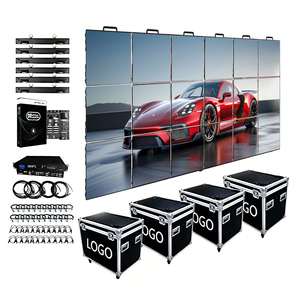
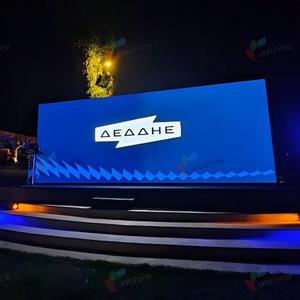
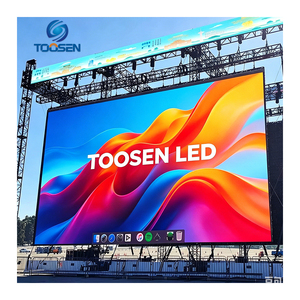
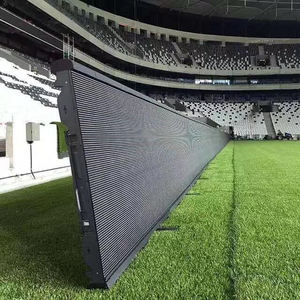
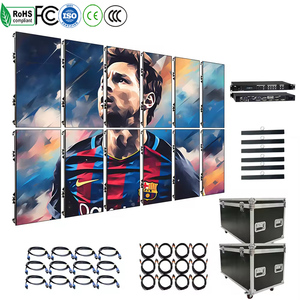
In modern sports arenas across the United States—ranging from massive NFL football bowls seating 80,000 screaming spectators to collegiate Division I fieldhouses—instant video replay displays are no longer passive scorekeeping boards. They are high-speed, synchronized visual communication hubs. Operating at the core of in-venue fan engagement and high-stakes referee video assistant refereeing (VAR/Rule Review), stadium replay LED displays demand specialized industrial-grade driver silicon, military-grade thermal chassis engineering, and low-latency signal distribution architectures.
When selecting a manufacturing partner serving the US commercial market, systems integrators and facility operators face stringent operational realities: high ambient light cancellation under the desert sun of Arizona, sub-zero freeze-thaw cycles in Minnesota, wind-shear loadings exceeding 140 MPH in coastal hurricane corridors, and stringent electrical safety mandates under National Electrical Code (NEC) and UL certifications (UL 48 / UL 8750). Our engineering matrix addresses these factors at the foundational component level rather than as an aftermarket modification.
| Display Parameter | Standard Commercial LED | digiLED Sports Replay Specification | Broadcast & Venue Impact |
|---|---|---|---|
| Driver IC PWM Refresh | 1,920 Hz – 3,840 Hz | 7,680 Hz Ultra-High Rate | Eliminates black scan bars & moiré during 1,000 FPS broadcast slow-motion replays. |
| Input Latency Processing | 2 to 4 Frames (33ms – 66ms) | < 0.5 Frame (< 8ms Low-Latency) | Guarantees real-time synchronization between live pitch action and instant review feeds. |
| Daylight Luminance | 4,500 – 6,000 Nits | 7,500 – 10,000 Nits Calibrated | Delivers true HDR contrast under direct 100,000 Lux unshaded stadium sun. |
| Standby Energy Consumption | 10% – 18% Residual Continuous Draw | 0.00 Watts (digiLED ZEUS® Patented) | Eliminates off-game parasitic power; enables LEED certification compliance for US stadiums. |
| Structural Rigidity / Cabinet | Standard Iron / Extruded Metal | Die-Cast CNC Magnesium-Aluminum | Withstands ASCE 7-22 structural wind shear; rapid tolerance alignment without panel gaps. |
Tailored video architectures engineered to accommodate the physical footprints and operational rhythms of major American sports leagues.
Massive, high-impact outdoor video walls mounted in end-zones and upper bowl tiers. Featuring 8,500+ nits brightness, automatic ambient sensor dimming, and P6 to P10 weatherized pixel pitches designed for broad viewing distances exceeding 300 feet. Fully compliant with NCAA stadium broadcast visibility standards.
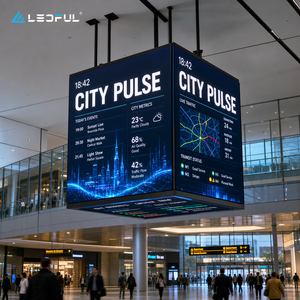
Precision indoor arena displays engineered with lightweight CNC cabinets for ceiling load compliance. Incorporating continuous curved seamless corners, four-sided P2.5 to P3.91 high-density surfaces, and integrated lower underbelly score rings for lower-bowl and court-side spectators.
Extra-wide aspect ratio LED fascia ribbon boards wrapping stadium mezzanines and outfield perimeter fences. Engineered with heavy impact-resistant silicon-gel masks to endure 100+ MPH baseball direct hits while delivering dynamic sponsor activations and real-time Statcast metrics.
FIFA and US Soccer compliant pitch-side perimeter systems. Featuring 960x960mm modular cabinets equipped with soft rubber louvers and top safety cushions to protect athletes during slide-tackles, matched with dual-power and loop-through data redundancy to ensure uninterrupted broadcast ad delivery.
Ultra-fine pitch Chip-on-Board (COB) and magnetic SMD displays (P1.2 to P1.8) deployed across high-end casino sportsbooks and stadium luxury suites. Delivers crystal-clear multi-window split screens displaying simultaneous high-definition game feeds, odds boards, and fantasy statistical tickers.
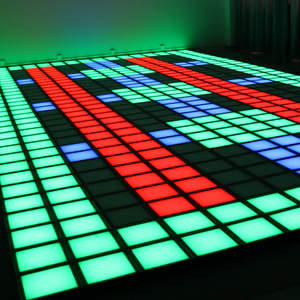
Interactive high-load floor displays and rapid-deploy rental video trailers for external stadium plazas. Interactive pressure-sensor tiles engage thousands of tailgating fans with sponsored gamification, interactive contests, and outdoor pre-game broadcast previews.
Market dynamics redefining how American stadium directors, university athletic departments, and AV consultants specify replay systems.
Historically, outdoor stadium video boards utilized P10 to P16 pixel pitch arrays due to brightness limitations and viewing distances. In recent US stadium upgrades, facilities are shifting aggressively toward sub-P4mm (P2.9, P3.9) high-brightness outdoor configurations. This transition is propelled by the need to support uncompressed SMPTE ST 2110 IP-broadcast streams, HDR10, and Hybrid Log-Gamma (HLG) grading, giving in-stadium attendees a visual experience that rivals high-end domestic 4K OLED screens.
With major sports leagues aligning with strict municipal ESG (Environmental, Social, and Governance) goals, facility energy waste is under the microscope. Traditional stadium displays draw thousands of kilowatt-hours in quiescent standby power simply maintaining controller circuits. The integration of patented, smart power systems like digiLED ZEUS®—which completely isolates power down to zero watts during off-hours—has shifted from a secondary option to a standard RFP requirement in North American municipal procurement.
Supply chain volatility and quality variations in offshore OEM components have led US consultants to reject simple "catalog dropshipping." Integrators now insist on rigorous, documented Factory Acceptance Testing (FAT) overseen by qualified Western engineers directly on the manufacturing floor. Independent batch binning of LEDs, 72-hour thermal cycling, and rigorous optical calibration before ocean freight are mandatory to avoid catastrophic stadium opening-day failures.
Stadium operators can not wait six to eight weeks for sea-freight replacement modules when a panel suffers damage before a playoff match. The American market increasingly favors manufacturers maintaining fully stocked domestic service centers. Facilities like our dedicated Las Vegas Pixel Depot provide local component stocking, batch-matched module calibration, component-level micro-soldering, and emergency overnight field support throughout North America.
Why Tier-1 stadium integrators, broadcast engineers, and municipal sports authorities choose our manufacturing solutions.
Rather than pushing a single rigid production line, we partner with specialized, vetted manufacturing facilities, selecting the ideal clean-room facility for each sports application. Our core displays are engineered strictly to digiLED intellectual property, utilizing premium driver ICs, Gold-Wire encapsulated diodes, and custom multi-layer PCBs.
We do not rely on remote promises. digiLED QA engineers are physically present on the production floor during your screen's build cycle. We enforce rigorous 100% white-balance soak testing, high-pressure water ingress IP66 verification, and strict factory acceptance sign-offs before any container is loaded.
Our globally patented power management system cuts standby power waste completely. Recognized with prestigious industry awards and holding official Made in Britain status, ZEUS® is engineered to safely sequence, control, and shut down massive stadium displays, significantly lowering venue operational expenditures.
Our dedicated North American technical center in Las Vegas, Nevada provides rapid-turnaround support across all 50 states. We house full batch-matched spare parts, test frames, calibrated color profiling suites, and factory-trained technicians to guarantee minimal downtime during regular league play.
Our engineered screens power some of the most visible sporting venues in North America: from the massive "Big Hoss" screen at Texas Motor Speedway to Bristol Motor Speedway, Tampa Bay Rays' Tropicana Field, and the PPL Center arena. We have delivered over 375,000 sqm of display technology across demanding live environments.
From initial viewing-distance geometry and pixel density mapping to structural wind-load calculations and PE-stamped architectural drawings, we guide integrators through local permitting, seismic safety checks, and complex installation logistics from conception to first game kickoff.
Comprehensive engineering and compliance insights for venue owners, consultants, and integration professionals.