Manufactured under stringent ISO 9001 and CE compliance protocols. Each cabinet delivers calibrated radiometric uniformity, superior thermal convection, and broadcast-grade refresh rates.

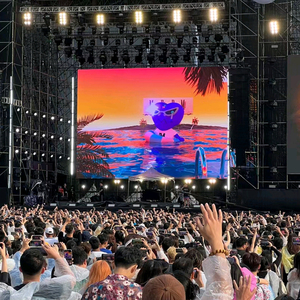
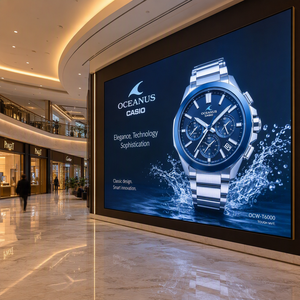
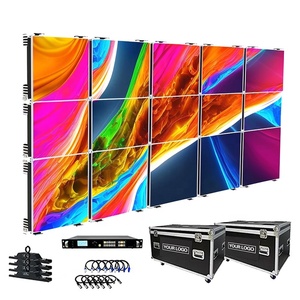
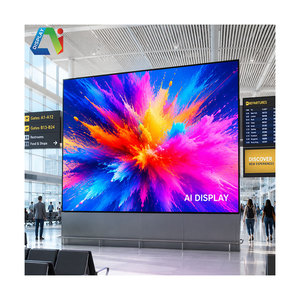
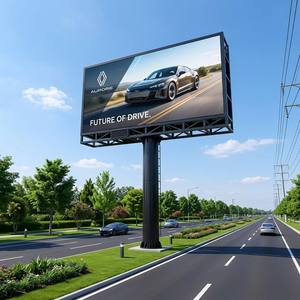
A rigorous industrial model marrying proprietary technical designs with audited manufacturing lines. Every production batch undergoes hands-on inspection by veteran display engineers before transit.
Unlike rigid single-line factories constrained by legacy tooling, we maintain an agile, IP-driven manufacturing model. Core modules and PCB layouts are engineered to proprietary schematics using selected high-grade components (Nationstar/Kinglight gold-wire LEDs, Macroblock/Chipone PWM driver ICs). We deploy customized tooling across dedicated tier-one fabrication floors, matching each project's mechanical criteria without technical compromises.
Zero unvetted hardware leaves the assembly facility. Display engineers supervise every milestone: SMT solder thickness verification, 72-hour continuous white-field burn-in at 100% luminance, thermal imaging to eliminate hot-spots, and full optical calibration (chroma and luma batch-matching). System integrators receive comprehensive FAT sign-off dossiers with individual pixel batch mapping prior to crating.
Commercial compliance goes far beyond a self-declared badge. Our hardware is engineered to pass stringent European directives: Electromagnetic Compatibility (EMC 2014/30/EU), Low Voltage Directive (LVD 2014/35/EU), and RoHS 2011/65/EU. We implement multi-stage EMI suppression coils, insulated grounding buses, and Class B emission shielding, preventing RF interference in critical control rooms, arenas, and transportation hubs.
The transition from conventional SMD packaging to surface-integrated MicroLED, energy-conserving common-cathode circuitry, and broadcast-ready HDR optical matrices.
Surface Mount Device (SMD) packaging is yielding to Chip-on-Board (COB) and MicroLED technologies. By mounting microscopic flip-chip dies directly onto the PCB backplane and sealing them with optical-grade epoxy resin, COB eliminates vulnerable wire bonds. This delivers an impact-resistant, dust-proof, moisture-proof surface with deep 10,000:1 contrast ratios and pixel failure rates below 5 PPM.
Traditional Common Anode architecture routes a uniform 5V supply across Red, Green, and Blue diodes, dissipating excess energy as ambient heat through R chips (which require only ~2.1V–2.8V). Common Cathode power distribution separates the R and G/B rails, delivering bespoke voltages. This slashes panel operating temperatures by 12–18°C and reduces operational energy draw by 25% to 35%.
Broadcast and virtual production require extreme precision. High-frame-rate cameras capturing LED backdrops demand ultra-low scan jitter. Modern drivers feature 16-bit to 22-bit grayscale reproduction, 7,680Hz refresh frequencies, and color pipeline support for HDR10 and DCI-P3 color spaces, preventing moiré artifacts and color clipping under cinema lenses.
| Packaging Topology | Impact Protection | Thermal Dissipation | Pixel Pitch Viability | Surface Uniformity | Ideal Application Domain |
|---|---|---|---|---|---|
| Traditional SMD | Low (Exposed Solder Pins) | Moderate (Copper Trace Conduction) | P1.5 mm – P10.0 mm | Standard Matte Masking | Rental Staging, Standard DOOH |
| GOB (Glue-on-Board) | High (Surface Polyurethane) | Moderate (Thermal Trap Risk) | P1.2 mm – P2.5 mm | Semi-Gloss Coating | High-Traffic Retail, Interactive Areas |
| COB (Chip-on-Board) | Extreme (Integrated Resin) | Superior (Direct Silicon Heat Path) | P0.6 mm – P1.5 mm | Deep Optical Black Anti-Glare | Broadcast Sets, Command Centers, Luxury Malls |
AV system specifiers and enterprise procurement managers are moving away from initial capital outlay (CapEx) metrics toward full-lifecycle operational expenditure (OpEx) optimization.
Initial acquisition cost accounts for less than 40% of the true lifecycle cost of an industrial LED installation. Energy consumption, heat management, module replacement, and down-time costs make up the remaining 60%. Enterprise buyers now demand audited power consumption curves and standardized mean-time-between-failure (MTBF) test reports to protect long-term operating margins.
Binning inconsistencies can compromise large video wall upgrades. Forward-looking procurement mandates single-bin wafer allocation for 100% of the display surface, supplemented by a 5% to 10% batch-matched spare module reserve. This safeguards uniform wavelength (dominant chromaticity within ±1.5nm) and matched lumen degradation profiles across multi-year operating horizons.
With corporate ESG targets and European ErP (Energy-related Products) directives stiffening, displays drawing unmonitored standby electricity face regulatory headwinds. Leading integrators are prioritizing hardware with intelligent idle-down logic and zero-watt standby systems. Cutting unneeded phantom draw reduces greenhouse gas metrics on annual enterprise sustainability audits.
Essential guidance for display engineers, procurement managers, and AV consultants designing, procuring, and commissioning commercial LED screen infrastructure.
Genuine CE compliance requires testing by an accredited laboratory under the EMC Directive (EN 55032 Class A/B for electromagnetic emissions; EN 55035 for immunity) and the Low Voltage Directive (EN 62368-1 for electrical safety). Low-cost alternatives often paste an unverified mark without third-party test reports, risking facility insurance coverage, severe RF interference with local communications, and border confiscation.
The standard industry guideline uses the 1:1 rule of thumb: Minimum comfortable viewing distance in meters roughly equals the pixel pitch in millimeters (e.g., a P1.5 display resolves smoothly at 1.5 meters). For fine-detail corporate or broadcast applications, the 20/20 visual acuity threshold requires dividing the distance by 1.5. A P2.5 display is ideal for retail at 2.5–4 meters, while P4 or P5 delivers optimal value for large viewing cones beyond 5 meters.
Front-service displays use precision magnetic vacuum extraction tools to remove individual LED modules, power units, and receiver cards from the face of the screen. This allows ultra-shallow wall mounting without rear maintenance corridors, saving valuable retail or corporate floor space. Rear-service cabinets require an 800mm service passage behind the wall, making them ideal for DOOH billboards, gantry structures, and arena perimeters.
Common-cathode circuitry supplies independent, dedicated voltages to the red diode (typically 2.8V) and the green/blue diodes (typically 3.8V), rather than forcing a uniform 5V across all channels. This prevents excess voltage from burning off as radiant heat. It reduces total panel power consumption by up to 35%, lowers cabinet surface temperatures, and avoids heat convection currents that can degrade indoor air quality and comfort.
During automated manufacturing, LEDs from the same crystal growth ingot and packaging lot are grouped by tight luminous intensity and dominant wavelength tolerances (within ±1.5nm for chromatic uniformity). At our facility, full-screen batch calibration applies per-pixel luminance and chrominance correction matrices, ensuring replacement spare modules blend invisibly without visible seams or color patches.
Large-format outdoor video walls act as massive wind sails. Structural calculation must follow regional civil codes (such as Eurocode 1: Actions on Structures - Wind actions EN 1991-1-4). Cabinets must be engineered using finite element analysis (FEA) to withstand gale-force gusts (often 120–150 km/h). In high-altitude or coastal setups, mesh or permeable transparent LED profiles can reduce structural static loading by 30% to 50%.
For mission-critical commercial projects, industry best practice mandates a 5% to 8% matched spare module allocation, alongside 3% spare receiver cards, power supply units (PSUs), and flat ribbon interface cables. Crucially, these spare modules must originate from the exact same production bin and FAT calibration cycle to prevent color drift when field replacements occur years later.
The first digit denotes ingress protection against solid particles (6 is entirely dust-tight; 5 is dust-protected). The second digit denotes water protection (4 defends against splashing; 5 shields against low-pressure water jets; 6 shields against high-pressure washdowns). Commercial outdoor screens demand minimum IP65 front protection with silicone-gasket sealing and conformal-coated PCB backplanes to survive humidity, coastal salt mist, and driving rain.
Plan your commercial video wall, retail DOOH network, or arena installation with technical guidance on pixel pitch selection, power budgets, optical calibration, and CE certification documentation.