CE Certified P3.91 LED Screen Manufacturer & Global Suppliers
Industrial-grade precision video wall engineering: Low-voltage emission compliant, ultra-high 7,680Hz refresh architecture, and factory-acceptance-tested reliability for DOOH, arena concourses, and broadcast stages.
Factory-Direct High Density Solutions
Featured Commercial & Touring LED Screen Displays
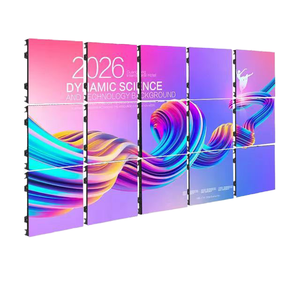
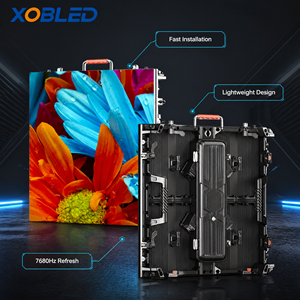
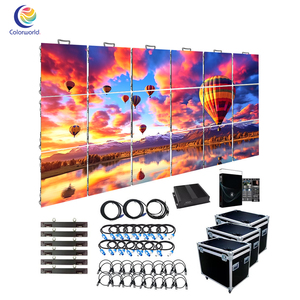
Precision-calibrated SMD and COB video panels built to stringent European Conformity standards, featuring redundant signal pathways, thermal dissipation chassis, and seamless staging mechanics.
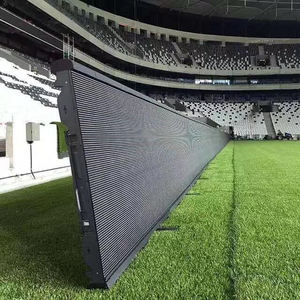
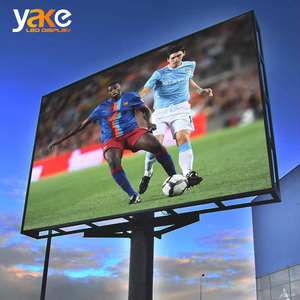
UEFA/FIFA standard perimeter barrier displays featuring protective elastomer masks, dual backup power supplies, and high refresh rates to eliminate camera scanning artifacts.
Magnetic Front Maint.16-Bit Grayscale4K / 8K Canvas
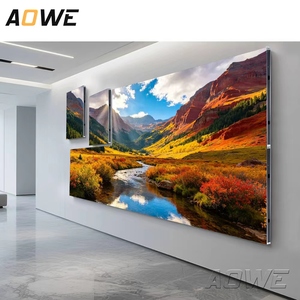
Ultra-slim architectural video wall with precision vacuum magnetic tool extraction, low-voltage driver ICs, and seamless bezel-free 3840Hz image delivery.
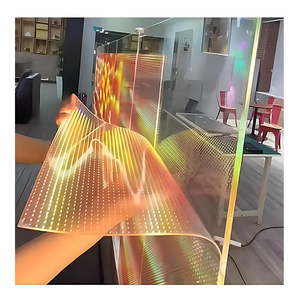
Architectural transparent conductive PET film display applied directly to structural glass facades, preserving spatial illumination while transmitting vibrant 3D visuals.
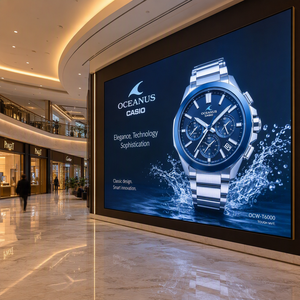
The gold-standard CE-certified P3.91 outdoor staging panel. Features dual-pin auto positioning, waterproof silicone seal rings, and high-efficiency common cathode drivers.
Heavy-duty structural roadside billboard modules with galvanized steel / marine-grade aluminum backshells for hurricane-force wind resistance and zero thermal throttling.
Engineering Whitepaper: The Anatomy of a Fully Certified CE P3.91 LED Display
In B2B audiovisual integration, the P3.91mm pixel pitch represents the definitive inflection point between close-quarter viewer proximity and large-scale structural efficiency. Offering a dense resolution of 65,536 dots per square meter, a P3.91 display delivers crystal-clear optical legibility from viewing distances as close as 3.5 meters (11.5 feet), while remaining robust and cost-effective enough to cover hundreds of square meters in stadium concourses, retail façades, and arena touring rigs. However, deploying a P3.91 video wall across European and Tier-1 international markets necessitates strict regulatory compliance, specifically CE Marking directives that govern electrical safety, electromagnetic compatibility, and hazardous material containment.
Technical Information Gain Insight: Many non-certified commercial displays cause high-frequency electromagnetic noise that interferes with wireless microphones, airport communication hubs, and digital television broadcasts. A true CE Certified P3.91 LED Screen adheres rigorously to EN 55032 Class-B EMC emissions through multi-layer PCB copper planes, ferrite core chokes on internal ribbon lines, and fully shielded die-cast aluminum power compartments.
1. European Regulatory Directives: What True CE Compliance Demands
Procurement teams must recognize that a self-declared "CE" sticker without corresponding third-party Notified Body lab test reports offers zero legal protection. Our engineering facilities manufacture P3.91 panels verified under the three mandatory European directives:
Low Voltage Directive (LVD) 2014/35/EU (Standard: EN 62368-1:2014+A11:2017): Focuses on hazardous electrical energy isolation, thermal dissipation boundaries, and flame-retardant mechanical housings. Internal wiring harnesses feature UL94 V-0 flame-retardant insulation, preventing toxic fire propagation in crowded indoor auditoriums or sports venues.
Electromagnetic Compatibility Directive (EMC) 2014/30/EU (Standards: EN 55032:2015, EN 55035:2017, EN 61000-3-2/3): Dictates radiated and conducted emission thresholds. Standard P3.91 display architectures utilize multi-channel constant current LED drivers with internal spread-spectrum clocking, attenuating peak radio frequency (RF) resonance peaks beneath 30MHz - 1GHz thresholds.
RoHS Directive 2011/65/EU & (EU) 2015/863: Rigorous lead (Pb), mercury (Hg), cadmium (Cd), and polybrominated biphenyls restriction within the SMD solder pastes, golden bonding wires, and FR-4 printed circuit board substrates.
Construction Products Regulation (CPR) EN 13501-1: Where LED walls are permanently integrated into architectural building envelopes, panels are evaluated for B-s1, d0 flammability ratings to satisfy commercial insurance covenants.
SMD1921 vs SMD2121 Black Face
Equipped with pure black copper-bracket SMD packaging or national-star gold-wire SMD1921 for outdoor arrays. Achieves a 5,000:1 to 8,000:1 optical contrast ratio while maintaining superior thermal conductivity under sustained 5,500 cd/m² luminescence.
PWM Driver IC Architecture
Powered by Macroblock MBI5252 or Chipone ICN2153 16-bit PWM driver circuits. Delivers low-gray scale uniformity without line-crawling, eliminates color shifts under low camera shutter angles, and elevates refresh rates up to 7,680Hz.
Common Cathode Energy Thrift
Separates red diode power supply rails (2.8V) from green and blue diodes (3.8V). By eradicating unnecessary drop-voltage thermal waste, operational cabinet temperatures decline by 12°C–18°C, lowering gross air conditioning HVAC overhead by 35%.
Precision alignment forms the cornerstone of seamless visual splicing. While lower-grade manufacturers rely on stamped sheet metal, our CE certified P3.91 cabinets utilize high-pressure die-cast aluminum or magnesium alloy frames processed on 5-axis CNC milling centers. Structural tolerance is maintained within ±0.04mm, ensuring that when arrays of 500x500mm or 500x1000mm cabinets are locked together, the resultant pixel pitch gap across seam boundaries does not diverge, preventing vertical or horizontal seam visible black lines.
For outdoor amphitheaters, festival mainstages, and DOOH applications, the display employs an IP65 / IP66 sealed rear maintenance chamber. Modules are sealed with three-layer industrial vacuum silicone conformal coatings, preventing micro-particulate penetration, coastal salt-mist oxidization, and wind-driven torrential water egress.
Specification Analysis
Technical Benchmark: Standard Market Display vs. CE Certified P3.91 Grade
Evaluate the critical architectural and electrical criteria that dictate lifetime operating costs, regulatory approvals, and visual fidelity.
Engineering Parameter
Standard Commercial Market Spec
CE Certified Tier-1 Industrial Spec (Our Benchmark)
Buyer & Integrator Impact
EMC Directive Compliance
Basic Class-A (Unshielded emissions)
EN 55032 Class-B Certified (Shielded cavity)
Permits legal installation in residential, retail, & airport RF zones.
Near-zero Dead-on-Arrival (DOA) panels upon global site arrival.
Future Procurement & Technological Trends in P3.91 LED Systems (2025–2030)
As commercial buyers, AV system integrators, and venue directors plan long-term capital investments, the LED display landscape is pivoting from brute-force luminescent output toward sustainable operation, enhanced colorimetry, and intelligent remote diagnosis.
1. ESG-Driven Zero Standby Power & Carbon Elimination
Historically, an idle 100m² outdoor stadium display draws significant standby electricity 24 hours a day simply keeping driver ICs, receiving cards, and switch-mode power supplies energized in wait mode. In the European Union and the UK, surging corporate ESG requirements have transformed power management into a top-3 procurement criterion. Groundbreaking patented solutions—such as our proprietary digiLED ZEUS® platform—enable automated, safe, physical power disconnection across the entire screen array when no active video source is present. This achieves absolute zero idle power consumption without stressing sensitive internal electronics, slashing carbon footprints and generating verifiable energy certificate deductions.
2. Transition to GOB (Glue-on-Board) and Micro-Protective Coatings
In high-traffic retail malls, airport passenger avenues, and touring rental applications, SMD LEDs face constant threats from physical impact, accidental collisions, and fluid spills. The industry is rapidly adopting Glue-on-Board (GOB) optical epoxy encapsulation for P3.91 panels. GOB applies an optically clear polyurethane polymer across the module surface, boosting impact resistance past 10 Joules (IK08 rating), making the face 100% waterproof, dustproof, and anti-static, while reducing perceived pixel glare for close-up viewers.
3. Virtual Production & Dynamic DCI-P3 Color Management
Modern P3.91 video walls are increasingly multi-purposed for hybrid live-events and in-camera visual effects (ICVFX) concourse broadcasts. Procurement specifications now mandate 100% DCI-P3 color gamut coverage, 22-bit+ internal video processing pipelines via high-tier controllers (such as NovaStar MX40 Pro or Brompton SX40), and low-latency genlock sync to prevent frame tearing during high-frame-rate 120fps live camera tracking.
4. Modular Circularity and Component-Level Re-Binning
Tier-1 procurement teams are rejecting "throw-away" display designs. Modern specification guides mandate modular circularity: receiving cards, hub boards, power packs, and LED magnetic modules must be swappable independently within under 60 seconds from the front or rear. Furthermore, suppliers must preserve dedicated LED diode single-bin silicon batches (wavelength variance <1.5nm) in temperature-controlled Pixel Depots to ensure replacement modules installed five years later maintain 100% radiometric and chrominance consistency.
Why Integrators Choose Us
The Enterprise Difference: Engineering, QC & Global Support
We do not merely warehouse inventory. We engineer, customize, stress-test, and guarantee display hardware with hands-on technical oversight on the factory floor.
Independent Integrity
Tailored Factory IP
We choose the ideal manufacturing baseline for each technical brief. Our displays are built to digiLED intellectual property with Japanese capacitors, gold bonding wires, and bespoke circuit designs.
On-Site Precision
Strict Factory FAT
Our dedicated engineers remain on the factory floor throughout production, conducting multi-point Factory Acceptance Testing (FAT) and 72-hour continuous thermal burn-in before cargo release.
Patented Green Tech
digiLED ZEUS® Integration
Equipped with globally patented, multi-award-winning smart power controllers holding Made in Britain certification. Powers down displays to true zero watts when idle.
Decades of Legacy
Dual Pixel Depots
Supported by 500+ aggregate years of specialist LED engineering experience and dedicated Pixel Depots in Las Vegas and the UK for immediate parts, calibration, and local warranty servicing.
Procurement Knowledge Base
Frequently Asked Questions on CE Certified P3.91 LED Displays
In-depth technical answers addressing testing protocols, electrical engineering, installation constraints, and total cost of ownership.
What specific lab documentation confirms genuine CE certification on a P3.91 LED screen?
A compliant CE submission consists of an official Declaration of Conformity (DoC) signed by the manufacturer, paired with full test reports issued by an accredited laboratory (such as TÜV Rheinland, SGS, Intertek, or Nemko). The test reports must explicitly reference EN 62368-1 for electrical product safety (under the Low Voltage Directive 2014/35/EU) and EN 55032 / EN 55035 for electromagnetic interference and immunity (under the EMC Directive 2014/30/EU). Additionally, for outdoor fixed installations, reports must verify hazardous chemical restrictions under RoHS Directive 2011/65/EU.
How does the P3.91 pixel pitch perform outdoors versus P4.81 or P6?
With 65,536 dots/m², a P3.91 screen provides over 50% higher pixel resolution than a P4.81 (43,264 dots/m²) and more than double that of a P6 (27,777 dots/m²). This enables crisp readability of fine typography, sponsor logos, and 1080p/4K high-density live video feeds at a close viewing distance of 3.5 to 4 meters. For premium street-level DOOH plazas, stadium perimeter lower bowls, and live touring venues where attendees walk right up to the display, P3.91 represents the optimal balance of resolution fidelity and outdoor brightness (up to 5,500–6,000 nits).
What is the difference between EMC Class A and EMC Class B, and why does it matter?
Under EN 55032, Class A certification covers equipment intended for commercial and heavy industrial electromagnetic environments. Class B imposes significantly tighter radiation and conduction emission limits (typically 10dB lower) so the equipment can safely operate in residential zones, commercial high-streets, and mixed-use transit terminals without disrupting local Wi-Fi, cell phone towers, emergency radios, or retail point-of-sale systems. Standard low-cost screens struggle to pass Class B; our CE Class-B certified P3.91 panels integrate localized multi-layer ground planes and isolated metal driver housings to eliminate spurious EMI leakage.
How does Common Cathode technology improve the lifespan and running costs of P3.91 screens?
Conventional Common Anode power distribution forces 5.0V across all red, green, and blue diodes. Because the red LED chip only requires roughly 2.8V to light up, the excess 2.2V is entirely dissipated as heat across the driver resistor. Common Cathode technology delivers dedicated, split voltage rails: 2.8V to the red chip and 3.8V to the green and blue chips. This precision voltage matching slashes panel operating heat by up to 18°C, prolongs silicone encapsulation life, reduces the risk of dead pixels, and cuts overall electrical power consumption by approximately 30% to 35%.
What is Factory Acceptance Testing (FAT), and why is it essential for international LED procurement?
Factory Acceptance Testing (FAT) is an intensive, on-site quality protocol conducted prior to packaging and dispatch. Rather than trusting off-the-shelf factory promises, our experienced engineers physically test the complete batch: verifying pixel binning color coordinates with specialized spectroradiometers, conducting 72-hour full-white and RGB burn-in cycles at high thermal loads, stress-testing drop-voltage limits across long DC cabling runs, and inspecting the CNC seam tolerances under micro-alignment gauges. This ensures 100% out-of-the-box readiness upon international site delivery.
Can the P3.91 cabinet be built into curved, corner, or custom creative shapes?
Yes. Our P3.91 touring and architectural cabinets are available with high-precision angular latching systems capable of concave and convex curving from -10° to +10° in increments of 2.5°. For 90-degree architectural pillars or seamless wrap-around corner billboards, we provide factory-beveled 45-degree edge modules that lock together with under 0.5mm seam gap, eliminating visible bezels across structural right angles.
How does the digiLED ZEUS® intelligent power tool eliminate standby operational expenses?
Awarded the prestigious Made in Britain status and holding worldwide patents, digiLED ZEUS® is an intelligent hardware-and-software power regulation unit. When a stadium, arena, or retail store turns off its video feed for the night, a traditional screen keeps hundreds of switch-mode power supplies in parasitic standby, drawing significant grid energy and accumulating thermal hours. ZEUS® automatically senses content loss and safely isolates the mains power at the breaker level, bringing standby draw to literal zero watts. When the morning video signal resumes, it executes a sequenced, inrush-current-dampened startup without tripping master facility circuit breakers.
Plan Your Next LED Video Wall Installation With Certified Specialists
Connect with our technical engineering team in the UK, USA, or Asia. Submit your project drawings, architectural viewing angles, and lumen requirements for a comprehensive specification review and customized quotation.