High-refresh, fast-rigging modular display panels engineered to digiLED quality specifications and manufactured through audited Tier-1 production facilities in Shenzhen.
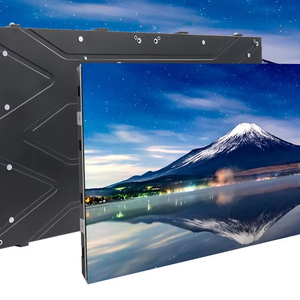
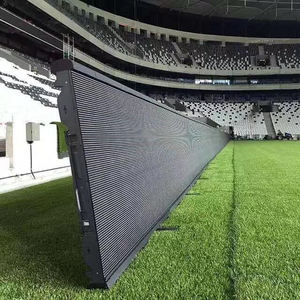
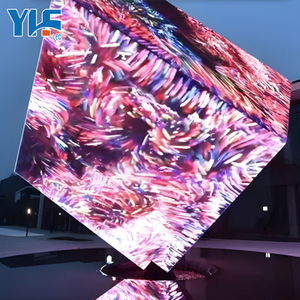
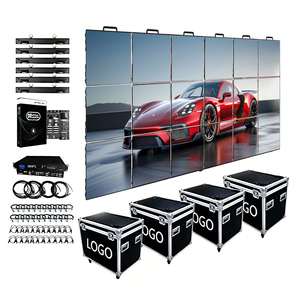
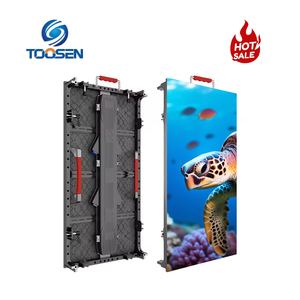
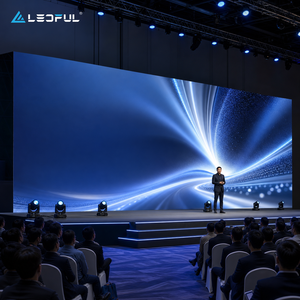
Procuring stage LED screens from China is the primary cost-saving mechanism for global live event producers, AV rental firms, touring houses, and stadium system integrators. Over 85% of the world's high-performance LED displays originate within the industrial corridors of Shenzhen and the wider Guangdong province. However, navigating direct Chinese supplier networks carries substantial technical risk: uncalibrated binning variations across diode batches, overstated ingress protection (IP) claims, substandard driver IC clock rates, and absence of verifiable Factory Acceptance Testing (FAT).
Unlike conventional middleman export brokers or volume-centric assembly plants that sacrifice long-term reliability for razor-thin bill-of-materials (BOM) margins, our operating framework bridges western project design with boots-on-the-ground manufacturing governance. Rather than tying our clients to a single rigid production line, we independently engineer custom display IP and select the optimal tier-1 manufacturing facility in China for each mechanical and optical requirement. Crucially, our dedicated display engineers remain physically present on the factory floor throughout surface-mount technology (SMT) production, module encapsulation, conformal coating application, and structural chassis assembly.
Every single rental panel undergoes 72 hours of uninterrupted white-screen thermal burn-in, vibration drop testing, and colorimetry bin verification supervised on-site by our display engineers prior to sea or air export clearance.
Integrate our globally patented, multi-award-winning zero-power standby system. ZEUS® completely kills quiescent standby electrical consumption when the video wall is idle, protecting sensitive power supplies while eliminating venue idle carbon footprint.
Avoid catastrophic downtime during global tours and arena installations. Backed by factory-calibrated spare diode batches and dedicated Pixel Depots in Las Vegas and the UK, component swaps and module recalibration are completed within hours.
A mission-critical stage LED video wall is an interconnected mechanical, electrical, and optical computing system. Evaluating Chinese exporters requires rigorous auditing across three non-negotiable hardware tiers:
1. Driver IC Architecture & Scan Rate Realities: The difference between a consumer advertising billboard and a broadcast-certified stage backdrop lies in the pulse-width modulation (PWM) driver silicon. Lower-tier exporters deploy 1920Hz or 3840Hz drivers operating on 1/32 or 1/16 scan rates to drive cost down. When captured by high-frame-rate studio cameras or RED/ARRI cinema sensors, this results in dark scanning bands, color shifting, and moiré artifacting. Premium stage rental panels utilize top-tier drivers (such as Macroblock MBI5264 or Chipone ICN2153) engineered to achieve a true 7680Hz refresh rate, 16-bit to 22-bit grayscale depth, and scan rates optimized to prevent camera sensor flicker down to 1/2000s shutter speeds.
2. Structural Metallurgical Tolerance: Stage rental demands rapid assembly, tear-down, and repeated trucking vibration. Low-grade suppliers utilize die-cast zinc or thin sheet metal that deforms under dynamic touring loads, resulting in visible module seam lines. Our factory-overseen touring panels rely on CNC-machined die-cast magnesium alloy chassis. Magnesium offers a 35% reduction in deadweight compared to die-cast aluminum while yielding a tensile strength exceeding 240 MPa. Integrated curve-locking mechanisms allow fast concave (-10°) and convex (+10°) curving without compromising inter-panel pixel pitch alignment.
3. Optical Binning and Diode Encapsulation: Whether selecting SMD1921 black-face LEDs for high-contrast arena stages or GOB (Glue-on-Board) epoxy coating for water-resistant and impact-resistant stage floor tiles, diode wavelength consistency is critical. Tier-1 Chinese exporters strictly source diodes sorted to a tight $\pm 1.5\text{nm}$ dominant wavelength bin, ensuring that an entire 400-square-meter curved wall exhibits identical color chromaticity from extreme oblique angles.
Review the empirical differences between commodity Chinese suppliers and high-reliability stage display systems:
| Engineering Attribute | Standard Export Wholesaler | Engineered Tier-1 Standard (Our IP) | Impact on Stage Production |
|---|---|---|---|
| Refresh Frequency | 1,920Hz - 3,840Hz | 7,680Hz Native Refresh | Zero moiré, zero scan lines under 4K/8K broadcast broadcast cameras. |
| Chassis Fabrication | Standard Die-Cast Aluminum ($\pm 0.3\text{mm}$) | High-Tensile Die-Cast Magnesium ($\pm 0.05\text{mm}$) | Weight savings of 4kg per panel; razor-sharp seamless transitions without seam gaps. |
| Factory Quality Gate | Batch sample visual inspection (10%) | 100% In-Person FAT Audit & 72hr Burn-in | Eliminates infant dead-pixel failures before sea container departure. |
| Power Architecture | Continuous high-draw standby quiescent load | Patented ZEUS® Zero-Power Standby | Reduces power draw to 0W during idle; conforms to EU/US ESG venue mandates. |
| Locking & Rigging | Two-hand screw knobs, plastic latches | Forged steel fast-cam locks with safety interlock | Allows 1-technician assembly; certified 15:1 safety factor for overhead stage rigging. |
B2B procurement directors and AV hire companies cannot afford to invest capital expenditures into obsolete display technology. The following four structural vectors represent the immediate future of stage LED hardware manufacturing:
Traditional Surface-Mount Device (SMD) packaging is increasingly being superseded by Chip-on-Board (COB) and Micro-in-Package (MIP) encapsulation. By wire-bonding or flip-chip mounting bare LED microchips directly to the PCB substrate, module failure from physical stage contact or rough road transit is reduced by over 80%.
The dividing line between live concert touring backdrops and broadcast extended reality (xR) soundstages has collapsed. Stage rental inventories are now demanded to support Genlock synchronization, frame rates up to 240fps for high-speed panning cameras, and low spectral metamerism to eliminate color drift across LED-to-camera workflows.
Global environmental, social, and governance (ESG) rules in European and American municipal arenas are forcing touring companies to monitor energy consumption. Common cathode driver topologies that deliver tailored voltages (2.8V to red diodes, 3.8V to green/blue diodes) are eliminating up to 35% of heat dissipation, drastically lowering operating thermals.
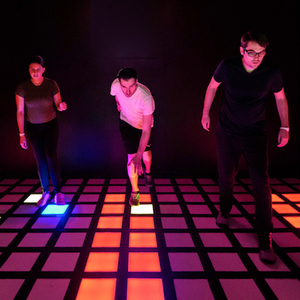
Stage design is breaking the flat 2D proscenium barrier. Procurement trends favor multi-dimensional setups integrating pressure-sensing active LED dance floors, five-sided 3D cubic billboards, and acoustically transparent mesh walls that allow massive front-of-house PA speaker clusters to be concealed directly behind visual elements.
Before releasing a 30% production deposit to an LED manufacturer in Shenzhen, procurement officers should enforce the following four-tier verification procedure:
Step 1: Bill-of-Materials (BOM) Single-Binning Lock: Demand explicit manufacturer contracts stating that the entire order's LED lamps originate from identical wafer slicing and single-bin sorting runs (same color bin, brightness bin, and forward voltage range). If an exporter combines leftover bins across a 200-panel order, calibration across modules will fail over time as diodes age at differing decay curves.
Step 2: Uncompromised Factory Acceptance Testing (FAT): A manufacturer's ISO9001 certificate is insufficient proof of product performance. An engineer must oversee the physical Factory Acceptance Test on the assembly line floor. This encompasses: continuous 72-hour thermal stress testing at 45°C ambient temperature, 100% white field evaluation for chromaticity uniformity ($\Delta E < 1.5$), and mechanical drop testing of flight cases packed with loaded panels.
Step 3: Certification Transparency for Import Clearance: Ensure international compliance documentation is legitimately issued by accredited testing bodies (TÜV Rheinland, SGS, or Intertek). Stage screens intended for US and EU markets require genuine UL9439/ETL electrical safety listings, FCC Class A/B electromagnetic compatibility, and CE-LVD certification. Exporters cutting corners frequently provide fake photocopies of expired certificates that lead to devastating customs impoundments.
Authoritative technical guidance addressing the common challenges faced by system integrators, touring production directors, and AV rental operations.