Engineered specifically for in-camera visual effects, multi-camera tracking sync (Genlock), high dynamic range (HDR10/HLG), and severe broadcast environments.
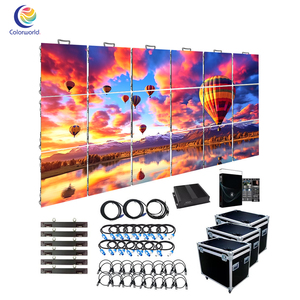
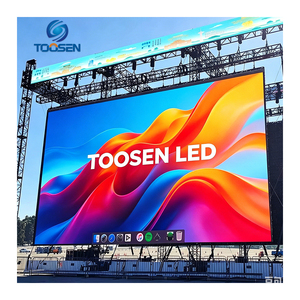
Our structural engineering and supply chain oversight resolve the three hardest challenges in ICVFX: thermal drift, scanning line artifacts, and color fringing off-axis.
Rather than reselling white-label stock, our displays utilize proprietary PCB multi-layer routings, customized driver IC logic, and precision die-cast CNC frames engineered to eliminate structural sagging across 20-meter spans.
Every square meter destined for international export undergoes strict FAT protocols: 72-hour white balance burn-in, full camera-tracking sensor sync validation, and optical colorimetry checks under red, green, and blue saturation.
Integrated zero-noise passive cooling and advanced energy-saving topologies drop operational temperatures by 12°C. This prevents wavelength shifting in red emitters and protects camera-matched white points over long shoot days.
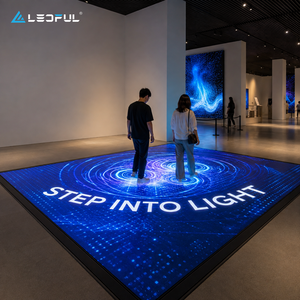
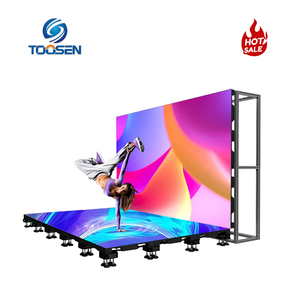
Engineered with high-tensile composite face-masks and polycarbonate diffusers, our interactive floor panels withstand heavy production rigs, tracking cranes, and stunt vehicles up to 2,500 kg/m² without optical distortion.
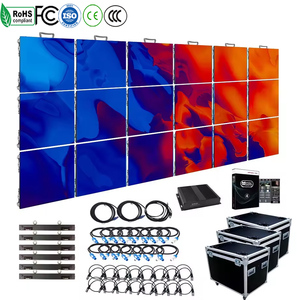
Eliminating deployment bottlenecks: we back every exported volume with 3-5% matched-bin batch spares, pre-calibrated receiving cards, and dedicated depot warehousing to provide immediate replacement overseas.
Direct factory firmware customization for Tessera SX40 and HELIOS processing pipelines. Fully unlocked access to PureTone, 3D LUT importing, ShutterSync, and high-frame-rate tracking up to 240fps.
Procuring an XR volume is no longer simply buying standard video walls. In-Camera Visual Effects (ICVFX) has transformed the physical LED wall into an active cinematic lighting and perspective element. Virtual production demands zero tolerance for rolling shutter black bands, color-shift on steep camera angles, or moiré fringing.
Modern studio engineers prioritize panels featuring cathode common-driver IC architectures, reducing power dissipation by up to 35% while sustaining the sustained high nit output required for simulating natural sunlight reflections on actors.
The industry is rapidly shifting away from conventional SMD (Surface Mount Device) packages to Surface-Treated Flip-Chip COB (Chip-on-Board) and MIP (Micro-in-Package) architectures for sub-1.5mm studio builds.
COB technology provides physical encapsulation that makes panels impervious to physical impacts, dust, and humidity, while providing a pure matte black optical base that achieves an unprecedented 10,000:1 contrast ratio.
Furthermore, bidirectional ceiling lighting panels and curved perimeter frustums now demand specialized low-reflection matte coatings to eliminate internal light bouncing caused by directional key lights.
Essential technical considerations when specifying and importing virtual production walls from China.
We configure pixel pitches strictly aligned to your camera sensor sizes and focal distance requirements (typically P1.5 to P2.6 for walls with 3-meter minimum camera separation). Additionally, our panels utilize matte optical diffusion resins and specialized micro-louvers that widen optical blending.
Yes. Our panels interface directly via Megapixel VR HELIOS or Brompton Tessera processors equipped with Genlock inputs, synchronizing down to the microsecond with tracking protocols from Mo-Sys, OptiTrack, Vicon, and Stype without frame-drop jitter.
Common cathode designs power the red, green, and blue diodes with dedicated voltages rather than a shared 5V line. This drops operational heat generation significantly, prevents module thermal expansion, and ensures color stability across 12+ hour filming sessions.
All panels for an individual project are fabricated from the single identical lot of LED wafers and driver ICs. Prior to sea/air crating, our engineers conduct complete multi-angle camera testing and radiometric calibration to generate unified correction coefficients stored in module flash.
Connect directly with our specialized engineering export desk to review CAD layouts, optical pitch simulations, thermal budgets, and customized processor integrations.