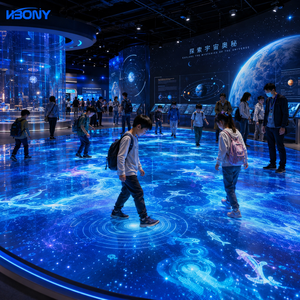
Heavy-Load Substrate
Durable 2 Tons Load P2.97 Interactive LED Floor Screen HD Dance Floor
Load: 2000kg/m²
Pitch: P2.97mm
Optocoupler Touch

Precision-engineered fine-pitch surfaces, weight-bearing interactive dance floors, transparent window substrates, and front-accessible perimeter solutions designed for synchronized multi-faceted cube spaces.
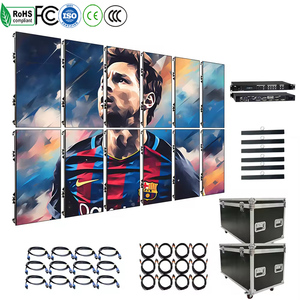
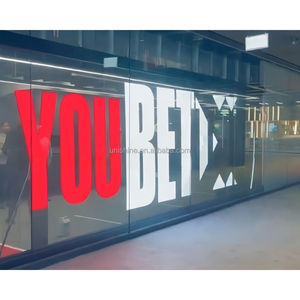
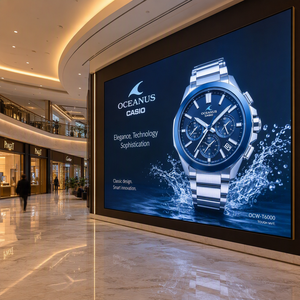
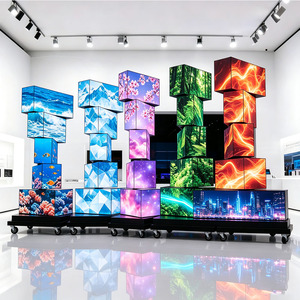
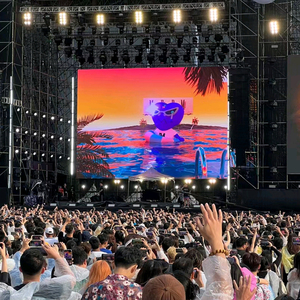
The global transition from projection mapping to direct-view Light Emitting Diode (LED) volumes within immersive CAVEs (Computer Automatic Virtual Environments), XR virtual production stages, and 360-degree experiential visitor attractions has permanently disrupted AV procurement protocols. Commercial real estate developers, themed entertainment designers, and system integrators frequently look to the manufacturing cluster concentrated in the Guangdong province of China—most notably Shenzhen’s Bao'an and Guangming districts—to source multi-sided display canvases.
However, wholesale procurement of an immersive LED room is fundamentally distinct from buying standard flat digital billboards. An immersive room operates as a cohesive, non-Euclidean optical box requiring precise geometric harmony across 4 to 6 discrete planes: left, center, right, ceiling, and load-bearing floor. Slight engineering variances that are negligible in standalone video walls—such as a 0.2mm mechanical gap, 1.5% brightness roll-off at 45-degree off-axis angles, minor PWM scan lines, or 3-nanometer chromaticity wavelength discrepancies across manufacturing bin lots—manifest inside an enclosed room as glaring optical boundaries, shattering the audience's psychological immersion.
Navigating direct factory wholesale requires shifting from commoditized square-meter cost shopping to strict mechanical, optical, and thermal systems engineering. This whitepaper analyzes the manufacturing architecture, component binning hierarchies, supply chain vulnerabilities, and future-proof design criteria essential for cross-border procurement.
Standard 90-degree outer and inner cabinet joints suffer from black bezel shadows. Tier-1 engineering utilizes 45-degree precision chamfered module substrates, ensuring optical pixel-to-pixel pitch uniformity across orthogonal corners down to <0.1mm tolerance.
Heavy-load immersive floor panels demand aviation-grade die-cast aluminum bases topped with high-polymer anti-scratch, anti-glare masks rated for point loads >2,000 kg/m², coupled with integrated high-frame-rate optical or capacitive pressure sensors.
Unenclosed CAVE setups concentrate massive thermal loads. Premium manufacturing integrates distributed 4.2V/3.8V common-cathode driver topologies with dynamic zero-watt standby systems like digiLED ZEUS®, avoiding thermal drift and runaway HVAC costs.
Why direct transactional procurement from wholesale marketplaces often results in field failures, visual artifacts, and unmanageable maintenance life cycles.
| Evaluation Parameter | Direct Wholesale Factory (Tier-2/3) | digiLED Engineering Managed Model | Impact on Immersive Spaces |
|---|---|---|---|
| LED Binning & Chromaticity | Mixed wafer batches; ±3nm dominant wavelength variance; visual patchwork. | Single-bin encapsulation (MacAdam Ellipse <2 steps); zero batch variance. | Critical. Color shifts between floor and walls destroy spatial depth perception. |
| Corner Mechanical Tolerance | Standard straight edge with 1.5mm–3.0mm seam gap; visible black line at intersections. | CNC precision-milled 45° beveled edges; sub-millimeter seamless optical continuity. | Essential. The seam at wall-floor junctions breaks the 3D stereoscopic illusion. |
| Driver Architecture & Refresh | Basic common-anode PWM; 1920Hz or 3840Hz; noticeable flicker under mobile cameras. | Advanced common-cathode ICs; 7680Hz refresh; 16-bit grayscale depth at ultra-low nit. | Vital for guest social capture, broadcast recording, and moiré suppression. |
| Standby Energy & Thermal Load | Constant standby current draw; massive idle power draw and ambient room heat. | Integrated digiLED ZEUS® power system; automated zero-watt standby consumption. | Drastically lowers 10-year OpEx, HVAC cooling wear, and ESG carbon footprints. |
| QC & Factory Acceptance (FAT) | Self-administered 24-hr generic aging; high variance in missing pixels upon arrival. | Independent bilingual engineers on the factory floor; 72-hr full thermal/vibration FAT. | Eliminates costly on-site rebuilds and catastrophic opening night delays. |
| Post-Warranty Pixel Repair | Return to China depot; weeks of customs delays and batch replacement mismatch. | Dedicated Regional Pixel Depots in Las Vegas & UK; master-batch module matching. | Guarantees 5-to-10-year architectural serviceability without aesthetic divergence. |
Key technological paradigm shifts steering global architectural specifications away from legacy SMD manufacturing toward high-reliability spatial computing surfaces.
Traditional Surface-Mount Device (SMD) packaging is giving way to Chip-on-Board (COB) and Micro-in-Package (MIP) encapsulation. For immersive venues, COB provides a sealed, impact-resistant, IP65-front surface with a matte, low-reflectance finish that prevents ambient optical scatter and glare from orthogonal walls.
With environmental, social, and governance (ESG) reporting governing Tier-1 venue developments, idle power burn is unacceptable. Breakthrough intelligent tools such as digiLED ZEUS® enable venues to safely cycle multi-surface LED arrays to true zero watts during non-operational hours, prolonging internal component MTBF.
Achieving realistic spatial audio in a closed 5-sided glass-like LED cube is notoriously difficult due to extreme high-frequency acoustic reflections. Next-generation installations are utilizing micro-perforated acoustically transparent LED screens, permitting subwoofers and point-source line arrays to fire directly through the visual pixels.
In standard DOOH and outdoor arena settings, raw luminous output (>5,000 nits) is paramount. In contrast, immersive room displays operate at deliberate low-nit ranges (100 to 400 nits) to avoid blinding enclosed visitors. Cheaper driver ICs suffer severe bit-depth loss when dialed down, producing stepping, contouring, and pink tint shifts in dark shadow gradients.
Future-ready immersive environments demand specialized PWM driver ICs that maintain true 16-bit to 22-bit linear grayscale performance even at 5% drive brightness. Furthermore, integration with spatial tracking systems (such as OptiTrack, Mo-Sys, or Vicon) and real-time rendering pipelines (Unreal Engine 5 nDisplay) necessitates genlocked controllers with low frame latency (<1 frame), frame rates scaling to 120Hz/240Hz, and sub-frame phase adjustments.
Bridging the divide between high-capacity Chinese manufacturing centers and Western engineering, compliance, and lifetime operational continuity.
Rather than being wedded to a single assembly line's tooling limits, we maintain vetted manufacturing partnerships across premier Asian production centers. We engineer the core intellectual property, specify exact component bills of materials (BOM), and choose the exact facility optimized for your architectural form factor.
We do not rely on remote factory attestations. Dedicated digiLED quality engineers occupy the factory floor throughout production, conducting rigorous in-person optical inspection, frame tolerance validation, and stringent Factory Acceptance Testing (FAT) before crates leave the dock.
Long-term maintenance cannot rely on trans-Pacific logistics. Through fully equipped Pixel Depots located in the United Kingdom and Las Vegas, Nevada, we provide local component repairs, precision batch SMD/COB module calibration, and lifetime engineering support.
Actionable answers addressing critical engineering, integration, structural, and electrical challenges encountered during immersive room specifications.