Precision-fabricated panels, flexible architectural film, and interactive tile matrices engineered for enterprise visual deployments.
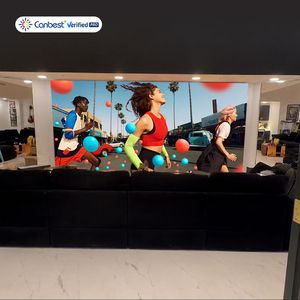


As corporate boardrooms, mission-critical operations centres (NOCs), virtual production studios, and command authorities transition beyond conventional SMD (Surface Mount Device) architectures, the P1.2 mm pixel pitch (typically 1.25mm to 1.27mm center-to-center diode spacing) has crystallized as the global gold standard for native 4K and 8K fine-pitch visual environments. Sourcing P1.2 LED arrays directly from audited Chinese manufacturing hubs demands a forensic comprehension of micro-encapsulation methods, substrate thermal conductivity, and dynamic driver silicon engineering.
Historically, fine-pitch displays under 1.5mm relied exclusively on fragile SMD 1010 or SMD 0808 packages prone to physical collision shear, solder pad degradation, and high thermal junction resistance. Contemporary tier-1 Chinese manufacturing has bifurcated this sector through the rapid commercialization of Chip-on-Board (COB) flip-chip arrays and Integrated Matrix Devices (IMD 4-in-1). These advancements mitigate dead-pixel failure rates by over 90% while providing unprecedented optical surface uniformity and IP65 front-surface impact resistance.
| Evaluation Parameter | P1.25 SMD (Traditional) | P1.25 IMD 4-in-1 | P1.25 Flip-Chip COB (Next-Gen) |
|---|---|---|---|
| Packaging Chemistry | SMD Wire-Bonded Diode | Integrated Matrix Array | Direct Silicon Die Flip-Chip Bonding |
| Surface Protection Level | Exposed Resin (Fragile) | Reinforced Epoxy Coating | Nano-Polymer Hermetic Optical Seal |
| Thermal Junction Resistance | High (> 45°C/W) | Moderate (~ 32°C/W) | Ultra-Low (< 15°C/W Direct Copper Substrate) |
| Optical Contrast Ratio | 3,000:1 - 5,000:1 | 6,000:1 - 8,000:1 | 10,000:1 (Deep Carbon Black Matt) |
| Front Collision Force Resistance | < 1.5 kg/cm² | > 5.0 kg/cm² | > 12.0 kg/cm² (Anti-Collision, Dustproof) |
| Recommended Viewing Distance | ≥ 1.5 meters (5.0 ft) | ≥ 1.2 meters (4.0 ft) | ≥ 0.9 meters (3.0 ft, Zero Moiré) |
For international system integrators and distributors, partnering with a Chinese supplier capable of engineering native 16:9 aspect-ratio die-cast magnesium cabinets (typically 600×337.5mm) ensures modular building-block precision. Four P1.25 cabinets form an exact 55-inch FHD array; sixteen cabinets effortlessly resolve a bezel-free 110-inch 4K UHD video wall without requiring non-standard pixel scaling or anamorphic processor interpolation.
Key vectors reshaping international supply chains, procurement specifications, and life-cycle economics for commercial video walls.
Procurement models are rapidly prioritizing Flip-Chip COB over legacy SMD for pitches ≤ 1.2mm. SMT assembly yields in Shenzhen manufacturing clusters now exceed 99.98%, reducing the initial CAPEX premium of COB to within 12% of SMD, while slashing 5-year OPEX maintenance budgets by nearly 65% through the virtual elimination of on-site micro-soldering repairs.
Global regulatory pressure (including European ErP Ecodesign requirements) has established Common Cathode driver IC topology as a mandatory tender specification. By delivering independent, discrete voltage lines to Red (2.8V) and Green/Blue (3.8V) diodes, operational heat is reduced by up to 35%, extending panel longevity past 100,000 continuous operating hours.
Procurement teams are shifting away from disaggregated components toward pre-calibrated All-in-One (AIO) 110", 138", and 165" systems. Integrated with embedded Android/Windows SoC motherboards, motorized wall mounts, and wireless presentation protocols, these enterprise solutions streamline installation from three days down to under four hours.
Next-generation optical innovations delivering cinematic color accuracy, sub-black levels, and environmental resilience.
Proprietary nano-level light absorption layers deposited between emitter clusters suppress ambient room reflections by 98%, producing true deep blacks and raising contrast to 10,000:1 under direct lighting conditions.
Equipped with 16-bit to 22-bit grayscale depth mapping and low-brightness grayscale enhancement algorithms, modern P1.2 driver ICs maintain 100% color fidelity without clipping even at dimmed boardroom output levels (80–120 nits).
Floating board-to-board high-speed connectors link module logic directly to cabinet control systems, completely eliminating internal flat ribbon cables and DC wiring harnesses for zero EMI radiation and seamless cableless builds.
Vacuum-deposited conformal polymer overlays render the entire front face impervious to water vapor, dust, electrostatic discharge (ESD > 8kV), and fingerprint oil, allowing safe cleaning with standard alcohol solutions.
Rigorous manufacturing discipline, engineering transparency, and end-to-end quality assurance backed by world-class installations.
Rather than relying on unmonitored sub-tier OEM assembly, our technical specialists operate directly on the factory floors across Shenzhen and Guangdong. We enforce strict component selection—incorporating high-grade Epistar or Nationstar gold-wire emitters, Macroblock/ICN driver silicon, and Mean Well power solutions under our own registered IP benchmarks.
Every batch undergoes non-negotiable Factory Acceptance Testing (FAT) prior to crating. This includes 72 hours of uninterrupted full-white and continuous RGB color-wash thermal burn-in, vibration testing, spectrophotometric batch-bin matching, and high-voltage isolation analysis to guarantee zero lot-to-lot chromatic variation upon delivery.
We solve the logistical challenges of international display deployment. From custom CNC precision frames, power distribution unit (PDU) load calculations, to guaranteed 5% spare part reserves (paired batch modules, receiving cards, and driver boards), our regional support depots ensure rapid turnaround and life-cycle technical support worldwide.
Crucial commercial and technical clarifications for international procurement officers, project engineers, and AV contractors.
A: Optical viewing comfort is defined by the visual acuity threshold: Minimum Optimal Viewing Distance (meters) ≈ Pixel Pitch (mm) × 1.0. For P1.25mm, comfortable single-pixel cohesion occurs at 1.25 meters (~4.1 feet). If your viewers sit inside executive boardrooms, control consoles, or luxury residential suites within 1.2 to 3.5 meters of the screen, P1.2 provides true continuous-image density without visible pixelation (screen-door effect). For distances continuously exceeding 4 meters, P1.5 or P1.8 may represent a more cost-effective compromise.
A: Human eyes detect wavelength shifts as minute as 1.5nm and brightness variances of 3%. When purchasing wholesale P1.2 LED walls from our manufacturing supply line, the complete project order is produced using a single raw wafer ingot run and unified driver IC wafer lot. We supply a mandatory 3%–5% over-allocation of identical-batch spare modules and provide continuous optical calibration file backups stored securely in cloud-backed firmware vaults for future panel replacement servicing.
A: Fine-pitch P1.2 installations are almost universally flush-mounted against structural architecture. Front-service modules incorporate precision-aligned magnetic latches extracted from the cabinet face via a vacuum-suction extraction tool in seconds, eliminating the requirement for rear service corridors (which saves 0.8 to 1.2 meters of premium room floor space). Our cabinets feature secondary safety lanyards and integrated z-axis micro-adjustment screws to dial out mechanical seam errors to within 0.05mm tolerances.
A: Enterprise export shipments are fully certified and documented with authentic accredited test reports, including CE (EMC Directive 2014/30/EU and LVD Directive 2014/35/EU), FCC Part 15 Class B (crucial for commercial office electromagnetic compliance), RoHS 2.0, UL/ETL listed power subassemblies, and CB Scheme certifications. Full Factory Acceptance Test (FAT) dossiers, photometric maps, and mill-certificate structural data sheets are supplied alongside export bills of lading.