Direct Factory Inventory
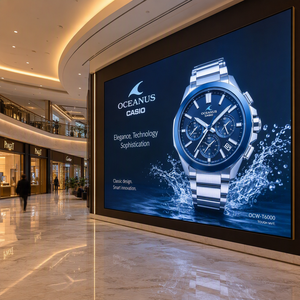
Featured Window & Architectural Commercial Displays
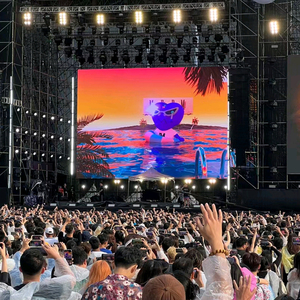
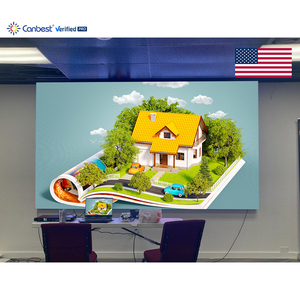
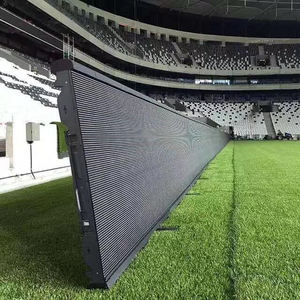
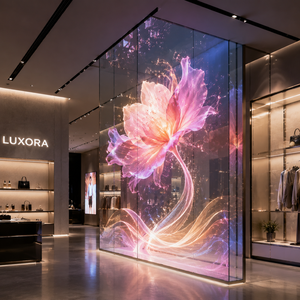
Engineered for direct storefront exposure, high-ambient sun rejection, high refresh rates, and invisible glass mounting.
Proven Global Reliability
Engineering-First Export Advantages
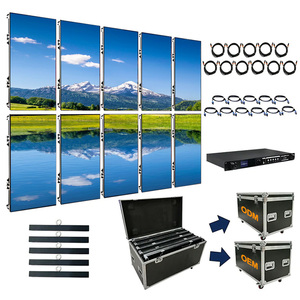
Bridging high-volume Chinese manufacturing precision with strict Western quality controls, in-person factory acceptance testing, and patented sustainability architectures.
Independent by Design
We do not lock our clients into fixed factory tooling. We partner with Tier-1 certified manufacturing hubs across Shenzhen and Huizhou, deploying custom PCB layouts, top-bin Nationstar/Cree LEDs, and Macroblock driver ICs built strictly to our intellectual property.
Zero Standby Energy (ZEUS®)
Integrating intelligent power management tools designed and built under global patents. Our window displays incorporate remote sleep scheduling that draws genuine zero watts when retail storefronts are closed, slashing ongoing operational expenditures by up to 38%.
Floor-Level In-Person FAT
Every square meter of display undergoes a continuous 72-hour white balance burn-in, vibration testing, and thermal imaging at our production lines. Our dedicated quality-assurance engineers issue comprehensive Factory Acceptance Testing (FAT) dossiers prior to container sealing.
Regional Pixel Depots
Post-installation reliability is secured through strategically placed Pixel Depots across North America (Las Vegas) and Europe (UK). We store factory batch-matched reserve bin diodes, replacement receiving cards, and dedicated diagnostic labs for true lifetime display maintenance.
Window LED Engineering Benchmark: Commodity vs. High-Performance Architectural Grade
Comprehensive procurement evaluation criteria for architects, AV consultants, and commercial DOOH operators.
| Evaluation Parameter | Standard Wholesale Commodity | Engineered Architectural Grade (Our Benchmark) | Impact on ROI & Reliability |
|---|---|---|---|
| Optical Transmittance | 45% – 60% (Thick acrylic louvers) | 78% – 90% (Micro-wire & Film substrate) | Preserves indoor daylighting; complies with urban municipal storefront codes. |
| Luminance (Nits / cd/m²) | 2,000 – 3,500 Nits (Fades in sun) | 5,500 – 7,500 Nits (Auto-dimming calibrated) | Guarantees direct sunlight punch without thermal discoloration of the glass facade. |
| Power Consumption | 800W/sqm peak; constant 80W standby | Common Cathode + ZEUS® Zero Idle (<320W avg) | Lowers HVAC burden within commercial storefronts; cuts electricity overhead by >40%. |
| Color Wavelength Binning | Mixed batches (±5nm shift) | Single-Bin Sorting (≤1.5nm / MacAdam Step 3) | Eliminates patchwork tiling; guarantees pristine white point tracking across large video walls. |
| Substrate Flexibility & Weight | Rigid aluminum frame (16-22 kg/sqm) | Adhesive Crystal Film (1.5 - 4.5 kg/sqm) | No structural building reinforcements required; mounts directly to existing window glazing. |
Comprehensive Engineering Guide: Navigating China's Window LED Display Supply Chain
Architectural digital signage has undergone a radical paradigm shift. Traditional rigid indoor video walls, while capable of high pixel densities, present severe drawbacks when positioned in commercial window facades: excessive thermal reflection, the complete occlusion of natural ambient sunlight, heavy structural footprints, and non-compliance with strict municipal storefront zoning laws. For global systems integrators, architectural consultants, and retail display procurement executives, sourcing wholesale window LED displays from China requires an analytical understanding of the convergence between optical engineering, thermal dynamics, and component-level binning.
China accounts for over 85% of the world’s LED packaging and display fabrication capacity. However, the quality delta across Chinese suppliers is substantial. The spectrum ranges from low-cost assembly workshops that assemble off-the-shelf printed circuit boards (PCBs) with unbinned light-emitting diodes, to premier Tier-1 contract manufacturers that fabricate military-grade driver boards, utilize automotive-grade silicone encapsulants, and enforce strict automated optical inspection (AOI). Sourcing successfully requires navigating past cosmetic marketing brochures and understanding the deep physical specifications that dictate optical lifespan, color uniformity, and electrical efficiency behind direct-sunlight glazing.
“Direct sunlight striking storefront glass can generate localized temperatures exceeding 65°C within the interior air boundary layer. Window LED screens that lack common cathode silicon topologies and UV-stabilized optical encapsulation will suffer irreversible wavelength shifting, catastrophic driver delamination, and severe lumen degradation within 18 months of commissioning.”
Optical Physics of Window Facade Displays: Transmittance vs. Ambient Lux Rejection
When engineering an architectural window display, the primary performance trade-off centers on the inverse relationship between pixel pitch and optical transparency. In standard transparent LED screens constructed with rigid vertical or horizontal printed circuit bars, the surface area occupied by the PCB and the LED package naturally obstructs light. For instance, a P3.91mm pixel pitch transparent panel typically achieves an optical transmittance between 60% and 70%. In contrast, stepping up to a P7.8mm or P10.4mm pitch increases transparency to 80%–88%, but degrades visual clarity when viewed from pedestrian sidewalks less than 5 meters away.
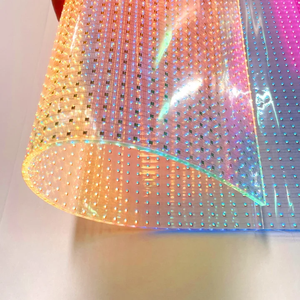
To overcome this limitation, cutting-edge Chinese manufacturing has pioneered Invisible Crystal Film LED Displays. Fabricated using high-purity optical Polyethylene Terephthalate (PET) or Polyimide (PI) substrates integrated with etched invisible copper mesh circuitry, these displays achieve optical transparency metrics exceeding 90%. Because the microscopic circuit traces are virtually imperceptible to the human eye, retail storefronts can turn expansive floor-to-ceiling glass partitions into active multimedia canvasses while preserving natural architectural sightlines and building illumination.
However, transparency is useless if the luminance of the display is overpowered by direct daylight ambient illumination. Solar illuminance hitting a south-facing exterior window can effortlessly surpass 80,000 to 100,000 Lux. Under such intense ambient wash, a standard indoor screen calibrated for 800 to 1,200 Nits (cd/m²) will appear washed out, displaying milky contrast and completely unreadable dynamic range. To achieve commercial-grade contrast ratios of at least 10:1 under direct solar irradiation, the window LED display must deliver an uncalibrated optical output between 5,000 and 7,500 Nits. This level of punch must be counterbalanced by high-precision pulse-width modulation (PWM) auto-dimming sensors to avoid blinding pedestrian traffic during twilight and nighttime hours.
Thermal Dynamics and Common Cathode Energy Efficiency
Thermal accumulation represents the primary failure vector for window-facing electronics. A storefront window acts as a greenhouse: solar radiation penetrates the glass envelope, warming the interior air pocket between the display and the double or triple glazing. If the display relies on obsolete Common Anode power architectures, up to 45% of the consumed electric energy is dissipated directly as waste heat due to the voltage mismatch across the Red, Green, and Blue diode dies.
In standard Common Anode circuits, a unified voltage (typically 5V or 4.2V) is supplied simultaneously to all three color chips. However, while Blue and Green diodes require roughly 2.8V to 3.2V to operate efficiently, Red diodes require only 1.8V to 2.1V. The excess voltage supplied to the Red chip is burned off as heat across the current-limiting driver resistors. In a sealed architectural showcase, this excessive heat triggers severe junction degradation, accelerating the lumen half-life ($L_{70}$) of the display and causing catastrophic optical color shifting.
Our engineered procurement standards demand Common Cathode Dynamic Power Architectures. In this topology, independent, separated power rails supply 2.8V to the Green and Blue semiconductor channels, and a separate 1.8V rail directly to the Red channel. By eliminating passive voltage drops, common cathode architecture reduces surface operating temperatures by 12°C to 18°C, lowers total electrical draw by 35% to 40%, and prevents the glass pane from experiencing thermal shock fractures caused by localized differential heat expansion.
Future Sourcing & Procurement Trends (2025–2030)
Global architectural procurement channels are evolving rapidly. Corporate brand managers, luxury retailers, and commercial property developers are imposing stringent total-cost-of-ownership (TCO) benchmarks, carbon footprint caps, and building management system (BMS) integrations. Below are the transformative trends reshaping how international buyers procure window displays from China:
Micro-Pitch Transparent Films
Evolution toward sub-2.5mm pixel pitches utilizing Mini-LED and Micro-LED flip-chip topologies on flexible transparent glass films, enabling 4K video playback on commercial shopfronts without visible diode clusters.
Smart Zero-Standby Protocol
Integration of intelligent power isolation relays (such as ZEUS®-compliant architectures) that drop standby power draw to zero during mandatory municipal curfew hours, directly fulfilling institutional ESG criteria.
BIPV-Signage Convergence
Building-Integrated Photovoltaic Digital Signage (BIPV-DS) combining semi-transparent organic solar cells on peripheral glass margins with central transparent active-matrix LED visual display zones.
Direct Structural Glass Lamination
Moving away from secondary retrofit adhesive films toward pre-laminated architectural safety glass panels (EVA / PVB autoclaved), manufactured at Chinese glass processing hubs with embedded LED circuitry.
Cloud-Loom Remote Diagnostics
Automated driver IC telemetry transmitting per-pixel current draw, thermal junction readouts, and power supply voltages back to regional service centers, predicting component failure before visual degradation occurs.
Manufacturing & Technology Frontiers: From SMD to Flip-Chip Micro-COB
The manufacturing architecture of wholesale window displays in China is bifurcated into two distinct technological lineages: Surface Mount Device (SMD) packaging and Chip-on-Board (COB) / Glue-on-Board (GOB) encapsulation. Understanding the material science behind these technologies is critical for procurement officers calculating long-term reliability.
Standard SMD transparent displays solder discrete 1921, 1515, or 1010 LED packages onto narrow structural PCB ribs. While cost-effective and highly repairable at the sub-module level, SMD packages suffer from limited impact resistance and vulnerability to ambient moisture, dust ingress, and accidental physical impacts during window cleaning operations. To elevate physical durability, leading Chinese exporters utilize GOB (Glue-on-Board) coatings—applying an optically transparent, UV-stabilized polyurethane or epoxy resin over the entire surface of the diodes. This shields the emitter surfaces to an IP65 protection rating, preventing diode shearing and corrosion.
At the apex of technological innovation lies Flip-Chip Micro-COB on Glass Substrates. In conventional wire-bonded LEDs, microscopic gold or copper wires link the semiconductor die to the lead frame; these delicate wires can snap under repetitive thermal cycling. Flip-chip technology eliminates wire bonding completely: the microscopic diode dies are inverted and bonded directly to the circuit traces using eutectoid solder balls. This design provides double the thermal dissipation surface, increases luminous efficacy by 25%, and ensures zero bonding wire shadows, allowing window displays to achieve pitch resolutions down to P1.2mm with unprecedented optical clarity.
Frequently Asked Procurement & Engineering Questions
Key technical insights compiled by senior AV engineers to streamline your architectural tender specifications and factory supplier evaluations.
1. What minimum nit rating is required for window displays subjected to direct southern sun exposure?
For storefront windows exposed to direct southern solar illumination (or northern exposure in the Southern Hemisphere), ambient illuminance can exceed 80,000 Lux. Under these conditions, an optical luminance of at least 5,500 to 6,500 Nits (cd/m²) calibrated is mandatory to maintain acceptable image contrast and visual punch. For windows with western afternoon sun glare, 7,000 Nits is strongly recommended. For east-facing, indirect, or arcade windows shaded by deep awnings, a calibrated output of 3,500 to 4,500 Nits is generally sufficient.
2. What is the fundamental difference between flexible adhesive film LED and rigid transparent LED panels?
Flexible adhesive film displays utilize ultra-thin (1.5mm–2.5mm) optical PET or polyimide sheets embedded with microscopic circuitry that adhere directly to the existing glass surface via optical clear adhesive (OCA). They weigh between 1.5 and 4.5 kg/sqm and boast transparency rates of up to 90%, requiring no external hanging frames or structural modifications. In contrast, rigid transparent panels utilize die-cast aluminum or magnesium framing with rigid PCB louvers. They offer higher peak brightness (up to 7,500 Nits) and easier single-module servicing, but weigh more (12–18 kg/sqm), provide slightly lower transparency (60%–75%), and require dedicated structural truss or floor-stack mounting.
3. How does heat dissipation function in sealed or double-glazed window cavities?
High-grade window LED displays mitigate heat buildup by adopting Common Cathode driver circuits, which lower heat generation by up to 40% compared to traditional displays. Secondly, the display structure must maintain a minimum 100mm to 150mm convection gap from the glass surface. For completely sealed architectural display windows, natural thermal buoyancy must be augmented by dedicated low-velocity intake and exhaust fans or cross-flow plenum integration connected to the building’s HVAC system to ensure the ambient operating environment remains below 40°C.
4. What quality assurance standards should be verified during Chinese Factory Acceptance Testing (FAT)?
A comprehensive FAT protocol must include: (1) A non-stop 72-hour continuous aging burn-in test, including 24 hours at 100% full-white saturation to identify early diode failures; (2) Thermal imaging scans to detect hot spots across driver ICs and power supply units; (3) Optical spectrometer evaluations ensuring chromatic consistency within MacAdam Ellipse Step 3; (4) Ground continuity and high-voltage dielectric insulation breakdown tests (Hi-Pot test); and (5) Vibration and drop testing of flight cases or export crates to ensure transport stability.
5. How do you prevent optical yellowing of adhesive transparent LED films over extended UV exposure?
Optical degradation and yellowing of the transparent adhesive substrate occur when low-grade industrial epoxy or aliphatic adhesives are exposed to intense ultraviolet radiation. Premier Chinese manufacturers utilize high-grade optical silicone elastomers combined with anti-UV PET base films treated with hindered amine light stabilizers (HALS). During procurement, always request ASTM G154 or ISO 4892 accelerated weathering test reports demonstrating zero yellowing delta (ΔYI < 1.5) over a minimum 3,000-hour exposure cycle.
6. What international safety, fire, and electromagnetic certifications are legally required for import?
For the European Union, CE certification covering both the Low Voltage Directive (LVD, EN 62368-1) and Electromagnetic Compatibility (EMC Directive, EN 55032 Class A/B) is legally required, along with RoHS compliance. For the United States, UL 48 (Electric Signs) or UL 62368-1 certification through an OSHA-recognized Nationally Recognized Testing Laboratory (NRTL such as UL, ETL, or TÜV) is mandatory for building permits, alongside FCC Part 15 Class A verification. Additionally, flame-spread ratings such as UL94-V0 for plastics and optical films are critical for commercial interiors.
7. How are dead pixels serviced or repaired on transparent adhesive film screens?
Adhesive film displays are built using modular strips or panels linked via micro-FFC (Flexible Flat Cable) jumpers. When an isolated diode or IC driver suffers damage, field engineers do not replace individual diodes on-site. Instead, the specific modular film section (typically 250mm x 500mm or 1000mm strips) is cleanly peeled away using thermal release tools, the glass surface is cleaned with isopropyl alcohol, and a factory-calibrated replacement section from the original spare batch is applied and re-mapped in the controller software.
8. What refresh rate and scan mode are necessary to avoid moiré and flicker in social media recordings?
Modern retail environments serve as secondary broadcasting sets for consumer smartphones and social media filming. To ensure complete elimination of black scan lines and rolling shutter artifacts, displays must feature a refresh rate of ≥ 3,840Hz driven by high-performance PWM driver ICs (such as Macroblock MBI5353 or Chipone equivalents). For ultra-high-end broadcast or studio window facades, displays should be specified with 7,680Hz refresh capabilities and low 1/8 or 1/16 scan ratios.
Accelerate Your Commercial Architectural LED Project
Consult directly with our bilingual technical engineering desk. Receive detailed structural schematics, photometric Lux/Nit calculation models, comprehensive Factory Acceptance Testing (FAT) documentation, and custom volume export pricing within 24 hours.
Get Catalog