Bespoke visual hardware designed for mission-critical venues, exterior facades, broadcast, and experiential retail architectures.
Strategic guidelines on structural load, optical binning, thermal dissipation, and ESG-aligned lifecycle management.
Architectural installations demand strict structural validation. Large exterior screens must balance wind tunnel shear tests, building dead load capacities, and thermal expansion joints. Utilizing marine-grade die-cast aluminum with specialized venting channels decreases structural stress while meeting local municipality building codes.
Unlike standard rental panels, architectural facades remain in position for 7–10 years. Single-bin diode curation ensures strict chromatic consistency across wide viewing cones. Maintaining Delta E < 1.5 across adjacent cabinets prevents pixel checkerboarding and guarantees brand color fidelity under direct solar illumination.
Standard architectural arrays bleed massive power during non-operating hours. Integrated intelligent power systems (such as patented zero-standby relays) mitigate parasitic loads. Combined with common-cathode driver topologies, forward voltage drops reduce heat by up to 35%, drastically lowering required HVAC cooling infrastructure.
Key analytical shifts influencing RFPs, AV consultants, and commercial real estate specifications globally.
Procurement teams are shifting away from traditional SMD packages toward Flip-Chip Chip-on-Board (COB) and Micro-LED architectures for indoor and close-proximity facades. COB eliminates fragile wire bonding, provides an impact-resistant IP65 surface, and reduces diode failure rates down to <5 PPM annually.
Tier-1 commercial developers now mandate complete carbon disclosures in procurement dossiers. Specifiers require documentation on component recyclability, lead-free PCB assemblies, and operational power mitigation. Systems carrying audited zero-draw standby ratings earn precedence in BREEAM and LEED-certified developments.
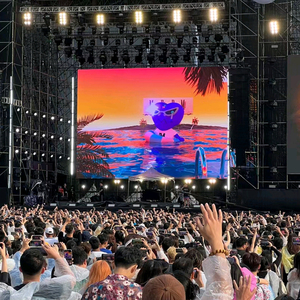
Permanent installations in arenas, corporate atriums, and hospitality venues are increasingly drafted to serve dual purposes: live digital signage and XR/virtual production backdrop. High refresh rates (7680Hz), low scan ratios, and genlock synchronization are transitioning from luxury specs to basic procurement prerequisites.
How breakthroughs in transparent substrates, acoustics, and mechanical flexibility redefine built environments.
Architectural glass facades must balance vibrant media playback with natural daylight transmittance. Advanced transparent mesh screens and PCB-free film displays provide up to 80% natural daylight penetration, preventing interior office blackout and honoring strict municipal solar preservation covenants.
In high-end auditoriums, immersive domes, and live arenas, screen real estate often conflicts with acoustic driver positioning. Micro-perforated, acoustically transparent LED modules allow direct positioning of line arrays behind the visual canvas, maintaining directional sound coherency without treble attenuation.
Physical access to exterior architectural ribbons and skyscraper facades entails significant cradle rigging costs. Emerging driver topologies report individual module voltage, thermal variance, ribbon signal latency, and pixel short circuits over encrypted telemetry networks, allowing predictive maintenance before failure occurs.
Precision manufacturing oversight, factory-floor engineering, and lifecycle support across global jurisdictions.
We do not operate as detached brokers. Our senior engineers reside on the production floor throughout every run. From solder paste inspection (SPI) and automated optical inspection (AOI) to 72-hour sustained thermal burn-ins, every panel undergoes multi-point Factory Acceptance Testing prior to worldwide export.
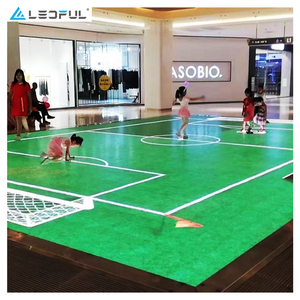
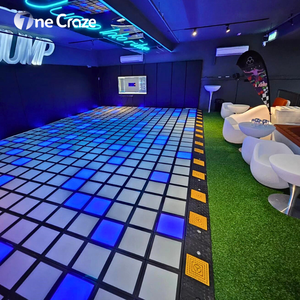
From complex organic curves, faceted columns, and 90-degree seamless corner mitering to load-bearing interactive floor systems, our mechanical design team engineers around the spatial realities of your architectural blueprint, backed by a portfolio of custom patents and Made in Britain recognized systems.
Operational longevity requires guaranteed spares availability. Through our regional hubs and dedicated Pixel Depots in Las Vegas and the United Kingdom, we stock matched batch-run diode reserves, IC drivers, and specialized micro-soldering labs to ensure continuity for decades after initial handover.
Direct technical answers addressing lead times, batch consistency, weather ratings, and engineering compliance.
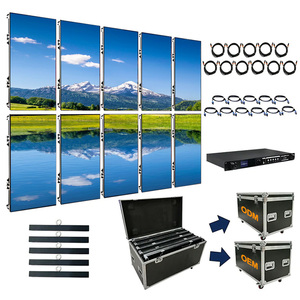
Standard rental cabinets prioritize rapid assembly/disassembly rigging and lightweight profiles, often compromising long-term thermal management, ingress protection durability, and architectural anchoring compatibility. OEM/ODM architectural panels are engineered for permanent outdoor or indoor deployment, utilizing thicker marine-grade alloy frames, double-coated conformal potting, custom front/rear service access mechanisms, and specialized power supplies rated for 24/7/365 uninterrupted lifecycle operation.
For architectural developments with phased handovers, we source entire wafer lots from the diode foundry in a single production reservation. Unused modules and extra repair stock are calibrated concurrently and cataloged under unified spectrometer matrices. When replacement or expansion modules are introduced years later, our calibration software precisely maps target white points (x, y coordinates) and brightness curves to guarantee zero noticeable boundary shift.
Exterior architectural screens require a minimum of IP65 rating on the front face and IP54 (preferably IP65) on the rear cabinet. In coastal or humid environments, modules undergo cyclic salt-spray tests (ASTM B117 compliance) and must feature anti-corrosive gold-plated PCB interconnects, silicon potting compound across driving ICs, and dynamic ambient brightness sensors to counter solar glare and prevent nighttime light pollution.
Yes. Our ODM capabilities integrate CNC-machined structural aluminum profiles that can be fabricated to non-standard aspect ratios, trapezoids, 90-degree miters, and precise cylindrical radiuses without full re-tooling of die-cast molds. We provide full mechanical structural FEA (Finite Element Analysis) to certify that bespoke cabinet forms withstand local site wind and seismic stresses.
For standard customized architectural configurations, prototyping and submittal reviews take 2 to 3 weeks. Full-scale production spans 4 to 6 weeks, culminating in continuous 72-hour full-white and RGB cycling burn-in tests overseen by our QA engineers. Clients receive complete FAT sign-off dossiers, including photometric reports, thermal scans, and high-resolution optical uniformity verifications prior to container dispatch.
Connect directly with our engineering team for viewing distance analysis, optical lux calculations, and customized mechanical drawings.