Digital out-of-home (DOOH), sports stadiums, architectural facades, and command operation centers operate under intensive duty cycles. Procurement leaders are shifting from basic CAPEX calculations to rigorous 10-year Total Cost of Ownership (TCO) benchmarks. The integration of dynamic common cathode architectures, flip-chip package micro-LED, and automated thermal load throttling allows modern installations to eliminate up to 48% of parasitic electrical waste. As veteran optical and display system engineers with over 375,000 m² of global field deployments, this analysis examines the manufacturing standards, structural efficiencies, and lifecycle ROI of tier-1 energy-saving LED platforms.
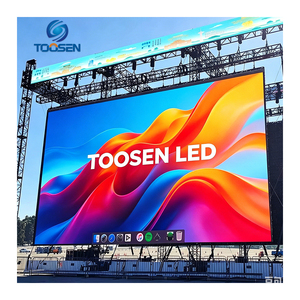
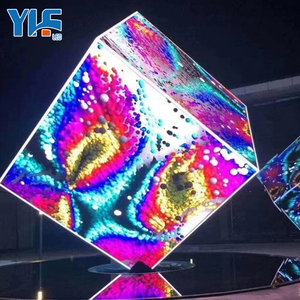
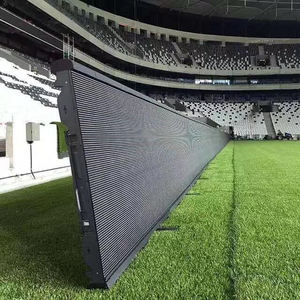
Procurement executives in commercial real estate, municipal media assets, and sports franchise arenas no longer assess bids simply on surface pixel pitch and peak nit output. Enterprise procurement protocols demand demonstrable sustainability metrics, system life validation, and thermal mitigation without high-maintenance mechanical cooling.
Standard common anode LED displays route uniform voltage (typically 5V or 4.2V) simultaneously to Red, Green, and Blue diodes. Because Red chips require approximately 2.8V, the remaining 1.4V–2.2V is dissipated directly into the cabinet chassis as waste heat. Advanced common cathode topologies separate the supply lines, delivering 2.8V to Red and 3.8V to Green/Blue diodes. This physical segregation cuts module thermal loads by up to 20°C, doubling driver IC lifespans and preventing premature wavelength shift (color distortion) over 100,000 operating hours.
DOOH billboards and sports screens spend 30% to 50% of their operational lifetimes in standby or non-broadcasting states. Traditional switch-mode power supplies maintain idle parasitic current to preserve controller ping and internal circuitry, drawing hundreds of kilowatt-hours per panel array monthly. Procurement frameworks across Europe, North America, and the Middle East now prioritize systems with certified hardware isolation, such as digiLED ZEUS®, which terminates line voltage upstream to deliver verifiable zero-watt standby without risking downstream inrush current spikes on restart.
Surface Mount Device (SMD) wire bonding introduces structural resistance and thermal bottlenecks where fine gold/copper wires cross the resin layer. Direct-bonding Flip-Chip Chip-on-Board (COB) technologies eliminate wire bonds completely, mounting micro-diodes directly onto thermal-grade multi-layer PCBs. This configuration yields a 250% increase in optical emission surface while lowering junction operating temperatures, enabling fine-pitch displays (P0.9–P1.5) to operate at 1000 nits with a 35% lower current draw than traditional SMD arrays.
Engineering audit of power distribution configurations across enterprise digital displays:
| Engineering Vector | Conventional SMD (Common Anode) | Energy-Saving Common Cathode | COB Micro-Drive (ZEUS Managed) |
|---|---|---|---|
| Operating Driving Voltage | Unified 4.2V – 5.0V cross-channel rail | Dual Rail: 2.8V (Red) / 3.8V (Green/Blue) | Dynamic Micro-Rail: 1.8V to 3.2V variable |
| Average Power Draw (Per m²) | 380W – 520W / m² (Outdoor 6000 nits) | 220W – 290W / m² (Outdoor 7500 nits) | 160W – 210W / m² (Outdoor 8000 nits) |
| Thermal Generation (Above Ambient) | +28°C to +38°C (Requires active air cooling) | +8°C to +14°C (Passive convection) | +4°C to +8°C (Aluminum heat conduction) |
| Standby Power Draw | 30W – 60W per cabinet constant leak | 15W – 25W per cabinet constant leak | 0.00 Watts True Zero (Patented relay) |
| Diode Life Degradation (L70) | ~50,000 Hours (Thermal bleaching risk) | ~85,000 Hours (Stable chromaticity) | >100,000 Hours (No wire-bond failure) |
Unlike regional brokers who resell catalog products without physical oversight, we operate as an independent engineering authority. We partner with specialized manufacturing hubs, choosing the exact facility suited to the structural, optical, and thermal profile of each project. All core products are built to digiLED intellectual property with strict quality controls.
We do not lock clients into single-factory constraints. Instead, we select vetted manufacturing lines equipped for fine-pitch COB, large-format DOOH, or extreme-curve flexible modules, ensuring optimal component pairing for every project.
Our veteran UK and international engineers oversee production directly on the factory floor. We enforce component testing, wave-soldering thermal curves, and strict Factory Acceptance Testing (FAT) before any crate receives clearance to ship.
With developments like digiLED ZEUS®—designed and built in the UK with official Made in Britain status—we provide patented intelligent power management that completely eliminates screen standby energy across any format or cabinet size.
With dedicated Pixel Depots in Las Vegas and the United Kingdom, alongside regional hubs in Asia and EMEA, we deliver component-level repair, batch-matched diode binning, and rapid field deployment across every continent.
Detailed technical answers for consulting engineers, MEP contractors, and commercial procurement teams.
Conventional LED designs distribute a standard single voltage (often 4.5V or 5V) to Red, Green, and Blue diodes alike. Since the Red diode requires roughly 2.8V forward voltage, the excess power is shed as heat through the driver IC and printed circuitry. Common cathode circuits supply separate voltage lines: 2.8V for Red, and 3.8V for Green and Blue. This targeted voltage delivery prevents over-saturation, reduces cabinet operating temperatures by 15°C–20°C, and lowers overall display power draw by up to 50% without dimming the screen.
For indoor command centers, broadcast sets, and retail malls, conventional video walls generate heavy thermal output, requiring costly supplemental HVAC air-conditioning systems. A 100 m² conventional screen can output over 40,000 BTUs/hour of waste heat. Energy-efficient cold-screen designs eliminate this thermal load, enabling passive convective cooling through die-cast aluminum chassis. This cuts internal mechanical ventilation costs, eliminates fan noise, and reduces secondary utility bills.
Stadium perimeter displays, scoreboards, and transit networks operate on scheduled content rotations and remain dormant for 12 to 16 hours daily. Typical switch-mode power supplies still draw 30–60W per panel in idle mode to keep control cards active. Over a massive venue with 1,000 panels, this parasitic load wastes tens of thousands of kilowatt-hours annually. Patented power-isolation systems like digiLED ZEUS® turn off power downstream when idle, dropping standby consumption to zero while safely managing startup inrush current when powering back on.
Energy-saving driver ICs use tighter voltage thresholds than legacy architectures. Without comprehensive Factory Acceptance Testing (FAT), slight inconsistencies in power supplies, batch-to-batch driver IC variations, or uncalibrated diode forward voltages can lead to visible micro-banding and uneven brightness at lower gray levels. Having dedicated engineering personnel on the factory floor guarantees thermal-scan imaging, 72-hour full-white burn-in tests, and verified electrical draw calibration prior to international shipping.
Consult with our engineers to build custom thermal dissipation models, calculate power supply run lengths, and benchmark 10-year TCO savings across indoor, stadium, or DOOH installations.
Get a Quote