China Wholesale Retail Digital Signage LED Displays Manufacturer & Supplier in the Chicago Market
Direct Factory Engineering, Architectural Video Walls & Sub-Zero Proven Commercial Signage for Chicagoland Integrators
Enterprise Product Portfolio
Engineered Commercial & Retail LED Displays
Precision-manufactured display hardware calibrated for the extreme architectural, ambient lighting, and temperature demands of the Greater Chicago metropolitan footprint.
Engineering White Paper: Procuring Tier-1 LED Display Infrastructure in Chicago
The commercial and retail digital signage landscape across the Chicago metropolitan area—spanning from Michigan Avenue’s iconic "Magnificent Mile" and the Loop’s high-traffic transit corridors to the post-industrial creative spaces of Fulton Market and the massive convention complexes of McCormick Place—presents a rigorous set of structural, environmental, and regulatory hurdles. Procuring wholesale LED displays directly from Chinese manufacturing facilities requires technical insight far beyond standard billboard assembly. For American audio-visual integrators, general contractors, and corporate real estate portfolios, success hinges on strict adherence to North American electrical codes, environmental mitigation against Midwest freeze-thaw cycles, and advanced thermal dynamic engineering.
Information Gain Insight: Unlike standard temperate installations, Chicago displays operate under extreme temperature differentials (ΔT) that can swing from -25°F (-31°C) with Arctic wind chills blowing off Lake Michigan to +95°F (+35°C) in humid summer conditions. Standard SMD packaging experiences epoxy delamination and thermal bond wire snapping under these stresses without conformal silicone potting and customized aluminum alloy thermal dissipation backplates.
Architectural & Climate Adaptation: The Lake Michigan Factor
Outdoor digital out-of-home (DOOH) assets deployed along interstate arteries such as I-90 (Kennedy Expressway), I-290 (Eisenhower), and pedestrian districts like Navy Pier must withstand relentless microclimate phenomena. Cold-weather thermal contraction stresses soldier joints on driver ICs, while lake-effect moisture introduces condensation risk into unsealed cabinet seams.
Thermal Cycling Endurance: Modules are manufactured using dual-layer gold-wire bonding and copper alloy lead frames, housed in precision CNC-extruded aluminum die-cast cabinets that match the thermal expansion coefficients of the display's structural steel backing.
IP65 / IP68 Hermetic Sealing: Multi-tiered polyurethane potting shields sensitive high-density PCB pathways from saline-infused precipitation, road salt mist, and sub-zero ice accumulation.
Dynamic Condensation Management: Internal solid-state PTC heating elements prevent internal cabinet dew point transitions during rapid morning temperature spikes, eliminating the risk of internal short-circuits.
Performance Parameter
Standard Commercial Grade
Chicago Severe-Weather Tier-1 Spec
Impact on Integrator TCO
Operating Temperature
-10°C to +40°C (14°F to 104°F)
-40°C to +60°C (-40°F to 140°F) Tested
Eliminates winter failure blackouts across Cook County
Scan Rate & Refresh
1920Hz - 3840Hz
3840Hz - 7680Hz with Low Greyscale Purity
Eliminates moiré and shutter black-bars on broadcast cameras & smartphones
Direct Glare Brightness
4,500 - 5,500 Nits
7,500 - 10,000 Nits Auto-Calibrating
Maintains dynamic contrast against high-reflectance glass facades
Structural Ingress
IP54 Front / IP43 Rear
True Hermetic IP65 Front & Rear
Prevents salt corrosion and internal circuitry failure from lake humidity
Standby Idle Energy
80W - 140W per cabinet idle
0.0W Standby Draw with Patented ZEUS® System
Saves thousands per screen annually in ComEd commercial utility tariffs
Compliance, Permitting & City of Chicago Code Integration
Chicago municipal compliance is among the most stringent in the United States. Deploying fixed indoor or outdoor LED equipment requires strict alignment with local building authorities and national electrical standards:
Chicago Electrical Code (Title 14-B): Mandates that all luminaires, power modules, and digital signs bear recognized Nationally Recognized Testing Laboratory (NRTL) certifications. Every power supply and internal sub-chassis must conform to UL 48 (Standard for Electric Signs) and UL 879 (Sign Components).
City of Chicago Department of Buildings (DOB) Sign Permits: Installations facing public thoroughfares require engineer-sealed wind-load calculations (minimum 90 to 115 MPH gust survival ratings per ASCE 7 standards) to protect pedestrian sidewalks below.
ADA Compliance (Americans with Disabilities Act): For indoor mall concourses and hospitality lobbies, wall-mounted display structures extending along circulation paths must conform to ADA Section 307 (Protruding Objects), mandating a profile projection of no more than 4 inches (100mm) if positioned between 27 and 80 inches above the finished floor. Our front-service ultra-slim panels are designed specifically to meet this requirement without wall-recessing reconstruction costs.
Local Deployments
Targeted Chicago Architecture & Use Scenarios
From high-end luxury retail to industrial entertainment hubs, see how our specialized LED technology integrates into the architectural fabric of Chicagoland.
The Magnificent Mile Luxury Storefronts
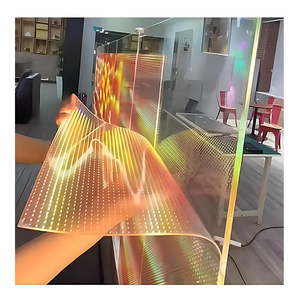
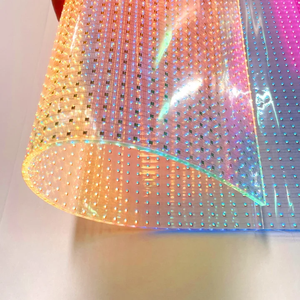
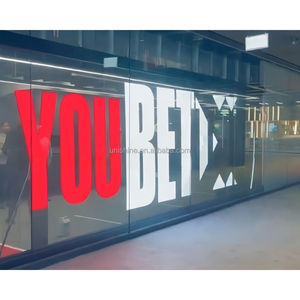
Historic architectural guidelines along North Michigan Avenue restrict physical alterations to stone and limestone facades. Our Flexible Ultra-Adhesive Transparent 3D Film Screens adhere directly to window glazing, delivering vibrant 85% transparent video messaging without impeding natural illumination or violating historic building preservation ordinances.
Fulton Market & River North Hospitality
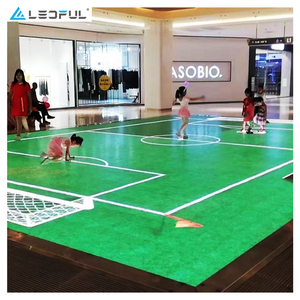
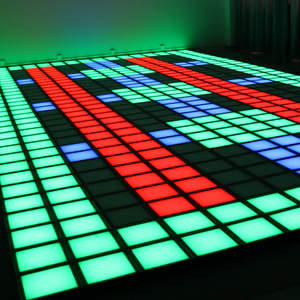
In high-concept nightlife, trendy restaurants, and boutique spaces across Fulton Market and River North, venues utilize our Active Interactive LED Floor Tile Systems and fine-pitch indoor video walls. Pressure-responsive interactive floors transform dance spaces into kinetic immersive experiences that drive organic social media engagement.
McCormick Place Exhibitions & The Loop
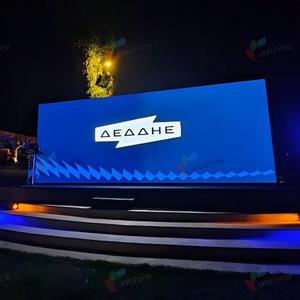
As the largest convention facility in North America, McCormick Place demands fast-rigging, modular, and lightweight staging screens. Our P2.6 - P4.81 Stage Backdrop Video Wall Systems feature magnesium die-cast frames with integrated curvature locks (+/- 10 degrees), enabling production teams to deploy massive visual backdrops in hours.
Local Market Trends: The Evolution of Chicago Digital Signage
1. Shift from Traditional Static Lightboxes to Transparent Architectural Film
Property managers in Class-A Loop office towers and high-density retail strips are phasing out vinyl prints and static neon boxes in favor of dynamic transparent glass LED films. These displays allow corporate lobbies and high-profile retailers to run dynamic advertising campaigns while maintaining open line-of-sight views, interior natural lighting, and clean sightlines required by urban planning boards.
2. Decarbonization Mandates & Chicago Energy Transformation Codes
With Cook County and the City of Chicago aggressively enforcing building decarbonization targets, commercial properties face penalties for wasteful energy consumption. High-consumption LED video walls left running on standby 24/7 waste hundreds of kilowatt-hours annually. Our integrated, patented ZEUS® power management system shuts off power at the source during dark hours, driving standby current to absolute zero and lowering commercial operational expenditures (OpEx) while qualifying for sustainability incentives.
3. Front-Service Fine-Pitch Integration in High-Density Foot-Traffic Zones
Floor space in downtown Chicago retail is premium real estate. Traditional rear-access LED cabinets necessitate dedicated service corridors of 24 to 36 inches behind the video wall, consuming expensive square footage. Today’s procurement standard demands 100% front-service magnetic extraction, such as our P2.5 Front-Service Retail Screens, which bolt directly against drywall or structural studs with zero rear clearance needed.
Enterprise Advantage
Why Chicagoland Integrators Partner With Us
Combining the direct-from-source manufacturing power of Shenzhen with the quality governance, patent-holding engineering, and North American support infrastructure of a global LED pioneer.
Patented Technology & Proven Quality
Direct Factory Partnership with Global In-Person QC
We operate on an independent-by-design manufacturing philosophy. Rather than being restricted by rigid factory-floor production lines, we partner with specialized production facilities, utilizing our own proprietary intellectual property, Tier-1 LEDs (Nationstar, Kinglight, or Nichia), and high-reliability driver ICs (Macroblock, Chipone).
Over 375,000 SQM Installed Worldwide: Deployed in landmark sporting venues like the Arsenal Emirates Stadium, O2 Arena London, NASCAR speedways, and high-end Westfield DOOH networks.
On-Site Factory Acceptance Testing (FAT): Our senior engineers personally monitor factory floor assembly in China, performing rigorous 72-hour burn-in tests and white-balance spectrometer calibration before crating.
US Pixel Depot Support: Supported by dedicated engineers and a regional Pixel Depot in Las Vegas, providing quick-turnaround spare modules, sub-component repairs, and domestic logistics backup for Midwest partners.
Patented Zero-Standby Draw (ZEUS®): Multi-award winning, globally patented technology developed by LED engineering veteran Tom Mudd, officially recognized with Made in Britain status.
Chicago Procurement FAQ: Navigating Direct Wholesale Purchasing
Key architectural, logistical, and legal considerations for AV consultants, systems integrators, and venue operators ordering commercial LED panels.
How do shipments from China clear US Customs into Chicago, and what are typical lead times?
Wholesale orders destined for Chicagoland are typically shipped via ocean freight to the Port of Los Angeles/Long Beach or Port of Tacoma, followed by Class-1 rail intermodal (BNSF or Union Pacific) directly to the Chicago rail hubs (such as Corwith or CenterPoint Intermodal Center in Joliet), totaling 22–28 days transit. For urgent installation milestones, air freight via O’Hare International Airport (ORD) delivers door-to-door within 5–7 business days. We provide comprehensive DDP (Delivered Duty Paid) terms, handling US Customs clearance, Section 301 tariffs, and bonded trucking straight to your job site or warehouse.
How do your outdoor LED displays endure Chicago's extreme freeze-thaw cycles and lake-effect wind chills?
Standard LED cabinets rely on low-cost plastic module masks that warp and crack under sub-zero Chicago winters (-20°F wind chills), allowing ice penetration that splits SMD diodes off the PCB. Our Chicago-spec outdoor screens (such as our IP65 Fixed Advertising Displays) use high-strength polycarbonate masks with silicone gaskets, high-purity die-cast aluminum cabinets, and low-temperature switching power supplies (capable of cold-booting at -40°C). Conformal double-potting guarantees that salt air and winter moisture never bridge circuit traces.
Are your displays compliant with the City of Chicago Electrical Code (Title 14-B) and UL requirements?
Yes. City of Chicago electrical inspectors strictly enforce third-party NRTL listings. Installing uncertified grey-market displays can result in stop-work orders or failure to obtain certificate-of-occupancy approval. Our wholesale power units and cabinet assemblies are manufactured with genuine UL, ETL, and FCC certified components meeting UL 48 and UL 879 standards, ensuring immediate compliance sign-off from local plan examiners.
How are warranty, replacement parts, and color-bin matching handled post-installation?
Every production batch includes an automatic 3% to 5% spare parts allowance (modules, receiving cards, ribbon cables, and power supplies) pulled from the exact same LED diode dye lot and silicon binning run. This eliminates the "checkerboard effect" when a module is replaced years later. Furthermore, domestic engineering support and critical hardware inventory are backed by our regional Pixel Depot in Las Vegas, offering fast dispatch without waiting for international shipping.
What pixel pitch is recommended for typical indoor retail windows along Michigan Avenue?
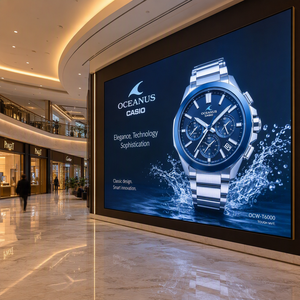
Viewing distance dictates pixel pitch selection. For typical pedestrian sidewalks with viewers standing 4 to 12 feet away, our P2.5 indoor video walls or P3.91 transparent displays offer the sweet spot between resolution and cost. For glass curtain walls where preserving natural light and outdoor visibility is paramount, our P6 to P10 self-adhesive transparent film displays provide high optical transparency (up to 85%) while delivering over 5,000 Nits to cut through direct noon daylight reflections.
Connect with Our Display Engineers for Wholesale Chicago Inquiries
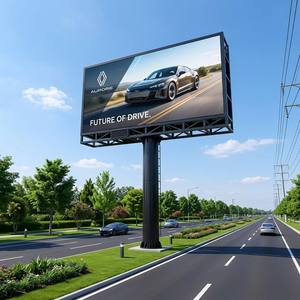
Whether you are engineering a high-impact DOOH billboard for an Illinois tollway, specifying transparent window glass displays on Michigan Avenue, or equipping an experiential venue in Fulton Market, our team delivers factory-direct engineering and competitive wholesale pricing.