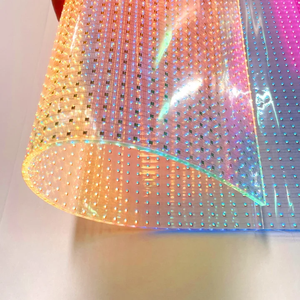
Explore our comprehensive portfolio of CE-certified, high-reliability LED kiosks, interactive dance-floor matrices, transparent storefront films, and ultra-high-refresh video walls customized for the demanding retail, transport, and commercial environments across the Netherlands.
The Netherlands possesses one of the world's most concentrated digital infrastructure networks. Urban density in the Randstad conurbation demands public displays that marry architectural elegance with stringent electromagnetic safety, high footfall resilience, and low acoustic impact.
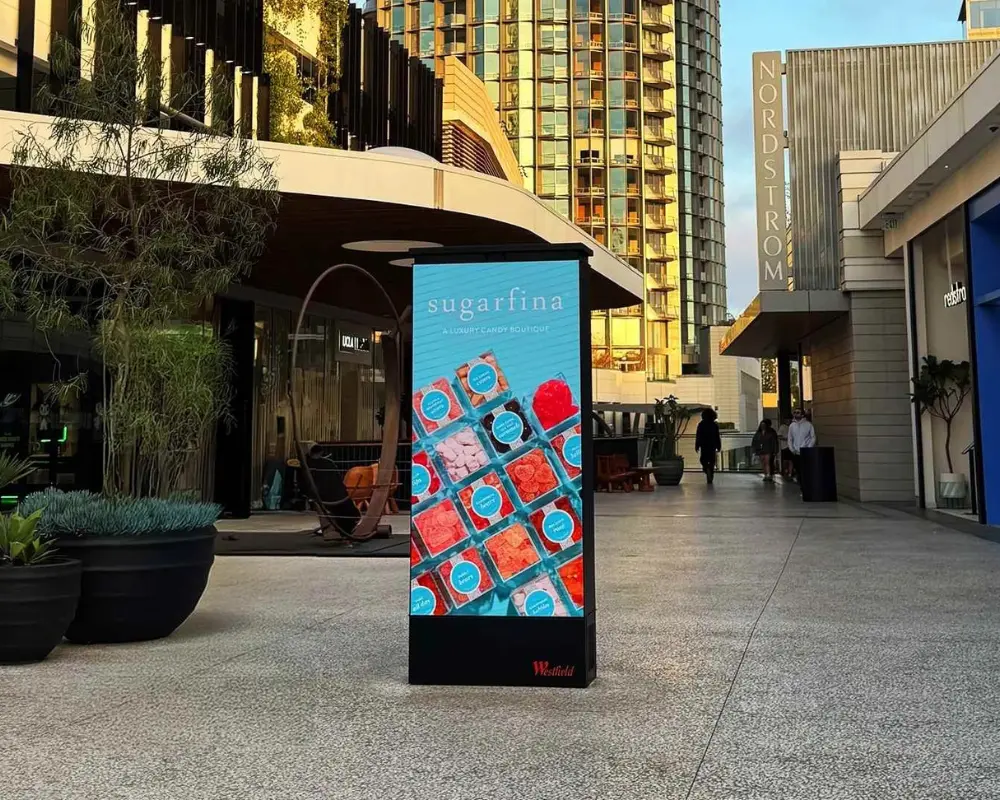
In luxury retail epicenters like P.C. Hooftstraat Amsterdam and Westfield Mall of the Netherlands (Leidschendam), interactive LED totems replace legacy printed signage. Utilizing fine-pitch P1.5 to P2.5 modules with bonded anti-glare capacitive touch overlays, retailers achieve seamless interactive product catalogues, real-time omni-channel stock query, and dynamic DOOH sponsorship.
At high-velocity multimodal nodes including Amsterdam Airport Schiphol, Rotterdam Centraal, and the automated access terminals of the Port of Rotterdam, our kiosks provide non-stop 24/7 mission-critical status updates, multilingual flight/rail wayfinding, and contactless touchless optical gesturing engineered to withstand heavy commuter shock.
Across Eindhoven's Brainport technology corridor and corporate headquarters in Zuidas Amsterdam, enterprise clients demand sophisticated executive reception totems. Featuring COB (Chip-on-Board) surface hardness and zero-noise fanless cooling, these systems deliver interactive visitor badge printing, live IoT facility analytics, and ultra-high-definition corporate storytelling.
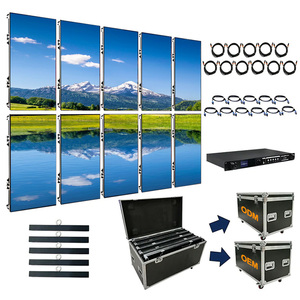
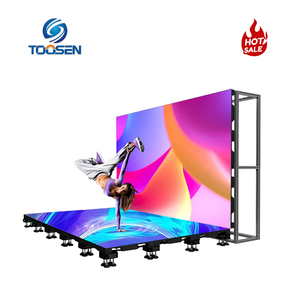
World-class exposition centers such as RAI Amsterdam and Jaarbeurs Utrecht require rapidly reconfigurable interactive totem arrays and interactive gravity-sensing LED flooring. These platforms allow exhibition builders and event managers to drive gamified attendee engagement, live polling, dynamic sponsor monetisation, and intelligent flow routing.
Procuring visual display technology in the Netherlands requires deep compliance with both European Union environmental directives and localized Dutch building codes. Below are the key technological shifts reshaping Dutch RFP requirements.
With aggressive Dutch net-zero targets and surging commercial kilowatt-hour rates across the Randstad, procurement directors now enforce strict standby power constraints. Conventional LED kiosks draw between 45W and 120W per square meter in passive standby mode simply sustaining receiver cards and idle power supplies. In contrast, integrating intelligent architecture such as patented ZEUS® power management allows the system to completely drop to 0.00 Watts during off-hours, significantly slashing building carbon footprints and ensuring full alignment with the EU ErP Directive 2019/2021.
Dutch cities feature historic architectural layouts where commercial retail units reside directly below residential apartments. Under NEN-EN 55032, public displays must satisfy rigorous EMC Class B (Residential and Commercial Environment) emission standards rather than the looser Class A industrial thresholds. Non-compliant displays leak electromagnetic radiation, causing severe interference with residential 5G cellular bands, Wi-Fi networks, and emergency frequencies, leading to costly enforcement shutdowns by the Dutch Radiocommunications Agency (Rijksinspectie Digitale Infrastructuur).
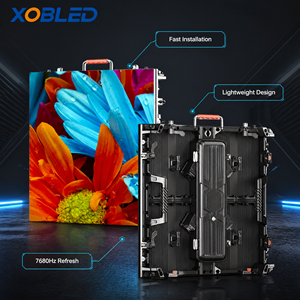
Unlike passive outdoor billboards, interactive kiosks are subject to continuous physical human contact, beverage spills, abrasive cleaning chemicals, and occasional vandalism. The Dutch market has transitioned rapidly away from exposed SMD diodes toward GOB (Glue-on-Board) and solid-state COB protective resins. These modules achieve an IK08 to IK10 mechanical impact rating while supporting multi-touch Projected Capacitive (PCAP) glass integration capable of rejecting moisture droplets and operating smoothly under wet atmospheric conditions.
An objective technical analysis evaluating interactive visual kiosks deployed in high-ambient-light Dutch transport halls and retail plazas over a standard 7-year total cost of ownership (TCO) lifecycle.
| Specification Metric | Our Engineered Interactive LED Kiosk | Conventional High-Brightness LCD Totem | Strategic Benefit for Dutch Integrators |
|---|---|---|---|
| Calibrated Peak Brightness | 1,500 – 6,500 nits (Dynamic Sensor Controlled) | 700 – 2,500 nits (CCFL/Edge-LED Backlit) | Maintains vivid contrast even in sunlit Dutch glass atrium malls. |
| Operating Lifetime (L80) | 100,000 Hours to 80% Initial Luminance | 30,000 – 50,000 Hours (Backlight Degradation) | More than doubles service life without panel yellowing or black-spotting. |
| Zero-Standby Power Draw | 0.00 Watts (Intelligent Hardware Disconnect) | 15W – 45W Continuous Idle Consumption | Direct compliance with Dutch Municipal ESG and energy savings covenants. |
| Thermal & Acoustic Profile | Fanless passive dissipation (<15 dB noise level) | High-RPM active fans (>45 dB audible noise) | Zero acoustic nuisance in quiet museums, high-end lobbies, and banks. |
| Surface Ingress & Impact | IP65 Front / GOB Impact Rating IK10 | IP54 Front / Standard Tempered Glass IK07 | Maximum protection against Dutch driving rain and aggressive public wear. |
| Maintenance & Module Service | Front magnetic sub-module replacement (<3 mins) | Complete panel/chassis tear-down (>3 hours) | Dramatically reduces field technician SLA call-out costs across the Benelux. |
We do not merely distribute hardware; we engineer bespoke visual display architectures. Drawing upon an international pedigree of over 375,000 square meters of worldwide installations—spanning Premier League stadiums, NASCAR speedways, iconic retail complexes like Westfield, and world-class live broadcast sets—our engineering teams safeguard every step of your project.
Essential answers covering logistics through Rotterdam, European VAT reverse charge mechanisms, technical protocol interoperability, and environmental durability.
We manage full container (FCL) and consolidated (LCL) freight direct to the Port of Rotterdam or air cargo via Amsterdam Airport Schiphol under Incoterms 2020 (DAP or DDP). Dutch VAT-registered companies can leverage the Article 23 (Artikel 23 van de Wet op de omzetbelasting) import deferment license, shifting import VAT directly to the periodic VAT return rather than paying upfront at customs clearance.
Yes. The maritime climate of the Netherlands (especially coastal Zuid-Holland and Zeeland) exhibits high humidity and salinity. Our outdoor-rated kiosk enclosures and internal PCB modules undergo specialized conformal triple-coating meeting ISO 12944 C4/C5 marine atmospheric corrosion standards. Aluminum alloy housings with architectural-grade powder coating eliminate electrolytic corrosion.
Our interactive systems feature hardware-agnostic controller architectures supporting standard Novastar, Brompton, and Colorlight pipelines. On the software side, the touch and sensor layers connect via HID USB or Ethernet (TCP/UDP, WebSocket, OSC, and MQTT), enabling seamless interoperability with popular Benelux CMS platforms like ZetaDisplay, First Impression, Scala, BrightSign, and custom Unity/Unreal interactive applications.
All kiosk totems are fully engineered in alignment with NEN-EN 62368-1 (Audio/Video and Information Technology Equipment Safety), CE Low Voltage Directive (LVD), and RoHS guidelines. Furthermore, interactive touch interfaces adhere to the European accessibility directive EN 301 549, ensuring wheelchair access compliance with ADA/European reach-range standards (touch interactive elements placed between 400mm and 1200mm from floor level).
Before shipment, our senior engineers execute rigorous in-person FAT protocols on the factory floor. This involves full chromatic consistency scanning, grayscale linearity profiling, thermal dissipation imaging under high load, vibration testing, and a non-stop 72-hour continuous aging sequence. Detailed FAT sign-off certificates with high-resolution photographic proof are provided to the client prior to dispatch.
Standard modular LED kiosk chassis require a 15 to 25 business-day manufacturing and FAT cycle. Bespoke architectural totems (custom dimensions, RAL custom powder coating, integrated ticketing printers or card readers) average 30 to 40 days. Air freight to Schiphol takes 5–7 days, while ocean freight direct to Rotterdam typically spans 24–28 days. Expedited spare batch modules are stocked in regional Pixel Depots for rapid emergency dispatch.
Whether you are designing a high-impact DOOH advertising roll-out for Dutch transit corridors, modernizing an Amsterdam flagship storefront, or installing interactive immersive flooring for a major cultural landmark, our engineering consultants provide CAD layouts, thermal modeling, photometric studies, and comprehensive tender documentation.
Connect directly with our engineering desk for immediate technical consultations, factory direct pricing schedules, and localized Dutch logistics planning.