Engineered to rigorous British and European compliance benchmarks, our display portfolio delivers superior lumen output, high refresh rates, and front-accessible service architectures for premier retail, architectural, and transport installations.
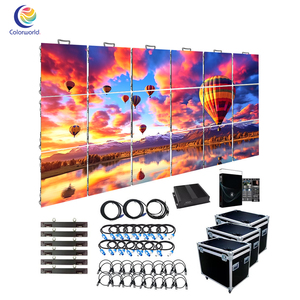
From London’s West End luxury flagships to Manchester’s bustling transport interchanges, digital LED poster screens and totems represent the sharpest frontier of localized experiential marketing and institutional public communication.
The United Kingdom represents one of the world's most sophisticated and heavily regulated markets for digital out-of-home (DOOH) installations, commercial retail signage, and architectural display integrations. Unlike transient consumer electronics, commercial LED poster displays, freestanding digital totems, and ultra-fine pitch video walls are capital investments that must withstand relentless commercial duty cycles, maritime atmospheric conditions, and strict municipal planning controls.
Across England, Scotland, Wales, and Northern Ireland, enterprise procurement managers, commercial AV integrators, and venue operators face a distinct set of operational challenges. Specifying an LED poster display requires an exhaustive evaluation of pixel pitch physics, optical contrast ratios, thermal dissapation profiles, EMC emission limits, and life-cycle energy consumption. The trend toward standalone, ultra-slim LED posters—often configured as modular interactive totems or cascaded into wide multi-panel ribbons—stems directly from the UK high street's demand for high-impact visual real estate without compromising floor plans or requiring disruptive structural masonry alterations.
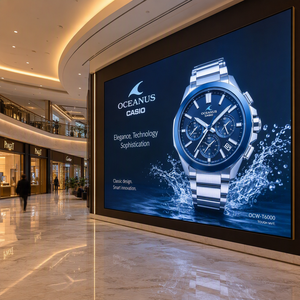
Installed across premier retail destinations such as Regent Street, Westfield Stratford City, Manchester Arndale, and the Birmingham Bullring. Super-slim P1.86 to P2.5 indoor LED poster displays replace dated static lightboxes. Their high refresh rate (3840Hz+) ensures flicker-free reproduction under smartphone cameras, capturing social-first brand storytelling.
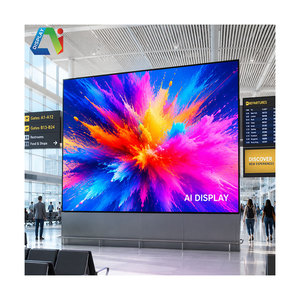
Crucial infrastructure at London St Pancras International, Birmingham New Street, and Edinburgh Waverley. These deployments feature robust IP65-fronted totems with optical anti-glare coatings, ambient auto-dimming light sensors, and rapid front-service latch systems that guarantee under-10-minute field maintenance during restricted operational windows.
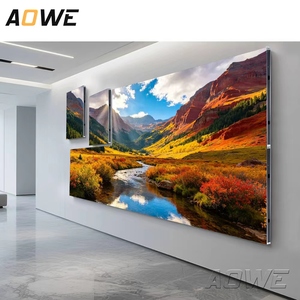
Prominently deployed at top-tier universities, research facilities in the Oxford-Cambridge Arc, and Canary Wharf financial institutions. High-definition P1.25 to P1.53 fine-pitch LED poster arrays deliver multi-source AV integration for executive town halls, architectural donor walls, and dynamic digital campuses.
Deploying commercial LED poster displays and digital out-of-home totems across the UK mandates adherence to statutory planning frameworks, rigorous electrical safety testing, and local environmental illumination limits.
A frequent error among commercial buyers importing generic displays is neglecting the legal ramifications of non-compliant hardware. In the UK, commercial display signage installed on building envelopes or visible from public highways is subject to the Town and Country Planning (Control of Advertisements) (England) Regulations 2007 and equivalent statutory instruments in Scotland and Wales. Local planning authorities (LPAs) strictly mandate maximum luminance cut-offs to mitigate light pollution and motorist distraction.
Following post-Brexit divergence, products placed on the Great Britain market require mandatory UKCA conformity. Displays must comply with BS EN 62368-1 for audio/video information technology safety, governing fire enclosure classifications, creepage clearances, and touch-temperature safety thresholds.
High-speed driver IC clock lines produce electromagnetic interference. British compliance requires Class B electromagnetic compatibility for indoor residential/retail environments and Class A for industrial deployments, preventing degradation of localized cellular and Wi-Fi networks.
The Institution of Lighting Professionals (ILP) establishes strict environmental luminance caps: maximum 5,000 cd/m² under daytime direct sunlight, stepping down to 300 cd/m² to 600 cd/m² during nocturnal hours (Zone E3/E4) to avoid obtrusive spill light into residential frontages.
From stringent Net-Zero carbon targets to architectural heritage preservation, British commercial clients are demanding more than raw lumen counts.
Three primary technological and economic forces are transforming how UK businesses procure, deploy, and monetize LED poster hardware:
With sky-high commercial electricity tariffs across the UK, energy efficiency is no longer an afterthought. Venue operators demand intelligent power solutions—such as patented standby isolation technology—that physically disconnect idle power supplies, driving quiescent consumption to zero watts outside trading hours.
Traditional Surface Mounted Device (SMD) chips are vulnerable to physical impact in crowded retail queues and high-traffic shopping avenues. The UK market is pivoting to Chip-on-Board (COB) and Glue-on-Board (GOB) encapsulation, offering IP54/IP65 surface protection, moisture proofing, and scratch resistance.
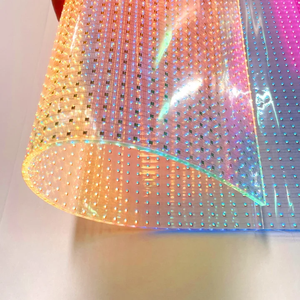
In conservation areas and listed building zones across London, Edinburgh, and Bath, council planners prohibit opaque external totems. Flexible and transparent self-adhesive LED glass film (over 75% light transmission) preserves architectural sightlines while turning glass into a dynamic media canvas.
Downtime in premier retail venues incurs immediate commercial revenue losses. Specifiers require sub-minute vacuum module removal tools and centralized magnetic front-service architectures, eliminating rear maintenance corridors and maximizing rentable commercial footprint.
Compare mechanical dimensions, thermal envelope limits, optical resolutions, and ingress protection across key hardware configurations.
| Architecture Class | Pixel Pitch (mm) | Optimum Viewing Distance | Luminance (cd/m²) | Ingress Rating | Typical UK Application |
|---|---|---|---|---|---|
| Ultra-Fine Pitch COB Poster | P1.25 – P1.86 | 1.0m – 3.0m | 600 – 1,000 Nits | IP54 Front / IP30 Rear | Luxury Retail, Corporate Boardrooms, Galleries |
| Standard Indoor Retail Totem | P2.0 – P2.5 | 2.0m – 5.0m | 800 – 1,200 Nits | IP43 Front / IP20 Rear | Shopping Centres, High Street Retailers, Showrooms |
| High-Bright Window Display | P2.9 – P3.91 | 3.0m – 8.0m | 3,500 – 5,000 Nits | IP54 Front / IP30 Rear | South-Facing Shop Windows, Automotive Dealerships |
| Transparent Crystal Glass Film | P6.0 – P10.0 | 5.0m – 15.0m | 2,500 – 4,500 Nits | IP65 Front / IP43 Rear | Glazed Commercial Atriums, Grade-II Listed Façades |
| All-Weather Outdoor DOOH Totem | P3.91 – P5.0 | 4.0m – 20.0m | 5,500 – 7,500 Nits | IP65 Front / IP65 Rear | High Street Public Walkways, Train Station Forecourts |
Bridging bespoke British engineering oversight with high-throughput manufacturing discipline, backed by comprehensive Factory Acceptance Testing (FAT) and lifetime UK Pixel Depot support.
We do not lock clients into restrictive single-factory assembly lines. We curate top-tier global fabrication partners matched precisely to the mechanical and optical demands of each brief, constructing screens to proprietary intellectual property.
Every batch undergoes strict hands-on Factory Acceptance Testing (FAT) overseen by our resident engineers directly on the production floor. Optical binning, thermal heat-soak testing, and 72-hour burn-in ensure flawless out-of-the-box reliability.
Proudly holding 'Made in Britain' status, the multi-award-winning digiLED ZEUS® intelligent power management tool eliminates parasitic standby power draw across full display matrices, saving thousands in annual kilowatt-hours.
Field support does not end at customs clearance. Our regional UK Pixel Depot maintains calibrated module batches, batch-matched diode spares, and dedicated engineering technicians providing rapid turn-around diagnostics and component-level repairs.
Clear, definitive answers to technical, commercial, and regulatory queries encountered during project scoping and tender evaluation.
For shopfront windows directly facing pedestrian pavements, pixel pitch between P2.5mm and P3.91mm represents the optimal balance of resolution and thermal headroom. High-brightness calibrated diodes (3,500 to 5,000 Nits) are required to combat daytime solar wash-out, equipped with auto-dimming ambient sensors to conform with nighttime council curfew standards.
Yes, under the Town and Country Planning (Control of Advertisements) Regulations, displays located within 10 metres of a glazed façade and clearly visible from a public highway or carriageway often require Express Consent from the Local Planning Authority (LPA), especially in Conservation Areas or near listed structures.
The UK's damp, salt-laden maritime air accelerates electrochemical corrosion and condensation ingress. We specify a minimum of IP65 ingress protection, fully conformal-coated printed circuit boards (PCBs), aerospace-grade die-cast aluminium enclosures, and humidity-tolerant gold-wire bonded LED packages.
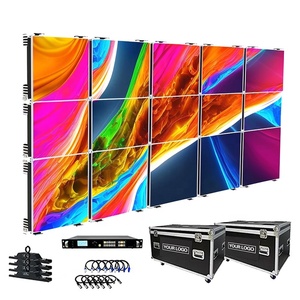
Yes. Premium commercial LED posters feature integrated cascading hardware with Gigabit Ethernet loop-through and automated frame synchronization. Up to 6 or 8 poster units can be linked side-by-side to form a singular, seamless 16:9 ultra-wide video presentation with zero bezel separation.
Commercial properties seeking high BREEAM (Building Research Establishment Environmental Assessment Method) ratings are scrutinized on energy consumption metrics. ZEUS® physically eliminates standby energy drain, preventing the screen's power converters from drawing quiescent load when blank, directly reducing measured Scope 2 carbon emissions.
Standard stock poster units from our UK distribution hubs can be delivered within 3 to 5 business days. Custom engineered, bespoke architectural builds—including curved frames, specialized structural totems, or custom IP66 extrusions—typically require 6 to 9 weeks including production, full factory acceptance testing, and freight.
LED diodes differ minutely in wavelength emission and luminance between manufacturing batches. Our UK Pixel Depot archives specific diode wafer bin codes for every installation, ensuring that replacement modules look optically identical without visible colour patching or luminosity borders.
All our LED poster systems integrate with enterprise CMS platforms including Novastar ViPlex, BrightSign, Scala, and custom cloud-hosted Android players. Displays support asynchronous cloud scheduling via 4G/5G SIM or local Wi-Fi, alongside synchronous HDMI input for live event broadcasting.