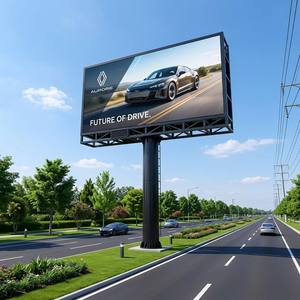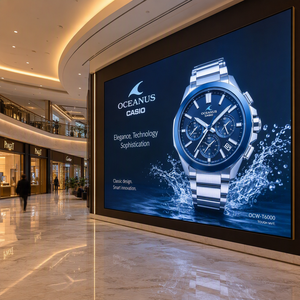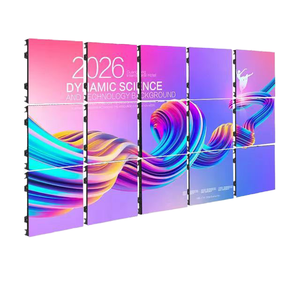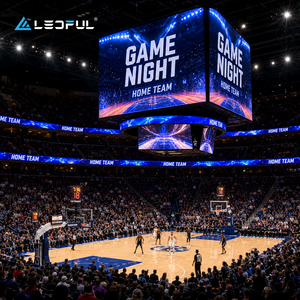
Custom-fabricated video wall modules, transparent storefront films, and stadium perimeter display systems tested for severe seismic environments, salt-air resistance, and ultra-high dynamic contrast.
The architectural landscape across Japan presents some of the most rigorous technical, seismic, and electrical standards in the global digital media industry. From the seismic isolation imperatives regulated by the Building Standard Law of Japan (建築基準法, Kenchiku Kijun-hō) to stringent safety protocols dictated by the Fire Service Act (消防法, Shōbō-hō) and mandatory METI PSE (Electrical Appliance and Material Safety Act) compliance, deploying bespoke architectural LED screens demands precision manufacturing far beyond standard commercial sign displays.
As premier OEM/ODM partners and global exporters working directly with Japanese general contractors (Zenekon such as Shimizu, Obayashi, and Taisei), AV system integrators, and architectural facade engineering firms, our custom manufacturing pipeline bridges British intellectual property (IP), aerospace-grade materials, and on-site factory acceptance testing (FAT). Whether constructing naked-eye 3D curved surfaces above multi-story transit intersections in Tokyo, glass-curtain adhesive film screens along Ginza high-street retail, or wide-temperature perimeter ribbons inside Japanese sports stadiums like Hiroshima Football Stadium, our bespoke LED assemblies harmonize high visual fidelity with relentless operational reliability.
Densely built metropolises such as Shibuya, Shinjuku, and Umeda prioritize corner-wrapping naked-eye 3D LED screens. OEM customization involves tight cabinet edge-chamfering (45-degree angle joints yielding less than a 1.2mm total optical seam), customized radius curvatures matching building lines, and high nit outputs (>8,500 nits) equipped with automatic lux sensors that satisfy municipal illumination ordinances without causing visual glare.
Deployments across JR East, JR West, and Tokyo Metro concourses require non-combustible materials meeting JIS A 1321 flame retardancy specifications. Front-serviceable magnetic latching mechanisms enable 15-second module swaps without rear gantry access. Acoustically transparent perforated substrates and low-electromagnetic emission (VCCI Class A/B) certifications protect mission-critical railway signaling networks.
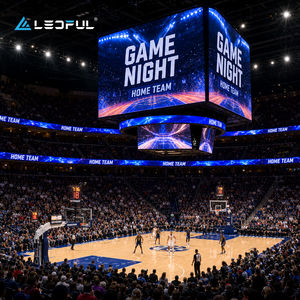
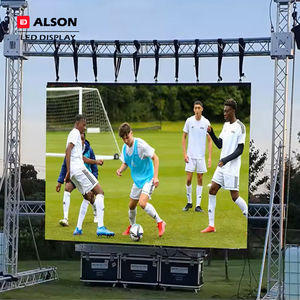
Drawing direct insights from stadium engineering—such as our Hiroshima Football Stadium VISION Series installations—outdoor stadium perimeter boards and scoreboards feature impact-resistant soft silicone rubber masks, IP65/IP66 dual-chamber sealing against typhoon torrential rains, and mechanical decoupling sub-frames engineered to survive Level 7 seismic activity without cabinet buckling or signal loss.
Comparing electrical tolerances, mechanical integration methods, and optical capabilities designed specifically for Japanese architectural and DOOH requirements.
| Display Category | Optimal Pixel Pitch | Brightness & Contrast | Thermal & Power Architecture | Japanese Compliance & Standards |
|---|---|---|---|---|
| Outdoor Curved DOOH Facade | P3.91 - P6.67 | 7,500 - 10,000 nits 8,000:1 Contrast |
Common Cathode, Aluminum Die-Cast Fin Heat Dissipation, Fanless Silent Design | PSE Certified, Tokyo Outdoor Advertising Ordinance Compliant, VCCI Class A |
| Transparent Window Adhesive Film | P3.91 - P7.81 | 4,000 - 5,500 nits >82% Transparency |
Flexible FPC PCB with Anti-UV PET substrate, ultra-thin 2.5mm profile | JIS Fire-Retardant Adhesive, Minimal Building Load (<5kg/sqm), Natural Light Preservation |
| Fine-Pitch COB Indoor Media Wall | P0.93 - P1.87 | 800 - 1,200 nits 15,000:1 Contrast |
Flip-Chip Chip-on-Board (COB), Anti-glare Matt Black resin, Full Front Vacuum Access | VCCI Class B (Low EMI for Corporate/Broadcast), JIS C 61000 Power Quality Compliance |
| Stadium Fascia & Perimeter Ribbon | P5.0 - P10.0 | 6,500 - 8,500 nits 7,680Hz Refresh |
Dual Redundant Power & Data Paths, Soft TPU impact mask, Quick-latch brackets | JIS Seismic Damping Mounts, IP66 Ingress Rating, Salt-Fog Corrosion Resistance |
Under Japan's national decarbonization strategies, building owners face strict carbon caps. Traditional large-format displays consume substantial standby electricity when inactive. Our integration of patented digiLED ZEUS® intelligent power management eliminates idle parasitic draw, enabling multi-hundred-square-meter architectural displays to achieve true zero-watt standby consumption.
Earthquake engineering codes require architectural retrofits to minimize dead load on building facades. Our custom OEM lightweight magnesium and aerospace aluminum frames reduce screen weight from the conventional 45kg/sqm down to 22kg/sqm. This dramatically simplifies the structural reinforcement required by Japanese structural engineers (Kennyushi).
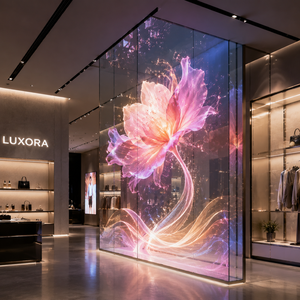
Preserving natural light into office towers while activating exterior glass facades during dusk is an essential architectural brief in Marunouchi and Roppongi. Our high-density, bare-die transparent LED film achieves up to 88% visual transparency, applying directly to architectural double-glazing without modifying external building silhouettes.
Rather than relying on generic off-the-shelf catalog models, we operate as a dedicated engineering powerhouse. Built on a foundation of over 500 combined years of display engineering experience, 375,000+ square meters of bespoke LED deployments, and 14 industry-first display technology patents, our manufacturing ecosystem guarantees:
Our senior visual engineers oversee the production floor in person throughout SMT mounting, conformal coating application, and structural chassis milling. Every batch undergoes a continuous 72-hour color uniform aging burn-in and full Factory Acceptance Testing (FAT) sign-off before custom export packaging.
Engineered and patented in the UK, ZEUS® safely and automatically isolates display subsystems during non-operational hours, preventing constant idle power waste across immense exterior video surfaces. This tangible carbon-abatement tool directly strengthens client ESG credentials and lowers Japanese corporate utility expenditures.
With an active regional liaison presence in Tokyo (+81 3 5846 8842) alongside dedicated Pixel Depots in the UK and USA, we guarantee lifetime batch-matched diode binning, immediate component replacement availability, and specialized bilingual technical support for project lifecycles spanning well over a decade.
Direct technical answers addressing structural certification, electrical compliance, lead times, and post-installation support for procurement specialists and consulting engineers.
We work in unison with your registered structural engineers (Kennyushi), providing complete finite element analysis (FEA) data for wind pressures exceeding 60 m/s (typhoon rating) and Level 7 seismic accelerations. Our frames use flexible decoupling mounting brackets and high-tensile fasteners to absorb building sway without transferring shear stress to fragile silicon and PCB traces.
Yes. All internal switching power supplies, step-down converters, and external power distribution units (PDUs) supplied for Japanese installations carry official PSE Diamond or PSE Circle certifications under METI regulations, ensuring full insurance compliance and legal installation across Japanese commercial properties.
Absolutely. We manufacture custom 45-degree mitered die-cast cabinets and flexible PCB modules that form smooth right angles or continuous organic curves. Total seam gaps are engineered to stay strictly under 1.2mm, preventing pixel pitch disruption and maintaining flawless optical continuity for anamorphic 3D video content.
Every architectural display is built using premium single-bin Nationstar or Cree LEDs. Following assembly, the entire canvas undergoes high-resolution camera calibration (chromaticity and luminance) to ensure Delta E < 1.5 across the complete active surface. Furthermore, we reserve an exact 5-10% batch-matched diode buffer in our Pixel Depot for future maintenance.
Our control ecosystems support multi-step hardware and software lux monitoring that continuously adapts nit output according to ambient conditions. Micro-louver masks and directional optical baffles focus brightness directly toward intended street viewing cones, preventing upward or peripheral light spillage into adjacent residential windows.
Given the spatial constraints of Tokyo building envelopes where rear access catwalks are structurally impossible, our cabinets feature 100% true front-service architecture. Modules, power supplies, and receiving cards are removable from the front via motorized vacuum extraction or precision mechanical latching tools in less than 60 seconds.
Standard architectural OEM/ODM cycles average 6 to 9 weeks from finalized engineering drawings and sign-off to completion of factory burn-in and FAT testing. For expedited retrofits or seasonal retail rollouts, rapid-track prototyping can deliver initial structural proof-of-concept units within 21 business days.
Yes. While engineered to interface natively with our display ranges, digiLED ZEUS® is brand-agnostic. It integrates with any standard three-phase electrical distribution rack to safely manage inrush currents and shut down idle display draw across legacy stadium or commercial digital billboards.