Engineered to exceed Tier-1 international export benchmarks. Each dual-sided and specialty panel undergoes rigorous in-person Factory Acceptance Testing (FAT), comprehensive thermal stress cycling, and sub-pixel calibration prior to global dispatch.
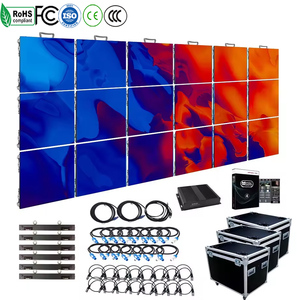
Most international buyers mistakenly assume buying directly from a single Chinese OEM factory yields the safest outcome. In real-world enterprise procurement, single-source factory reliance exposes projects to capacity bottlenecks, uncalibrated batch mixing, and biased component choices. Our independent engineering-driven methodology changes the paradigm.
We do not accept third-party vendor self-certifications. Dedicated resident British and multinational optical engineers physically station inside Shenzhen, Huizhou, and Dongguan partner plants. Every export batch undergoes 72-hour continuous white-field thermal stress tests and sub-pixel Factory Acceptance Testing (FAT) before export clearance.
Dual-sided digital totems and outdoor pylon billboards frequently dissipate hundreds of kilowatt-hours in idle black-screen modes. Integrating our proprietary, globally patented digiLED ZEUS® power system physically cuts parasitic standby consumption to exactly 0 Watts, directly supporting corporate ESG compliance and reducing operational overhead.
True enterprise reliability extends far past initial freight arrival. With dedicated Pixel Depots established in Las Vegas (USA) and Hertfordshire (UK), our clients secure decades-long module binning continuity, localized emergency component swaps, and rapid IC component repair without the friction of overseas customs re-importation.
Double-sided LED displays represent one of the most mechanically and thermally demanding form factors in commercial AV. Unlike conventional single-sided displays backed by open air or cooling cavities, dual-faced configurations place two thermal emitter planes within a compressed central chassis.
In standard DOOH (Digital Out-of-Home) pylon totems and transit station displays, back-to-back LED modules sandwich power distribution units (PDUs) and receiving cards within an enclosure rarely exceeding 120mm to 160mm in thickness. Operating at peak daytime ambient temperatures exceeding 40°C in outdoor sunlight, solar radiation loading on Side A conducts directly through the central mounting frame into the PCB substrate of Side B.
Without advanced thermodynamic engineering, this thermal coupling causes severe chromatic drift, red-channel degradation, and driver IC thermal throttling. High-tier Chinese manufacturing partners resolve this by utilizing customized aerospace-grade magnesium-aluminum alloy internal chassis with integrated chimney-effect convection channels. By separating the central spine with ceramic thermal barrier sheets and deploying common-cathode driver ICs (which reduce heat generation by 30-40% compared to traditional common-anode topologies), internal junction temperatures are maintained within safe tolerances (<65°C), doubling LED lifespan.
Double-sided outdoor billboards mounted on vertical monopoles or suspended from airport terminal atrium trusses encounter extreme rotational torque (torsion) and high wind load factors (EN 1991-1-4 Eurocode standards). A dual-sided structure acts as an aerodynamic bluff body. Our structural design framework accounts for dynamic vortex shedding and torsional deflection:
Die-cast aluminum cabinets must maintain a tensile precision of ±0.05mm across all locking interfaces to prevent micro-gaps from opening along the dual facings during 12-force gale events. Furthermore, front-service magnetic extraction mechanisms must feature mechanical fail-safe safety tethers—ensuring that even during extreme vibration induced by passing subway trains or high-speed freeway winds, modules remain mechanically locked to the structural sub-frame.
| Architecture Typology | Typical Pixel Pitch (mm) | Thermal Dissipation Method | Cabinet Thickness | Brightness Range | Target Sourcing Application |
|---|---|---|---|---|---|
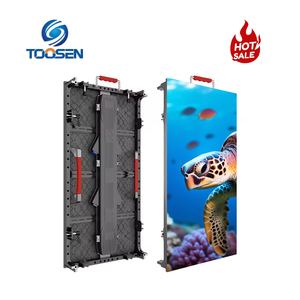
| Direct-Back Die-Cast Totem | P1.53 – P3.91 | Dual-Chamber Chimney Convection | 110 – 140 mm | 800 – 4,500 nits | Airport Terminals, Luxury Retail Kiosks |
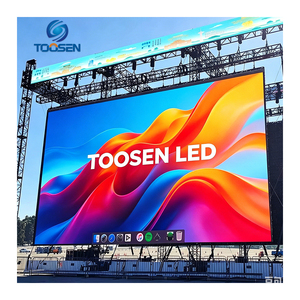
| Outdoor DOOH Pylon Display | P2.97 – P10.0 | Forced Positive-Pressure IP65 Air Circulation | 160 – 220 mm | 5,500 – 8,500 nits | Gas Station Roadside, Smart City Totems |
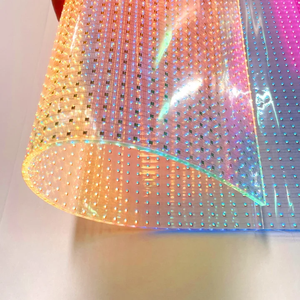
| Adhesive Film Glass Screen | P6.0 – P16.0 | Natural Ambient Glazing Radiation | 3 – 8 mm | 3,000 – 6,000 nits | Flagship Storefronts, Atrium Glass Railings |
| Rental Stage Reversible Rig | P1.95 – P2.97 | Magnesium Chassis Heat Sinks | 75 – 95 mm (per side) | 1,000 – 3,500 nits | Concert Center-Hung, Touring Arenas |
Procurement officers and technical consultants must plan 5 to 7 years ahead to protect capital investments against rapid obsolescence. The Chinese LED manufacturing ecosystem is undergoing an aggressive generational transition across four key vectors.
Surface Mounted Device (SMD) packaging is rapidly yielding ground to Chip-on-Board (COB) and Micro-LED in Package (MiP) below P1.5mm. For double-sided retail and airport kiosks where pedestrian foot traffic frequently bumps against screens, COB's hardened epoxy resin surface provides near-indestructible anti-collision, dust-proof (IP65 front), and moisture-resistant protection that eliminates fragile pixel dropouts.
Global energy directives (such as the EU Ecodesign Directive) are penalizing inefficient commercial electronics. Future procurement specs mandate Common-Cathode driver architecture as standard. By supplying dedicated independent voltages (2.8V for Red, 3.8V for Green and Blue), forward voltage waste drops substantially, allowing dual-sided pylon displays to run 15°C cooler and slash long-term power bills by up to 35%.
Modern DOOH operators monetize the two faces of double-sided totems independently. The latest factory architectures embed dual gigabit receiving card pipelines within unified slim enclosures, enabling asynchronous frame rate rendering (e.g., 60Hz programmatic dynamic video on Face A; 120Hz high-frame sports feeds on Face B) without electromagnetic cross-talk or timing jitter.
Navigating the industrial supply bases of Guangdong requires piercing through aggressive export marketing claims. B2B buyers must implement this four-phase technical audit framework prior to executing high-value purchase contracts.
Demand certified batch binning logs from primary packaging suppliers (e.g., Nationstar, Kinglight). In high-stress double-sided enclosures, copper-wire bonded SMD lamps suffer from premature galvanic oxidation when thermal cycling occurs. For mission-critical commercial projects, insist on pure gold-wire bonding (99.99% Au) and verify that wavelength variance across the entire procurement lot is strictly constrained within ±1.5nm to avoid color blotching between the two display faces.
A legitimate Tier-1 export factory will welcome destructive and extreme-load testing during your Factory Acceptance Test (FAT). Require the plant to run the double-sided cabinet at full white balance (R=255, G=255, B=255) at maximum nit brightness for 4 continuous hours. Perform FLIR thermal imaging sweeps across both faces. Any delta-T exceeding 8°C between the perimeter pixels and center-core pixels indicates deficient chassis thermal conduction, which will trigger visible differential color decay within 18 months.
Because two high-frequency scanning PCB arrays operate back-to-back within mere millimeters of separation, poor layout design causes severe electromagnetic coupling. This interference manifests as high-frequency horizontal banding on video capture and can cause compliance failure under FCC Part 15 and CE EN 55032 Class A/B regulations. Ensure the exporter produces verified third-party laboratory EMC test reports for the exact integrated dual-sided cabinet model being purchased.
Straightforward technical and commercial answers addressing common engineering challenges, export tariffs, structural loading, and system longevity.