Explore our export-ready, high-resolution indoor video wall panels and complete conference display packages engineered with front-serviceable dies, ultra-low thermal dissipation, and camera-ready driver topologies.
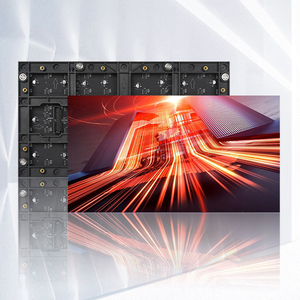
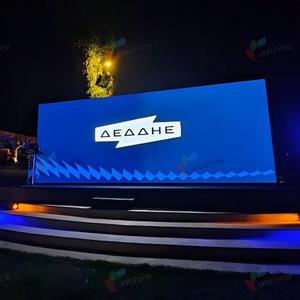
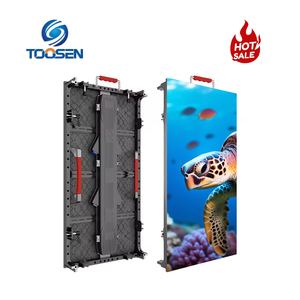
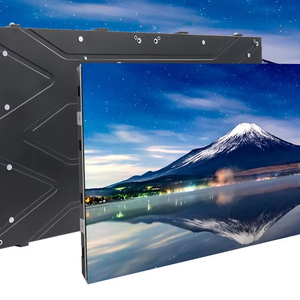
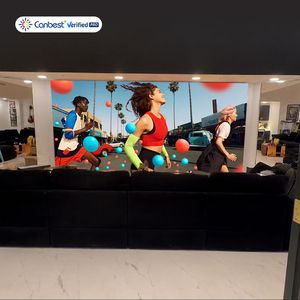
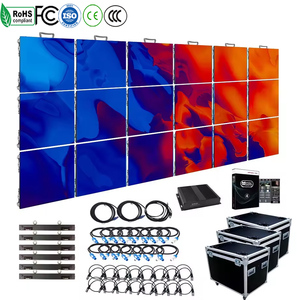
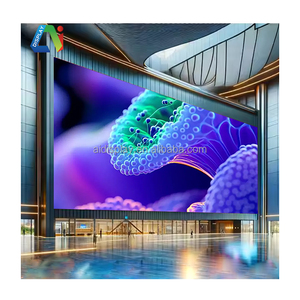
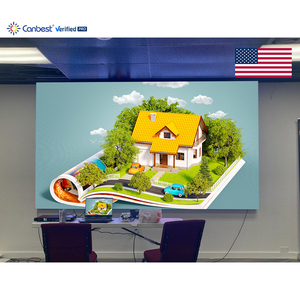
We reject generic white-label assembly in favor of rigorous precision engineering, intellectual property design, proprietary power orchestration, and absolute supply chain transparency.
We maintain an agile, application-tailored manufacturing matrix. Core hardware is fabricated strictly to proprietary engineering IP using top-tier Nichia, Nationstar, or Kinglight diodes alongside Macroblock or Chipone PWM drivers, ensuring bespoke performance without factory bias.
Our senior optical and electrical engineers are stationed on the factory floor throughout production. Every panel undergoes a mandatory 72-hour burn-in, full-white luminance calibration, thermal imaging analysis, and rigorous Factory Acceptance Testing (FAT) before export clearance.
Downtime is inadmissible in executive boardrooms and mission-critical operation centers. Our regional Pixel Depots in Las Vegas, USA, and London, UK, maintain dedicated bin-matched batch spares, module repair benches, and local field engineering teams for lifetime continuity.
Corporate sustainability mandates real ESG performance. Our systems integrate intelligent power down architectures—inspired by patented technologies like digiLED ZEUS®—allowing multi-panel conference walls to achieve absolute zero power draw when idle.
A standard 4K conference room LED screen can draw between 400W and 1200W continuously while idle in standby, wasting thousands of kilowatt-hours annually and degrading internal power capacitors. Our proprietary engineering integrates intelligent contactor relays and localized power management systems that isolate the display from AC mains when no video sync is detected.

Built to the highest European and North American electrical safety codes (CE, UL, FCC Class B, RoHS).
Selecting the optimal pixel pitch requires balancing optical viewing distance, resolution requirements (Full HD, 4K, 8K), and surface encapsulation technologies.
| Pixel Pitch | Encapsulation Type | Optimal Distance | Calibrated Brightness | Refresh Rate | Target Corporate Application |
|---|---|---|---|---|---|
| P0.93 mm | COB Flip-Chip / Micro LED | ≥ 1.0 Meter | 600 - 800 nits | 3,840Hz - 7,680Hz | Executive Boardrooms, Mission-Critical C2 Hubs, VIP Telepresence |
| P1.25 mm | COB / GOB SMD1010 | ≥ 1.5 Meters | 600 - 1,000 nits | 3,840Hz - 7,680Hz | Hybrid Meeting Rooms, Microsoft Teams Front Row, Finance War Rooms |
| P1.53 / P1.56 mm | GOB / Matte SMD1212 | ≥ 1.8 Meters | 800 - 1,000 nits | 3,840Hz | Medium Conference Spaces, Video Conferencing Suites, Training Halls |
| P1.86 / P1.90 mm | SMD1515 / GOB Option | ≥ 2.2 Meters | 800 - 1,200 nits | 3,840Hz | Enterprise Auditoriums, Town Hall Spaces, Multi-Purpose Presentation |
| P2.50 mm | Black SMD2020 / SMD2121 | ≥ 3.0 Meters | 1,000 - 1,500 nits | 3,840Hz - 7,680Hz | Large Auditoriums, Corporate Event Stages, Church Sanctuaries |
Enterprise procurement departments, AV consultants, and system architects are experiencing a fundamental shift in how digital visual surfaces are evaluated. Traditional metrics like cost-per-square-meter are no longer the primary decision driver. Instead, modern procurement strategies focus on Total Cost of Ownership (TCO), mean time between failures (MTBF), optical comfort, and seamless integration into enterprise UC (Unified Communications) ecosystems.
Key procurement shifts currently dominating the global landscape include:
The display manufacturing domain is undergoing rapid innovation at the wafer, packaging, and driving semiconductor levels. Understanding these technological vectors is essential for building future-proof corporate facilities:
With the permanent establishment of hybrid corporate workplaces, boardrooms are simultaneously broadcasting environments. Ordinary indoor displays frequently create severe optical interference—known as the moiré effect—when recorded by PTZ cameras, as well as horizontal scan lines caused by mismatched refresh frequencies. OEM/ODM conference displays must incorporate:
Three core vectors driving the replacement of legacy LCD flat panels and projection systems with fine-pitch direct-view LED video walls in global workspaces.
The standard 16:9 ratio is being rapidly complemented by panoramic 21:9 screens designed specifically for Microsoft Teams Front Row and Zoom Rooms. Enterprise buyers are prioritizing seamless visual width to accommodate remote participants, digital whiteboards, and agenda feeds at eye-level on a singular, bezel-free canvas.
Architectural floor plates no longer allow for rear maintenance service corridors. Modern enterprise tenders strictly specify 100% full-front magnetic serviceability, where magnetic vacuum tools allow modules, power supplies, and hub boards to be replaced from the front in under 60 seconds without disrupting structural framing.
IT departments insist on separation between optical panels and video processing engines. Standardizing on open-architecture AV-over-IP receiver cards (SDVoE, Dante AV, or high-bandwidth HDMI 2.1 matrix switchers) guarantees long-term modularity, allowing processors to be upgraded without replacing physical screen hardware.
Direct technical answers addressing the critical mechanical, optical, and operational inquiries posed by corporate procurement teams, AV integrators, and consultants.
The standard optical formula states that the minimum comfortable viewing distance in meters is approximately equal to the pixel pitch in millimeters (e.g., P1.25 mm has a minimum viewing distance of 1.25 meters or ~4.1 feet). For executive meeting rooms where participants sit within 2 to 4 meters of the display and review detailed spreadsheets, CAD drawings, or small typography, P0.93 to P1.56 is strongly recommended to render retina-level clarity without visible pixel grid structures.
SMD (Surface Mount Device) solders discrete RGB diode packages onto the PCB surface. While cost-effective, pins are vulnerable to accidental impact during cleaning or maintenance. GOB (Glue-on-Board) applies an optical epoxy layer over standard SMD modules for physical impact resistance. COB (Chip-on-Board) directly mounts bare semiconductor flip-chips onto the substrate with monolithic resin encapsulation, providing superior heat dissipation, 170° viewing angles, IP54 front moisture/dust protection, and an order of magnitude fewer dead-pixel defects.
While source material plays at 30 or 60 frames per second, the LED driver IC must pulse the LEDs thousands of times per second (PWM frequency) to control grayscale gradation. If the refresh rate is below 1920Hz, PTZ conference cameras, smartphone recording, and broadcast telepresence systems will capture flickering bands, dark rolling bars, and optical aliasing caused by shutter interference. A 3840Hz to 7680Hz refresh rate guarantees completely artifact-free visual capture across all shutter speeds.
Premium conference LED panels utilize fanless, die-cast aluminum chassis designs that operate with zero acoustic noise (≤ 0 dB). The aluminum cabinet acts as a passive heatsink, drawing heat away from driver ICs. Furthermore, common-cathode power distribution reduces operating thermal dissipation to approximately 100–150W/m² average, ensuring that boardroom participants do not feel radiant heat during marathon meetings.
For operations centers, defense command hubs, and Fortune 500 boardroom applications, our OEM architecture incorporates dual-loop data redundancy and dual-backup power sharing. If a primary data cable or sending port fails, the backup receiver card instantly assumes video transmission without a single dropped frame. Similarly, power supplies are cross-linked across adjacent cabinets so that a failed PSU will draw load from its neighbor without screen blackout.
During the primary production run, our factory calibrates and reserves a dedicated 3% to 5% spare parts allocation derived from the exact same LED wafer ingot and optical binning lot. This ensures identical wavelength tolerances (±1nm) and voltage curves. These spares are cataloged in our regional Pixel Depots, guaranteeing that any module replaced years down the road integrates seamlessly without optical mosaic differences or color divergence.
Consult directly with our display engineers for comprehensive CAD drawings, optical viewing distance calculations, structural weight loading analyses, and direct OEM/ODM pricing quotes.
Send an Inquiry