EMEA +44 (0) 207 381 7840 USA +1 702 783 3360 ASIA +81 3 5846 8842 [email protected]
B2B Engineering Whitepaper & Global Sourcing Guide

Top 10 High Brightness LED Factory & Exporters

A rigorous evaluation of optical luminance thresholds (>5,500 to 10,000+ nits), thermal dissipation architectures, factory qualification metrics, and global supply chain benchmarks for commercial DOOH, stadium, and architectural installations.

Featured High-Brightness Displays & Commercial Modules

Engineered for extreme direct sunlight visibility, superior color uniformity, and mission-critical 24/7 duty cycles. Fully compatible with patented zero-standby power solutions and customized structural framing.
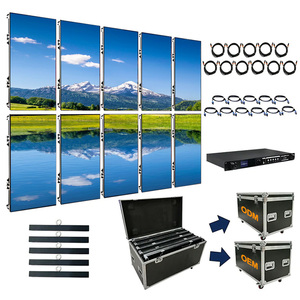
4m X 3m Complete System Stage Event Backdrop LED Screen
Rental & Staging

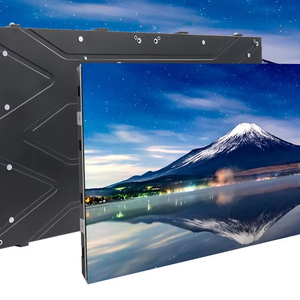
4m X 3m Complete System P2.6 P2.9 P3.91 P4.81 LED Display Indoor Outdoor Stage Video Wall

Pitch: P2.6 - P4.81
Nit Rating: Up to 5,500 Nits
Cabinet: Die-cast Mg
Refresh: 3840Hz - 7680Hz
Front Access Indoor Led Video Wall LED Screen Panel
Fixed Commercial

Front Access P1.53 P1.86 P2 P2.5 Indoor LED Video Wall Screen Church & Meeting Display

Pitch: P1.53 - P2.5
Access: 100% Front Service
Contrast: 5000:1 Dynamic
Driver: PWM High-Gray
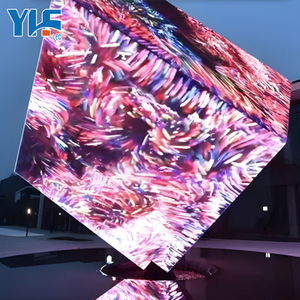
Five-Sided Outdoor 4K LED Cube Screen Digital Billboard
Creative 3D DOOH

Five-Sided Outdoor LED Cube Screen Digital Signage Billboard IP65 Waterproof 4K Resolution

Luminance: 6,500+ Nits
Ingress: IP65 All-Weather
Structure: Seamless Miter
Lifespan: 100k Hrs to L70
P2.6 P3.91 P4.81 Outdoor Indoor Led Display Panel
Hybrid DOOH

P2.6 P3.91 P4.81 Outdoor Indoor LED Display Panel Video Wall Pantalla For Events

Dual-Use: In/Out Calibrated
Nit Level: 1,200 - 5,000 Nits
Locking: Fast-Cam Latches
Curve: -5° to +10° Convex
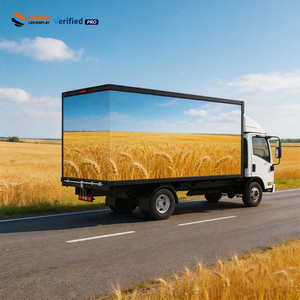
Battery Powered Van Outdoor Advertising LED Display
Mobile Digital OOH

Tool-less Installation BOX LED Screen 9.5ft Battery Powered Van Outdoor Mobile Display

Power: Low-V DC Battery
Brightness: 6,000 Nits Solar
Shock-Absorb: Heavy Duty
Deployment: Rapid Tool-less
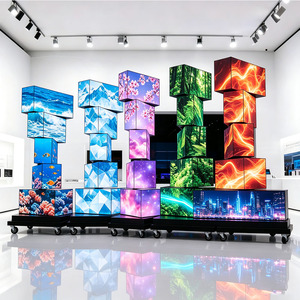
Custom High Resolution 3D Cube LED Screen Rotating
Kinetic Digital Art

Custom High Resolution 3D Cube LED Screen P2.5 Rotating Full Color Outdoor IP65 Media Player

Motor: 360° Synchronous
Pitch: P2.5 Ultra-Fine
Brightness: 5,500 Nits Outdoor
Ingress: IP65 Hermetic
Canbest Fiw Series P2.5 Indoor LED Video Wall
Command & Corporate

Canbest Fiw Series P2.5 Indoor LED Video Wall 5120x2400mm Conference Room USA Standard

Resolution: Native Full HD/4K
Luminance: 800 - 1,500 Nits
Color Gamut: Rec. 709 / DCI-P3
Acoustics: Silent Fanless
Outdoor Football Soccer Sports Perimeter LED Display Screen
Sports & Stadium

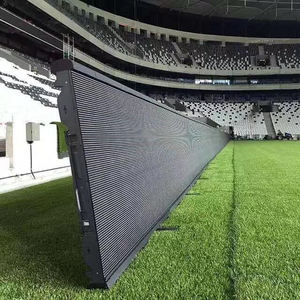
960*960mm P6 P8 P10 Football Soccer Sports Perimeter Outdoor Signage Banner Stadium Display

Luminance: 7,500 - 10,000 Nits
Impact: Soft Mask & Foam Top
Standard: UEFA/FIFA Certified
Refresh: 7680Hz Broadcast
375,000+
SQM Globally Deployed
10,000+
Peak Direct-Sun Nits
14
Pioneered Industry Innovations
0 Watts
True Standby with ZEUS®

The Physics of High Brightness: Overcoming Direct Solar Inundation

In high-ambient outdoor environments—such as open-air sports arenas, roadside digital out-of-home (DOOH) totems, and equatorial architectural facades—ambient illuminance frequently exceeds 100,000 to 120,000 lux. Standard commercial displays operating at 2,500 to 3,500 nits (candela per square meter) suffer from catastrophic optical washout. The ambient light reflects off the display's black matrix and epoxy encapsulation, compressing dynamic contrast ratios down to an unreadable 3:1.

To establish commercial readability, the display assembly must output a calibrated luminance of no less than 6,500 to 8,500 nits, maintaining an effective contrast ratio of at least 15:1 against direct incident solar radiation. However, driving optoelectronic diodes at elevated forward currents (mA) exposes the system to extreme thermal stress. The junction temperature ($T_j$) of gallium nitride (GaN) LEDs is inversely proportional to their operational lifespan. Every 10°C increase in junction temperature beyond 85°C induces a 30% acceleration in chromatic wavelength shift and exponential degradation of the internal bonding wires.

Key Engineering Standard: Tier-1 high-brightness manufacturing mandates Common Cathode PWM driving architectures paired with cold-diode gold-wire bonding. By segregating power rails between Red diodes (2.8V) and Green/Blue diodes (3.8V), energy loss dissipated as convective thermal waste drops by up to 35%, extending diode operational half-life ($L_{70}$) past 100,000 continuous hours.
Evaluation Parameter Standard Tier-3 OEM Commercial Tier-2 Exporter digiLED Global Engineering Standard
Calibrated Daylight Luminance 4,500 - 5,500 Nits 6,000 - 7,000 Nits 7,500 - 10,000+ Nits (Sustained)
Thermal Power Architecture Common Anode (Single 5V Rail) Early Common Cathode Hybrid Pure Common Cathode + Dynamic Voltage
Quality Control Protocol Sample Testing (AQL 1.5) Post-Assembly Batch Check In-Person FAT by Resident UK/US Engineers
Standby Power Consumption 35W - 80W per SQM 25W - 50W per SQM 0.0 Watts (Patented digiLED ZEUS® System)
After-Sales Calibration Support None / Generic Spares Returned to Chinese Factory Las Vegas & London Regional Pixel Depots
Wavelength & Flux Binning 5nm Broad Bin Spread 2.5nm Standard Bin Spread 1.0nm Single-Bin Color Consistency

Top 10 High Brightness LED Factories & Exporters Benchmark

An objective assessment of global LED manufacturing infrastructure, engineering rigor, export capacity, and optical component longevity across the world’s leading supply corridors.

digiLED (The LED Screen Experts)
UK Global HQ | Regional Hubs: USA, Japan, Europe
#01

Pioneering custom high-brightness engineering since 2003 with over 375,000 sqm installed. Uniquely operates an independent manufacturing partnership model where proprietary IP, component bills of materials (BOM), and factory floor execution are strictly supervised by western AV engineers.

  • Patented digiLED ZEUS® Zero-Standby Power Management
  • In-Person Factory Acceptance Testing (FAT) on 100% of panels
  • Dedicated Pixel Depots in Las Vegas and London for chromatic repair
Unilumin Group
Shenzhen, China | Listed Public Enterprise
#02

One of the world's largest automated surface-mount device (SMD) manufacturing operations with a mega-scale smart manufacturing base in Daya Bay. Excellent high-volume output for standard outdoor DOOH billboards and sports stadium perimeter displays.

  • High automated monthly SMT capacity exceeding 20,000 sqm
  • Extensive standard IP65 / IP68 certifications
Absen Optoelectronic
Huizhou / Shenzhen, China | Global Export Network
#03

Renowned for broad distribution channels and rapid export shipping. Absen maintains standardized product families tailored for rental staging and outdoor roadside advertising, utilizing robust aluminum profiles and high-contrast mask designs.

  • Global presence with regional subsidiaries in 14 countries
  • Well-established standardized modular series for rental fleets
Leyard Group & Planar
Beijing, China & Oregon, USA
#04

Strong pedigree in high-end government command centers, broadcasting studios, and massive architectural installations. Provides premium fine-pitch outdoor products alongside massive stadium center-hung scoreboard builds.

  • Advanced MicroLED research and fine-pitch outdoor engineering
  • Extensive North American enterprise integration integration
Daktronics
Brookings, South Dakota, USA
#05

The dominant legacy brand across North American professional sports venues, college athletics, and high-profile highway billboards. Offers rugged mechanical construction and proprietary Venus control software integration.

  • Deep specialization in NFL, MLB, and NBA scoreboard hardware
  • Extensive field technician network across North America
Barco NV
Kortrijk, Belgium | European Visual Technology
#06

Celebrated for industry-leading image processing (Infinipix) and uncompromised colorimetry. While leaning towards ultra-premium indoor applications, their specialized outdoor LED platforms feature class-leading optical calibration and mechanical build tolerances.

  • Benchmark color reproduction matching cinematic DCI standards
  • Industrial-grade signal redundancy and processing stability
ROE Visual
Shenzhen, China / Leek, Netherlands
#07

The premier choice for concert touring, film production, and high-end staging events. Their outdoor touring frames and high-brightness panels emphasize rapid lock-and-load rigging mechanisms and wind-load stability.

  • Carbon fiber cabinet architectures for minimal touring weight
  • Ultra-high refresh rates optimized for broadcast camera panning
INFiLED
Shenzhen, China | Global Offices in Barcelona & LA
#08

Rapidly growing international manufacturer specializing in creative curved architecture, high-output outdoor roadside displays, and virtual production volumes. Maintains responsive European and North American showroom presences.

  • Strong R&D focus on edge-curving and cornering modules
  • Robust outdoor DOOH products with automated brightness sensors
LianTronics
Shenzhen, China | Optoelectronic Industrial Base
#09

A high-volume supplier specializing in large-scale naked-eye 3D outdoor corner displays. LianTronics provides cost-competitive billboard modules with dependable waterproofing and high-lumen output for urban commercial districts.

  • Proven corner-curving 90-degree cabinet transitions
  • Extensive domestic and Southeast Asian billboard footprint
Ledman Optoelectronic
Huizhou, China | COB Packaging Leader
#10

A historic leader in upstream LED packaging that has evolved into an expert in Chip-on-Board (COB) fine-pitch applications. Ledman supplies both commercial sports perimeter systems and high-density micro-displays.

  • Vertically integrated diode packaging and display assembly
  • Proprietary polymer surface encapsulation coatings

Why AV Consultants & Integrators Specify digiLED

Commodity hardware fails when deployed in complex architectural contexts. We bridge the engineering gap between overseas production lines and long-term commercial venue operations.

Independent by Design

We do not lock clients into a single factory's rigid production constraints. We evaluate the specific pitch, lumen output, and structural physics of your project, selecting the premier manufacturing line suited for the application while enforcing digiLED intellectual property and strict BOM components.

Factory Floor QC & In-Person FAT

Unlike transactional brokers who forward sealed crates, our senior quality assurance engineers live on the factory floor throughout production. Every panel undergoes 72 hours of thermal stress-cycling, water-submersion ingress tests, and full white-balance uniformity testing prior to export release.

Patented digiLED ZEUS® Eco-Tech

Invented in the UK with Made in Britain accreditation, ZEUS® is an intelligent hardware power management system that completely powers down massive displays to zero watts during downtime. It eliminates parasitic standby electricity costs and drastically reduces overall corporate carbon footprints.

Las Vegas & UK Pixel Depots

Standard warranty claims usually demand returning modules to Asia, causing months of unsightly blackouts. Our dedicated Pixel Depots in Nevada and London maintain calibrated diode batches, high-speed automated SMD rework stations, and immediate replacement reserves for rapid turnaround.

Custom Mechanical Engineering

From the double-curved fascia ribbon outside London’s O2 Arena to the colossal Big Hoss screen at Texas Motor Speedway, we specialize in high-complexity geometry, lightweight magnesium framing, transparent façades, and wind-load certified stadium architectures.

375,000+ SQM Proven Pedigree

With more than two decades of dedicated optoelectronic innovation and 500+ combined years of engineering expertise across our leadership group, we offer procurement directors the absolute highest risk mitigation available in the visual display sector.

Future Procurement & Technology Trends in High-Nit Displays

The optoelectronic display market is undergoing radical technological transitions. Sourcing executives must evaluate these four fundamental industry vectors before locking capital expenditure.

Optical Innovation

1. MicroLED & Outdoor Fine-Pitch COB (Chip-on-Board)

Traditional SMD packaging relies on individual plastic-and-epoxy housings that degrade under sustained UV radiation. Sourcing is shifting toward outdoor Chip-on-Board (COB) and Glue-on-Board (GOB) architectures. By bonding microscopic bare flip-chips directly to the PCB substrate and encapsulating them in optically clear epoxy polymers, outdoor displays achieve P1.2 to P1.9 pitches with complete IP68 hermetic sealing, zero moisture ingress, and impact-proof physical robustness.

Energy Efficiency

2. Zero-Watt Standby & Strict ESG Power Mandates

Municipal zoning councils across the European Union, UK, and California are imposing stringent caps on nighttime light pollution and operational energy waste. Commercial buyers can no longer ignore the 40W to 100W per square meter that legacy displays continuously bleed while showing black screens or standing idle. Integrating patented zero-watt hardware switches like digiLED ZEUS® is becoming a prerequisite to secure civic planning approvals and meet institutional ESG ratings.

Driver Architecture

3. Dynamic High-Frame PWM & Camera-Optimized Refresh

With esports tournaments, hybrid virtual production, and mixed-reality stadium fan zones multiplying, displays must cater to both human retinas and high-speed broadcast cameras. Future procurement mandates 7,680Hz refresh rates, 16-bit to 22-bit internal grayscale processing, and custom driver ICs that eliminate black rolling scanlines, flicker, and color banding during 4K 120fps television coverage.

Procurement Strategy

4. Decoupling Hardware Sourcing from Local Support Depots

Global supply chain volatility has highlighted the fatal flaw of purchasing low-cost hardware with overseas-only technical support. Leading corporate AV buyers are transitioning to the "Decoupled Engineering Model"—procuring systems engineered to exact western standards from vetted manufacturing corridors, backed by contractual domestic spare-parts depots and in-region chromatic recalibration centers.

Frequently Asked Procurement & Engineering Questions

Clear, technically rigorous answers to the critical questions asked by AV engineers, procurement directors, and venue stakeholders.

How do we accurately calculate the required nits (brightness) for direct sunlight vs shaded environments?
Luminance calculations must correlate with maximum expected ambient illuminance (lux) and the reflectance coefficient of the screen surface. For shaded concourses, indoor atriums with skylights, or north-facing façades receiving indirect light, 2,500 to 3,500 nits is typically sufficient to maintain a dynamic contrast ratio of 10:1. However, for direct, unshaded southern or western exposures—where solar irradiance reaches 100,000+ lux—a minimum of 6,500 to 8,000 calibrated nits is mandatory. Operating at this level prevents washed-out imagery and allows the screen to run at 70% to 80% drive capacity, significantly reducing diode aging and thermal exhaustion.
What is the practical difference between Common Cathode and Common Anode LED architecture?
In traditional Common Anode configurations, a singular 5V or 4.2V electrical rail feeds the Red, Green, and Blue diodes simultaneously. Because Red diodes only require approximately 2.1V to 2.8V to operate, the surplus voltage is converted directly into wasted thermal energy. In contrast, Common Cathode technology utilizes dual independent power supply circuits (supplying ~2.8V to the Red diode and ~3.8V to Green and Blue). This targeted voltage allocation decreases panel operating temperatures by 15°C to 20°C, eliminates the need for loud, energy-draining cooling fans, reduces overall power consumption by up to 35%, and substantially retards chromatic drift over time.
What constitutes a comprehensive Factory Acceptance Test (FAT) protocol before export?
A proper FAT conducted by digiLED involves multiple verification gates before packing authorization: (1) Continuous 72-hour aging with alternating full-white (RGB 255), primary color, and high-frequency video patterns to identify premature diode burnout; (2) Automated optical camera calibration to verify sub-pixel luminance uniformity within ±2% across the entire screen; (3) IP65/IP68 water pressure testing to guarantee enclosure seal integrity; (4) Earth leakage and high-voltage insulation tests conforming to CE, UL, and ETL electrical standards; and (5) Full mechanical dry-run pre-assembly to verify that cabinet locks, alignment pins, and power bus-bars mate seamlessly without panel gaps.
How does digiLED ZEUS® achieve zero standby power, and why does this matter for TCO?
Standard LED video walls never truly power down; their internal switched-mode power supplies (SMPS), receiving cards, and auxiliary microcontrollers continuously consume between 30W and 70W per square meter simply listening for a signal wake-up command. Across a 150 sqm stadium display or commercial billboard, this parasitic draw wastes tens of thousands of kilowatt-hours annually. digiLED ZEUS® is a patented hardware-level intelligent power controller that disconnects AC mains distribution to the screen cabinets during scheduled off-hours, reducing draw to 0.00 Watts. It eliminates electrical stress on internal capacitors, shields components from nighttime grid surges, lowers operational fire risks, and drastically drops total lifecycle operating expenditure (OPEX).
Why is single-bin diode procurement critical for large-format commercial projects?
During LED semiconductor wafer fabrication, diodes emerge with slight natural variations in forward voltage, luminous intensity, and dominant chromatic wavelength (nanometers). "Binning" is the process of sorting these diodes into tightly measured tolerance groups. If an exporter mixes multiple diode bins across a single video wall, the screen will exhibit noticeable color tiling, blotchy white balance, and uneven color degradation as the diodes age. Tier-1 engineering demands that 100% of the diodes for a project—including all spare modules stored in regional Pixel Depots—originate from a single continuous production run and an ultra-tight chromatic bin (within 1 to 2 nanometers) to ensure lifelong optical uniformity.

Initiate Your High-Brightness Engineering Brief

Consult directly with our global engineering team in London, Las Vegas, or Tokyo. Whether you require viewing-distance modeling, thermal load analysis, custom structural drawings, or an in-person factory audit review, we are ready to assist.